
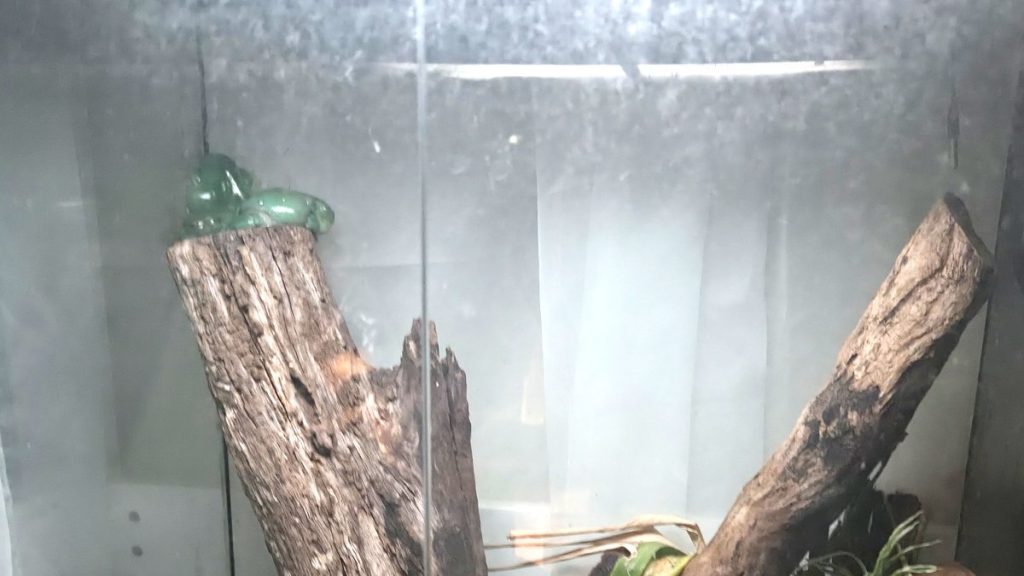
I keep green tree frogs, and I sell amphibian gear at the pet store I work in. They are one of the easiest Australian natives to keep well and one of the easiest to keep badly, and the gap between those two things is smaller than people think.
Here is the shortcut that makes everything else make sense. A green tree frog needs almost the exact opposite of what a bearded dragon needs. Height instead of floor space, humidity instead of dry heat, gentle warmth instead of a scorching basking spot, and a low trickle of UVB instead of a desert-strength tube. If you have read a reptile setup guide and applied it to a frog, you have probably got several things backwards.
This is what I run, what actually matters, and the mistakes I see most often across the counter.
Green tree frogs need a tall arboreal enclosure rather than a wide one, humidity around 50 to 70%, gentle warmth rather than a hot basking spot, a low output UVB tube such as an Arcadia ShadeDweller, and dechlorinated water. The single most important thing is the water. Frogs absorb through their skin, so untreated tap water can kill them. Use a dechlorinator every time. A full setup runs roughly $290 to $570 in Australia depending on your state, and new owners consistently underspend on the enclosure and overspend on the frog.
If you just want the short answer, I would start with Exo Terra High Glass Terrarium 24 x 18 x 36in, the tall arboreal shape frogs need, with a mesh top for ventilation.
Check price on AmazonAffiliate link. I may earn a small commission at no extra cost to you.
| Item | Why it matters | Typical AU cost |
|---|---|---|
| Tall glass terrarium | Height, not floor space | $150 to $400 |
| Low output UVB (ShadeDweller) | Low dose, not none | $139 to $189 |
| Water conditioner | Non-negotiable, chlorine kills frogs | $15 to $30 |
| Bioactive substrate layers | Clay ball drainage, mesh barrier, organic soil and leaf litter | $15 to $30 |
| Branches and cork | Vertical climbing surfaces | $30 to $80 |
| Digital thermometer and hygrometer | You cannot guess humidity | $25 to $45 |
| Shallow water dish | Big enough to sit in | $15 to $35 |
| Green tree frog | Captive bred, with paperwork | $40 to $120 |
They Need the Opposite of a Bearded Dragon
If you keep both, as I do, the contrast is the fastest way to remember it.
A bearded dragon wants a long floor, a 40 degree basking spot, bone dry air and a 12% UVB tube. A green tree frog wants a tall enclosure, room temperature with only gentle warmth, humid air, and a low output UVB tube if any.
Getting this backwards is the single biggest cause of problems I see. People buy the reptile starter kit because it says reptile on the box, and end up with a wide shallow tank, a powerful basking lamp drying the air out, and a frog that spends its life hiding and slowly dehydrating.
The frog is arboreal. It climbs. Vertical space is the usable space, and everything else follows from that.
The Water Is the Thing That Will Kill Them
If you take one thing from this whole guide, take this.
Frogs breathe and drink through their skin. Their skin is permeable in a way that reptile and mammal skin simply is not, which means anything in the water goes straight into the animal. Australian tap water is treated with chlorine or chloramine, and while that is completely fine for us, it is genuinely dangerous to an amphibian sitting in it.
Use a water conditioner every single time, for the water dish and for misting. It costs a few cents a use and it is not optional. Products like Seachem Prime handle both chlorine and chloramine, which matters because letting water stand overnight only deals with chlorine and does nothing about chloramine.
Two more water points:
- The dish needs to be big enough to sit in, and shallow enough that the frog can get out easily. They soak, that is how they hydrate. A tiny water bowl is a reptile idea, not a frog one
- Change it daily. Frogs defecate in their water constantly, and a fouled dish becomes a bacterial problem fast
The same permeability is why you should not handle them with bare dry hands. Soap residue, hand sanitiser, sunscreen and the natural salts on your skin all pass straight through. If you must move one, wet your hands with dechlorinated water first, or use clean wet gloves, and keep it brief. Green tree frogs are not a handling pet, and that is worth knowing before you buy one for a child.
Height, Branches and Making the Space Usable
A tall glass terrarium is the right shape. Mine is a glass arboreal tank with a mesh top, and the whole thing is built around vertical structure.
What actually makes the height usable is what you put in it. An empty tall box is not better than a short one. You want branches at multiple levels, ideally at different angles rather than all horizontal, plus broad leaves or cork bark to sit on and behind.
I use chunky natural branches and driftwood, with plants worked in around them. Plants matter more than decoration: they hold humidity, they give the frog cover so it feels secure enough to actually come out, and they break up sight lines. Air plants are easy because they do not need soil and cope with being misted.
Give them somewhere to be at the top of the enclosure. That is where a green tree frog wants to sit, and if the only options are at the bottom you have effectively built a short tank with wasted space above it.
Humidity Without Turning It Into a Swamp
Aim for somewhere around 50 to 70% relative humidity. Green tree frogs are more tolerant than a lot of exotic amphibians, which is part of why they are a good beginner species, but tolerant is not the same as indifferent.
Mist with dechlorinated water. How often depends entirely on where you live and what time of year it is, which is why you need a hygrometer rather than a schedule. Misting twice a day might be right in a dry Adelaide winter and far too much in a Brisbane summer.
The mistake at the other end is a permanently soaked enclosure. Constant wet with poor airflow grows mould and bacteria, and that is how you end up with skin infections. You want humid air with ventilation, not standing damp. A mesh top helps enormously here, which is one of the reasons glass arboreal terrariums with mesh lids suit frogs so well.
My frog tank is bioactive, and that is what sits underneath. From the bottom up: a drainage layer of clay balls, a barrier of window flyscreen so the soil does not wash down into it, then organic soil, with leaf litter on top. It is planted heavily, and the back is a Reptile One CopiRock Iron Stone background. A bioactive tank holds humidity well and the plants and soil do a lot of the cleaning for you.
UVB: Low, But Not None
There is a persistent belief that frogs do not need UVB at all because they are not baskers. It is worth being careful with that one.
Green tree frogs are crepuscular rather than strictly nocturnal, and the current thinking is that a low dose of UVB supports better calcium metabolism and generally more natural behaviour. It is not the life-or-death requirement it is for a bearded dragon, but the evidence has moved and it is cheap to provide.
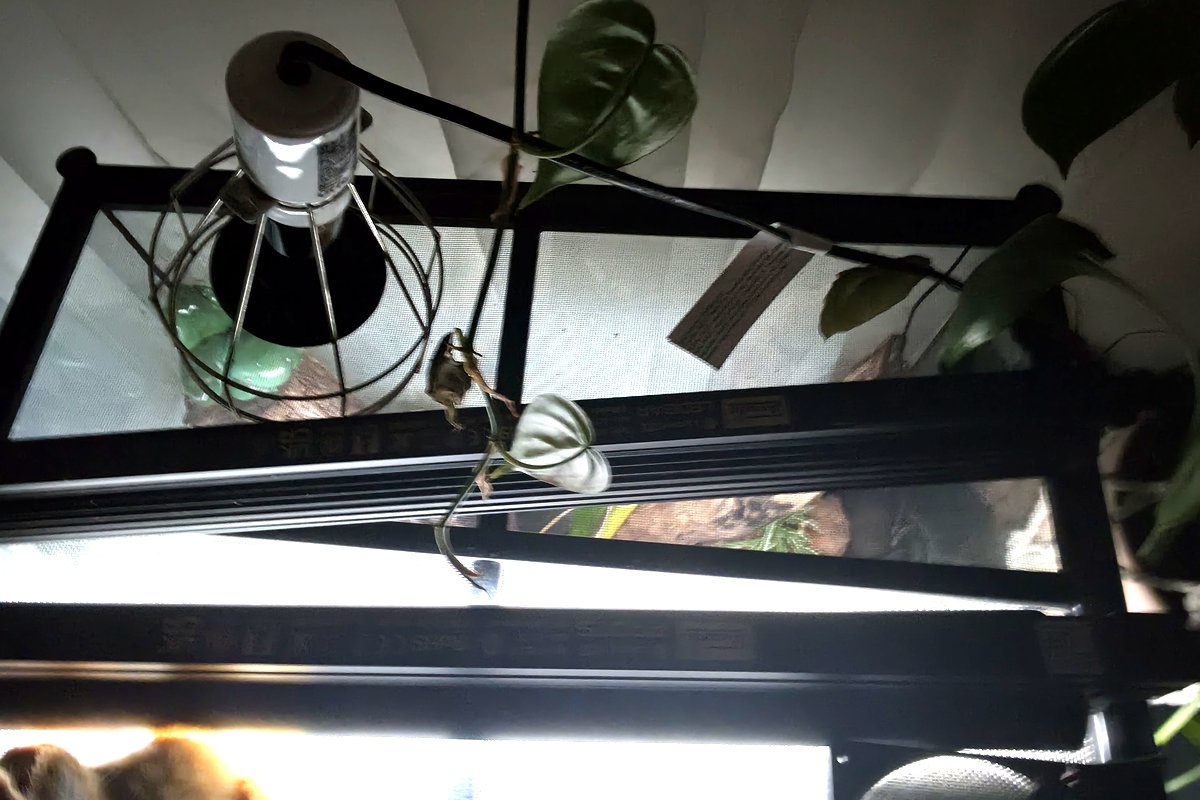
I run an Arcadia ShadeDweller over mine. That is the low output tube designed exactly for shade dwelling and arboreal species. Do not put a 12% desert tube over frogs. That is far too strong and you can genuinely harm them with it.
Give them shade as well as light. Dense planting and cover means the frog can choose its exposure, which is the whole point. A tube over a bare tank with nowhere to hide is worse than no tube at all.
Overfeeding Is the Most Common Mistake I See
Green tree frogs get fat. Very easily. And because a chubby frog looks healthy and contented to most people, it goes unnoticed for a long time.
They are ambush predators built for irregular meals, and in a tank with a reliable food supply and nowhere much to go, they will happily eat whatever you offer indefinitely. An overweight frog develops fat deposits, and it shortens their life.
Adults do not need feeding every day. Fewer, appropriately sized insects on a sensible schedule is better than a daily buffet, and it is worth resisting the urge to feed just because they will always take it. Dust with calcium as directed.
The other side of that is size the insects sensibly. Anything wider than the space between the frog’s eyes is too big.
Housing More Than One
Unlike bearded dragons, green tree frogs can be kept in groups, and mine live together. There is one hard rule.
Match them for size. Green tree frogs will eat anything that fits in their mouth, and that absolutely includes a smaller frog. A noticeably larger individual housed with a smaller one is not a social arrangement, it is a countdown. If you add to a group, add frogs of a similar size to the ones you have.
Scale the enclosure with the number. Three frogs in a tank sized for one is how you get stressed animals and fouled water.
One more thing that matters in Australia specifically: never add a wild-caught frog to a captive group, and never release a captive frog. Chytrid fungus is devastating to amphibian populations here, and moving frogs between the wild and captivity is how it spreads. Buy captive bred, keep your paperwork, and keep them separate from anything wild.
What I Run
Short version of my own setup:
- Enclosure: tall glass arboreal terrarium with a mesh top
- Lighting: Arcadia ShadeDweller low output T5
- Structure: heavy natural branches at multiple heights, plus plants for cover and humidity
- Substrate: bioactive, with clay balls for drainage, a window flyscreen barrier, organic soil and leaf litter on top
- Background: Reptile One CopiRock Iron Stone background
- Water: always conditioned, dish changed daily
It is not an expensive setup and it does not need to be. The thing I would say to anyone starting, and I have said it before on my cost guide, is that new owners tend to underspend on the enclosure and overspend on the frog. The environment is what keeps them healthy, and that is where I would put the money.
Green Tree Frog Setup Gear
This is the kit I would actually put together for a green tree frog. If your budget is tight, the water conditioner and the enclosure size are the two things not to compromise on. (these are affiliate links)
This guide contains affiliate links. If you buy through them we may earn a small commission at no extra cost to you. I only point to gear I would actually use or sell.
Want to see everything I run? Here is all the gear I actually use across my reptiles, tanks, rabbits and caique.
Frequently Asked Questions
Can green tree frogs drink tap water?
No, not untreated. Frogs absorb water through their skin, so the chlorine or chloramine in Australian tap water passes straight into the animal and can kill it. Use a water conditioner such as Seachem Prime every time, for both the water dish and for misting. Letting water stand overnight is not enough, because that only deals with chlorine and does nothing about chloramine, which many Australian supplies use.
What size tank does a green tree frog need?
A tall arboreal enclosure rather than a wide one, because green tree frogs climb and vertical space is the usable space. Something in the range of a 24 by 18 by 36 inch glass terrarium suits a small group well. What matters as much as the dimensions is what you put in it: branches at multiple heights and angles, plus plants for cover, so the frog can actually use the height. An empty tall box is no better than a short one.
Do green tree frogs need UVB?
A low dose, yes. The old advice that frogs need no UVB at all has moved, and current thinking is that low output UVB supports better calcium metabolism and more natural behaviour. Use a low output tube such as an Arcadia ShadeDweller. Do not use a 12% desert tube, which is far too strong and can harm them. Provide dense planting and cover so the frog can choose its own exposure.
Can you hold a green tree frog?
As little as possible. Their skin is permeable, so soap residue, hand sanitiser, sunscreen and even natural skin salts pass straight into them. If you have to move one, wet your hands with dechlorinated water first or use clean wet gloves, and keep it brief. They are a watching pet rather than a handling pet, which is worth knowing before buying one for a child.
Can green tree frogs live together?
Yes, unlike bearded dragons they can be kept in groups, but they must be matched for size. Green tree frogs will eat anything that fits in their mouth, including a smaller frog, so never house a noticeably larger individual with a smaller one. Scale the enclosure to the number of frogs. Never add a wild-caught frog to a captive group or release a captive one, because chytrid fungus spreads that way and is devastating to Australian amphibians.