
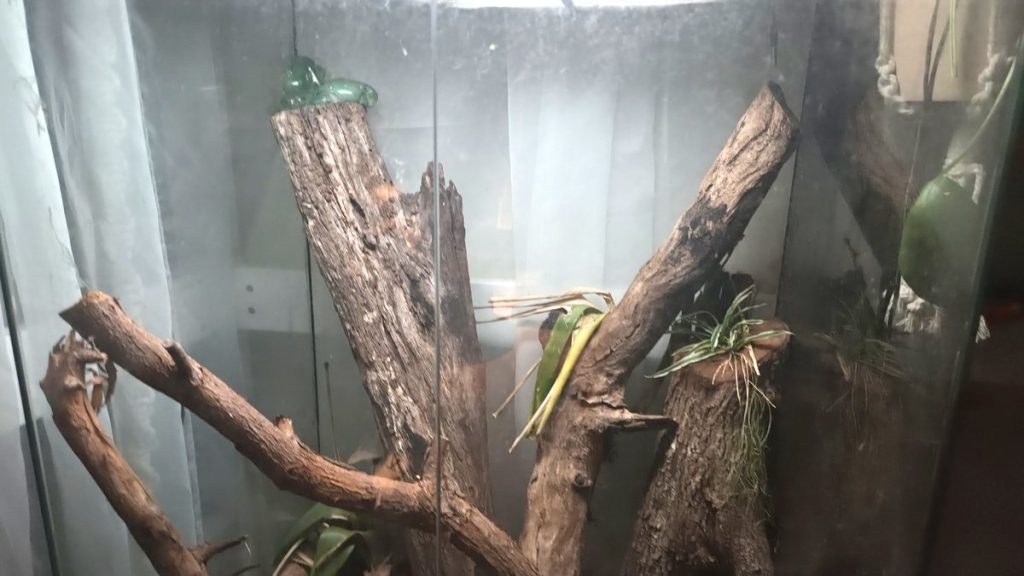
A thermostat is the least exciting thing you will buy for a reptile and the most important. I keep bearded dragons and green tree frogs, and I sell reptile gear at the pet store I work in, and the single most common thing I see is someone with a good enclosure, a good UVB setup and a heat source plugged straight into the wall.
In a hurry? Skip straight to our live Australian reptile electricity cost calculator → Drag the sliders for a price that fits your pet.
Do not do that. An unregulated heat mat or ceramic heat emitter will keep climbing until something stops it, and the thing that usually stops it is your animal getting burnt. Choosing the best reptile thermostat in Australia is really about two decisions: which type suits your heat source, and where you put the probe.
A reptile thermostat costs about $70 to $200 in Australia. Basic on and off models like the Reptile One Ezistat are $70 to $80 and are fine for heat mats. Dimming thermostats, which you need for any heat source that gives off light, are $119 to $199. Pulse proportional units for ceramic heat emitters sit around $149. Never run a heat source without one. The type has to match the heat source, and getting that pairing wrong is the mistake I see most often.
| Thermostat type | Typical AU price | Use it for |
|---|---|---|
| On and off (basic) | $70 to $80 | Heat mats and heat cords, simple setups |
| Pulse proportional | $140 to $160 | Ceramic heat emitters and non-light heat sources |
| Dimming | $119 to $199 | Any bulb that gives off light, stops strobing |
| Dimming and pulse combined | $120 to $220 | One unit that does both, best all rounder |
| Day and night with timer | $150 to $350 | Species that need a night time temperature drop |
| Wifi connected | $479 to $799 | Serious keepers and breeding rooms only |
Sources (August 2026): Your Online Pet Store, reptile thermostats, Amazing Amazon, thermostats and thermometers
Why You Cannot Skip This
Heat mats, heat cords and ceramic emitters have no idea how hot they are. They convert electricity into heat until you cut the power. A heat mat sitting under glass with nothing regulating it can climb well past anything safe.
Reptiles make this worse, because a lot of species do not reliably move away from heat on their belly the way a mammal would. Thermal burns on the underside are one of the more common serious injuries in captive reptiles, and they are slow and miserable to treat. There is also the plain fire risk of an unregulated heating element running in a timber cabinet.
The thermostat is not the accessory. It is the safety device that makes the heat source usable. If your budget only stretches to one more purchase, it is this, ahead of a nicer enclosure or extra decor.
The Three Types, and Matching Them to Your Heat Source
This is the part that trips people up, so it is worth being precise. There are three ways a thermostat can control a heat source, and they are not interchangeable.
On and off. The simplest. It cuts power when the probe hits your set temperature and restores it when it drops. Cheap and reliable, but the temperature swings either side of the target, and it kills bulbs quickly because they are being switched on and off constantly. Good for heat mats and heat cords, where a bit of swing does not matter.
Pulse proportional. Instead of cutting power completely, it sends rapid pulses of power, easing off as the temperature approaches the target. Much tighter control, usually within about half a degree. Use it for ceramic heat emitters and other heat sources that do not produce light. Do not use it on a light-emitting bulb, because the pulsing makes it flicker visibly, which is unpleasant for the animal and destroys the bulb.
Dimming. Smoothly reduces the power like a dimmer switch, so a bulb gets quietly brighter and dimmer rather than flicking. This is what you need for any heat source that gives off light, including basking bulbs and halogens. It also extends bulb life considerably.
The practical shortcut: if your heat source glows, you want dimming. If it does not glow, pulse proportional or on and off will do. If you want one unit that handles whatever you plug into it later, buy a combined dimming and pulse model, which is what I generally suggest.
Probe Placement Is Where Most Setups Go Wrong
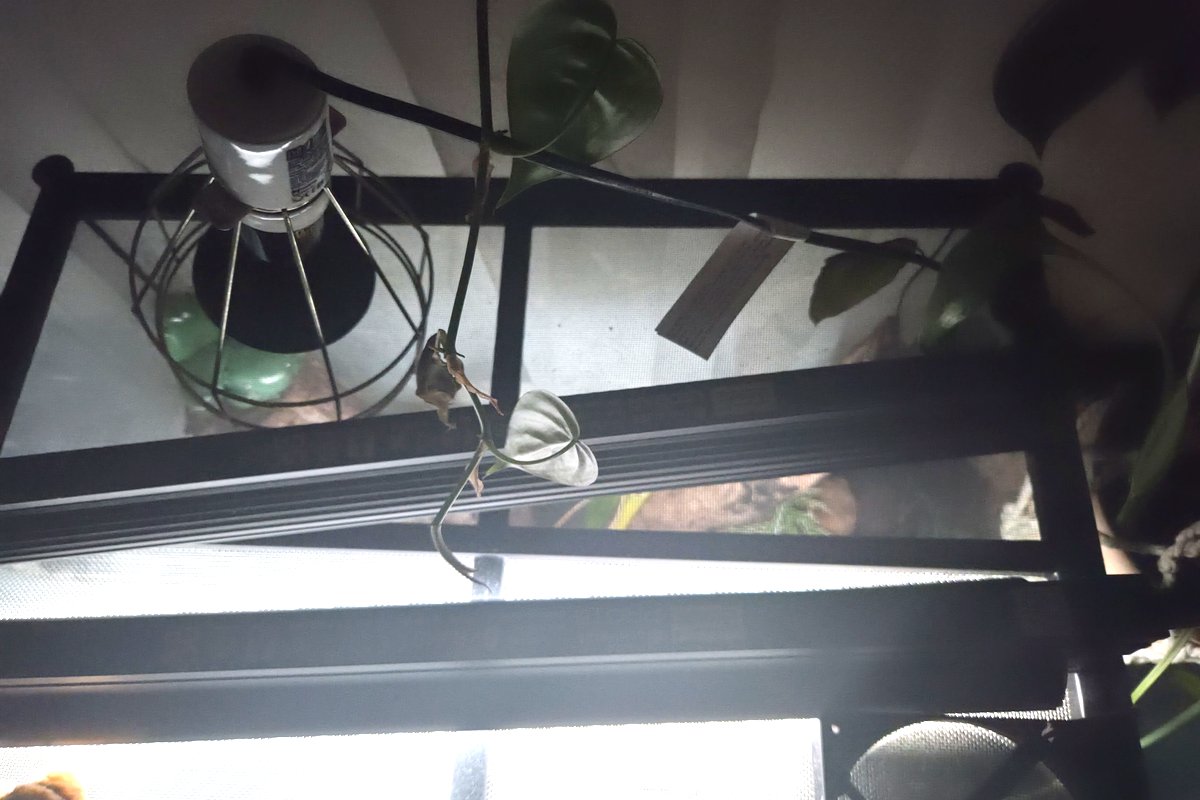
You can buy the best thermostat on the shelf and still cook your animal if the probe is in the wrong place. The thermostat does not know anything about your enclosure. It only knows what the probe is touching.
A few rules that will save you trouble:
- Put the probe where the animal actually sits, not floating in mid air and not stuck to the roof. If you are controlling a basking spot, the probe goes at the basking surface
- For a heat mat, the probe goes between the mat and the enclosure floor, directly on the mat surface. If you tape it to the glass on the inside you are measuring air, not the surface your animal is lying on
- Secure it. A probe that gets dragged into a cool corner by a curious lizard will read low, and the thermostat will respond by pouring more heat in
- Keep it out of direct line from the basking lamp if you are running a separate air sensor, or it will read the lamp rather than the enclosure
Once it is set, verify it independently. Do not just trust the number on the thermostat display. A separate digital thermometer with a probe, or an infrared temperature gun pointed at the basking surface, will tell you what is really happening. I check every setup this way before I am happy with it.
Night Drops, Timers and When You Actually Need Them
Plenty of Australian species do better with a temperature drop overnight, because that is what happens in the wild. Central bearded dragons come from country that gets genuinely cold at night.
A day and night thermostat lets you set two targets and a changeover time, so you are not doing it by hand. Whether you need one depends on where you live. If your house naturally drops a few degrees overnight and your enclosure follows it, you may not need to engineer anything. If you are in a heated house in a Melbourne or Hobart winter and the room never drops, a night setting is genuinely useful.
What I would not do is turn heating off completely overnight without checking how far the enclosure actually falls. Look up the night minimum for your species first. A drop is healthy, a cold enclosure that never recovers is not.
Wattage, Safety Margins and Not Overloading It
Every thermostat has a maximum wattage, usually printed on the unit, commonly 300W, 400W or 600W. Add up everything you are plugging into it and stay comfortably under that ceiling.
For most single enclosures this is not close. A heat mat might be 20W and a ceramic emitter 100W. It becomes relevant if you start running several enclosures from one unit, which I would generally avoid anyway, because they will all be controlled from one probe in one enclosure.
One more thing worth knowing: thermostats do fail, usually after years of service, and they can fail in the on position. If you keep something valuable or fragile, a second independent thermometer with a high temperature alarm is cheap insurance.
What I Would Buy
For a first reptile on a heat mat, a basic on and off unit like the Reptile One Ezistat at $70 to $80 does the job properly and there is no need to spend more.
For anything with a basking lamp, go straight to a dimming unit. The combined dimming and pulse proportional models are the ones I point most people to, because they cover whichever heat source you end up using and you are not buying twice when your setup changes.
Spend the difference on a separate thermometer to verify it, rather than on wifi. Remote monitoring is genuinely nice for a breeding room with a dozen enclosures. For one bearded dragon in the lounge room it is a solution to a problem you do not have.
Recommended Reptile Thermostats and Thermometers
These cover the three control types plus the thermometers I use to check what the thermostat is really doing. Match the type to your heat source first, then worry about brand. (these are affiliate links)
This guide contains affiliate links. If you buy through them we may earn a small commission at no extra cost to you. I only point to gear I would actually use or sell.
Frequently Asked Questions
How much does a reptile thermostat cost in Australia?
About $70 to $200 for most setups. Basic on and off thermostats such as the Reptile One Ezistat are $70 to $80, pulse proportional units are around $149, and dimming thermostats run $119 to $199. Combined dimming and pulse models sit around $120 to $220, day and night units with a timer are $150 to $350, and wifi connected thermostats for breeding rooms are $479 to $799.
Do I really need a thermostat for a reptile?
Yes. Heat mats, heat cords and ceramic heat emitters have no temperature limit built in, they simply keep heating until the power is cut. Reptiles do not always move off a hot surface the way a mammal would, and thermal burns to the belly are a common and slow-healing injury. There is also a real fire risk from an unregulated element running inside a timber cabinet. The thermostat is a safety device, not an accessory.
What is the difference between a dimming and a pulse proportional thermostat?
A dimming thermostat smoothly reduces power like a dimmer switch, so it suits any heat source that gives off light, such as basking bulbs and halogens, and it extends bulb life. A pulse proportional thermostat sends rapid pulses of power instead, giving very tight control for heat sources that do not produce light, like ceramic heat emitters. Do not use a pulse thermostat on a light emitting bulb, because it will flicker visibly and the bulb will fail early.
Where should I put the thermostat probe?
Where the animal actually sits. For a basking setup that means at the basking surface, not floating in mid air. For a heat mat, place the probe between the mat and the enclosure floor, directly against the mat surface, because taping it to the inside glass measures air rather than the surface your reptile lies on. Secure it so it cannot be dragged into a cool corner, which would make the thermostat add more heat.
Can one thermostat run more than one enclosure?
Technically yes if you stay under its maximum wattage, but I would avoid it. Every enclosure on that thermostat is controlled by a single probe sitting in one of them, so the others are being heated blind. Add up the wattage of everything you plug in and stay comfortably below the unit’s rating, which is commonly 300W, 400W or 600W.