
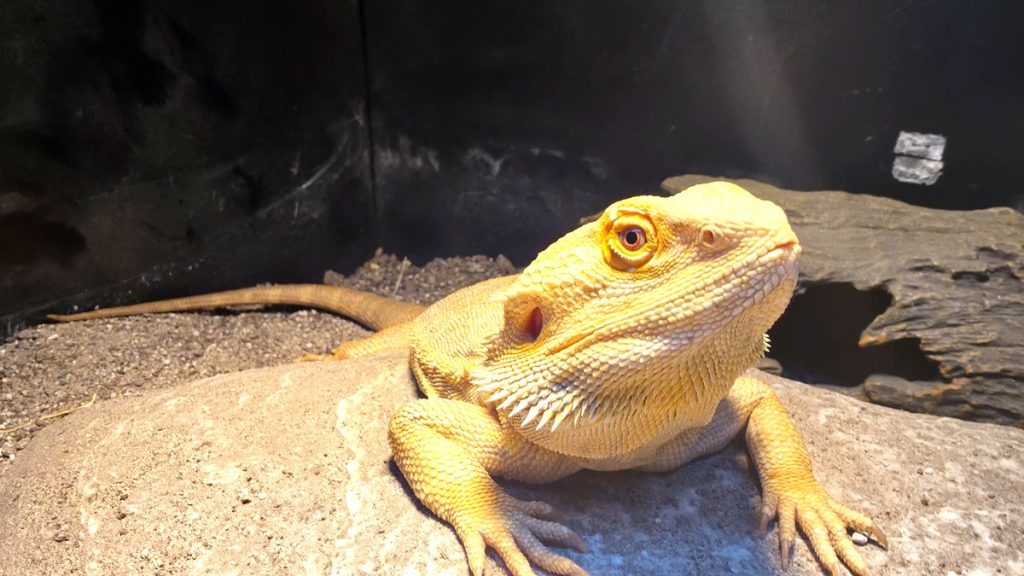
I keep a bearded dragon and I sell reptile gear at the pet store I work in, which means I see both ends of this. I see what people put in the basket on day one, and I see what they come back for a month later when half of it turns out to be wrong.
In a hurry? Skip straight to our live Australian reptile electricity cost calculator → Drag the sliders for a price that fits your pet.
So rather than another generic shopping list, this is my actual setup: the enclosure, the lighting, the heating, my substrate mix, what the whole thing cost me, and the bits I would do differently. Five things are genuinely non-negotiable, and a surprising amount of what gets sold for bearded dragons is money you do not need to spend.
My setup is a Reptile One S2M 1266 melamine vivarium at 120 x 60 x 60cm, an Arcadia 12% 24W T5 for UVB, an Arcadia Solar Basking Floodlight running 150W in winter and 50 to 100W in summer, a 100W ceramic heat emitter for winter nights, and a home-mixed substrate of play sand, organic worm castings and plain bentonite cat litter. All up it cost me about $900. The five non-negotiables for any dragon are a four foot enclosure, a linear T5 UVB tube, a basking heat source, a thermostat, and calcium with D3.
If you just want the short answer, I would start with Arcadia ProT5 12% Desert UVB Kit 24W, the Arcadia LumenIZE 12% 24W I run over my dragons, rated to hold its UVB for 12 months.
Check price on AmazonAffiliate link. I may earn a small commission at no extra cost to you.
| Item | Non-negotiable? | Typical AU cost |
|---|---|---|
| Enclosure, 4ft minimum | Yes | $300 to $600 |
| Linear T5 UVB kit, 12% | Yes | $139 to $199 |
| Basking heat source | Yes | $25 to $60 |
| Ceramic heat emitter for winter nights | Climate dependent | $35 to $70 |
| Thermostat | Yes | $70 to $160 |
| Calcium with D3 | Yes | $15 to $25 |
| Digital thermometer and hygrometer | Strongly recommended | $25 to $45 |
| Substrate | Yes, but cheap if you mix it | $20 to $50 |
| Hide, basking rock, decor | Recommended | $40 to $120 |
| Replacement UVB tube | Every 12 months | $49.95 to $69.95 |
What I Actually Run
The full list, so you can see the shape of it before the detail:
- Enclosure: Reptile One S2M 1266 melamine vivarium, 120 x 60 x 60cm
- UVB: Arcadia 12% 24W T5
- Basking: Arcadia Solar Basking Floodlight, 150W in winter, 50 to 100W in summer
- Night heat: 100W ceramic heat emitter, winter only
- Substrate: play sand, organic worm castings and 100% bentonite cat litter, mixed and dampened
- Occupancy: one dragon, always housed alone
Total cost with everything: about $900. I will come back to that number, because it is higher than the figure I usually give people and I think that is worth being honest about.
The Five Things That Are Not Optional
If you buy nothing else, buy these. A dragon can live a good life without a single decorative item. It cannot live a healthy one without any of the following.
- An enclosure of at least four feet. Adults are big, active and terrestrial. Four feet long is the practical minimum and bigger is genuinely better
- A linear T5 UVB tube. Not a coil, not a compact. Twelve percent for a desert species
- A basking heat source creating a proper hot end, so the dragon chooses its temperature by moving
- A thermostat controlling that heat. The heat source without the thermostat is a burn waiting to happen
- Calcium powder with D3, dusted on insects. Metabolic bone disease is the most common preventable illness in captive dragons
Everything after this point is refinement.
Living With a Reptile One S2M 1266
Mine is the S2M 1266, which is 120 x 60 x 60cm of melamine with sliding glass doors and a mesh top. Four feet, so it meets the minimum. Here is the honest version after living with it.
What is good: it holds heat brilliantly. That is the real advantage of melamine over an all-glass tank, and in a Australian winter it means your heating works less hard and your temperatures stay stable. If you are choosing between melamine and glass for a dragon, this is the argument for melamine.
What is not:
- The glass doors are hard to keep clean and hard to open. There are no handles, so you are pushing on the glass itself, which means fingerprints constantly and a genuine struggle when they stick. If I were doing it again I would stick a handle on the door. It is a five dollar fix for a daily annoyance and I do not know why they do not come with one
- Substrate escapes. It works its way out along the door track and ends up on the floor. My fix was a rubber door guard stuck along the bottom, and it has worked. If you buy this enclosure, do that on day one rather than sweeping up for six months first
Neither is a dealbreaker. Both are the kind of thing you only learn by owning it, and neither appears in a single product description.
UVB: Where Most of the Money Gets Wasted
You want a linear T5 tube at 12% for a bearded dragon. Not a compact bulb, not a coil. Coils put out a small uneven circle of UVB directly underneath and nothing useful across the rest of the enclosure, which is not adequate for an animal that basks properly.
I run an Arcadia 12% 24W T5. Arcadia tubes are the best available here and a genuine one holds its UVB for a full 12 months, which is what saves you money because cheaper tubes fade in about six.
The trap: the tube keeps making visible light long after the UVB has gone. You cannot tell by looking. Replace it on a date, not on whether it still lights up. Write the date on the tube in marker when you fit it.
I have written up my honest experience of the Arcadia range separately, including why I would buy the standard kit rather than the app-controlled LumenIZE version. It is linked at the bottom.
Why I Change Basking Wattage Between Summer and Winter
This is the bit almost nobody mentions, and it makes a real difference.
I run an Arcadia Solar Basking Floodlight at 150W through winter, and drop to 50 to 100W over summer. Same fixture, different globe. The reason is simple: the job of the basking lamp is to hit a target surface temperature, and the room it is working against changes by fifteen degrees or more between July and January.
Leave a 150W globe in over an Australian summer and one of two things happens. Either your thermostat spends the day cutting it in and out because it overshoots constantly, or if you are running it unregulated, the basking spot gets dangerously hot. Neither is good, and the second is how animals get hurt.
For winter nights I add a 100W ceramic heat emitter. Ceramics give off heat with no visible light, which matters because dragons need proper darkness to sleep. If your house drops below the mid teens overnight in winter, that is worth having. In a warm climate or a heated house you may not need night heat at all, so check what your enclosure actually does overnight before buying one.
One important pairing note: a ceramic emitter should be run on a pulse proportional or on and off thermostat, not a dimming one, and a light-emitting basking globe wants a dimming thermostat so it does not strobe.
My Substrate Mix
Substrate starts arguments, so here is exactly what I use and why.
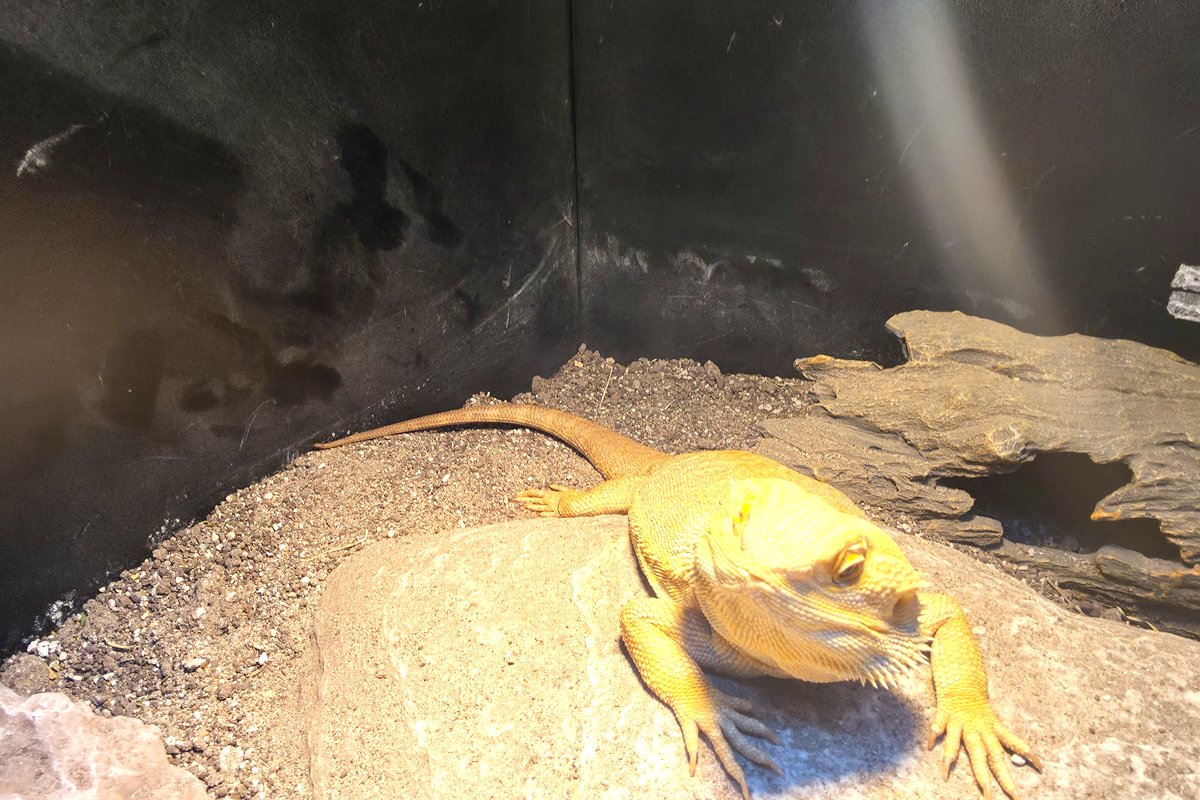
I mix play sand, organic worm castings from Bunnings, and 100% bentonite cat litter. The bentonite is the clever part. When you spray the mix with water it sets firm, which means my dragon can dig into it and the burrow holds its shape instead of collapsing.
That matters more than it sounds. Digging is a real behaviour, not enrichment theatre, and loose dry sand does not let them do it because the tunnel falls in immediately. A damp clay-sand mix behaves like the ground they evolved on.
Two things to be careful of. Make sure the cat litter is 100% bentonite with nothing else in it, no fragrance, no clumping additives, no crystals. And keep the surface dry even though the mix underneath is packed, because a dragon should not be living on wet ground.
The one to avoid entirely is calcium sand, which is marketed for reptiles and is exactly the thing dragons will eat.
For a young dragon, honestly, keep it simple with tile or reptile carpet and move to a dig-friendly mix when they are grown.
What You Can Skip
Here is the part you will not get from a shopping list, because shops make money on this. I sell some of it. I still would not buy it.
- Heat rocks. Skip entirely. They heat unevenly, the animal sits directly on the element, and they are a well known cause of serious burns
- Coloured night bulbs. Red and blue night lamps are sold as invisible to reptiles. They are not. Use a ceramic emitter if you need night heat
- Vitamin drops for the water bowl. Dragons get almost nothing from these and it fouls the water. Dust the insects instead
- Commercial pellets as a staple. Fine occasionally, but live insects and fresh greens are what they should be eating
- Hammocks and elaborate climbing furniture. They will use a basking branch, but they are ground animals. Spend it on floor space
- Calcium sand. Covered above, but worth repeating
Cutting those saves well over a hundred dollars, which covers the gap between a cheap UVB kit and a good one.
One Dragon Per Enclosure
Mine is housed alone and always has been. This is not a preference, and it catches people out because shops do sometimes sell pairs.
Bearded dragons are solitary. They do not get lonely and they will not thank you for a friend. Two together means competition for the basking spot, and the subordinate animal loses. It gets pushed off the heat, gets less UVB, eats less and quietly does worse. Injuries including lost toes and tail tips are common.
It is often invisible for months, because dragons do not make a fuss. You just end up with one thriving animal and one that is not.
If you want two dragons, budget for two complete setups. That is the honest answer, and it is a large part of why the total cost surprises people.
What Mine Cost, and Why It Is More Than I Usually Quote
My setup came to about $900 with everything.
That is more than the roughly $500 I normally tell people to budget, and I want to be straight about the gap rather than quietly quote the low number.
Five hundred dollars is a genuine, honest figure for a setup that will keep a dragon healthy without you needing to replace things. It is the number I stand behind as a minimum worth spending.
Nine hundred is what it costs when you buy a good melamine enclosure rather than the cheapest tank, run Arcadia lighting rather than budget equivalents, keep two basking globes for seasonal swapping, add a ceramic emitter for winter, and buy a proper thermostat. None of it is extravagant. It is just the difference between adequate and comfortable.
If your budget is $500, spend it on the enclosure size, the UVB and the thermostat, and buy decor slowly. If you have $900, this is roughly where it goes.
What I Would Change
Two things.
The door handle, immediately, as covered above. And the door guard would go on from day one rather than after months of sweeping up substrate.
The bigger one: I would think seriously about going bioactive. A bioactive setup uses live plants and a clean-up crew of springtails and isopods to break down waste, so the substrate becomes a living system rather than something you scoop.
The obstacle in my case is the enclosure. Bioactive is hard in a melamine tank because water escapes so fast. Melamine is not designed to hold moisture, so keeping a drainage layer and a living substrate at workable humidity is a fight, and you risk the board swelling at the seams. Glass or PVC handles it far better.
So it is a trade-off, and worth knowing before you choose your enclosure. Melamine gives you excellent heat retention, which is exactly what a dragon wants. It also more or less closes the door on going bioactive later without swapping the enclosure. If bioactive appeals to you, factor that in at the start rather than two years in like me.
My Kit List
This is the gear I actually run, or its closest equivalent where I bought locally. The enclosure itself, the Reptile One S2M 1266, is worth buying from an Australian reptile retailer rather than online, since freight on a 120cm melamine box is significant. (these are affiliate links)
This guide contains affiliate links. If you buy through them we may earn a small commission at no extra cost to you. I only point to gear I would actually use or sell.
Want to see everything I run? Here is all the gear I actually use across my reptiles, tanks, rabbits and caique.
Frequently Asked Questions
What size enclosure does a bearded dragon need?
At least four feet long for an adult, and bigger is better. Mine is a Reptile One S2M 1266 at 120 x 60 x 60cm, which is the practical minimum. Bearded dragons are ground dwelling and active so floor space matters far more than height, and a tall narrow vivarium wastes most of its volume. Buy the adult enclosure at the start rather than buying small and upgrading, because that means paying twice.
Is a melamine or glass enclosure better for a bearded dragon?
Melamine holds heat far better, which is its main advantage and a real one in an Australian winter, because your heating works less hard and temperatures stay stable. The trade-offs are that sliding glass doors can be stiff and mark easily, substrate escapes along the door track unless you fit a rubber door guard, and melamine makes a bioactive setup difficult because water escapes fast and the board can swell. Glass or PVC is better if you want to go bioactive later.
Should I change basking bulb wattage between summer and winter?
Yes, and most people do not. I run 150W through winter and drop to 50 to 100W over summer in the same fixture. The basking lamp needs to reach a target surface temperature, and the ambient room it is working against can differ by fifteen degrees or more between seasons. Leaving a high wattage globe in over summer means either constant thermostat cycling or, if unregulated, a dangerously hot basking spot.
What substrate is best for a bearded dragon?
I use a mix of play sand, organic worm castings and 100% bentonite cat litter. Sprayed with water the mix sets firm, so my dragon can dig and the burrow holds instead of collapsing, which loose dry sand will not allow. Make sure any cat litter is pure bentonite with no fragrance, clumping additives or crystals. Avoid calcium sand entirely, since dragons will eat it. For a young dragon, tile or reptile carpet is simpler and carries no impaction risk.
How much does a bearded dragon setup cost in Australia?
Budget around $500 as a minimum for a setup that will not need replacing. Mine came to about $900 with everything, which is what it costs once you buy a good melamine enclosure rather than the cheapest tank, run Arcadia lighting, keep two basking globes for seasonal swapping, add a ceramic emitter for winter nights and buy a proper thermostat. Ongoing costs are roughly $40 to $80 a month plus a replacement UVB tube each year at $50 to $70.