
I keep green tree frogs myself, so I’ve been through this from both sides: the fun of setting one up, and the slightly sobering moment of adding up what it all actually cost. The frog itself turned out to be the cheap part. It’s the licence, the enclosure, the ongoing food and the odd vet bill that add up. They look like an easy, low-cost first pet, and in a lot of ways they are, but the real number is more than the price on the tank at the pet shop. Here’s what one honestly costs to set up and look after in 2026, based on current Australian prices and my own experience keeping them.
A green tree frog usually costs $40 to $120 for the frog itself, $150 to $300 for a decent enclosure, and $30 to $60 up front for live plants and substrate. Add a $20 to $55 yearly licence fee in most states. All up, your first year usually lands somewhere between $350 and $600, depending on your state and how well you set things up.
Reptiles and amphibians are one of the fastest-growing pet groups in the country, according to Animal Medicines Australia’s 2025 Pets in Australia report, and green tree frogs are one of the most common starting points for first-time keepers. That steady demand has kept frog prices fairly stable, though good enclosures have crept up with general retail inflation over the last couple of years.
What you’ll pay across Australia in 2026
Both the frog and the setup vary a fair bit by state, mostly because licence fees and breeder supply differ. Queensland and NSW have the most active breeder networks, which keeps frog prices competitive. WA and Tasmania have less local supply, so prices sit a little higher.
Prices updated July 2026 from current Australian sources.
| State | Frog Purchase Price | Typical Range (Full Setup) |
|---|---|---|
| NSW | $50 to $90 | $320 to $520 |
| VIC | $55 to $100 | $330 to $530 |
| QLD | $40 to $80 | $290 to $490 |
| WA | $65 to $120 | $360 to $570 |
| SA | $55 to $100 | $330 to $540 |
| TAS | $65 to $110 | $350 to $560 |
| ACT | $55 to $95 | $330 to $520 |
| NT | $45 to $85 | $290 to $480 |
Sources (July 2026): Animal Medicines Australia (Pets in Australia 2025), RSPCA Australia, state wildlife licensing authorities (NSW, Victoria, Queensland, WA, SA, Tasmania, NT), and Australian reptile and amphibian retailer pricing., Pet Shop Direct
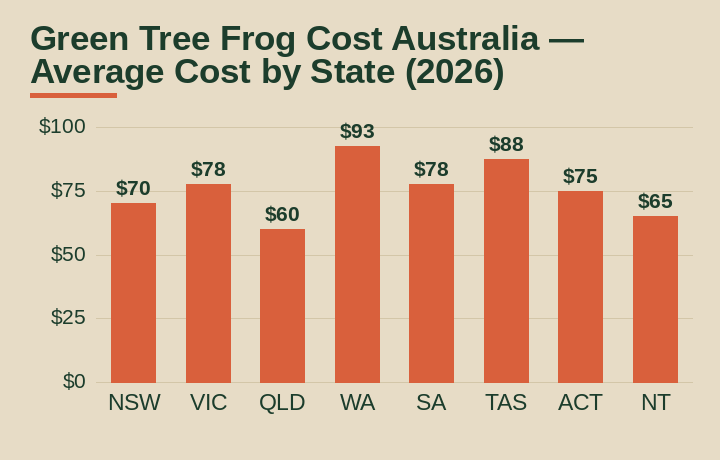
Those full-setup figures cover the frog, enclosure, lighting, substrate, live plants, a thermometer and hygrometer, and your first year’s licence. They don’t include a vet visit unless something goes wrong early on. Queensland and the NT tend to be cheapest, because supply is higher and licence fees are lower. WA is usually the priciest, thanks to restricted interstate movement of animals and a smaller pool of local breeders.
Where the money actually goes
The frog itself: from a licensed breeder in QLD or NSW, expect to pay $40 to $80 for a juvenile and $60 to $120 for a well-established adult. Pet shop prices run $70 to $130 once you add the retail markup. The frog really is the cheapest part of the whole thing. One thing worth doing: the RSPCA recommends always buying from a licensed keeper or breeder with paperwork, not through unverified classifieds or social media posts where the legality is unclear.
Licence fees: in most states you legally need a wildlife keeper’s licence before you can buy or keep a green tree frog. NSW charges around $55 a year for a basic Category 1 licence. Victoria’s equivalent sits around $22 to $45 depending on the category. QLD is roughly $43 a year. WA, SA and the ACT have their own structures in a similar ballpark, and the NT is at the cheaper end at around $20 to $30 a year. These aren’t optional if you want to keep things legal, and the penalties for unlicensed keeping can run into thousands of dollars.
The enclosure: this is where the real money goes. A good arboreal terrarium (tall, front-opening, glass) in the 45x45x60cm range costs $180 to $280 new from pet retailers. Exo Terra and Reptiles by Mack are two brands you’ll commonly see in Australian stores. You’ll also need a low-output UVB light fitting, which adds $35 to $70, and a basic ceramic heat mat or low-watt globe for cooler nights adds another $20 to $40 if you’re in the southern states.
Substrate and décor: a bag of coconut fibre substrate runs $12 to $20. Live pothos or other tropical plants add $10 to $25. Cork bark tubes and hides from a pet shop cost $15 to $40. Budget $50 to $80 all up for a setup that both looks good and works. You can halve that with cuttings and a few bits from Bunnings.
Ongoing food: green tree frogs eat live insects. A tub of crickets from a pet shop runs $6 to $10 and covers roughly five to seven days for one adult frog. Woodies (Blaptica dubia cockroaches) are a bit cheaper per insect and have a better nutritional profile, at $8 to $12 a tub or much less in bulk from a feeder supplier. Monthly food usually lands around $20 to $35.
Vet costs: not every visit is an emergency, but frogs can develop chytrid fungus, nutritional problems or skin conditions that need a proper diagnosis. An exotic vet consultation runs $85 to $150 in most capital cities. Finding one who genuinely knows amphibians is harder than finding a dog vet, so your state’s herpetological society is a good place to start for referrals. For a sense of how vet costs fit into the bigger picture, have a look at our guides to vet consultation costs in Adelaide and Hobart.
Basic vs premium setups: what you actually get for your money
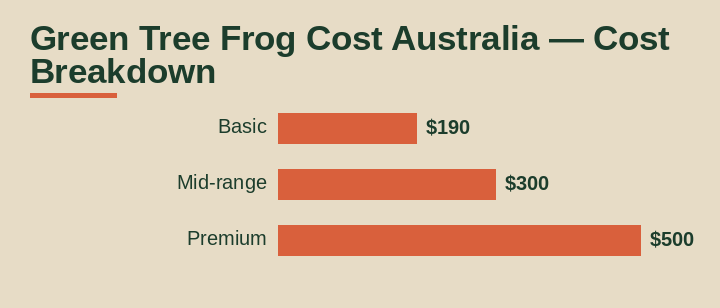
There’s a real difference between a $200 setup and a $450 one. Here’s how the two compare, so you can decide where your budget is best spent.
| Setup Tier | What’s Included | Approximate Cost |
|---|---|---|
| Basic | Second-hand glass terrarium, no UVB, basic substrate, plastic hides, tap water bowl | $150 to $230 |
| Mid-range | New arboreal terrarium, low-output UVB globe, coconut fibre substrate, 1 to 2 live plants, cork bark | $250 to $350 |
| Premium | Bioactive setup, UVB T5 fixture, drainage layer, live plant canopy, automatic misting system, digital controller | $400 to $600+ |
I wouldn’t recommend the basic setup for long-term keeping. Green tree frogs live 15 to 20 years in captivity, so cutting corners on their environment causes welfare problems down the track. The mid-range setup is genuinely enough for most keepers. The premium bioactive setup looks fantastic and needs less frequent cleaning, but you don’t need it to start out.
The thing I’d pass on from keeping my own is that new owners tend to underspend on the enclosure and overspend on the frog. It’s the wrong way round. The frog is the cheap part. The environment is what keeps them healthy, and it’s where I’d put the money.
Questions to ask before you buy
Can you show me your breeder licence number?
Any legitimate seller of green tree frogs in Australia must hold a current wildlife keeper’s or commercial breeder’s licence. Ask for the number and verify it with your state’s wildlife authority if you’re unsure. If the seller hesitates, walk away.
How old is the frog and has it been eating consistently?
A frog that hasn’t fed well in captivity may have an underlying health issue. Ask how long the seller has had it and what it’s been eating. A juvenile that’s been established on crickets for at least four weeks is a safer buy than one that was wild-caught recently (which is also illegal, but does happen).
What’s the return or support policy if the frog has health issues?
Reputable breeders will give you at least a week to have the animal checked by a vet and will talk through any concerns. Pet shops vary. A blanket “all sales final” policy on a live animal is a red flag, especially for a species that can carry chytrid fungus without any visible symptoms.
Does the enclosure size you’re recommending scale to adult size?
Some pet shops will sell you a starter enclosure that’s too small for adult frogs. A juvenile might look fine in a 30cm cube, but adults need height. Push for honest advice on the minimum long-term dimensions before you buy the tank and the frog together.
What’s your state’s specific licence category for this species?
Licence categories vary by state. In NSW, green tree frogs fall under Schedule 1 of the Biodiversity Conservation Act. In QLD they’re Category 1. Knowing your specific category matters because it decides how many animals you can hold and what records you have to keep. Get this right before you buy, not after.
Are there ongoing compliance requirements I should know about?
Some states ask you to log animal transactions, keep health records, or notify authorities of deaths. It’s not onerous, but it is real. Ask the wildlife authority or your breeder what’s expected where you live. Not knowing isn’t a defence if you’re ever audited.
Recommended Products for Green Tree Frog Cost Australia
If you’re setting one up yourself, here are a few products from Amazon Australia that can help:
Frequently asked questions
Do you need a licence to keep a green tree frog in Australia?
Yes. In most Australian states and territories you need a recreational wildlife keeper’s licence to legally keep a green tree frog. Fees range from about $20 in the NT to $55 in NSW each year. Queensland, Victoria, SA, WA and the ACT all have their own licence categories. Check your state’s wildlife authority before you buy a frog.
How much does a green tree frog cost to buy in Australia?
You’ll typically pay $40 to $120 for a green tree frog from a licensed breeder in Australia. Wild-caught frogs are illegal to buy or sell. Prices vary by breeder, the age of the frog, and demand in your state. Avoid any seller who can’t give you a licence number.
What enclosure does a green tree frog need?
Green tree frogs need a tall, well-ventilated terrarium. A 45cm x 45cm x 60cm arboreal enclosure is a reasonable minimum for one or two adults, and front-opening glass ones are the most practical. Budget $150 to $300 for a quality setup including the tank, lighting and substrate.
What do green tree frogs eat and how much does it cost?
Green tree frogs eat live insects, mainly crickets and woodies, with the occasional mealworm. A small tub of crickets from a pet shop runs $5 to $10 and lasts roughly a week for one frog. Monthly food costs are usually $20 to $35, more if you’re gutloading the insects properly.
Are green tree frogs expensive to take to the vet?
A consultation with an exotic or reptile vet in Australia costs $80 to $150 per visit. Finding a vet who’s experienced with amphibians matters, as not all general practices see frogs. Annual check-ups aren’t mandatory but they are a good idea, so budget for at least one vet visit a year.
How to bring the cost down
- Buy directly from a licensed breeder. Pet shops mark green tree frogs up by $30 to $50 over what breeders charge. State herpetological societies and dedicated Facebook groups are the best places to find reputable local breeders selling healthy, captive-bred animals at fair prices.
- Source a second-hand enclosure. A clean, second-hand arboreal terrarium on Facebook Marketplace often goes for $50 to $100. That’s $100 to $180 less than buying new. Check for cracks in the silicone seals and clean it with F10 veterinary disinfectant before use.
- Start a home feeder insect colony. Blaptica dubia cockroaches are easy to breed, odourless compared to crickets, and better nutritionally. A starter colony costs around $30 and can cut your monthly feeder bill from $30 to under $10 once it’s running.
- Use live plants from Bunnings instead of pet shop décor. Pothos, bromeliads and small ficus are all safe for frog enclosures and cost $5 to $15 at Bunnings, versus $25 to $45 at a reptile shop for the same plant in fancier packaging.
- Join your state herpetological society. Membership is $30 to $50 a year and gets you into swap meets where feeder insects are sold cheaply in bulk, plus a network of experienced keepers who can point you to a good vet and help you head off health problems before they turn into expensive vet visits.
- Apply for the right licence tier from the start. In some states, upgrading your licence later costs more than applying for a slightly broader category up front. If you think you might add a second frog species in the next year or two, check whether a Category 2 licence costs the same as Category 1 where you live.
Green tree frogs are genuinely one of the more rewarding pets you can keep in Australia. They’re handleable, entertaining, and not demanding once the setup is right. As the MoneySmart pet guide points out, the upfront cost is only part of the picture, and that’s especially true here. The first-year outlay of $350 to $600 is the hard part. After that, ongoing costs usually run $400 to $600 a year including food, licence renewal and one vet visit. Over a 15-year lifespan, that’s a long relationship with a native animal, and well worth it if you set things up properly from day one.
If you’re weighing up other pets too, our guides on vet consultation costs in Darwin and dog registration costs in NSW give a useful sense of what government fees and vet access look like around the country.
People Also Ask About Green Tree Frog Cost Australia
Can you keep a wild green tree frog as a pet in Australia?
No. It’s illegal to collect, keep or sell wild-caught native frogs in Australia. Every green tree frog kept as a pet has to come from a licensed breeder, and frogs sold through legitimate channels will have breeder documentation. Buying a wild-caught frog puts you at legal risk and is bad for wild populations.
How long do pet green tree frogs live in captivity?
Green tree frogs are unusually long-lived for amphibians. With good care they commonly reach 15 to 20 years, which makes them a serious long-term commitment compared to a lot of other small pets. Factor the ongoing annual costs into your decision, because you’re looking at 15-plus years of licence fees, food and the occasional vet bill.
Can green tree frogs be kept together in the same enclosure?
Yes, green tree frogs are generally communal and can be housed together. A pair or small group in a 60cm tall enclosure works well. Just make sure they’re all a similar size, as bigger frogs will occasionally try to eat smaller tank mates. Keeping a few doesn’t add much to ongoing costs, but you’ll need a larger enclosure up front.
What temperature and humidity does a green tree frog need?
Green tree frogs do well at daytime temperatures of 24 to 28°C and nights no lower than 18°C. Humidity should sit around 50 to 70%, rising to 80 to 90% after a misting. A digital thermometer and hygrometer combo (around $15 to $25) is enough to keep an eye on both. Supplemental heating is rarely needed in coastal Queensland or NSW over summer.
Do green tree frogs need UVB lighting?
A little, yes. Green tree frogs aren’t baskers like bearded dragons, so they don’t need strong UVB, but the research increasingly points to real benefits from low-level exposure. A low-output UVB globe (6% or lower) is now considered best practice and helps them process calcium properly. A suitable fixture runs $35 to $70, and the globe needs replacing about once a year.
Related Cost Guides
This guide contains affiliate links. We may earn a small commission from qualifying purchases at no extra cost to you.