
What an attic conversion actually costs in Australia in 2026
The single thing most people underestimate is compliance. You can budget carefully for materials and labour, then find the structural engineer, DA, building surveyor and fire egress window add $15,000–$25,000 you hadn’t counted on. MoneySmart’s home renovation resources are consistent on this point: total project costs almost always run higher than the initial builder quote once approvals and structural surprises are factored in.
Loft attic conversion cost in Australia ranges from $30,000 for a basic storage or study conversion up to $120,000 or more for a full bedroom with ensuite. Most mid-range conversions with decent headroom, insulation, flooring and a fixed staircase land between $50,000 and $80,000. The loft attic conversion cost varies significantly by state, council requirements and whether structural work is needed.
The loft attic conversion cost in Australia spans a wide range, and the gap between a basic storage conversion and a full habitable bedroom with ensuite is genuinely substantial. Here’s where most projects land:
- Basic loft/storage conversion (flooring, hatch, ladder, insulation): $15,000–$30,000
- Non-habitable study or retreat (flooring, fixed stairs, basic electrical, skylight): $30,000–$50,000
- Habitable bedroom, no ensuite (compliant ceiling height, egress window, insulation, lighting): $50,000–$80,000
- Full bedroom with ensuite (all of the above plus plumbing, waterproofing, tiling): $80,000–$120,000+
These are whole-project figures, not per-square-metre rates, because attic conversions don’t scale simply. A 20m² attic often costs nearly as much to convert as a 35m² one because the compliance and structural costs are largely fixed.
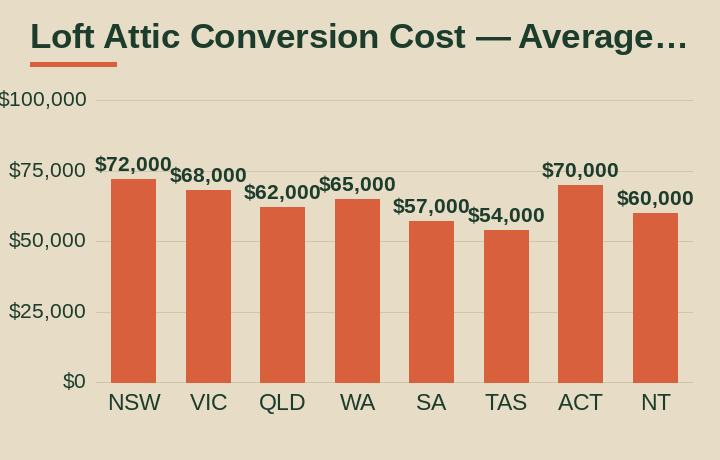
State-by-state loft and attic conversion prices
Labour costs and council fees vary enough across Australia that the same conversion in Sydney will cost meaningfully more than in Hobart or regional SA. The table below reflects realistic mid-range conversions (compliant bedroom, no ensuite) for each state in 2026.
| State | Average Cost | Typical Range |
|---|---|---|
| NSW | $72,000 | $50,000 – $105,000 |
| VIC | $68,000 | $48,000 – $98,000 |
| QLD | $62,000 | $42,000 – $90,000 |
| WA | $65,000 | $45,000 – $95,000 |
| SA | $57,000 | $38,000 – $82,000 |
| TAS | $54,000 | $35,000 – $78,000 |
| ACT | $70,000 | $50,000 – $100,000 |
| NT | $60,000 | $40,000 – $88,000 |
Get free quotes from local providers in your area. No obligation.
Sydney’s inner suburbs (Newtown, Surry Hills, Balmain) sit at the top of the NSW range. Outer-west Sydney areas like Penrith or Blacktown come in 15–20% lower on labour. In Melbourne, inner suburbs like Brunswick and Richmond run close to Sydney pricing, while Geelong and Ballarat-based builders can save you $8,000–$15,000 on the same scope.
A real-world scenario: what a typical Sydney conversion actually looks like
Consider a 1960s brick home in Marrickville, Sydney with a traditional cut-timber roof and a ridge height of 2.6 metres. The owners want a habitable bedroom for a teenager. Here’s roughly how the budget breaks down:
- Structural engineer assessment and drawings: $3,200
- DA preparation and council fees: $4,800
- Building surveyor (CDC): $2,100
- Structural strengthening of floor joists: $7,500
- Fixed staircase installation: $9,500
- Insulation (walls, floor, ceiling): $4,200
- Plasterboard, lining and painting: $8,800
- Egress window and skylight: $5,600
- Electrical (lighting, power points, smoke alarms): $4,100
- Flooring (engineered timber): $5,300
- Total: approximately $55,100
No ensuite, no air conditioning, no plumbing. Just a compliant bedroom. That’s what the real number looks like once every line item is in. The builder’s original rough estimate? $42,000. The gap between a ballpark and a final invoice is worth understanding before you start.
Conversion type vs. cost: what you’re actually comparing
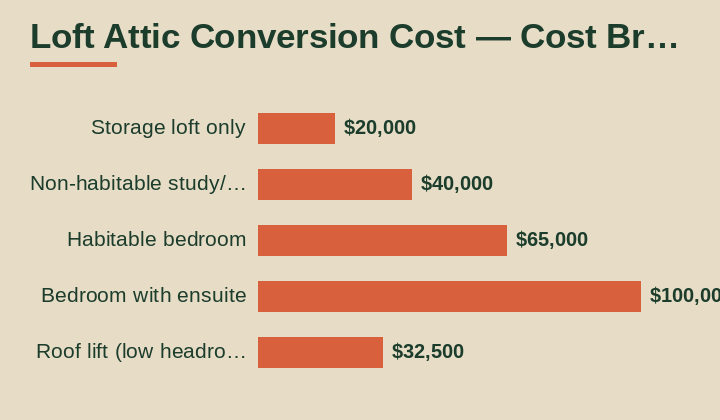
People often have different things in mind when they say ‘attic conversion.’ The table below separates the main categories so you can compare what you actually need.
| Conversion Type | Typical Cost | Council Approval | Key Requirements |
|---|---|---|---|
| Storage loft only | $12,000 – $28,000 | Often not required | Structural flooring, access hatch or ladder |
| Non-habitable study/retreat | $30,000 – $50,000 | Usually required | Flooring, fixed stairs, electrical, skylight |
| Habitable bedroom | $50,000 – $80,000 | Required (DA or CDC) | 2.4m ceiling, egress window, compliant insulation |
| Bedroom with ensuite | $80,000 – $120,000+ | Required (DA) | All above plus plumbing, waterproofing, ventilation |
| Roof lift (low headroom) | Additional $20,000 – $45,000 | Required | Structural engineer, new roofing, full rebuild of space |
The jump from ‘non-habitable’ to ‘habitable’ is where costs really escalate. NCC compliance for a habitable room is not a checklist you can cut corners on. Egress windows alone can run $2,800–$5,500 installed, and floor joist strengthening to support a live load of 1.5 kPa (as required) often means a structural engineer and a team of carpenters for a week.
Where the money actually goes: factors that move the price
Roof structure type
A cut-timber roof (common in Australian homes built before about 1975) is a builder’s friend for conversions. The open space is largely there already. A truss roof, which became standard from the late 1970s onward, has a web of structural timber that takes an engineer to modify. Modifying a truss roof adds $15,000–$40,000 to the project before you’ve touched insulation or flooring. If you’re not sure what you have, have a builder look in your roof cavity before assuming anything.
Headroom and whether a roof lift is needed
The NCC requires 2.4 metres of ceiling height over at least half the floor area for a habitable room. Many Australian homes of 1950s–1970s vintage have ridge heights of 2.2–2.3 metres at the peak, which doesn’t leave enough clearance after joist depth is accounted for. A roof lift (raising the entire roof structure) costs $20,000–$45,000 on top of everything else. Worth checking early. A building designer can assess this for $200–$500 and save you a lot of wasted planning time.
Access: ladder vs. staircase
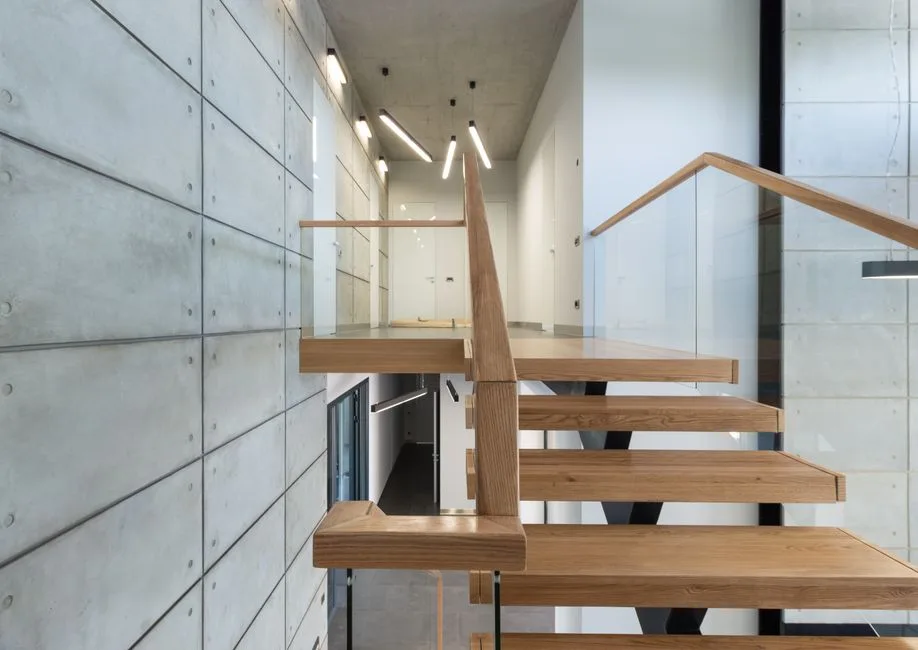
A retractable attic ladder costs $800–$2,500 installed. A fixed staircase costs $4,000–$12,000 and takes floor space from the level below. If the space will be used as a bedroom, a fixed staircase is essentially mandatory under NCC. For storage or the occasional study session, a quality pull-down ladder is fine. a well-rated pull-down attic ladder is one area where doing the research pays off, because quality varies a lot in this category.
Insulation requirements
Attics in Australia’s climate need serious insulation, both for energy efficiency and to meet NCC Section J. In Queensland and the NT, the priority is keeping heat out (bulk insulation in the ceiling plane plus reflective foil). In Victoria and Tasmania, the focus shifts to retaining heat. Budget $3,500–$7,000 for insulation depending on the space size and climate zone. Skimping here shows up in energy bills for years afterward. See what Choice Australia reports about home insulation performance before deciding on specifications.
Services: electrical and plumbing
Running new electrical circuits to an attic space costs $2,500–$5,500 depending on distance from the switchboard and how many circuits are needed. Adding a bathroom or ensuite means plumbing penetrations through the floor and potentially a pump system if gravity drainage isn’t available. Plumbing alone for a simple ensuite runs $8,000–$18,000. If you’re building near Fremantle or coastal Brisbane and dealing with older copper or galvanised pipes, unexpected replumbing can add further to the cost. recessed LED downlights designed for sloped ceilings are worth specifying early, as they need less structural depth than standard fittings.
Questions to ask before you book a builder
Have you done an attic conversion on this type of roof structure?
Truss roofs, cut-timber roofs and steel-framed roofs each require different approaches. A builder experienced only in new builds or extensions may not have priced a structural truss modification before. Ask specifically about the roof type in your home and listen for whether they hesitate.
Is the quote fixed price or do you charge provisional sums?
Provisional sums are line items where the builder estimates a cost but reserves the right to charge more if the actual work exceeds it. They’re legitimate for genuinely unknown scopes (like what you find when you open up a ceiling), but a quote heavy with provisional sums can blow out significantly. For a conversion where the scope should be well-defined, push for as many fixed-price items as possible.
Who organises the DA or CDC, and is that cost included?
Some builders quote the construction only and leave approval costs for you to manage. Others include a building designer and handle the whole process. The approval pathway alone (drawings, application, surveyor fees) typically runs $5,000–$12,000. Make sure you know whether it’s in the quote or not.
Does the quote include a structural engineer’s report?
You’ll need one regardless. If the builder hasn’t factored in an engineer, that’s a $1,500–$4,500 cost sitting outside the quote. Ask explicitly, because it’s easy to miss on first read.
What’s the payment schedule, and when does it start?
Reputable builders don’t ask for large deposits before DA approval is confirmed. A schedule tied to construction milestones (slab, frame, lock-up, fitout, completion) is standard. If a builder asks for 30–40% upfront before work starts, that’s a red flag worth taking seriously.
How do you handle scope changes once work is started?
Variations are common in attic conversions because you don’t always know what’s in the roof until it’s open. Ask how variations are documented and priced. A builder who says ‘we’ll sort it out as we go’ is a builder who’ll present you with an invoice you weren’t expecting.
Common mistakes that inflate the cost
- Assuming council approval isn’t needed. Non-habitable storage conversions sometimes fly under the radar, but the moment you add electrical, a staircase or a window, you’re in council territory. Getting caught without approval means fines and potentially expensive rectification work.
- Not checking headroom before commissioning drawings. Paying $2,000–$4,000 for architectural drawings only to discover you need a $35,000 roof lift is a costly order of events. A $300 pre-assessment by a builder saves this.
- Underestimating floor joist upgrades. Ceiling joists in older homes are designed to support the weight of a plaster ceiling, not a person walking around. Upgrading to floor joists capable of a habitable load can cost $6,000–$14,000 and is non-negotiable for compliance.
- Ignoring the impact on the floor below. A fixed staircase eats into the room below, often removing a wardrobe or reshaping a bedroom. Factor in any remediation work to the existing level, which can add $3,000–$8,000 to the overall project.
If you’re looking at other renovation or pet-related ownership costs for comparison, our guide on the real cost of owning a Husky in Australia shows how quickly annual expenses compound, which is a useful framing exercise for any major home project too.
Frequently asked questions about attic conversion costs
Do I need council approval for an attic conversion in Australia?
In most cases, yes. Converting a roof space into a habitable room almost always requires a Development Application (DA) or at minimum a Complying Development Certificate (CDC). Requirements vary by state and council. NSW, VIC and QLD have different thresholds, so check with your local council before spending anything on design.
How much headroom do I need for an attic conversion?
The NCC requires a minimum ceiling height of 2.4 metres for habitable rooms, but 2.1 metres is accepted for bathrooms and corridors. Many older Australian homes have ridge heights that only allow 2.0–2.2 metres, which means a structural roof lift is needed if you want a habitable space. This can add $20,000–$40,000 to the project.
What roof types are easiest to convert in Australia?
Traditional cut timber roofs (common in homes built before the 1970s) are the most straightforward to convert because the rafters leave open space inside. Truss roofs, which dominate newer builds from the 1980s onwards, are much harder and more expensive because the web of timber members needs engineering to remove or modify.
Can I use my attic as a bedroom legally?
Only if it meets the NCC’s habitable room standards: minimum ceiling height, natural light, ventilation, a compliant egress window for fire escape, and proper structural flooring. An attic that meets these requirements after conversion can legally be classified as a bedroom. Many attics don’t meet these standards without significant structural work.
How long does an attic conversion take in Australia?
A straightforward attic conversion with minimal structural changes typically takes 8–16 weeks from DA approval to completion. More complex projects involving roof lifts, new dormers or full ensuites can stretch to 5–6 months. Council approval alone can add 6–12 weeks before a builder even starts.
People Also Ask About Loft Attic Conversion Cost
Is an attic conversion worth it for resale value in Australia?
It depends on the suburb and what the space becomes. A compliant attic bedroom in a city like Sydney or Melbourne typically adds more value than it costs to build, particularly in areas where an extra bedroom adds meaningful sale price. A non-habitable storage loft adds less value but still increases appeal. In regional areas, the return on investment is less reliable because buyers are less willing to pay a premium for square footage. Check realestate.com.au’s market insights for comparable sales data in your suburb before deciding whether it stacks up financially.
Can a truss roof be converted to a liveable attic?
Yes, but it’s expensive and requires a structural engineer. The timber web members in a truss roof can be modified or replaced with a raised tie or attic truss design, but you’re looking at an additional $15,000–$40,000 in engineering and structural work on top of the base conversion cost. Most builders will want a structural engineer’s report before touching a truss roof.
What’s the difference between a loft conversion and an attic conversion in Australia?
In Australian usage, the terms are used fairly interchangeably. Technically, a loft tends to refer to an open mezzanine-style space created within an existing room (often in warehouses or high-ceilinged homes), while an attic conversion refers to converting the roof cavity of a house into usable space. For cost purposes, both involve similar trades and compliance requirements.
Do attic conversions require a building permit in Victoria?
Yes. In Victoria, any work that creates a new habitable room, alters the structure of the roof, or adds plumbing requires a building permit from a registered building surveyor. This is separate from a planning permit, which may also be required depending on the local council overlay. Budget $1,500–$4,000 for the permit and inspection costs alone. Our guide on council registration costs in Victoria gives some context for how variable council fees can be across the state.
How do I know if my attic has enough height for a conversion?
Measure from the top of the ceiling joists to the underside of the ridge beam. If you have less than 2.4 metres at the ridge, you’ll need structural work to raise the roof or lower the ceiling below, if that’s even possible. A builder or building designer can assess this during a site inspection, which typically costs $200–$600. Don’t skip this step before commissioning drawings.
Related Cost Guides
Recommended Products for Loft Attic Conversion Cost
If you’re tackling this yourself, here are some products from Amazon Australia that can help:
Comparing the figures for this guide, the pattern that stood out was how consistently the compliance and structural costs catch people off guard. A conversion you could build for $55,000 on a cut-timber roof can run $90,000 on a truss roof in the same suburb because of the engineering bill alone. Get the roof structure assessed before you commit to anything. For other home and pet costs worth knowing, see our guides on Maltese grooming costs, German Shepherd grooming in Australia, and the real cost of owning a Labrador for a sense of ongoing pet expenses alongside your renovation planning.
This guide contains affiliate links. We may earn a small commission from qualifying purchases at no extra cost to you.