
Dog registration in Victoria is one of those expenses new owners often don’t see coming, and existing owners frequently forget to budget for. It’s compulsory under the Domestic Animals Act 1994, it’s annual, and the fee varies enough between councils that it’s worth understanding exactly what you’ll pay. According to Animal Medicines Australia’s 2025 Pets in Australia report, over 48% of Australian households own a dog, and Victorians are no exception. The bureaucratic side of dog ownership doesn’t get talked about much, but getting this wrong can cost you in fines.
Dog registration cost Victoria typically runs $35 to $110 for desexed dogs and $90 to $220 or more for entire (undesexed) dogs. The exact fee depends on your local council, whether your dog is microchipped, and if you qualify for a concession. Most councils in Victoria charge significantly less for desexed dogs, so getting your dog desexed before registration pays off fast.
Prices updated July 2026 from current Australian sources.
| Dog | Typical annual council fee | Notes |
|---|---|---|
| Desexed dog | $35 to $110 | Lower rate in most councils |
| Non-desexed dog | $90 to $220+ | Higher rate for entire dogs |
| Pensioner concession | Usually about 50% off | Varies by council |
Victorian councils set and collect dog registration under the Domestic Animals Act 1994, renewed by 10 April each year. Your dog must be microchipped first. Fees are lower for desexed, microchipped dogs, and each registration includes a small State Government levy (rising to $9 per animal from 1 July 2026).
Sources (July 2026): Agriculture Victoria, Dog and cat registration fees, City of Melbourne, Pet registration
The short version: desexed dogs cost less to register. A lot less, in many cases. If your dog isn’t desexed yet, that decision will affect your annual registration fee for the life of the dog.
Victoria sits at the higher end nationally, though this reflects higher council operating costs and stronger enforcement. The Australian Veterinary Association has noted that cost pressures on pet owners are increasing, which makes understanding your actual obligations, and how to reduce them, genuinely useful.
What’s included in registration, and what costs extra
Registration isn’t just a tax. Your council fee funds animal management services: the rangers who return lost dogs, the pound facilities, microchip database maintenance and community compliance. That said, the fee itself only goes so far. Here’s what’s typically bundled in versus what you’ll pay separately.
| What’s Included in Registration | What Costs Extra |
|---|---|
| Annual council registration tag | Microchipping ($25 to $60, one-off) |
| Listing on council’s dog register | Desexing procedure ($200 to $600+) |
| Access to council pound services if lost | Vaccinations ($60 to $130 per year) |
| Basic compliance coverage | Restricted breed declaration (varies) |
| Concession rates (if eligible) | Dangerous dog enclosure requirements |
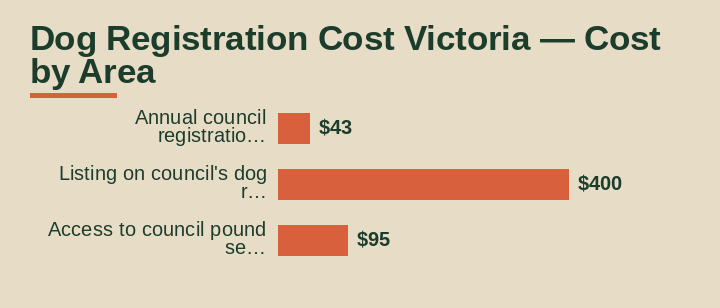
The registration fee itself is the smallest recurring cost in that list. Microchipping is a one-off expense, and once done, it doesn’t affect your annual fee directly. But if you’re registering a new dog and haven’t microchipped yet, that $25 to $60 is coming. For ongoing costs like vaccinations, check what pet vaccinations typically cost in Australia before you budget for the full year.
Why the price varies so much between councils
Five factors genuinely move the number around. Understanding them means fewer surprises when your renewal notice arrives.
1. Desexing status. This is the biggest one. The City of Yarra, for example, charges around $65 for a desexed dog and over $170 for an entire dog in 2026. That’s a $105 annual gap. Multiply that over eight years and you’re looking at $840 in extra registration fees alone for an undesexed dog, on top of the behavioural and health arguments for desexing. If you’re weighing the procedure cost, take a look at how much dog desexing costs in Australia first.
2. Council area. Inner Melbourne councils (Yarra, Port Phillip, Stonnington) typically charge at the upper end. Regional councils like Ararat Rural City or Pyrenees Shire can be $20 to $40 cheaper for the same category of dog. This reflects the difference in council operating costs and enforcement resources, not any difference in what registration covers.
3. Concession eligibility. Pension concession card holders and health care card holders pay reduced fees at most Victorian councils. In some councils, the concession rate for a desexed dog is as low as $0 to $18. It’s one of those things worth checking every year, especially if your financial situation changes.
4. Dog category or breed classification. Restricted breed dogs (Japanese Tosa, Fila Brasileiro, Dogo Argentino, Presa Canario, American Pit Bull Terrier) attract significantly higher fees and additional compliance requirements. Some councils also charge more for dogs with a prior attack or menacing declaration on their record. If your dog is large, check whether your council applies any category surcharges.
5. Late registration or penalty history. Registering late adds a late fee, usually $15 to $55 depending on how overdue you are. If rangers have previously issued an infringement for an unregistered dog at your address, some councils factor that history into future registrations. Staying current is genuinely cheaper. Dog boarding costs in Australia are another annual budget item to plan alongside registration if you travel regularly.
For more on ongoing dog ownership costs and microchipping specifically, MoneySmart’s pet ownership cost guidance is a useful starting point for building a realistic first-year budget.
Recommended Products for Dog Registration Cost Victoria
If you’re tackling this yourself, here are some products from Amazon Australia that can help (these are affiliate links):
Questions to ask before you register (or renew)
Does my council offer a concession rate, and do I qualify?
Concession rates aren’t automatically applied. You need to provide your concession card details when registering or renewing. If you’ve recently become eligible (new pension, new health care card), flag it at renewal, some councils offer backdated adjustments within the same registration year.
Is there a discount for microchipping with a council-approved vet?
Several Victorian councils run periodic microchipping events or have arrangements with local vets offering reduced rates. If you have a new puppy, ask your council before paying full price at a private vet clinic. You might save $15 to $30 and satisfy the registration requirement at the same time.
What category will my dog be registered under?
Some councils classify dogs as ‘standard’, ‘menacing’ or ‘dangerous’ based on prior incidents. The registration fee for a menacing or dangerous dog can be three to five times the standard rate. If you’ve just adopted a dog with an unknown history, ask the council what category applies before you assume the standard fee.
Are there any payment plan options for the registration fee?
Most Victorian councils require the full annual fee upfront, but some will accommodate payment plans for concession holders or financial hardship cases. Worth asking if the $150 to $220 entire-dog fee is a stretch. The answer is almost always no, but occasionally councils have hardship provisions they don’t advertise prominently.
What proof of desexing do I need to provide?
A vet certificate confirming the procedure is standard. Some councils accept a statutory declaration if the certificate has been lost. Don’t assume the council will take your word for it, missing documentation means you’ll be charged the higher entire-dog rate until you provide the paperwork, and refunds aren’t guaranteed. For context on procedure costs, see what vaccination records and vet documentation typically cost.
Does my dog need to be vaccinated to register?
Some (not all) Victorian councils require evidence of current vaccination as part of registration. The City of Melbourne, for example, asks for an up-to-date vaccination certificate. Check your specific council’s requirements before lodging your application. Being caught short on this delays registration and can push you into late-fee territory.
How to bring the cost down
The single most effective move is getting your dog desexed before registration. I know that sounds obvious, but plenty of owners put it off and end up paying the higher rate for years. In inner-Melbourne councils, the difference between desexed and entire registration fees is often $90 to $120 per year. Over five years, that’s $450 to $600 in avoidable fees. The desexing procedure itself typically costs $200 to $500 for a female dog and $150 to $350 for a male. The maths usually work in your favour within two to three registration cycles.
Apply for concession rates if you’re eligible. Seriously, don’t skip this. A pension concession card can drop your annual fee from $65 down to $15 in some councils. That’s real money, and it’s not a trick, it’s what the concession rate is there for.
Register on time. This one’s free savings: late fees of $15 to $55 add up over the years if you’re habitually disorganised. Set a calendar reminder for early April so you’re not caught out. An pet document organiser can help you keep registration papers, vet records and microchip details in one spot, so renewal takes minutes rather than a frantic search.
If you’ve recently moved from another council area, check whether your previous council will issue a partial refund. It’s not guaranteed, but some will prorate the fee. And check whether your new council’s rates are higher or lower, if you’re moving from a regional area to inner Melbourne, expect the fee to jump. For dogs with other ongoing costs like dental care, see what pet dental cleaning costs in Australia to get a realistic picture of total annual spend.
For owners with working dogs or assistance animals, the registration fee may be zero or heavily reduced. This applies to guide dogs, hearing dogs and some farm working dogs. Confirm with your council, it requires documentation but the saving is substantial. You might also consider an engraved dog ID tag as a backup to your council registration tag, particularly useful if your dog is ever found without their collar.
If you’re planning to travel interstate with your dog and need to sort temporary registration or transfer, take a look at what pet transport interstate actually costs, there are often compliance steps involved beyond just the ticket.
Generally yes, though the gap is smaller than you’d expect. Inner Melbourne councils like Yarra and Port Phillip tend to charge at the higher end ($85 to $160 for entire dogs), while regional councils like Mildura or Ararat often sit $20 to $50 lower. The desexing discount matters more than location in most cases.
Frequently asked questions about dog registration cost Victoria
Is dog registration compulsory in Victoria? Yes. Under the Domestic Animals Act 1994, all dogs must be registered with their local council by three months of age. Failure to register can result in an infringement notice or fine.
What documents do I need to register my dog in Victoria? Your dog’s microchip number, proof of desexing (vet certificate), proof of vaccination where required by your council, and a concession card if claiming a reduced rate.
Can I get a refund if my dog passes away during the registration year? Policies vary. Many Victorian councils offer a partial refund or credit if you notify them promptly. It’s not automatic, contact your council directly.
What happens if I don’t register my dog in Victoria? Councils can issue infringement notices ranging from $330 to over $800. Rangers can also impound unregistered dogs found in public.
Do I need to re-register if I move to a different Victorian council area? Yes. Registration is council-specific. You’ll need to register with your new council and notify the old one when you move.
People Also Ask About Dog Registration Cost Victoria
How often do I need to renew dog registration in Victoria?
Dog registration in Victoria is renewed annually. Most councils align renewal notices to 10 April each year, but your specific notice will arrive before that date. If you miss it, late fees apply, typically $15 to $55 depending on the council.
Can I register my dog online in Victoria?
Yes, most Victorian councils now allow online registration and renewal. You’ll need your dog’s microchip number and current desexing or vaccination records handy. A handful of smaller rural councils still require in-person or phone registration, so check your council’s website first.
What’s the difference between microchipping and registration in Victoria?
Microchipping is a permanent implant containing your dog’s ID number, linked to a national database like the Australian Animal Registry. Registration is an annual fee paid to your local council. Both are legally required in Victoria, they’re separate obligations, though your microchip number is needed to complete registration.
Do puppies need to be registered straight away in Victoria?
Under Victoria’s Domestic Animals Act, dogs must be registered by three months of age. Microchipping must happen before eight weeks of age for dogs born from a registered domestic animal business. If you’ve just bought or adopted a puppy, the clock starts quickly, don’t leave it more than a few weeks.
Does dog registration cost more in Melbourne than regional Victoria?
Related Cost Guides
This guide contains affiliate links. We may earn a small commission from qualifying purchases at no extra cost to you.