
Desexing a cavoodle typically sits between $320 and $650 at a standard private vet clinic, though what you actually pay depends on several factors most pet owners don’t think to ask about before booking. According to Animal Medicines Australia’s 2025 Pets in Australia report, dogs remain the most commonly owned pet in the country, and Cavoodles consistently rank among the most popular breeds, which means most vets have plenty of experience with them. That’s good news. The less good news is that prices vary more than you’d expect, even within the same city.
Cavoodle desexing cost Australia typically falls between $320 and $650 for a standard procedure at a private vet clinic. Female Cavoodles generally cost more to desex than males, with spey prices running $380-$650 and castration from $320-$480. Low-cost clinics and vet schools can bring this down to $150-$250.
Prices updated July 2026 from current Australian sources.
| Procedure | Typical cost | Notes |
|---|---|---|
| Male (castration) | $320 to $480 | |
| Female (spey) | $380 to $650 | More complex surgery |
| Low-cost clinic or vet school | $150 to $250 | For eligible owners |
Female Cavoodles cost more to desex than males because the surgery is more involved. Pre-anaesthetic bloodwork and take-home pain relief are usually extra.
Sources (July 2026): National Desexing Network, RSPCA Australia, PetCloud, Vet prices in Australia
The Australian Veterinary Association has noted rising cost pressures for pet owners, and desexing is one of those predictable expenses where a bit of research upfront genuinely pays off. This page breaks down real 2026 prices, what’s actually included, and where you can save without cutting corners on your dog’s care.
What Cavoodle desexing typically costs in 2026
The national average for desexing a Cavoodle sits around $420-$480 at a private vet clinic. Females cost more than males because a spey is an internal abdominal procedure, while castration is comparatively straightforward. Budget around $380-$650 for a female and $320-$480 for a male.
Low-cost clinics run by organisations like the RSPCA or the Animal Welfare League charge considerably less, often $150-$280 for the same procedure. The quality is comparable. The difference is waiting times, which can stretch to 6-8 weeks.
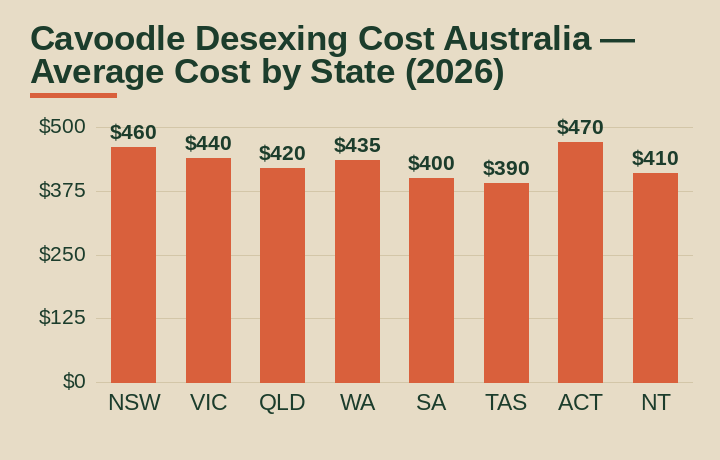
| State | Average Cost | Typical Range |
|---|---|---|
| NSW | $460 | $350 to $650 |
| VIC | $440 | $330 to $620 |
| QLD | $420 | $320 to $600 |
| WA | $435 | $320 to $610 |
| SA | $400 | $300 to $580 |
| TAS | $390 | $290 to $560 |
| ACT | $470 | $360 to $660 |
| NT | $410 | $310 to $590 |
What’s included and what costs extra
The base desexing quote from most Australian vet clinics includes more than just the surgery. But there are legitimate add-ons that some clinics include automatically while others charge separately. Knowing the difference before you hand over your card matters.
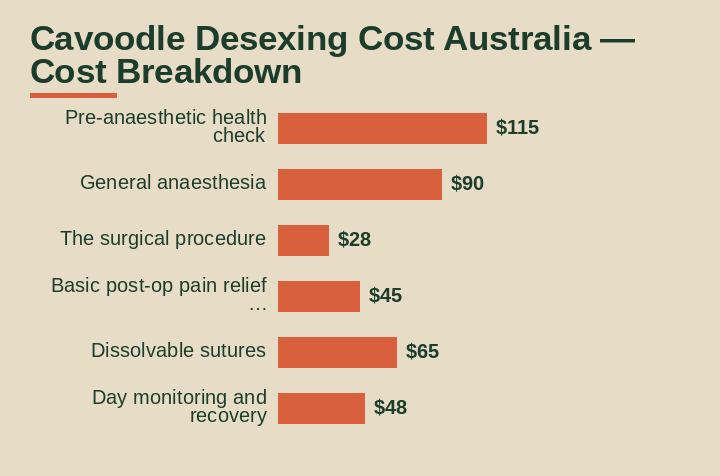
| Usually Included | Often Charged Separately |
|---|---|
| Pre-anaesthetic health check | Pre-op blood tests ($80-$150) |
| General anaesthesia | IV fluid support during surgery ($60-$120) |
| The surgical procedure | Elizabethan collar / recovery cone ($15-$40) |
| Basic post-op pain relief (1 day) | Extended pain medication take-home ($30-$60) |
| Dissolvable sutures | Non-dissolvable suture removal visit ($50-$80) |
| Day monitoring and recovery | Microchipping if not done ($30-$65) |
Pre-op blood tests are the most common hidden cost. They’re optional for young, healthy Cavoodles but many clinics present them as standard. For a dog under 2 years with no health concerns, they’re rarely necessary, but a nervous owner is an easy upsell. Ask specifically whether blood tests are included or optional when you get your quote.
Why the price varies so much
Your dog’s sex
A male Cavoodle castration in inner Melbourne might run $340-$420. The same clinic will charge $450-$580 to spey a female. That’s not arbitrary, the spey involves opening the abdominal cavity, locating and removing the ovaries (and often the uterus), and closing in multiple layers. It takes longer and carries slightly more surgical complexity. Worth the cost. Just expect it.
Weight and age
Cavoodles are a small breed, typically 5-12kg, so they fall into the lower end of most clinics’ weight pricing tiers. A 6kg Cavoodle in Brisbane might cost $335 to desex; a 12kg one at the same clinic might be $395. The difference is anaesthetic dosing and procedure time. If your Cavoodle is on the heavier side of the breed range, budget accordingly. Also, desexing a female in season or (worse) while pregnant adds $100-$250 to the bill, sometimes more.
Clinic type and location
You’ll pay more in inner-Sydney suburbs like Surry Hills or Newtown compared to outer west areas like Penrith or Campbelltown, where overheads are lower. A spey in Surry Hills runs $520-$650. The same procedure in Penrith might be $380-$450. In regional SA or Tasmania, prices tend to be lower still, though availability of low-cost clinics is more limited. If you’re near a university vet school (think Sydney Uni or Melbourne Uni), their teaching hospitals offer heavily discounted procedures with the same safety standards as private practice.
Whether additional procedures are done simultaneously
Some owners combine desexing with microchipping, a dental check or scale and polish, or hernia repair while the dog is already under anaesthetic. Bundling makes sense if your dog needs multiple procedures. Clinics typically discount the anaesthesia component when multiple things are done in one sitting, saving $80-$150 versus separate visits. If your vet mentions anything that needs doing at the next visit, ask whether it can be done under the same anaesthetic.
After-hours and emergency surcharges
Standard desexing is always booked in advance, so you won’t pay an emergency fee for a routine procedure. Where this matters is if there’s a post-op complication, infection, or internal bleeding that requires after-hours attention. That’s when you’re looking at emergency clinic rates of $150-$300 just for the consult, on top of any treatment costs. Pet insurance won’t cover the desexing, but it should cover genuine post-op complications, worth checking your policy. See also our breakdown of dog desexing costs across all breeds in Australia.
Recommended Products for Cavoodle Desexing Cost Australia
If you’re tackling this yourself, here are some products from Amazon Australia that can help (these are affiliate links):
Questions to ask before you book
Is the quote all-inclusive or will there be add-ons on the day?
This is the single most useful question you can ask. Get the clinic to specify exactly what’s in the quoted price. Some clinics quote low and then present a longer invoice at discharge. Asking upfront signals you’re paying attention and gives you a basis for comparison.
Are pre-op blood tests required or optional?
For a healthy Cavoodle under 18 months with no known health issues, blood tests are optional. If a clinic says they’re required for all patients, that’s their policy, but it adds $80-$150 to the bill. Another clinic nearby may include a basic health screen or skip it entirely for young dogs.
Will my dog receive IV fluids during surgery?
IV fluid support during anaesthesia is considered best practice by the Australian Veterinary Association, but not all clinics include it in the base price. It costs around $60-$120 if charged separately. It matters more for longer procedures like a female spey than a quick castration.
How much take-home pain relief is included?
Most clinics send dogs home with 1-3 days of pain medication. Some charge extra for anything beyond the day of surgery. A full 5-7 day course of meloxicam (a common dog NSAID) costs $25-$50, and your dog will want it. Ask if it’s in the quote. You might also consider getting a post-surgery recovery suit to keep them comfortable without the stress of a hard cone.
When is the follow-up appointment and is it included?
A suture check at 7-10 days post-surgery is standard. Many clinics include it in the original quote; others charge $50-$80 as a separate consult. If your dog has dissolvable sutures, you may not need to go back at all, but a quick check is still worth doing for peace of mind.
What happens if there are complications?
Ask whether the clinic handles post-op complications in-house or refers to an emergency centre. If they refer out, you’re looking at emergency clinic rates. Knowing this in advance means you can keep the after-hours vet number handy and aren’t scrambling at 11pm. Complications are rare in healthy young Cavoodles, but they do happen.
How to bring the cost down
The most reliable way to save money on cavoodle desexing cost Australia is to use a low-cost clinic. The RSPCA, Animal Welfare League and various council-run programs offer desexing for $150-$280 in most states. The procedure is identical. Wait times can be 4-8 weeks, so if your Cavoodle is approaching 5-6 months, get on a waiting list now rather than later.
Book before your female’s first heat. A female desexed in season typically costs an extra $100-$200 on the standard price, and some clinics won’t do it at all until the heat passes. Cavoodle females usually have their first heat between 6-9 months. Booking at 5-6 months sidesteps this entirely and also reduces the long-term risk of mammary tumours. That’s two wins for one appointment. You can keep recovery costs down too by buying a soft recovery e-collar from an online retailer rather than paying clinic markup prices.
Ask about puppy package deals. Many private vet clinics bundle desexing with the final puppy vaccination and a microchip for a combined discount. This saves $80-$150 compared to booking each service separately, and you’re already at the clinic anyway. Check our guide to dog vaccination costs in Australia to see if bundling makes financial sense for your situation.
Also worth checking: some NSW, VIC and QLD councils offer desexing rebates of $50-$100 for pensioners or low-income concession card holders. The MoneySmart pet ownership page is a decent starting point for understanding the total cost of pet ownership, including which government assistance exists. It won’t tell you the rebate details for your specific council, but it’ll point you in the right direction. For Cavoodle owners thinking about the bigger picture of annual pet expenses, our breakdown of annual pet vaccination costs is also worth a read.
One more thing worth knowing: if you’re planning other pet services around the same time, such as puppy school or a first grooming appointment, budget for those separately. Most Cavoodle owners are surprised by how quickly the first-year costs add up.
Cavoodle desexing cost Australia is one of those predictable first-year pet expenses where a bit of homework genuinely saves money. Get three quotes, ask about what’s included, and check whether a low-cost clinic in your area has availability. The gap between the cheapest and most expensive option in any given city is often $200-$300 for an identical procedure. That’s real money, and there’s no good reason to pay more than necessary for routine surgery your dog will barely remember.
Frequently asked questions about Cavoodle desexing
How much does it cost to desex a female Cavoodle in Australia?
A spey (female desexing) for a Cavoodle typically costs $380-$650 at a private vet clinic in Australia. The higher cost compared to males reflects the more complex abdominal surgery involved. Low-cost clinics may charge $180-$280 for the same procedure.
What is the best age to desex a Cavoodle?
Most Australian vets recommend desexing Cavoodles between 5 and 9 months of age. Some will do it as early as 8 weeks under certain circumstances. Desexing before the first heat is generally recommended for females to reduce mammary tumour risk.
Does the price include pain relief and anaesthesia?
Usually, yes. Most standard desexing quotes include pre-anaesthetic assessment, anaesthesia, the procedure itself and basic post-op pain relief. However, always confirm this when booking, as some budget clinics quote the surgery fee separately from anaesthesia and medications.
Is desexing cheaper at a low-cost vet clinic?
Yes, significantly. Low-cost clinics and vet schools charge $150-$280 for Cavoodle desexing compared to $320-$650 at private practices. The procedure and safety standards are equivalent, but wait times are longer and after-care may be more limited.
Are there any ongoing costs after desexing a Cavoodle?
The main post-op costs are a follow-up check (often included or around $50-$80 if separate) and any additional pain relief medications. You may also need a recovery cone or suit, which runs $15-$45 from a pet store or online. Watch for signs of infection; unexpected complications can push costs higher.
People Also Ask About Cavoodle Desexing Cost Australia
Can I get my Cavoodle desexed for free in Australia?
In some circumstances, yes. Pensioner concession card holders and low-income households can access heavily subsidised or free desexing through select RSPCA programs, council schemes and charity vet clinics. Availability varies by state and demand is high, so wait times can stretch to several months.
Will desexing change my Cavoodle’s personality?
Desexing reduces hormone-driven behaviours like roaming, humping and urine marking in males, and eliminates heat-related behaviour in females. It doesn’t change your dog’s core temperament or affectionate nature. Most Cavoodle owners report no negative personality changes.
How long does Cavoodle desexing surgery take?
The actual surgery takes 20-45 minutes for males (castration) and 45-90 minutes for females (spey). Your Cavoodle will be at the clinic for most of the day, usually 8am to 4-5pm, to allow for pre-op prep, anaesthesia recovery and monitoring.
Does pet insurance cover Cavoodle desexing costs?
Most Australian pet insurance policies exclude desexing as it’s considered an elective procedure. Some comprehensive ‘wellness’ add-ons from providers like Petsy or PD Insurance include a desexing benefit, but these policies cost more per month. Check the product disclosure statement carefully before assuming it’s covered.
Do male Cavoodles need to be desexed at a different age than females?
Males can generally be desexed from 5-6 months, while females are typically done between 5-9 months (ideally before the first heat at around 6-8 months). Some vets prefer to wait until closer to 9-12 months for both sexes to allow for more hormonal development. It’s worth discussing the timing with your specific vet.
Related Cost Guides
This guide contains affiliate links. We may earn a small commission from qualifying purchases at no extra cost to you.