
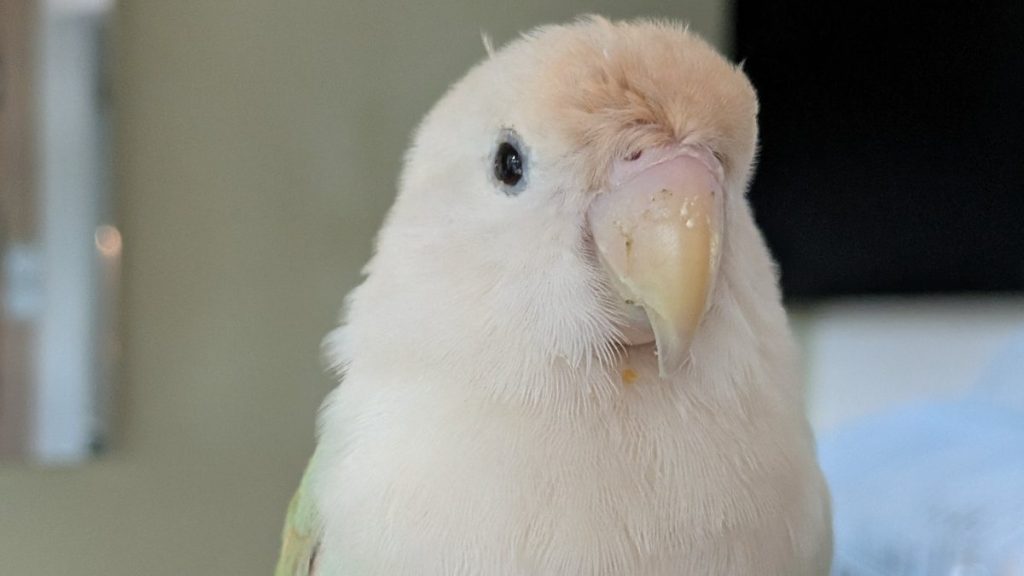
I keep a caique and lovebirds, and I sell bird cages at the pet store I work in, so I have had this conversation a lot of times. Almost everyone walks in wanting a cage that is too small, too tall and too narrow, usually because that is the shape that fits nicely in a corner.
Birds do not care about your corner. Picking the best bird cage in Australia comes down to three things that have nothing to do with how it looks: width, bar spacing, and what the bars are made of. Get those right and almost any cage will do. Get them wrong and you can injure the bird.
A decent bird cage costs about $70 to $400 in Australia depending on the bird. Small flight cages for budgies and finches start around $70 to $90, mid-size cages with a stand are $89 to $199, and large parrot cages run $399 to $799. The three things that actually matter are width rather than height, bar spacing matched to your species, and horizontal bars for anything that climbs. Avoid round cages and avoid galvanised wire, which can be genuinely toxic to parrots.
If you just want the short answer, I would start with VEVOR Large Open Top Bird Cage With Rolling Stand, open top flight cage on a rolling stand, good width for lovebirds, cockatiels and small parrots.
Check price on AmazonAffiliate link. I may earn a small commission at no extra cost to you.
| Cage type | Typical AU price | Suits |
|---|---|---|
| Small flight cage, 24 inch | $70 to $90 | Budgies, finches, a single small bird |
| Flight cage, 30 inch | $89 to $120 | Budgies and lovebirds, a pair |
| Mid-size cage with stand | $150 to $250 | Cockatiels, lovebirds, small conures |
| Large parrot cage | $399 to $500 | Caiques, conures, larger parrots |
| Heavy duty parrot cage | $700 to $800 | Amazons, eclectus, cockatoos |
| Cage stand (separate) | $69 to $75 | Any cage without one built in |
Sources (August 2026): Kellyville Pets, bird cages and stands
Width Beats Height, Every Time
This is the single most useful thing I can tell you. Tall narrow cages sell well because they look impressive and fit against a wall. They are close to useless for the bird.
Birds fly horizontally. They do not hover like a helicopter, so vertical space above a certain point is largely wasted, while horizontal space is what lets them actually move between perches with a wingbeat or two. A cage that is 45cm wide and 150cm tall gives a lovebird far less usable room than one that is 90cm wide and 90cm tall, even if the taller one has more volume on paper.
When you are comparing two cages, look at the width first and the height last. If the bird cannot open its wings fully without touching both sides, the cage is too narrow, full stop.
And whatever you buy, the cage is not the whole picture. Cage time plus daily out-of-cage time is what keeps a parrot sane. My caique spends a lot of the day out with us, and that matters more than any amount of extra cage.
Bar Spacing, and Why It Is a Safety Issue
Bar spacing is not a preference, it is a safety specification. Too wide and a small bird gets its head through and cannot get it back out, or escapes entirely. Too narrow for a big parrot and you lose the climbing grip they need.
Rough guide for common Australian pet birds:
- Finches and canaries: about 10mm
- Budgies and lovebirds: about 10mm to 12mm
- Cockatiels: about 16mm to 20mm
- Caiques, conures and similar: about 19mm to 22mm
- Larger parrots: 25mm and up, with much heavier gauge wire
If you keep a mixed household, size to the smallest bird. A cage that is safe for a cockatiel is not safe for a budgie sharing the room.
The other thing to check is horizontal bars. Parrots climb the sides constantly, and horizontal bars give them something to grip. A cage with only vertical bars gives a climbing parrot nothing to work with. Finches and canaries do not care, because they fly rather than climb, so vertical is fine for them.
Round Cages, and Why I Talk People Out of Them
Round cages look elegant and they are still widely sold. I would not put a bird in one.
Two problems. The first is behavioural. A bird under stress wants a corner to retreat into, somewhere it can put its back against something solid. A round cage has no corners, so there is nowhere to feel secure, and you tend to see more anxious, more restless birds in them.
The second is physical. Most round cages taper towards the top, so the bars converge and the gaps narrow. Tails, toes and occasionally wingtips get caught in the narrowing section. It is an avoidable injury.
Rectangular, wider than it is tall, with a flat or play top. That is the shape you want.
What the Cage Is Made Of Actually Matters
This is the part most buyers never think about, and with parrots it is genuinely important.
Parrots chew and lick the bars constantly. That means whatever coats the wire ends up inside them. Galvanised wire is the one to be careful with, because the zinc coating can cause heavy metal poisoning, and zinc toxicity in parrots is serious and not always obvious early. Cheap unbranded cages and some aviary mesh are the usual culprits.
What you want is powder coated steel or stainless steel. Powder coating is what most reputable cages use and it is fine, provided the bird is not stripping it off. Check the cage periodically, and if a determined parrot has chewed the coating back to bare metal in patches, that cage needs replacing.
Also worth checking before you buy: how the doors latch. Caiques and conures are clever and persistent, and a simple slide latch will be worked out surprisingly quickly. Look for something that needs two actions, or plan on adding a bird-safe clip.
Perches: Throw Out the Dowels
Nearly every cage ships with two identical smooth wooden dowels, and nearly every cage would be better without them.
A bird standing on the same diameter perch all day, every day, holds its foot in exactly the same position permanently. That leads to pressure sores on the underside of the foot, a condition called bumblefoot, and to stiff, sore joints as the bird ages.
What you want is variety. Natural branch perches of different diameters, so the foot is working differently through the day. Australian natives like eucalypt and bottlebrush are safe and free if you have access to an untreated tree, just scrub and dry them first. Add a rope perch, and a mineral or cement perch near a feeding station helps keep nails in check.
Keep the highest perch clear of the roof so the tail is not permanently bent, and do not put perches directly above food or water bowls, for reasons that will be obvious the first time you clean it.
Where You Put It Is Nearly as Important as What You Buy
Placement causes more problems than cage choice does.
Keep birds out of the kitchen. This is the one I get most emphatic about. Overheated non-stick cookware releases fumes that are lethal to birds, and it happens fast, with no warning and nothing you can do afterwards. It is one of the most common causes of sudden pet bird death and it is entirely preventable. Self-cleaning ovens are a risk for the same reason.
Beyond that:
- Against a wall rather than floating in the middle of a room, so the bird has one secure side
- Out of direct sun, especially through glass in an Australian summer, and out of draughts
- Somewhere the family actually is. Parrots are social and a bird isolated in a spare room becomes a bored, screaming, feather-plucking bird
- Away from scented candles, incense, air fresheners and aerosols, because bird respiratory systems are far more sensitive than ours
What It Costs to Run, and the Diet Mistake
The cage is one-off. Food, toys and vet care are ongoing, and toys are less optional than people assume, because destroying things is a genuine behavioural need rather than a luxury.
While we are here, the thing I correct most often at the shop: never keep a bird on an all-seed diet. It is the single most common mistake in Australian bird keeping. A proper diet is a mix of pellets, quality seed, greens and fresh veg.
Sunflower and safflower seeds should be a small treat only. Some birds will pick every sunflower seed out of a mix and ignore everything else, and those seeds are extremely high in fat. It is like eating McDonald’s every day. A high fat diet causes health problems and behavioural ones, and the most common thing you see is feather plucking.
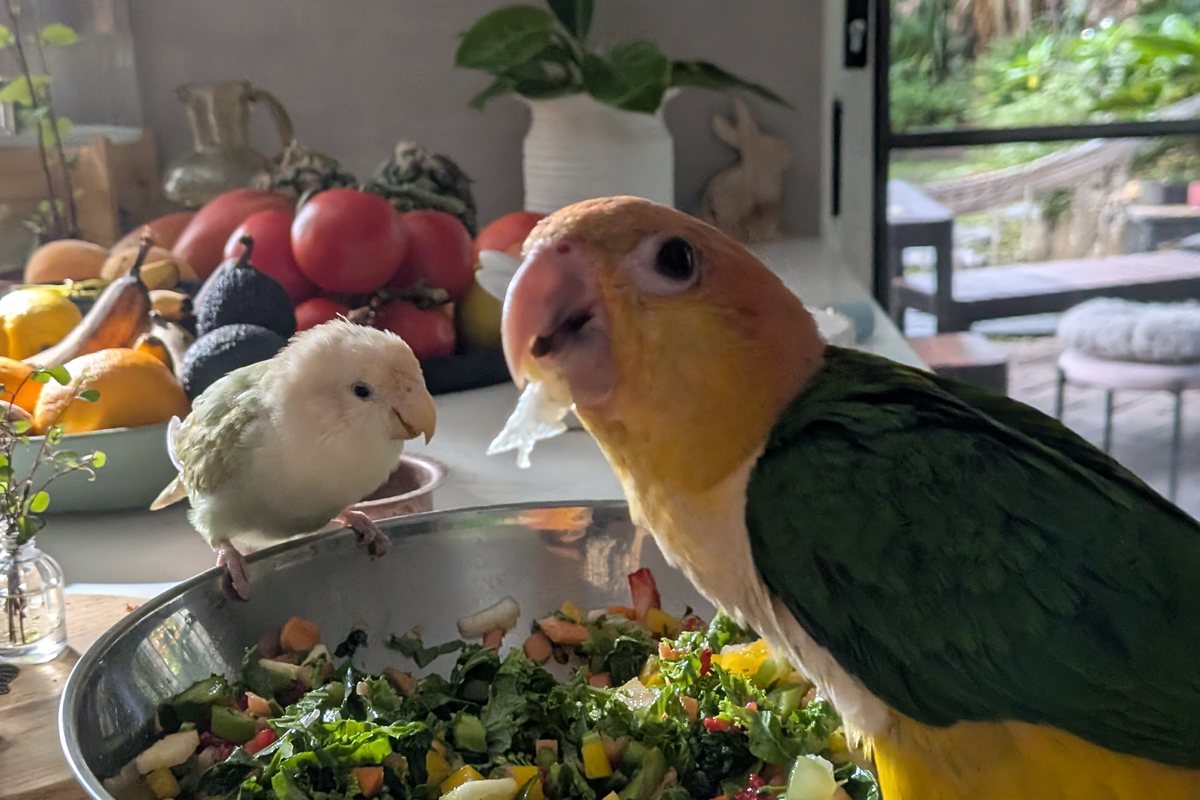
My two eat chopped veg alongside their pellets and it makes a visible difference to their condition.
Recommended Bird Cages and Setup Gear
These are all rectangular, wider than tall, with horizontal bars and a slide-out tray, which is the shape I would actually recommend. I have included the pellets and foraging toys because the cage is only half the setup. (these are affiliate links)
This guide contains affiliate links. If you buy through them we may earn a small commission at no extra cost to you. I only point to gear I would actually use or sell.
Frequently Asked Questions
How much does a bird cage cost in Australia?
About $70 to $400 for most pet birds. Small 24 inch flight cages for budgies and finches are $70 to $90, 30 inch flight cages are $89 to $120, mid-size cages with a stand are $150 to $250, and large parrot cages run $399 to $500. Heavy duty cages for amazons, eclectus and cockatoos are $700 to $800, and a separate cage stand is about $69 to $75.
What bar spacing does my bird need?
Roughly 10mm for finches and canaries, 10mm to 12mm for budgies and lovebirds, 16mm to 20mm for cockatiels, and 19mm to 22mm for caiques and conures. Larger parrots need 25mm and up with heavier gauge wire. Too wide and a small bird can get its head stuck or escape. If you keep several species in one room, size to the smallest bird. Parrots also need horizontal bars to climb, while finches and canaries do not.
Are round bird cages bad for birds?
I would avoid them. A stressed bird wants a corner to back into and a round cage gives it nowhere to feel secure, so you tend to see more restless, anxious birds. Round cages also taper towards the top, which narrows the gaps between bars, and tails, toes and wingtips get caught in that section. A rectangular cage that is wider than it is tall is the better choice every time.
Is a taller bird cage better?
No. Width matters far more than height. Birds fly horizontally rather than hovering, so height above a certain point is largely wasted while width is what lets them move between perches properly. A 90cm wide by 90cm tall cage gives a bird more usable space than a 45cm wide by 150cm tall one, even though the tall one looks bigger. If the bird cannot open its wings fully without touching both sides, it is too narrow.
Where should I not put a bird cage?
Never in or near the kitchen. Overheated non-stick cookware gives off fumes that are lethal to birds very quickly, and self-cleaning ovens carry the same risk. It is one of the most common causes of sudden pet bird death and it is completely preventable. Also avoid direct sun through glass, draughts, and rooms where the family never goes, because isolated parrots become bored and start screaming or plucking.