
When your pet has a crisis at 2am or on a public holiday, the bill for emergency care can be a real shock if you’re not prepared for it. Emergency veterinary care in Australia operates 24/7 to save lives, but this critical service comes at a significant premium compared to standard daytime appointments. Understanding these costs helps you prepare financially and make informed decisions during stressful situations when every minute counts for your pet’s wellbeing.
Emergency vet cost Australia typically ranges from $200-$500 for after-hours consultations, with additional treatment costs of $500-$5,000+ depending on the condition. Metropolitan emergency clinics charge 20-40% more than regional practices, and overnight stays add $300-$800 per night. Most emergency visits total $800-$2,500 including diagnostics and immediate treatment.
This comprehensive guide breaks down the real emergency vet cost Australia rates for 2026, covering consultation fees, treatment expenses, state-by-state variations, and money-saving strategies that every Australian pet owner needs to know.
How Much Does Emergency Vet Cost Australia Charge in 2026?
Prices updated July 2026 from current Australian sources.
| Service | Typical cost | Notes |
|---|---|---|
| After-hours consultation | $200 to $500 | |
| Treatment (depending on condition) | $500 to $5,000+ | |
| Overnight hospital stay | $300 to $800 / night | |
| Typical total visit | $800 to $2,500 | Including diagnostics and initial treatment |
Metropolitan emergency clinics charge 20 to 40% more than regional practices. Because emergencies are unpredictable, this is exactly the kind of cost pet insurance or a savings buffer is designed for.
Sources (July 2026): PetCloud, Vet prices in Australia, Forbes Advisor Australia, Vet fees in Australia, RSPCA Australia
The emergency vet cost Australia landscape varies significantly based on your location, time of visit, and the severity of your pet’s condition. Emergency consultation fees alone range from $200-$1000, which is 2-4 times higher than standard daytime appointments. This premium covers the expense of maintaining 24-hour facilities, specialized emergency staff, and immediate access to life-saving equipment regardless of the hour.
Treatment costs extend well beyond the initial consultation. Diagnostic tests like blood panels cost $150-$400, X-rays run $200-$3000, and ultrasounds range from $300-$600. Surgical interventions can add $1,000-$8,000 depending on complexity, while overnight hospitalization adds $300-$800 per night. According to the Australian Veterinary Association, most emergency visits total between $800-$8000 including immediate treatment and diagnostics.
| State | Average Emergency Consultation | Typical Total Visit Cost |
|---|---|---|
| NSW | $350 | $1,200 – $2,800 |
| VIC | $340 | $1,150 – $2,600 |
| QLD | $320 | $1,100 – $2,400 |
| WA | $330 | $1,150 – $2,500 |
| SA | $310 | $1,050 – $2,300 |
| TAS | $280 | $950 – $2,100 |
| ACT | $360 | $1,250 – $2,900 |
| NT | $340 | $1,200 – $2,600 |
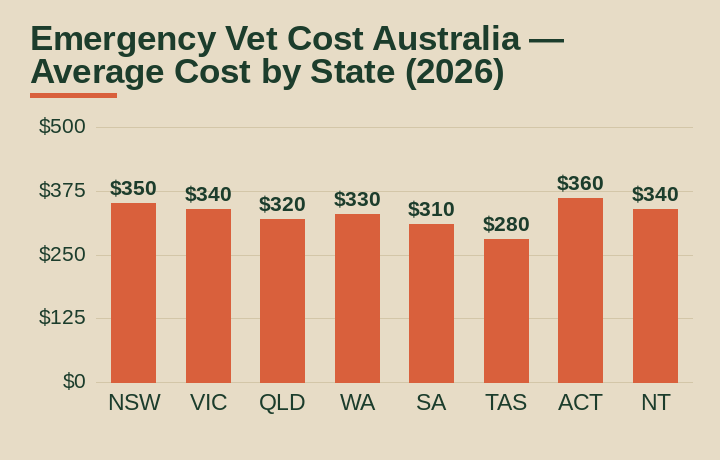

These figures represent 2026 averages across metropolitan and regional areas. Urban emergency clinics in Sydney, Melbourne, and Brisbane typically charge 20-30% more than smaller cities due to higher operating costs and demand. The total visit cost includes consultation, basic diagnostics, immediate treatment, and short-term medication, but excludes ongoing care, specialist referrals, or extended hospitalization.
A real-world emergency scenario: what the bill actually looks like
Here’s a specific example to make these numbers concrete. A Staffordshire Bull Terrier in Newtown, Sydney swallows a chicken bone at 9pm on a Saturday. The owner drives to a 24-hour emergency centre in Surry Hills.
The itemised bill on a case like this might look like this:
- After-hours emergency consultation: $280
- X-ray (2 views): $320-$420
- IV fluid therapy: $180-$250
- Endoscopy to retrieve the bone: $1,200-$1,800
- Anaesthetic and monitoring: $400-$600
- Overnight hospitalisation (observation): $350-$500
- Discharge medications: $80-$120
Total: roughly $2,800-$3,970 for a case that looked straightforward at the front door. That’s not worst-case. That’s a fairly typical mid-complexity emergency in a metro area.
Contrast that with a dog that presents at the same clinic with a deep laceration on its leg. Consult, wound cleaning, sutures and a cone to go home: around $500-$850 total. Case complexity is what really drives the final number.
Emergency costs by case type
Not every emergency is equal. The table below shows typical total cost ranges by presentation type, to give you a clearer idea of where your dog’s situation might land. These are total bill estimates, including consult, treatment and basic medications.
| Emergency Type | Typical Total Cost | Notes |
|---|---|---|
| Minor wound / laceration | $350 – $850 | Cleaning, sutures, cone and discharge meds |
| Toxin ingestion (induced vomiting only) | $300 – $650 | No imaging required, straightforward cases |
| Suspected fracture | $800 – $2,200 | X-ray, stabilisation; surgery billed separately |
| Gastric dilatation volvulus (bloat) | $3,500 – $7,500 | Life-threatening; emergency surgery required |
| Foreign body ingestion (endoscopy) | $1,800 – $4,000 | Endoscopy or surgery depending on location |
| Trauma (hit by car) | $2,500 – $8,000+ | Imaging, surgery, ICU monitoring |
| Respiratory distress | $1,500 – $5,000 | Oxygen therapy, diagnostics, possible specialist |
| Seizures (first episode) | $600 – $1,800 | Stabilisation, bloodwork, monitoring |
Bloat (GDV) deserves a special mention. It’s disproportionately common in deep-chested breeds like Great Danes, German Shepherds and Standard Poodles, and it’s almost always fatal without emergency surgery. If you own one of these breeds, factor $4,000-$7,500 into your emergency planning. That’s not a scare figure, it’s the real cost of the surgery that saves them.
What Affects Emergency Vet Cost Australia Pricing?
Time of Visit and Day of Week
The timing of your emergency dramatically impacts costs. Weeknight consultations (6pm-midnight Monday-Friday) typically represent the baseline emergency vet cost Australia rate. Saturday and Sunday visits add 30-50% surcharges, while public holidays can double consultation fees. Christmas Day, New Year’s Day, and Easter emergency visits often exceed $500 just for the initial assessment before any treatment begins.
Severity and Complexity of Condition
Minor emergencies like small lacerations or mild gastric upset cost $500-$1,000 total, while life-threatening conditions requiring immediate surgery or intensive care easily exceed $5,000. Critical cases involving hit-by-car injuries, bloat requiring emergency surgery, or severe poisoning often generate bills of $3,000-$8,000. The emergency vet cost Australia scales directly with the urgency and invasiveness of required interventions.
Location and Clinic Type
Metropolitan emergency veterinary hospitals charge premium rates due to higher rent, staff costs, and equipment investments. Sydney’s Inner West and Melbourne’s CBD emergency clinics charge $350-$450 for consultations compared to $250-$320 in regional centers like Bendigo or Wagga Wagga. Purpose-built 24-hour emergency hospitals also cost more than regular clinics offering extended after-hours services.
Diagnostic Testing Requirements
Emergency cases often require immediate diagnostics that regular appointments might schedule for later. Blood chemistry panels ($150-$300), complete blood counts ($100-$200), urinalysis ($80-$150), and imaging all add up quickly. Some pets need multiple tests, a suspected poisoning case might require blood work, X-rays, and ongoing monitoring, adding $600-$1,200 in diagnostic costs alone before treatment starts.
Hospitalization and Ongoing Monitoring
Pets requiring overnight stays face significant additional costs. Standard hospitalization runs $300-$500 per night, while intensive care unit stays cost $500-$800 nightly. This includes monitoring, cage space, and basic nursing care but excludes medications, IV fluids ($100-$200 per day), or additional treatments. A three-night stay for a dog recovering from surgery can add $1,500-$2,400 to your emergency vet cost Australia total. Many owners find keeping a pet health record organizer helps track these expenses and medical history for future reference.
Species of Pet
Emergency vets like SASH charge high prices for emergency vet visits for pets like birds, rabbits and reptiles. Generally these animals have higher vet costs anyways but emergency appointments can set you back quite a bit. Personally, i have a rabbit who got sick a little while ago and we were quoted $3000 for the consultation and an x-ray at an emergency vet compared to $2500 for the whole treatment at a non emergency specialist vet (which consisted of 2 nights in the vet and multiple tests).
How to Save on Emergency Vet Cost Australia Expenses
- Invest in comprehensive pet insurance: Quality policies cover 70-80% of emergency vet costs after your annual excess. Compare plans carefully, some exclude after-hours fees or have sub-limits. Policies purchased before emergencies arise save thousands compared to payment plans. Check out our guide on pet vaccination costs to understand routine preventive expenses that insurance also covers.
- Maintain a dedicated pet emergency fund: Financial experts recommend setting aside $2,000-$3,000 specifically for pet emergencies. This prevents impossible decisions during crises and eliminates high-interest payment plan charges. Automatic monthly transfers of $50-$100 build this fund quickly.
- Know what constitutes a true emergency: Not every after-hours concern requires immediate emergency care. Many conditions can safely wait until morning when regular vet rates apply. Call the emergency clinic for free phone triage, most provide guidance on urgency levels and can save you hundreds if immediate care isn’t critical.
- Ask about payment plans before treatment: Many clinics partner with VetPay, Zip Money, or offer in-house payment arrangements. Discussing options upfront prevents surprise bills and allows you to make treatment decisions based on your pet’s needs rather than immediate cash availability. Some require 50% upfront with the balance over 6-12 months.
- Consider less urgent cases for morning appointments: If your pet’s condition is stable and not deteriorating, waiting for your regular vet’s opening can save $200-$400 on consultation fees alone. Conditions like minor limping, small cuts, or mild vomiting without blood often fall into this category, always verify with phone triage first.
Understanding mobile vet costs also helps, as some mobile services offer after-hours home visits at rates between standard and emergency clinic fees for semi-urgent situations.
Recommended Products for Emergency Vet Cost Australia
If you’re tackling this yourself, here are some products from Amazon Australia that can help (these are affiliate links):
Questions to ask before you hand over your card
Can I have an itemised written estimate before you begin?
In most Australian states, vets are ethically required to provide a cost estimate before non-emergency treatment. Ask for this in writing. It lets you identify anything genuinely deferrable and gives you a realistic worst-case figure before you commit.
What’s the absolute must-do tonight versus what can wait until morning?
Emergency clinics are honest about this if you ask directly. Some diagnostic workup can happen at your regular daytime vet at standard rates. Ask the emergency vet to separate the critical-tonight items from the nice-to-know ones. This question alone can save $300-$800 on a non-critical presentation.
Do you have a payment plan or finance option?
Ask before you need to. VetPay and Humm are the most common finance options at Australian emergency clinics. Some clinics require a 50% deposit before surgery, knowing this at 11pm when you have $400 in your account is important information to have early in the conversation.
If my dog needs to be hospitalised overnight, will a vet be physically present?
Not all clinics that charge for overnight hospitalisation have a vet on-site around the clock. Some use nursing staff with on-call vet availability. For critical cases, this matters. A true 24-hour emergency hospital has a vet in the building at all times. Ask the question plainly.
What’s included in the consultation fee, and does it cover the triage nurse assessment?
Some emergency clinics charge a triage assessment fee separately from the vet consultation. You can end up paying $120 for triage plus $250 for the vet before any treatment begins. Clarify whether the fee you’re quoted covers the full assessment or just one component of it.
Will you call me before proceeding if costs exceed the estimate?
Ask them to commit to this in writing on the consent form. If your dog is hospitalised overnight and develops a complication, costs can escalate significantly between when you dropped off and when you pick up. Most reputable clinics will call proactively, but putting it on the consent form makes it explicit.
Common mistakes that make the bill worse
- Waiting too long before going. A condition that costs $400 to treat at midnight can cost $3,500 to treat by 6am if it’s deteriorated significantly. When in doubt, go. The cost of waiting with a genuinely sick animal is usually higher than the after-hours consult fee.
- Not having pet insurance in place. MoneySmart’s pet ownership guide specifically flags emergency vet costs as one of the biggest unplanned expenses Australian pet owners face. Comprehensive pet insurance typically costs $50-$100 a month for a dog, that’s a fraction of one moderate emergency bill. The time to get it is now, not after something happens.
- Assuming the first estimate is the final bill. Emergency medicine is dynamic. If your dog’s condition changes overnight, the bill changes with it. Build in a 30-40% buffer above the initial estimate when mentally planning your finances for a hospitalised animal.
- Driving past a closer emergency clinic to one you ‘know’. In a genuine emergency, the nearest accredited clinic is the right clinic. Time matters more than familiarity. Check the Australian Veterinary Association’s clinic directory before you need it, not during a crisis.
Preparing for pet emergencies means understanding the financial reality of emergency vet cost Australia rates and planning accordingly. While these premium costs seem high, they reflect the specialized resources and 24-hour accessibility that save countless pet lives every year. By investing in pet insurance, maintaining emergency funds, and knowing what constitutes a true emergency, you can ensure your beloved companion receives life-saving care when seconds count, without facing impossible financial decisions during your pet’s most vulnerable moments.
Frequently Asked Questions About Emergency Vet Cost Australia
How much does an emergency vet visit cost in Australia?
An emergency vet visit in Australia typically costs $200-$500 for the initial consultation, which is significantly higher than standard daytime appointments. This fee covers after-hours access, immediate triage, and initial examination. Treatment costs are additional and vary based on the condition severity, ranging from $300 for minor issues to $5,000+ for complex surgeries or intensive care. Most complete emergency visits total $800-$2,500 including diagnostics and immediate treatment, though life-threatening cases requiring hospitalization can exceed $5,000.
What’s included in emergency vet consultation fees?
Emergency vet consultation fees cover the initial examination, triage assessment, vital signs monitoring, and professional advice. However, this does NOT include diagnostics like blood tests ($150-$400), X-rays ($200-$500), ultrasounds ($300-$600), medications, treatments, or hospitalization. These are charged separately and can significantly increase your total bill. The consultation fee essentially pays for the veterinarian’s expertise and immediate assessment, not the actual treatment your pet receives.
Are emergency vet costs higher on weekends and public holidays?
Yes, emergency vet cost Australia rates increase substantially on weekends and public holidays. Saturday and Sunday consultations typically cost 30-50% more than weeknight emergencies, while public holidays can add 50-100% surcharges. A consultation that costs $250 on a Tuesday night might reach $400-$500 on Christmas Day or Easter Sunday. This reflects the premium required to staff facilities during periods when most veterinary practices close and demand for emergency services peaks.
Does pet insurance cover emergency vet visits?
Most comprehensive pet insurance policies cover emergency vet visits, typically reimbursing 70-80% of costs after you meet your annual excess. However, coverage varies significantly between policies. Some budget plans exclude after-hours fees or have sub-limits for emergency care. Always check your policy’s Product Disclosure Statement for specific emergency coverage details and waiting periods. The Australian Competition and Consumer Commission recommends comparing multiple policies before purchasing. Having a comprehensive comparison resource helps identify the best coverage for emergency situations.
How can I reduce emergency vet costs?
Reduce emergency vet cost Australia expenses by maintaining comprehensive pet insurance, keeping a dedicated emergency fund of $2,000-$3,000, asking about payment plans before treatment, and knowing which conditions truly require emergency care versus next-day appointments. Some clinics offer discounted rates for members of breed clubs or rescue organizations, so always inquire about available discounts. Preventive care also reduces emergency risk, regular check-ups catch issues before they become after-hours crises. Our guide on dog vaccination costs explains preventive care investments that reduce emergency risks.
People Also Ask About Emergency Vet Cost Australia
What counts as a genuine pet emergency requiring immediate vet care?
Genuine pet emergencies include difficulty breathing, uncontrolled bleeding, suspected poisoning, seizures lasting more than 3 minutes, inability to urinate or defecate, collapse or unconsciousness, severe trauma from accidents, bloated or distended abdomen, eye injuries, heatstroke, or broken bones. If your pet displays any of these symptoms, seek immediate emergency veterinary care regardless of cost. Time-critical conditions like gastric torsion (bloat) or toxin ingestion require treatment within hours to prevent death or permanent damage. When uncertain, always err on the side of caution and contact an emergency clinic.
Can I negotiate emergency vet bills or arrange payment plans?
Many emergency vet clinics offer payment plans through services like VetPay or Zip Money, allowing you to spread costs over 6-24 months. However, emergency clinics typically require 50-100% payment upfront for stabilization before discussing payment options for additional treatment. Always ask about financial assistance programs or charity funds that some practices maintain for genuine hardship cases. Being upfront about financial constraints allows vets to prioritize essential treatments and defer non-urgent procedures. Some clinics also accept CareCredit or similar medical financing options designed specifically for veterinary expenses.
Is it cheaper to wait until morning instead of using emergency vet services?
While waiting until morning saves on emergency consultation fees, delaying treatment for genuine emergencies can result in deterioration requiring more expensive interventions or even death. Time-sensitive conditions like bloat, poisoning, or severe bleeding need immediate attention. If uncertain, call the emergency clinic, most provide free phone triage to help determine urgency level. Minor issues like small cuts, mild limping without pain, or brief single vomiting episodes often can safely wait. However, the emergency vet cost Australia premium becomes irrelevant if delayed treatment allows a manageable condition to become life-threatening.
Do emergency vets charge more than regular vets for the same procedures?
Yes, emergency vets typically charge 50-150% more than regular vets for identical procedures due to after-hours operation costs, specialized equipment, 24-hour staffing, and higher overhead expenses. A procedure costing $600 at your regular daytime vet might cost $900-$1,500 at an emergency clinic. However, when your pet needs urgent care, the premium pays for immediate life-saving access. Emergency clinics maintain expensive facilities, stock extensive inventories of emergency medications, and employ specialist emergency veterinarians, costs that standard practices don’t incur. The higher fees reflect the convenience and critical nature of 24-hour availability.
What should I bring to an emergency vet appointment?
Bring your pet’s vaccination records, current medication list, any substances they may have ingested (packaging, plants), your regular vet’s contact information, and payment method or pet insurance details. Having medical history readily available helps emergency vets make faster, more informed decisions and can reduce the need for duplicate diagnostic tests, potentially lowering your overall emergency vet cost Australia bill. If your pet takes regular medications, bring the bottles, knowing exact dosages and drug names prevents dangerous interactions. For suspected poisoning cases, bring the packaging or a sample of the substance. Also consider information from our dog desexing guide if your emergency relates to complications from recent procedures.
Related Cost Guides
This guide contains affiliate links. We may earn a small commission from qualifying purchases at no extra cost to you.