
Pet hydrotherapy has really taken off in Australia, with more facilities now offering aquatic rehab for dogs, cats, and even exotic pets. Whether your pet needs post-surgical recovery, arthritis management, or weight loss support, understanding the full pricing spectrum helps you budget effectively for this increasingly popular therapeutic service.
Pet hydrotherapy sessions in Australia typically cost $60-$85 for a 30-minute standard session in 2026. Intensive rehabilitation programs range from $450-$850 for 10-session packages, while initial assessments cost $80-$150. Sydney and Melbourne prices sit 15-25% higher than regional areas, with underwater treadmill sessions averaging $10-$15 more than pool-based hydrotherapy.
Hydrotherapy provides low-impact exercise that reduces joint stress while building muscle strength, making it invaluable for ageing pets, those recovering from orthopaedic surgery, or animals with mobility challenges. This guide breaks down exactly what you’ll pay across Australia.
Hydrotherapy is usually claimable, but only as part of a covered condition and only with a vet referral, which is the kind of detail that decides whether a policy earns its keep. My pet insurance guide goes through how that works.
Related Cost Guides
Average Pet Hydrotherapy Cost Australia in 2026
Prices updated July 2026 from current Australian sources.
| Session | Average | Typical range |
|---|---|---|
| Initial assessment plus first session | $99 | $80-$120 |
| Follow-up hydrotherapy session | $60 | $40-$100 |
| 5-session package | $250 | $250-$300 |
Sessions use an underwater treadmill or pool with a trained hydrotherapist, and usually include wash and dry facilities. When your vet refers the treatment, many pet insurance policies cover part of the cost. Exact prices depend on the clinic and your dog’s rehab needs.
Sources (July 2026): Dogworx Hydrotherapy (AU), Services, Water Walkies (NSW), Underwater Treadmill, K9 Hydrotherapy (AU), Pet Hydrotherapy
Standard single pet hydrotherapy cost Australia sessions range from $60 to $85 for 30 minutes at most facilities nationwide. However, pricing varies considerably based on session type, location, and whether you’re purchasing individual appointments or package deals.
Initial consultations and assessments typically cost $80-$150 and include a full physical evaluation, treatment plan development, and sometimes a short introductory session. Many facilities waive or discount this fee if you book a package immediately.
Most therapeutic programs recommend 10-12 sessions, with package deals offering 10-20% savings. A typical 10-session package costs $550-$750, bringing the per-session rate down to $55-$75. Extended treatment courses or maintenance programs offer even better value.
Pet Hydrotherapy Cost by State
| State/Territory | Single Session (30 min) | Initial Assessment | 10-Session Package |
|---|---|---|---|
| New South Wales | $70-$95 | $100-$150 | $650-$850 |
| Victoria | $65-$90 | $90-$140 | $600-$800 |
| Queensland | $60-$85 | $85-$130 | $550-$750 |
| Western Australia | $65-$88 | $95-$135 | $600-$780 |
| South Australia | $60-$80 | $80-$120 | $550-$700 |
| Tasmania | $55-$75 | $75-$110 | $500-$650 |
| ACT | $68-$90 | $95-$140 | $630-$800 |
| Northern Territory | $65-$85 | $90-$125 | $600-$750 |
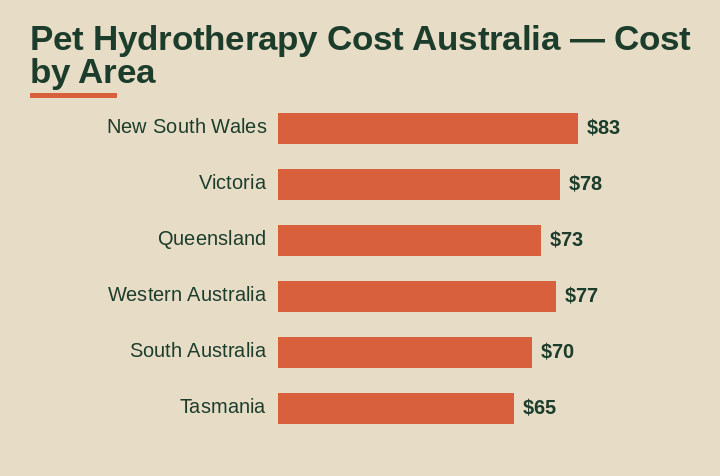
Metropolitan areas within each state command premium prices. Sydney’s inner suburbs and Melbourne’s eastern regions sit at the higher end, while regional facilities in areas like Ballarat, Toowoomba, or Bunbury offer more affordable rates, sometimes 20-30% below capital city pricing.
Included Versus Optional
Understanding what your pet hydrotherapy cost Australia covers prevents surprise charges. Most facilities bundle core services but charge separately for specialised add-ons.
Standard Inclusions in Base Price
- Supervised swimming or treadmill session (20-30 minutes of active therapy)
- Heated, filtered pool or tank maintained at optimal therapeutic temperature (28-32°C)
- Qualified hydrotherapist supervision throughout the entire session
- Life jacket or flotation support if your pet requires assistance
- Post-session towel dry and warm-down area access
- Progress notes and updates sent to your referring veterinarian
- Basic conditioning exercises tailored to your pet’s mobility level
Optional Extras (Additional Cost)
- Extended sessions (45-60 minutes): Add $25-$45 to base price
- Laser therapy or photobiomodulation: $30-$60 per treatment, often combined with hydrotherapy
- Massage or manual therapy: $35-$70 for 15-30 minute sessions pre or post-swim
- Home exercise program development: $50-$100 one-time fee for customised land-based routine
- Video gait analysis: $80-$150 for detailed movement assessment and reporting
- Specialised fitness equipment use: $15-$30 for resistance jets, balance boards, or underwater obstacles
- Transport services: $40-$80 each way for pick-up and drop-off within 15km radius
Many pet care services integrate with hydrotherapy for comprehensive wellness programs. Some facilities partner with mobile dog grooming providers offering post-session grooming packages at discounted rates.
5 Things That Affect What You Pay
Your final pet hydrotherapy cost Australia bill depends on multiple variables beyond the advertised session rate. Here’s what drives pricing differences.
1. Facility Type and Accreditation Level
Veterinary-integrated hydrotherapy centres charge premium rates ($80-$120 per session) but offer on-site veterinary oversight, advanced diagnostic equipment, and seamless medical record integration. These facilities employ veterinary physiotherapists or nurses with additional hydrotherapy qualifications.
Standalone certified hydrotherapy centres represent the mid-range option ($60-$85 per session), staffed by trained canine hydrotherapists with industry certifications. They work closely with referring vets but operate independently.
Pet fitness centres with hydrotherapy offer the most affordable sessions ($45-$65) focused on fitness and weight management rather than medical rehabilitation. These suit healthy pets needing exercise rather than therapeutic intervention.
2. Session Duration and Treatment Intensity
Standard 30-minute sessions suit most pets, but treatment intensity affects pricing. Gentle mobility maintenance costs less than intensive post-surgical rehabilitation requiring constant hands-on support and specialised exercises.
Puppies or elderly dogs with limited stamina might need shorter 15-20 minute sessions (typically 30-40% discount), while athletic dogs in training programs benefit from 45-60 minute extended sessions at premium rates. Your hydrotherapist will recommend optimal duration based on your pet’s condition and fitness level.
3. Your Pet’s Size and Species
Most facilities charge flat rates for dogs under 30kg, with large breed surcharges of $10-$20 for dogs over 40kg due to increased water displacement, longer dry times, and additional handling requirements. Giant breeds exceeding 60kg may face further supplements.
Cat hydrotherapy requires specialised handling and often uses separate, smaller facilities, prices typically match small dog rates ($60-$80). Exotic pets like rabbits or guinea pigs need even more specific expertise, with limited providers charging $70-$100 per session.
4. Geographic Location and Competition
Sydney’s Northern Beaches, Melbourne’s Bayside, and Brisbane’s western suburbs command the highest pet hydrotherapy cost Australia rates due to premium real estate and affluent demographics. Inner-city facilities also charge more for convenience despite smaller spaces.
Regional areas with single providers often maintain mid-range pricing without competitive pressure to discount, but lower overheads mean better value than metro equivalents. Areas with 3+ competing facilities see aggressive package deals and loyalty programs that can reduce costs by 15-25%.
5. Treatment Purpose and Required Equipment
Underwater treadmill sessions cost $10-$15 more than pool swimming due to specialised equipment maintenance and controlled environment requirements. Treadmills allow precise speed, incline, and water level adjustments for targeted rehabilitation, essential for neurological conditions or gait retraining.
Resistance jets, current generators, or underwater cameras for gait analysis add further costs. Post-surgical care requiring strict protocols, constant monitoring, or integration with physiotherapy exercises justifies premium pricing. Simple fitness swimming or arthritis maintenance uses less intensive (and cheaper) approaches.
A quality Life jacket designed for therapy can make home practice safer between professional sessions, though it should never replace supervised treatment for medical conditions.
How to Get Better Value
Book package deals upfront. Every facility offers multi-session discounts, typically 10-20% off individual rates. A 10-session package at $600 versus 10 singles at $750 saves $150 immediately. Many centres offer 15, 20, or even 30-session packages with escalating discounts. If your pet needs long-term treatment, commit to larger packages for maximum savings. Most facilities allow 6-12 months to use packages, and some permit sharing between household pets.
Leverage pet insurance coverage. Comprehensive policies increasingly recognise hydrotherapy as legitimate veterinary treatment when prescribed for medical conditions. Submit claims for reimbursement rather than paying out-of-pocket. Some insurers pre-approve treatment courses, streamlining the claims process. Even if your current policy doesn’t cover alternative therapies, switching during renewal to a policy including rehabilitation benefits might save hundreds annually. Check sub-limits carefully, many cap alternative therapy claims at $500-$1,500 yearly.
Schedule off-peak sessions. Weekday mornings and early afternoons cost less at many facilities compared to after-work and weekend slots. Some centres offer 15-20% “quiet time” discounts for sessions booked between 9am-2pm Monday to Thursday. If your schedule allows flexibility, you’ll pay significantly less for identical treatment. Ask about last-minute booking discounts too, facilities sometimes offer same-day or next-day discounts to fill cancellations.
Combine services strategically. If your pet needs multiple therapies, hydrotherapy plus massage, laser treatment, or physiotherapy, book them together. Bundled treatment plans typically discount each component by 10-15%. Some facilities partner with veterinary clinics, grooming services, or boarding facilities for cross-promotion deals. Your hydrotherapist might also recommend home exercises reducing session frequency, a Comprehensive rehabilitation guide helps you implement these correctly.
Join loyalty or wellness programs. Many hydrotherapy centres offer membership schemes: pay $200-$400 annually for unlimited access or heavily discounted per-session rates. These suit pets needing ongoing maintenance rather than time-limited rehabilitation. Calculate your expected annual usage, if you’ll need more than 8-10 sessions yearly, membership usually pays for itself. Some programs include complementary assessments, priority booking, and free home exercise consultations.
Supporting your pet’s recovery with Quality joint supplements may extend time between professional sessions once they’ve completed initial rehabilitation programs, though always consult your vet before starting supplements.
Don’t let your pet’s mobility challenges limit their happiness. Compare quotes, explore package deals, and discuss treatment options with qualified hydrotherapists who can create customised programs addressing your pet’s specific needs. The right hydrotherapy program transforms lives, both for pets regaining independence and owners witnessing their companions thrive again.
Frequently Asked Questions
Is pet hydrotherapy covered by pet insurance in Australia?
Most comprehensive pet insurance policies in Australia cover hydrotherapy when prescribed by a veterinarian for injury recovery or chronic conditions like arthritis. Coverage typically ranges from 60-80% of costs after excess, but pre-existing conditions are usually excluded. Always check your specific policy’s sub-limits for alternative therapies, which commonly cap at $500-$1,500 annually.
How many hydrotherapy sessions does a dog typically need?
Most dogs require 6-12 sessions for post-surgical rehabilitation, with sessions scheduled 2-3 times weekly. Chronic conditions like arthritis or hip dysplasia often need ongoing maintenance therapy, typically once weekly or fortnightly. Your hydrotherapist will create a tailored program after the initial assessment, and progress is reviewed every 4-6 sessions.
What’s the difference between pool and underwater treadmill hydrotherapy?
Pool hydrotherapy allows free swimming and is ideal for cardiovascular fitness, muscle building, and dogs nervous about confined spaces. Underwater treadmills provide controlled, repetitive movement excellent for gait retraining, targeted muscle work, and post-surgical rehabilitation. Treadmill sessions cost $10-$15 more but offer more precise therapeutic control for specific conditions.
Can I do pet hydrotherapy at home to save money?
Home swimming can supplement professional hydrotherapy but shouldn’t replace prescribed treatment. Proper hydrotherapy requires controlled water temperature (28-32°C), correct depth, qualified supervision, and specific exercises. Backyard pools are typically too cold and lack proper support equipment. However, once your pet completes their program, your hydrotherapist may approve supervised home swimming for maintenance.
Do all pets need a vet referral for hydrotherapy in Australia?
Veterinary referral requirements vary by state and facility. Most reputable hydrotherapy centres require or strongly recommend vet referrals to ensure treatment suits your pet’s condition and doesn’t worsen underlying issues. Some facilities accept pets for fitness and weight management without referral, but therapeutic sessions for injury or disease always need veterinary approval and diagnosis.
Start Your Pet’s Hydrotherapy Journey
The pet hydrotherapy cost Australia investment delivers measurable improvements in mobility, pain management, and quality of life for countless Australian pets each year. Whether your companion needs post-operative rehabilitation, chronic condition management, or fitness enhancement, hydrotherapy offers evidence-based benefits worth the expense.
Request initial assessments from 2-3 local facilities to compare approaches, pricing structures, and therapist expertise. Most centres offer free site tours so you can evaluate equipment quality, cleanliness standards, and staff qualifications before committing. According to the Australian Veterinary Association, pets receiving appropriate rehabilitation therapy recover faster and more completely than those without structured programs, making hydrotherapy a valuable component of comprehensive veterinary care.
This guide contains affiliate links. We may earn a small commission from qualifying purchases at no extra cost to you.