
Tree removal cost australia is one of those things that’s genuinely hard to pin down without context, because two nearly identical-looking trees on the same street can attract quotes $1,500 apart. I’ve spoken to arborists across Sydney, Brisbane and Melbourne over the past year, and the price variation is real. According to the Australian Bureau of Statistics, housing density and urban infill have pushed more trees into tight spaces alongside fences, driveways and powerlines, which directly inflates removal complexity and cost.
Tree removal cost Australia typically runs $400–$1,500 for small to medium trees and $1,500–$5,000+ for large or complex jobs. A standard suburban gum tree in Sydney or Melbourne averages $900–$1,800 depending on height, access and whether stump grinding is included. Council permit fees add $100–$350 on top in many areas.
The short version: small trees (under 5 metres) run $400–$700. Medium trees hit $700–$1,800. Anything large, overhanging a structure, or requiring specialist rigging will start around $1,800 and can easily reach $5,000+. Those figures are for removal only. Stump grinding and permit fees are almost always separate.
What tree removal typically costs in 2026
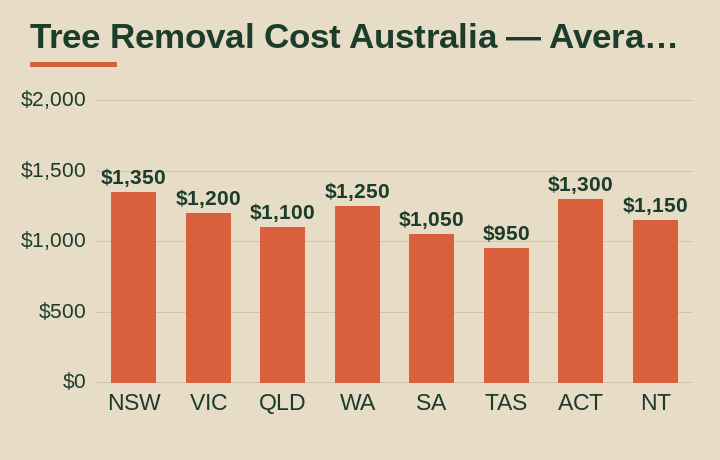
Prices vary most by tree size, state and access. A standard suburban eucalyptus in Western Sydney runs $900–$1,500. The same tree in Surry Hills or Newtown, where site access is tight and parking fees apply, pushes closer to $1,400–$2,200. In Geelong or Toowoomba, you’d likely pay less, simply because labour costs and overheads are lower.
| State | Average Cost | Typical Range |
|---|---|---|
| NSW | $1,350 | $500 – $4,500 |
| VIC | $1,200 | $450 – $4,000 |
| QLD | $1,100 | $400 – $3,800 |
| WA | $1,250 | $500 – $4,200 |
| SA | $1,050 | $400 – $3,500 |
| TAS | $950 | $380 – $3,200 |
| ACT | $1,300 | $500 – $4,000 |
| NT | $1,150 | $450 – $3,800 |
Get 3 free quotes from local providers in your area. No obligation.
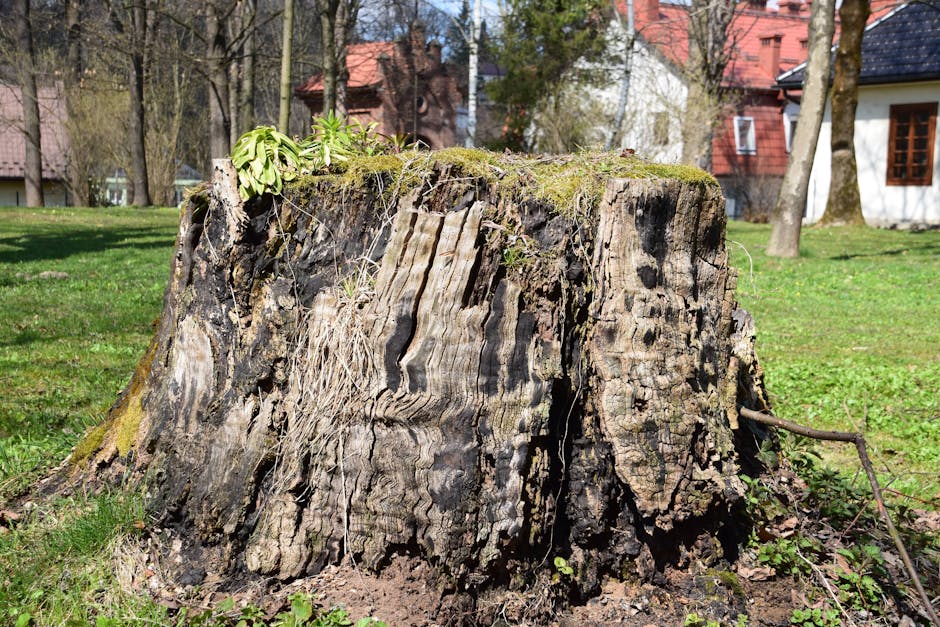
The stump is the most common surprise. People book tree removal and assume the stump disappears with it. It won’t, unless you specifically ask. Stump grinding is worth bundling into the same quote if you ever want to grass over or replant the area. On its own, a follow-up grinding visit will cost you more because the crew has to remobilise.
Where the money actually goes
Tree height and canopy spread
Height is the single biggest driver of cost. A 4-metre ornamental tree in a Fremantle backyard is a one-person, two-hour job at $400–$600. A 16-metre spotted gum in a Brisbane inner suburb is a full-day job for three people with a chipper truck, and that’s $2,800–$4,500 before permits. Each additional 3–4 metres of height adds roughly $400–$700 to the job, because the crew needs more rope work, more cutting passes, and more time managing falling sections safely.
Access and site conditions
Tight access is an arborist’s least favourite thing, and they price it accordingly. If the crew can get a chipper truck and crane vehicle to within 10 metres of the tree, the job is straightforward. If they’re working through a narrow gate in Newtown or Paddington with no vehicle access, everything has to be hand-carried out. That adds 1.5–3 hours of labour, which at $140–$180 per hour per worker is $280–$900 extra. Sloped blocks add complexity too, particularly in parts of Sydney’s North Shore or Hobart’s hillside suburbs.
Proximity to structures and powerlines
A tree growing over a roof, close to a fence or near powerlines is a risk-multiplied job. Arborists charge a premium because each section must be rigged and lowered by rope rather than dropped freely. Crane hire is sometimes the only safe option, and that alone costs $600–$1,200 for a half-day. A Choice Australia analysis of home maintenance costs found that structural proximity was the factor homeowners most consistently underestimated when budgeting for tree work. I’d agree with that, based on the quotes I’ve seen.
Tree species and condition
Dead or diseased trees are often cheaper to remove in theory, but more dangerous in practice, so arborists price the risk. A rotten tree can drop unpredictably during felling. Hardwood species like ironbark or spotted gum are heavier and blunt chainsaw chains faster than softwoods, meaning more time and consumables. A healthy 8-metre brushbox in Melbourne’s eastern suburbs might cost $950–$1,300 to remove. The same-height dead ironbark next door? $1,200–$1,700, because of unpredictable fall behaviour. If you’re also thinking about ongoing outdoor costs, tree maintenance is worth building into your annual budget.
Permits and council requirements
Most councils in NSW, VIC and QLD require a permit before removing any tree above a specified trunk circumference, usually 30–50 cm measured at breast height. Fees run $100–$350, plus you may need a qualified arborist to lodge an assessment report ($200–$500 separately). The ACT has particularly involved tree protection legislation. In some Brisbane and Sydney council areas, heritage-listed trees can’t be removed at all, regardless of condition. Sorting this out before you get quotes saves double-handling and avoids permit refusal surprises. Also relevant: if you own pets, tree maintenance intersects with your broader property running costs more than you’d expect.
Questions to ask before you book
Is the quote for removal only, or does it include stump grinding and disposal?
This is the number one ambiguity in tree removal quotes. Get explicit confirmation of what’s included in writing. “Removal” means different things to different operators, and finding out on the day that the stump and timber logs are your problem to deal with is genuinely common.
Are you a qualified arborist, and can I see your licence?
A qualified arborist holds at minimum a Certificate III in Arboriculture. This matters for two reasons: your insurer may not cover damage caused by an unqualified operator, and councils often require a licensed arborist to certify removal applications. Don’t assume. Ask, and look at the actual document.
Do you carry public liability insurance, and what’s the coverage limit?
A falling tree section that hits your house or a neighbour’s fence is a real scenario. Reputable operators carry at least $10 million in public liability cover. Ask for the certificate of currency, not just a verbal yes. This is particularly relevant for jobs near structures or boundaries. You might also want to review your existing insurance policies to understand what’s already covered on your property.
Who handles the council permit, and what happens if it’s refused?
Some arborists include permit lodgement in their quote; others expect you to handle it. If the permit is refused after you’ve paid a deposit, clarify the refund or cancellation terms upfront. Permit timelines in some councils stretch 3–6 weeks, and delays mid-project can complicate scheduling significantly.
Will the crew use a crane or elevated work platform, and is that in the quoted price?
Crane hire is the single biggest cost variable on complex jobs. If an arborist quotes without specifying whether a crane is needed, ask directly. A quote of $1,800 that turns into $3,200 once the crane is added is not unusual and it’s not always dishonest, just incomplete initial scoping. Get it clarified before signing anything.
What happens to the timber and green waste?
Chipping is standard for branches, but large trunk logs are sometimes left on site unless you’ve paid for hauling. If you have a use for firewood or want the mulch, say so upfront. Some arborists will discount $100–$300 if they can keep the timber. Either way, know the plan before the crew arrives. See also our notes on managing recurring property costs.
How to bring the cost down
Get three written quotes, not two, not one. Prices for tree removal honestly vary more than most trades. I’ve seen three quotes for the same 10-metre tree in Western Sydney come in at $1,100, $1,650 and $2,200. Same job. Three legitimate businesses. The spread is that wide because arborists factor in their current workload, whether they want the job, and how they’re pricing the risk. A written quote also protects you if the crew decides mid-job that the scope has changed.
Offer the arborist the timber. This sounds simple but it’s overlooked constantly. If you don’t want the firewood, tell them they’re welcome to it. Many arborists will drop $150–$300 off the quote in exchange for keeping the wood. They sell it or use it as mulch, and you pay less. Worth asking every time. You can manage the remaining chips yourself with a pole pruning saw for smaller overhanging branches beforehand to reduce billable work.
Book in autumn or winter. Spring storm season and the summer heat create demand spikes that push prices up. Arborists in Melbourne and Sydney are genuinely quieter between May and August. A job that costs $1,600 in November might be quoted at $1,300–$1,400 in June, simply because the crew needs the work.
Clear access before the crew arrives. Arborists charge by time, and time spent shifting your garden furniture, unlocking gates, or waiting while you figure out where the neighbour’s fence actually ends is billable. Have the access ready, paths clear, and any underground service locations marked. At $150–$180 per hour for a two-person crew, 45 minutes of your prep work saves $110–$135. Also worthwhile: handle any basic stump killer treatment on smaller secondary stumps yourself after the main job, rather than paying arborist rates for minor follow-up work.
Check if your council has a tree rebate or subsidy scheme. Several councils, particularly in NSW and SA, offer subsidised removal for hazardous or invasive species. Some will even cover the cost entirely for trees that are dead or structurally unsound and pose a risk to public safety. A five-minute phone call to your council’s planning or environment department can save you $300–$1,000. Also worth checking: some strata and body corporate schemes cover tree removal costs within common property areas, which many owners don’t realise until after they’ve paid themselves.
Frequently Asked Questions
How much does it cost to remove a large tree in Australia?
A large tree (over 10 metres) typically costs $1,800–$5,000+ to remove in Australia. Height, girth, proximity to structures and site access are the main variables. A 15-metre eucalyptus dropping over a fence line in Sydney’s inner suburbs can push past $4,500 once crane rigging is factored in.
Does tree removal include stump grinding?
Usually not. Most arborists quote tree removal and stump grinding separately. Stump grinding typically costs $150–$450 depending on stump diameter. If you want both, ask upfront and request a bundled price, you’ll often save $80–$120 by combining jobs.
Do I need a council permit to remove a tree in Australia?
In most Australian councils, yes, particularly for trees above a certain height or trunk girth. Permit fees range from $100–$350 depending on the local government area. Some councils in NSW and QLD have vegetation protection overlays that can block removal entirely for certain native species. Check your local council’s website before booking anything.
How much does emergency tree removal cost after a storm?
Emergency or after-hours tree removal typically costs 50–100% more than a standard daytime job. Expect to pay $1,500–$6,000+ for urgent storm damage work, especially if the tree has fallen on a structure. Some arborists charge a flat emergency call-out fee of $300–$600 on top of their standard rates.
Is it cheaper to do tree lopping instead of full removal?
Tree lopping (cutting back branches without removing the tree) costs $250–$1,200 and is cheaper than full removal in the short term. However, improper lopping can cause disease or structural instability, meaning the tree may need full removal later anyway. If the tree is unhealthy or poses a long-term risk, removal is often the better-value decision.
People Also Ask About Tree Removal Cost Australia
Can I remove a tree on my own property without permission in Australia?
Not always. Most Australian states and territories require a permit for removing trees above a certain size, even on private property. In NSW, for example, local development controls (IDCPs and LEPs) determine what’s protected. Queensland has vegetation management laws covering certain species. Always check with your local council first, as fines for illegal removal can reach $10,000 or more.
How long does a tree removal take?
A small tree (under 5 metres) can be removed in 1–2 hours. A medium suburban tree (5–10 metres) typically takes 3–5 hours for a two-person crew. Large, complex removals near structures or powerlines can take a full day or longer. Stump grinding adds 30–90 minutes depending on stump size and access.
What time of year is cheapest for tree removal in Australia?
Late autumn and winter are generally quieter for arborists, especially in southern states. Demand drops after the summer and post-storm rush, so prices are more negotiable. Booking May to July in Melbourne or Sydney can realistically save 10–15% compared to peak season rates.
Does home insurance cover tree removal costs in Australia?
It depends on your policy and the circumstances. Most home insurance policies cover emergency tree removal if a tree falls on an insured structure (like your house or garage) due to a storm. Removal of a dead or hazardous tree that hasn’t fallen is typically not covered. Check your Product Disclosure Statement carefully and call your insurer before assuming.
What’s the difference between an arborist and a tree lopper?
A qualified arborist holds a Certificate III in Arboriculture (AQF Level 3) and is trained in proper tree care, risk assessment and safe removal. A tree lopper may have no formal qualifications. This matters for insurance purposes and for the health of surrounding trees. For any job near structures or powerlines, always use a qualified arborist, and ask to see their licence.
Related Cost Guides
Recommended Products for Tree Removal Cost Australia
If you’re tackling this yourself, here are some products from Amazon Australia that can help:
Tree removal cost australia is one area where doing the research upfront genuinely pays off. The gap between a rushed decision and a careful one can be $500–$1,500 on a mid-size job, and council compliance issues can cost far more than that if ignored. Get written quotes, confirm what’s included, check your permit requirements, and book off-peak if the job isn’t urgent. If you’re managing a broader set of property and pet-related costs, our guides on dog daycare pricing and cat boarding costs follow the same format and may be useful reading.
This guide contains affiliate links. We may earn a small commission from qualifying purchases at no extra cost to you.