
I keep four shrimp tanks at home, alongside a 40 litre indoor pond and the rest of my animals, and I also sell aquarium gear at the pet store I work in. So I get to see two things at once: what works in my own tanks over years, and what people come back into the shop frustrated about.
This is what I actually run. The part I would most want a beginner to read is the next section, because the biggest change I made to my shrimp keeping was doing less, not more. Almost every shrimp disaster I hear about at work is someone intervening in a tank that was fine.
I keep four shrimp tanks at home, holding cherries, crystal reds, blue bolts, snow whites and green jades, with the different species groups kept in separate tanks rather than mixed. The single most useful thing I have learned is that I do almost no maintenance and I do not chase water parameters, and that is exactly why they thrive. I use straight tap water with Seachem Prime, Seachem Stability when a tank is new, Fluval Stratum as substrate and live plants in every tank. I have never had a colony crash and my shrimp have bred enough for me to sell the offspring.
If you buy one thing before the shrimp arrive, make it Seachem Prime. I run straight tap water in every tank and Prime is what makes that safe, because chlorine and chloramine are what actually kill shrimp in a new tank, not the things people usually worry about.
Check price on AmazonAffiliate link. I may earn a small commission at no extra cost to you.
| Tank | Size | Stock | Filtration |
|---|---|---|---|
| Aqua One Betta Sanctuary | 10 litres | Cherries | Built in, came with the tank |
| Crystal red tank | Small | Crystal reds, kept on their own | Planted |
| Curved glass tank | About 20 litres | Blue bolts | Sponge filter |
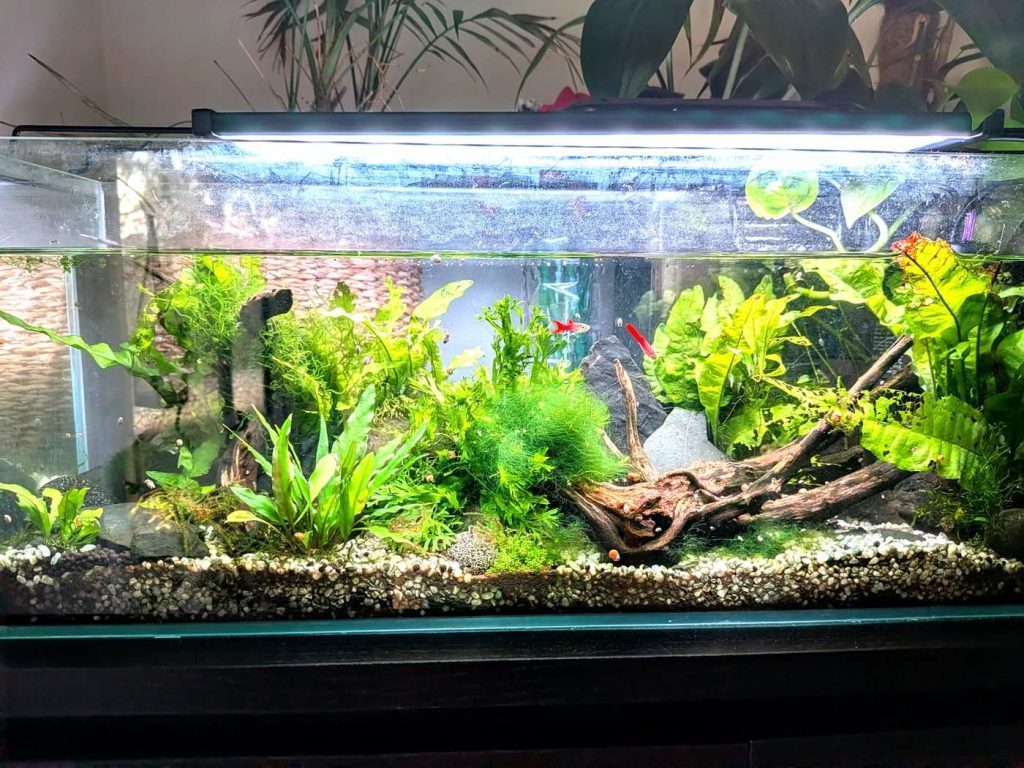
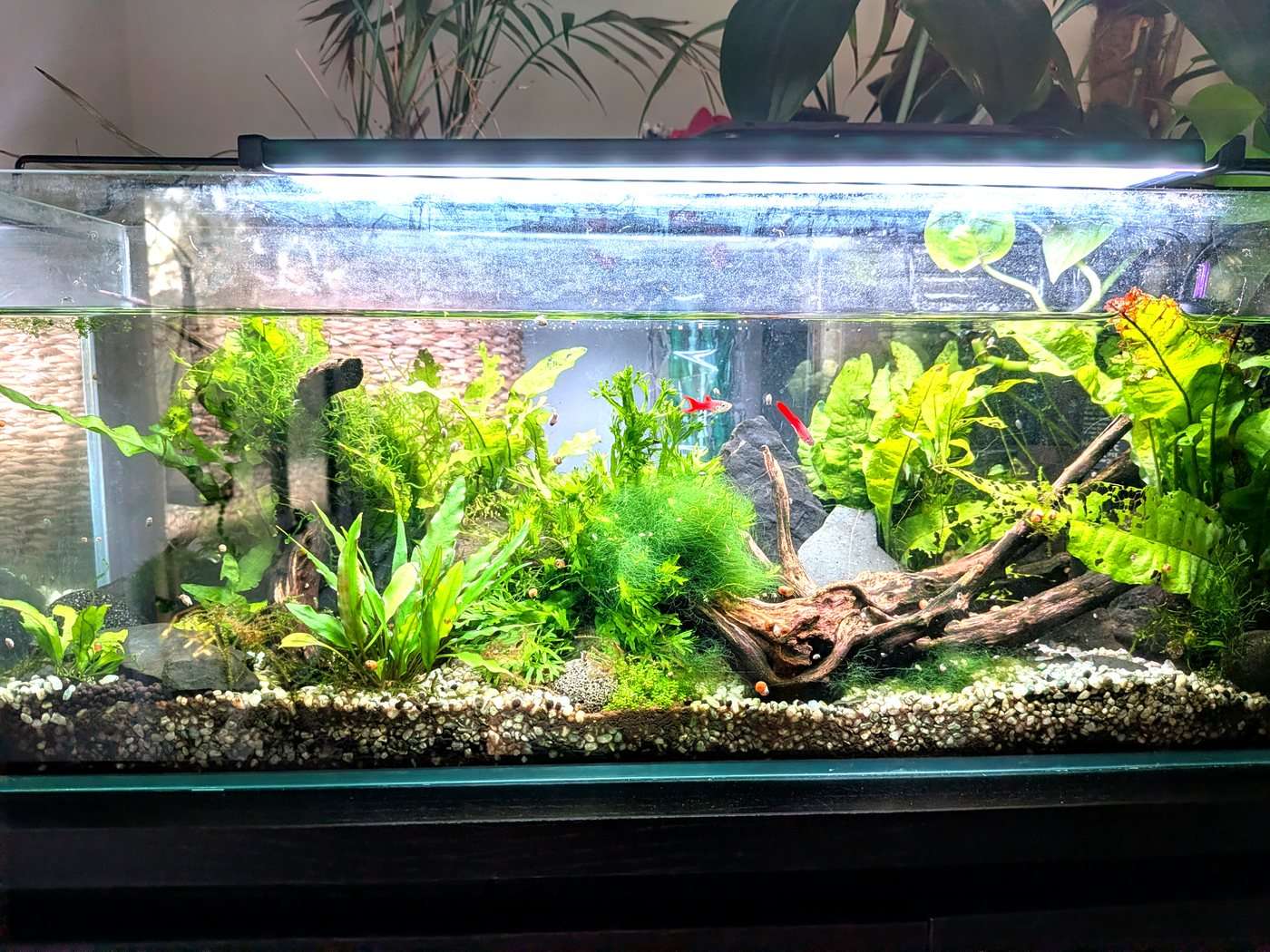
| Long tank | 25 litres | Snow whites, green jades, dark blue red eyes, ember tetras | Planted, heavily aquascaped |
Doing Less Is the Whole Trick
I will be completely honest with you: I do not really do much about the water parameters, and I do not do much maintenance. I think that is exactly what works.
This is the opposite of what most shrimp content tells you. There is a whole corner of the hobby built around remineralisers, RO water, TDS pens and a testing routine, and if you are breeding high grade Caridina competitively then fair enough. For the shrimp most Australians actually buy and keep, I think overdoing it is what causes the problems.
The reason is that shrimp cope badly with change, not with imperfection. A tank sitting at slightly harder water than the internet recommends, but sitting there consistently for a year, is a far safer place to be a shrimp than a tank where someone is adjusting something every weekend. Every big water change, every filter scrub, every dose of something new is a swing. Molting is when they are most vulnerable, and sudden shifts in water chemistry are what turn a molt into a death.
My tanks are planted, lightly fed and mostly left alone. I have never had a colony crash. The crystal reds and cherries in my little Betta Sanctuary have bred multiple times and I have sold the offspring on.
My Water Routine Is Two Bottles
Straight tap water with Seachem Prime in it. That is the whole routine for an established tank.
Prime is non negotiable rather than optional. Australian mains water is treated with chlorine or chloramine, and both will kill shrimp. Conditioner is what makes tap water usable, and it is cheap enough that there is no reason to skip it.
The second bottle only comes out when a tank is new. Seachem Stability goes into every tank I set up and I think it is genuinely important. Shrimp are much less forgiving of ammonia than fish are, and a tank that has not built up its bacteria yet is the single most common way beginners lose their first batch. Set the tank up, plant it, run the filter, dose the starter, wait a few weeks, then add a small group rather than everything at once.
That is it. No remineraliser, no RO unit, no daily testing. I keep a test kit so I can check when something looks wrong, which is different to testing constantly and then reacting to every reading.
Why My Species Live in Separate Tanks
Worth saying early, because it is the structural decision behind everything below. My cherries, my crystal reds and my blue bolts are all in separate tanks, not one big display tank.
There are two reasons for that. The first is water. Cherries and the other Neocaridina types are hardy and will put up with fairly ordinary tap water, while crystal reds and blue bolts are Caridina, which historically want something softer and fussier. Running them separately means each tank can just sit where it naturally sits instead of being a compromise that suits neither.
The second reason is colour. Shrimp within the same species group will happily interbreed, and the offspring do not come out as a nice blend. They revert towards plain wild type brown within a couple of generations, and the colour line you paid for is gone. If you have spent real money on a line, keep it on its own.
My long tank is honestly a bit mixed, and I have made my peace with that, but it is the exception rather than the plan.
Tank One: The All in One That Just Works
My 10 litre Aqua One Betta Sanctuary holds cherries, and it is the tank I would point a beginner at. It comes with the light, the heater and the filter already in it, which removes the part people find hardest: working out which four separate things to buy and whether they suit each other.
I find it quite easy to run, and it looks good, which matters more than people admit. A tank that looks good in your room is a tank you keep.
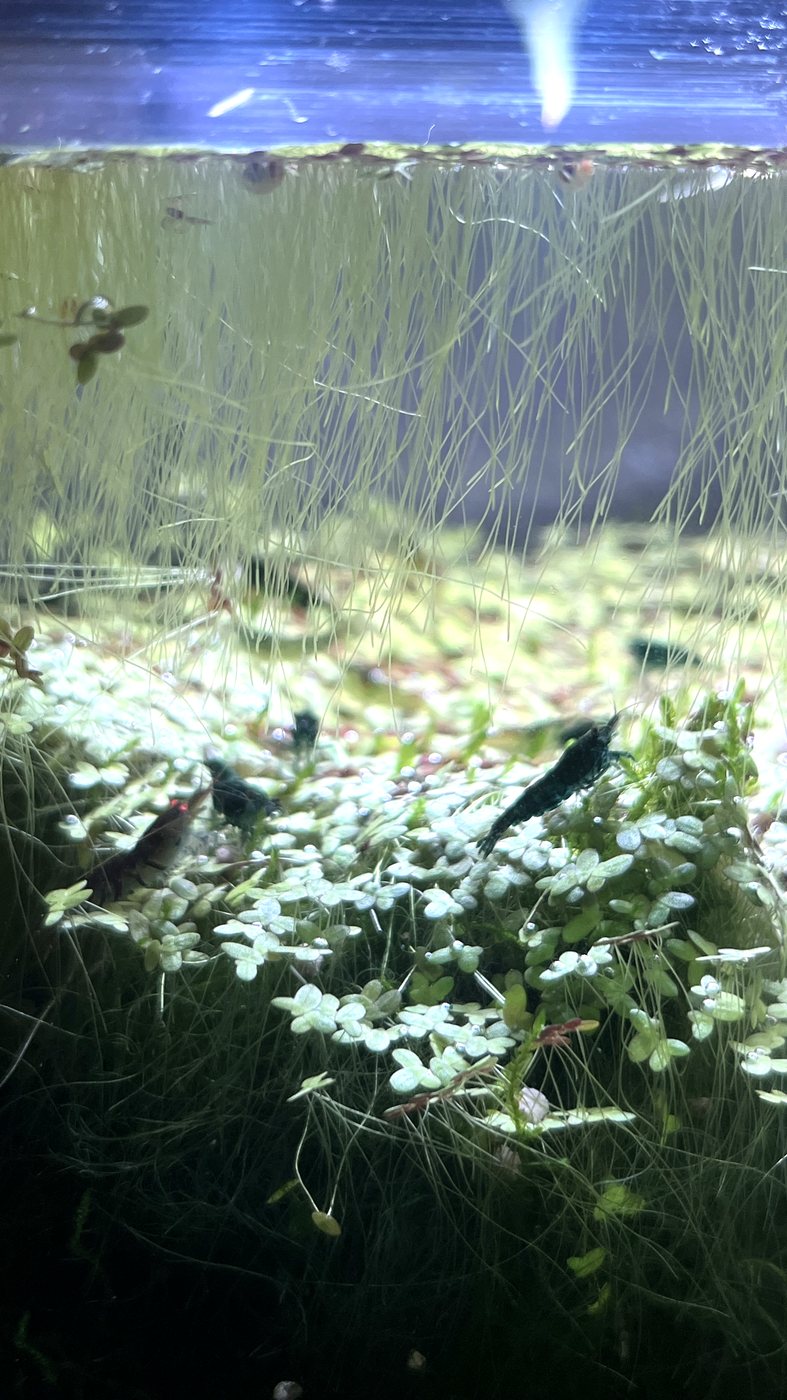
Inside it is Fluval Plant and Shrimp Stratum with Java fern and Java moss. That combination is close to foolproof. Both plants grow in low light, neither needs to be planted into the substrate, and moss in particular is where shrimplets hide and graze in their first weeks. If you want baby shrimp to survive, give them moss.
These shrimp came from a private breeder rather than a shop, and they have gone really well. They have bred multiple times and I have sold them on.
Tank Two: Blue Bolts, and the Light I Still Have Not Solved
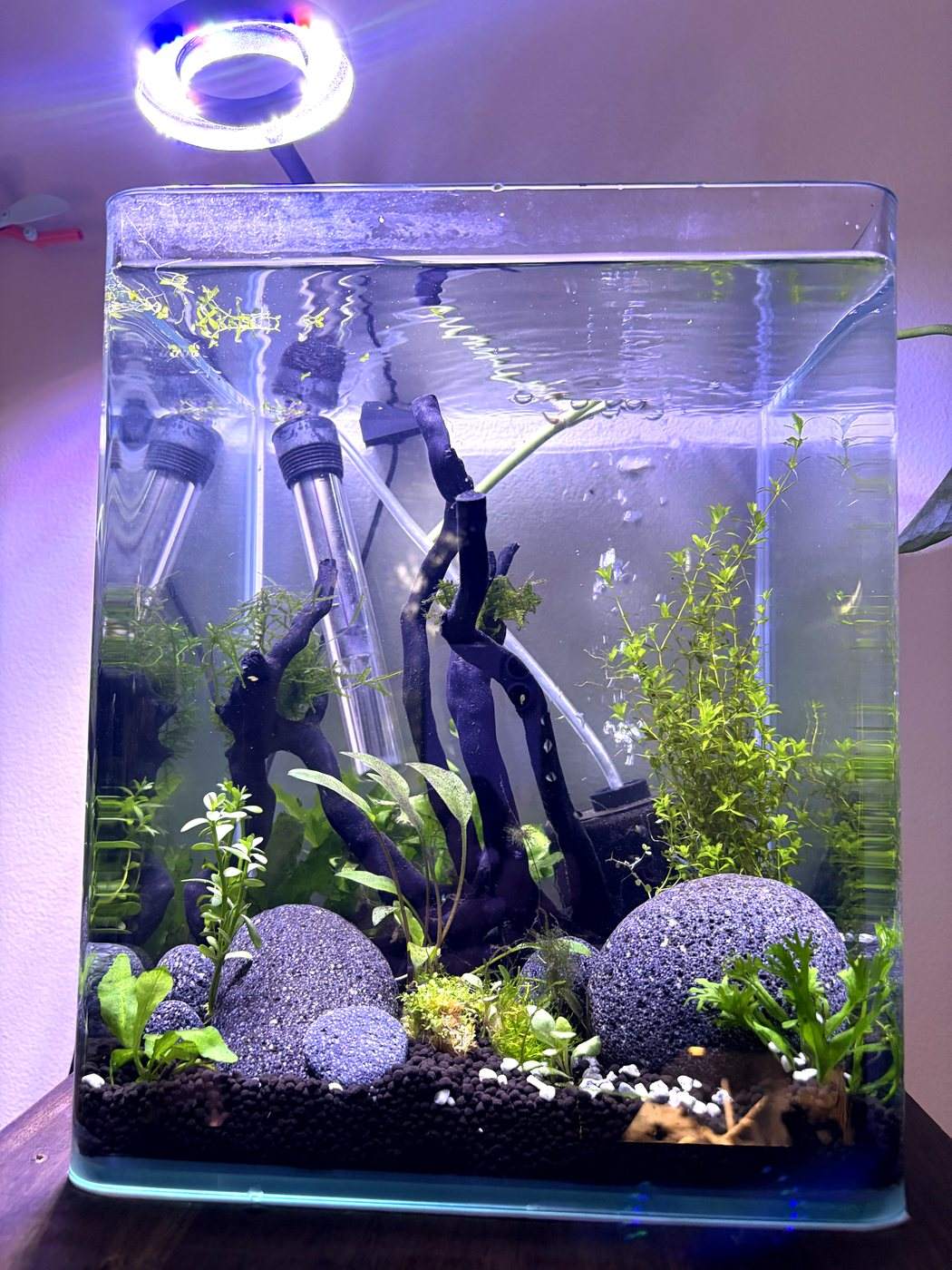
My blue bolts live in a curved glass tank of about 20 litres that I picked up from an aquarium shop, with a heater and a sponge filter.
Two honest gripes with this one.
The light. It is a random light I bought off Amazon and I do not love it. I have never been able to find an aquarium light that both works properly and is actually a good light, at least not without spending far more than I want to on a 20 litre tank. This is a genuine gap in the market at the budget end, and if you are shopping for one, my advice is to buy for the plants you want rather than the brightness on the box, and accept that under about a hundred dollars you are compromising somewhere.
The sponge filter. I like it and I do not like it. It is safe, which is the main reason people use them on shrimp tanks, because shrimplets cannot be pulled into it the way they can with a normal intake. They also graze on it. But I do not think it does as good a job as a regular filter. If I were setting this tank up again I would probably run a small internal filter with a sponge guard over the intake, which gets you the filtration without the risk.
Tank Three: Why Tank Shape Matters More Than Litres
My 25 litre long tank is my best aquascaped tank and my favourite, and the reason is the shape. I really love that it is long.
Two tanks can hold the same volume and be completely different to keep. A long tank gives you more floor area, and floor area is what shrimp actually use, because they graze along surfaces rather than swimming in open water. It also gives you far more room to aquascape, and more surface area for gas exchange. If you are choosing between a tall tank and a long tank at the same price, take the long one.
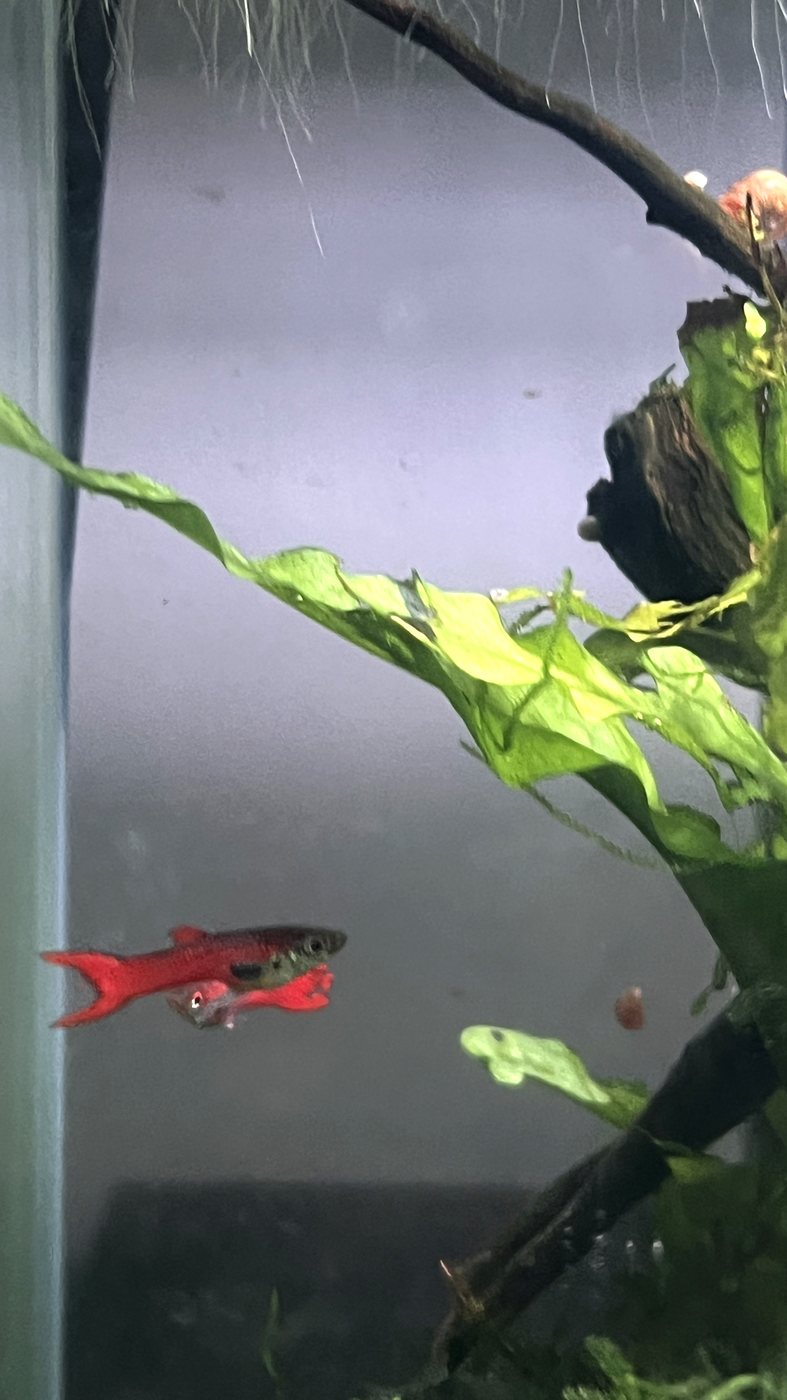
This one has Fluval Stratum, proper aquascaping rock and hardscape, and a mix of different plant species rather than one or two. It holds snow whites and green jades, along with some ember tetras, which look fantastic against the pale shrimp and stay small enough not to be a problem.
It also holds my most expensive shrimp: a dark blue line with bright red eyes, at around $25 each. They are so cool, and they are the clearest example of how wide the price range in this hobby gets. I will be honest and say I do not actually know what that line is called, which happens more than you would think once you are buying from specialist sellers, because the trade names change and the same shrimp gets sold under three of them. Most of my shrimp came from Micro Aquatic Shop.
Aquascape It Before You Fill It
This is my biggest regret across all three tanks, and the thing I would tell anyone starting out.
Once a tank is set up and running, it is quite hard to change. Not impossible, but hard enough that you will not do it. The substrate is in, the plants have rooted, the colony is established and breeding, and pulling it apart means stressing every shrimp in there and clouding the water for a week. So the layout you build on day one is very likely the layout you live with for years.
Spend the extra evening at the start. Get the hardscape in, think about where the moss goes, leave yourself somewhere to feed and somewhere to get a siphon in. My long tank is the one I aquascaped properly and it is the one I am still happy with.
The related regret is size. I would go bigger. A 10 litre tank is a lovely thing and it works, but small volumes swing faster when something does go wrong, and shrimp breed, so you fill the space sooner than you expect.
Food: What I Use and What I Am Switching To
I have been feeding Sera shrimp food and it has done the job. Next time I am going to buy Hikari instead, because I think the quality is a step up.
More important than the brand is the amount. Shrimp graze constantly on biofilm, algae and whatever is growing on your plants and hardscape, so the prepared food is a supplement rather than their diet. Overfeeding is the classic beginner mistake, and it does not just foul the water, it is also how you end up with a planaria or hydra problem. Feed a small amount, watch it get eaten, and take out anything still sitting there after a few hours.
A piece of cholla wood is one of the better value things you can put in a shrimp tank for the same reason. It grows biofilm, and biofilm is what they actually want to eat.
What I Would Do Differently
- Buy the bigger tank. More water is more stable, and shrimp fill the space.
- Aquascape it properly on day one, because you will not redo it later.
- Buy the long tank over the tall one at the same volume.
- Start with cherries. They are cheap, hardy and they breed, which means your first mistake is not an expensive one.
- Buy from a breeder or a specialist rather than a general pet shop. Mine settled in far better than shop bought shrimp usually do.
What I Use
The gear actually in my tanks, plus the two bottles I would buy before anything else. (these are affiliate links)
Want to see everything I run? Here is all the gear I actually use across my reptiles, tanks, rabbits and caique.
Frequently Asked Questions
Do shrimp tanks need a lot of maintenance?
Less than most people think, and in my experience that is the point. I run four shrimp tanks and I do very little to them. I top up evaporated water, feed lightly, and otherwise leave them alone. Shrimp are far more sensitive to sudden change than they are to slightly imperfect water, so a big water change or a scrub of the filter can do more harm than the thing you were trying to fix. A stable, planted, lightly stocked tank that you mostly ignore is the setup I would recommend to anyone starting out.
Can you keep shrimp in tap water in Australia?
Yes, and I do in every tank. Australian tap water is treated with chlorine or chloramine, both of which are lethal to shrimp, so it has to be dosed with a conditioner first. I use Seachem Prime. What I do not do is chase specific numbers with remineralisers or RO water. Plenty of guides insist you need them, and for very fussy high grade Caridina lines that may be true, but for the shrimp most people actually buy, conditioned tap water that stays consistent has worked better for me than water I was constantly adjusting.
How long does a new shrimp tank need before you add shrimp?
Give it a few weeks and use a bacterial starter. I use Seachem Stability whenever I set a tank up and I think it is one of the most important things you can buy. Shrimp are much less tolerant of ammonia than fish are, so adding them to a tank that has not established its bacteria is the most common way beginners lose a batch. Plant it, run the filter, dose the starter, wait, and add a small group first rather than the whole colony.
Are sponge filters good enough for a shrimp tank?
They are safe, which is their main advantage, because shrimplets cannot be sucked into them the way they can with an intake. I run one on my blue bolt tank and I have mixed feelings about it. It does the job and the shrimp graze on it, but I do not think it moves or polishes water as well as a proper internal filter does. If I were using an internal filter on a shrimp tank I would put a sponge guard over the intake and get the best of both.
How much do shrimp cost in Australia?
It depends enormously on the line. Common cherries are the cheapest entry point and the sort of shrimp I would start anyone on. At the other end, I paid about $25 each for dark blue red eyed shrimp, which is normal for sought after colour lines. Most of mine came from Micro Aquatic Shop and my first colony came from a private breeder. Buying from a breeder or a specialist shrimp seller rather than a general pet shop makes a real difference to how well they settle in.