
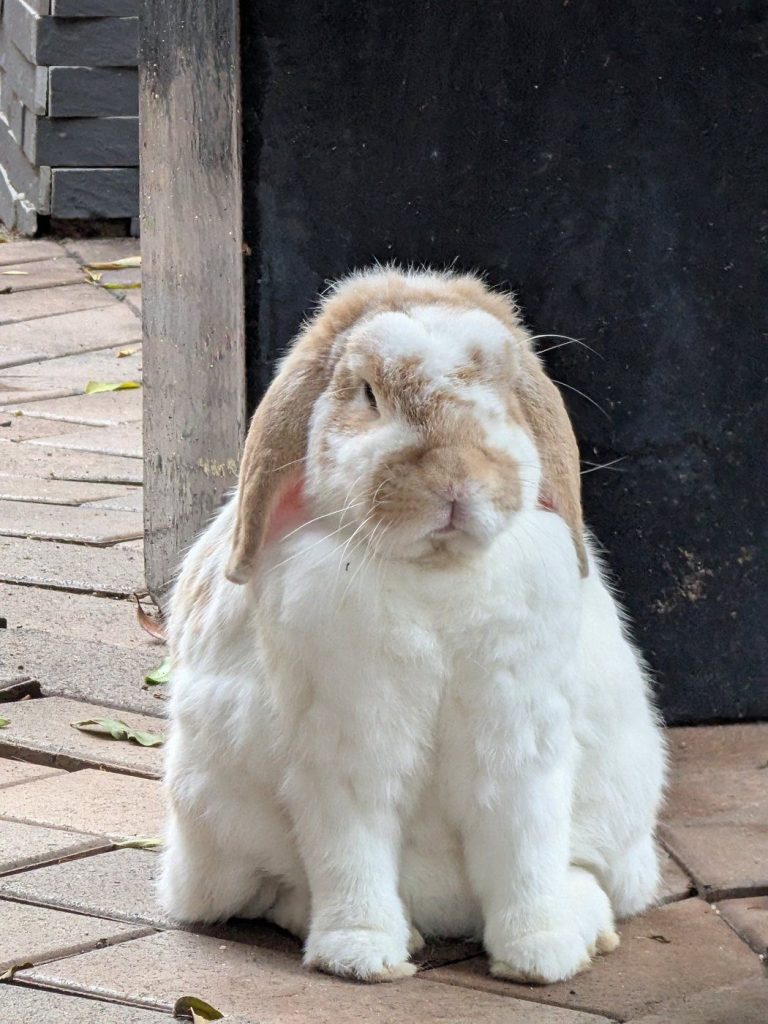
I have kept rabbits for most of my life and I currently have three: a Flemish giant, a mini lop and a Rex. They live outdoors, in areas we built for them rather than in shop bought hutches, in a yard they cannot get out of. I also work in a pet store, so I hear a lot of rabbit problems from the other side of the counter.
Most rabbit guides start with housing. I am going to start with bonding, because it is the thing people do not think about before they get rabbits, and it is the thing that goes wrong worst.
I keep three rabbits outdoors in Australia: a Flemish giant, a mini lop and a Rex, all males, in areas we built rather than shop bought hutches. The two things I would most want a new owner to know are that bonding rabbits is far harder and more dangerous than anyone tells you, and that hay has to be 70 to 80 percent of the diet and fed constantly. My Flemish giant and mini lop took years to accept each other. I have also had a rabbit with hypothermia three times, a permanent paw injury, and a $3,000 vet bill for a suspected liver problem, which is why I think pet insurance is worth considering for rabbits.
If you buy one thing, buy better hay and buy a lot of it. Oxbow Timothy Hay is the one I would point at. Hay is the single biggest thing people get wrong with rabbits, and good hay is not a treat or a bedding material, it is most of what your rabbit should be eating every day.
Check price on AmazonAffiliate link. I may earn a small commission at no extra cost to you.
| Rabbit | Housing | Company |
|---|---|---|
| Flemish giant | Built area, out in the yard during the day | Bonded to the mini lop |
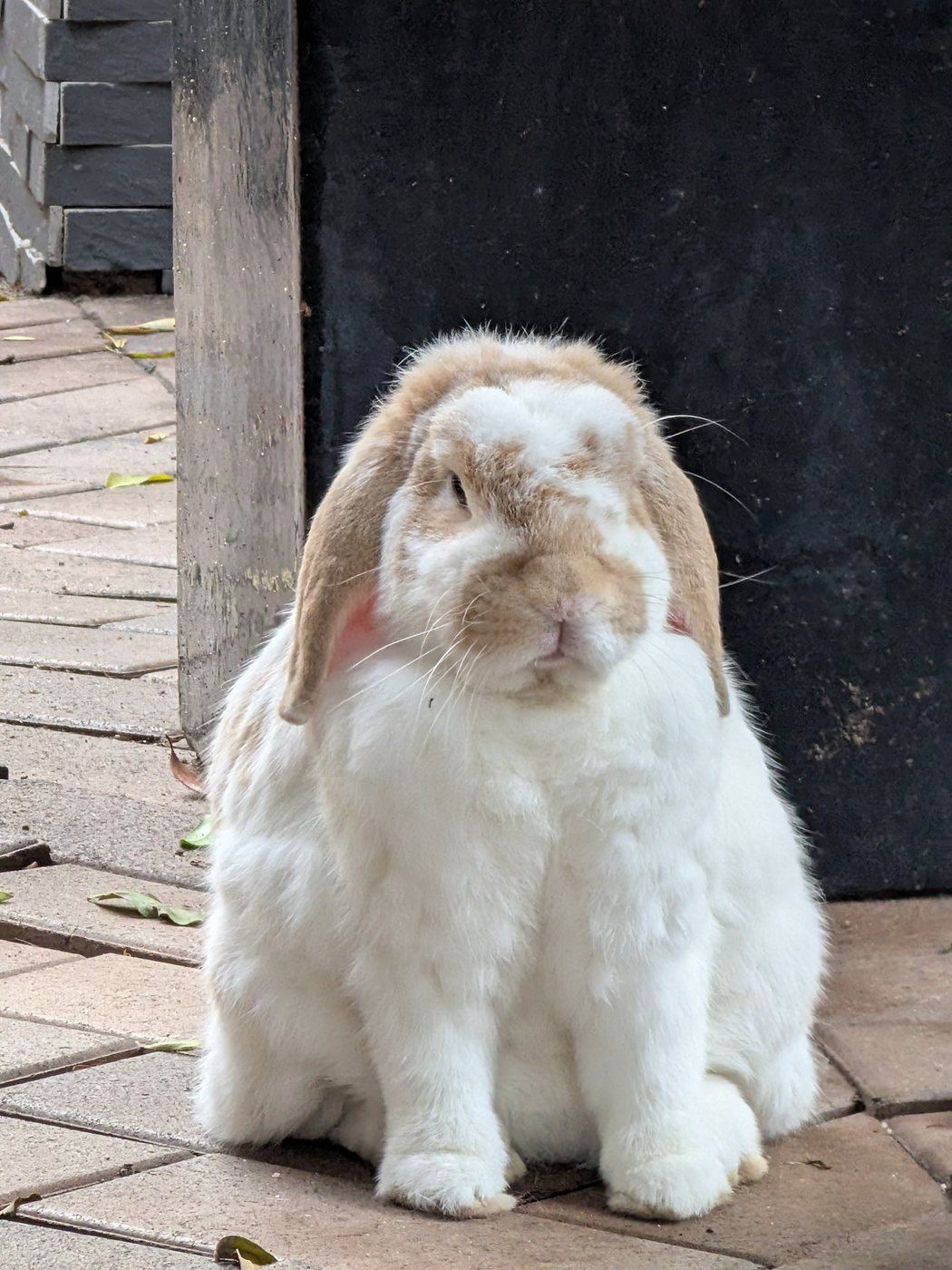
| Mini lop | Built area, out in the yard during the day | Bonded to the Flemish giant |
| Rex | His own large space | Kept separately |
Bonding Is the Thing Nobody Warns You About
Sometimes rabbits just do not get along, and it is really hard. That is something people do not really think about when they are getting them.
If you are getting two young rabbits from a breeder at the same time, you will probably be fine. That is the easy version, and it is the version most people picture. Introducing an older rabbit to a younger one is a completely different job, and it can be quite terrifying.
A rabbit fight does not look like a squabble. They latch onto each other and go into a ball, and they will hurt each other. It happens in seconds and it is genuinely hard to break up safely. I have had rabbits that had to go to the vet because of it. It is not great, and it is not rare.
All three of mine are male, which does not help. Two males are harder to bond than a male and a female, and entire rabbits are harder than desexed ones.
My Flemish giant used to have another Flemish giant as a partner. He is now paired with the little mini lop, and it took years for them to get along. What actually fixed it was an accident. One time they were let out together by mistake, in the open yard rather than in either one’s space, and they have been together ever since and they love it.
The lesson I take from that is about territory. Rabbits defend the space they think is theirs, so most failed introductions are failing on ground one of them already owns. Neutral space, no rush, and be ready for it to take far longer than the internet suggests.
Hay Is 70 to 80 Percent of the Diet
This is the one people get wrong all the time, and it is the easiest thing on this page to fix.
Hay needs to be the majority of a rabbit’s diet, around 70 to 80 percent, and it needs to be available constantly. Not a handful in the corner, not bedding they happen to nibble. Most of what goes into the rabbit, all day.
Rabbits go through hay very fast, and they should. Their teeth grow continuously and chewing tough fibre is what keeps them worn down, and their digestive system needs fibre moving through it more or less nonstop. A rabbit fed mostly pellets and vegetables with hay as an afterthought is on a path to dental problems and gut stasis, and both of those are vet bills.
Good hay is not cheap. Oxbow Timothy hay runs about $120 for 4kg, and that sounds like a lot until you accept that hay is the actual food. I use Ocean Hay as both the bedding and the hay, because it builds up nicely and I think it is the best value for how I keep mine.
The other thing I would push, especially for young rabbits, is a specific growth formula rather than adult pellets. Growing rabbits need nutrients that adult food is not built to provide, and it is a short window where it matters. I definitely recommend it.
Why Mine Live on Pavers, Not Dirt
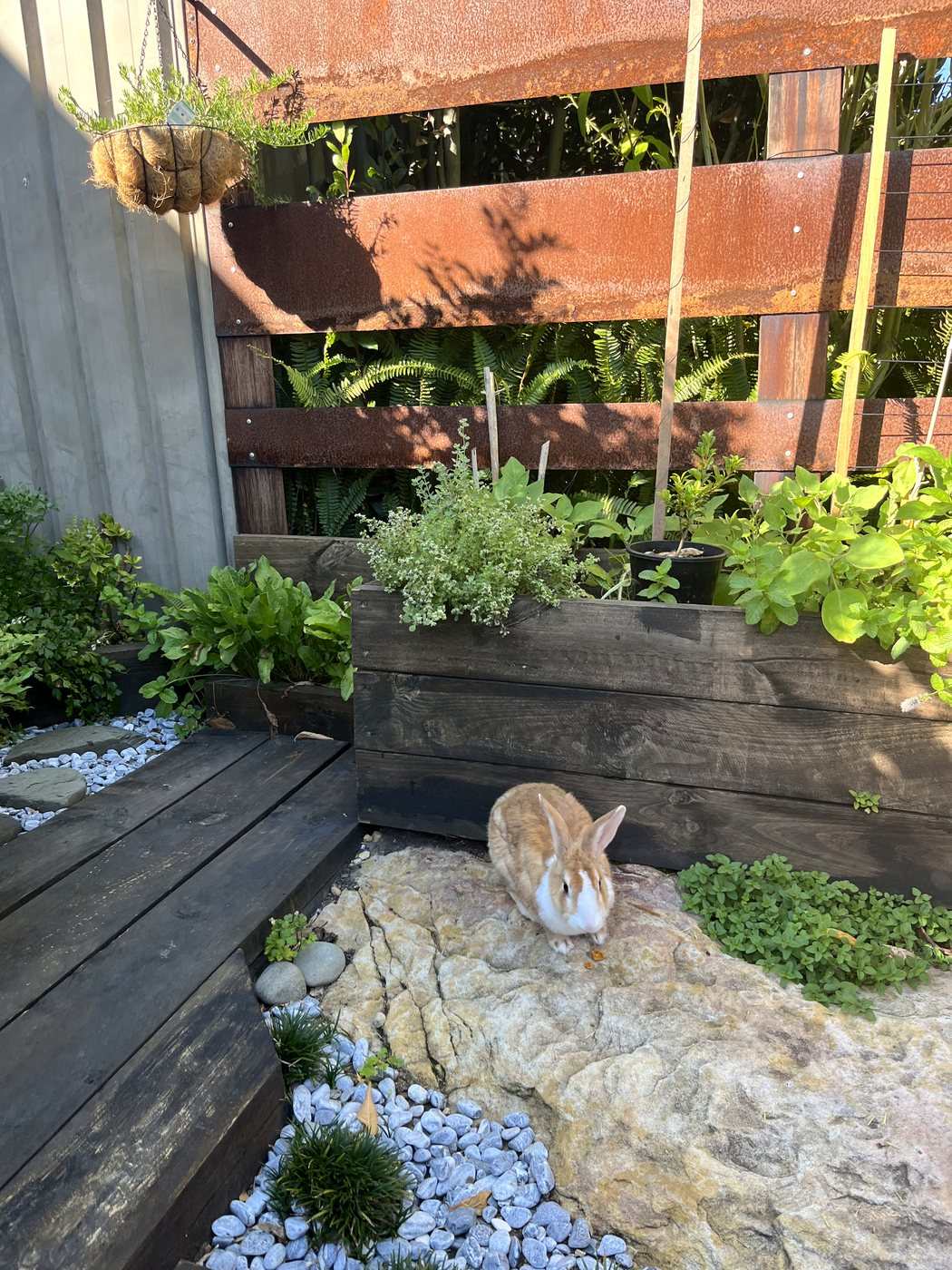
My rabbits are kept on tiles and pavers. That is deliberate.
If you have them on dirt, they will dig through it. Rabbits are extremely good at this and it is not a behaviour you train out, because it is what they are built to do. A run sitting on soil is a run with an exit in it, you just have not found it yet. Hard surfaces underneath solve that permanently.
One of mine does have some grass in his area, which is worth having for grazing and for the sake of it being a nicer place to live. The rest is hard surface with deep bedding on top, which is also far easier to keep clean.
The two bonded rabbits get the run of the yard during the day. It is properly rabbit proofed, so they cannot escape, and it has big trees and places for them to get away from each other and from anything overhead if they want to. The Rex has his own large space, which is bigger than it would otherwise need to be precisely because he does not get the yard time the other two do.
What Has Actually Gone Wrong
Three things, over years of keeping them, all of which are worth knowing about before you start.
Hypothermia, three separate times, in one rabbit. People assume the risk in Australia is heat, and heat absolutely is a serious risk. But a wet, windy night will drop a rabbit faster than you expect, particularly one that is young, thin or unwell. Dry, draught free and off the ground matters more than warm.
A paw injury that never resolved. One rabbit hurt its paw and was never quite the same again. Rabbit feet and legs are fragile, and a bad landing or a panicked scramble can do lasting damage.
A $3,000 vet bill. A couple of months ago my Flemish giant became unwell. We are still not certain what it was, though it looked like a liver problem. It came to around $3,000 at the vet. He lived, and he has been great ever since, so it was definitely worth it. But that is a number worth sitting with before you bring a rabbit home.
Rabbits are prey animals and they hide illness until they cannot. By the time you can see something is wrong, it is usually already urgent. Rabbit competent vets also cost more than dog and cat vets, because far fewer of them do it.
Which Is Why I Would Look at Insurance
I think having pet insurance for rabbits could be a really good idea, and that view comes directly from the $3,000 bill rather than from theory.
The catch is that cover for rabbits is much thinner on the ground than cover for dogs and cats, and the policies that do exist have their own exclusions. It is worth pricing up properly rather than assuming either that it exists or that it does not. If you decide against it, the alternative is a genuine savings buffer, because the bill does not wait.
Indoors or Outdoors
Setup cost depends enormously on which way you go, and both are legitimate.
Indoors, the housing itself is cheaper, but you have to rabbit proof the room. They chew cords and they chew skirting boards, and neither is a small repair. Cord protectors and blocking access to furniture edges are not optional extras, they are part of the setup cost.
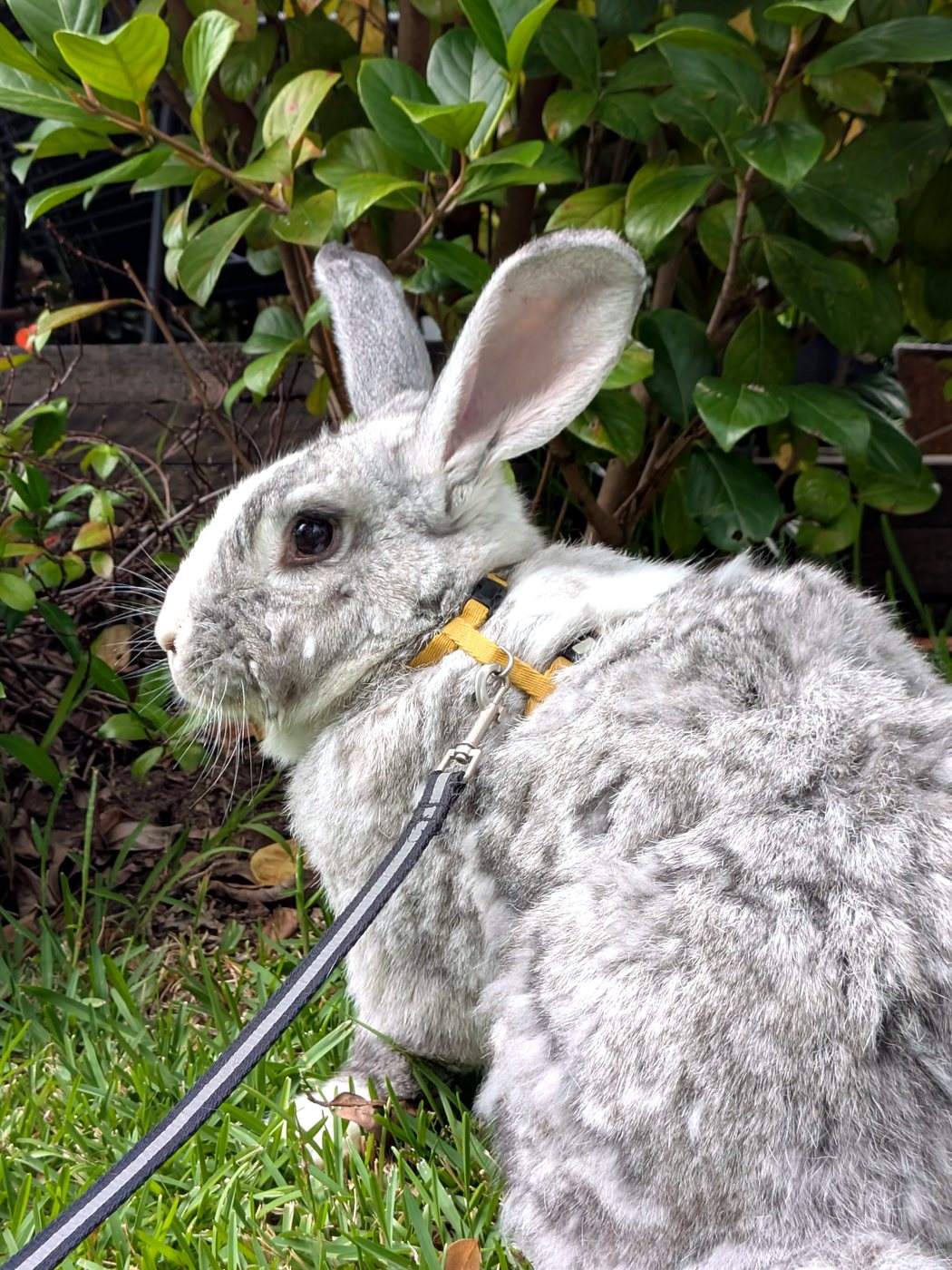
Outdoors, you are spending up front on secure housing, a hard base and a yard that is genuinely escape proof and predator proof. That is more money at the start and then mostly finished. It is the way I have gone, and having somewhere they can properly move around during the day is worth a lot to them.
Either way, the ongoing costs are similar, and hay is the biggest line item.
What I Would Tell a New Owner
- Decide the bonding question before you buy. Two from the same litter is the easy path. Adding a rabbit to an existing one is a long project.
- Get them desexed. It makes bonding easier and it removes a set of health problems.
- Budget for hay properly, then buy more hay than you budgeted for.
- Do not house them on bare dirt unless you want to find out how fast they dig.
- Have a rabbit vet identified before you need one, not on the day.
- Assume a four figure vet bill will happen at some point. Insure it or save for it.
What I Use
The gear my three actually live with, plus the things I would put on a first shopping list. (these are affiliate links)
Want to see everything I run? Here is all the gear I actually use across my reptiles, tanks, rabbits and caique.
Frequently Asked Questions
Why do rabbits fight when you put them together?
Rabbits are territorial, and an unbonded pair meeting on ground one of them already considers theirs will often go straight to fighting. It does not look like a scuffle. They latch onto each other and roll into a ball, and they can do serious damage in seconds. I have had rabbits need a vet after a fight. Two young rabbits that come home from a breeder together are usually fine. Introducing an older rabbit to a younger one is the hard version, and two males makes it harder again. Desexing helps, neutral territory helps, and time helps more than anything.
How long does it take to bond two rabbits?
Anywhere from days to years, and nobody can tell you which you will get. My Flemish giant and my mini lop took years. What finally did it was an accident. They were let out together by mistake, out in the open yard rather than in anyone’s territory, and they have been inseparable ever since. That is not a method I would recommend deliberately, but it does show how much neutral space matters compared to swapping hutches back and forth.
How much hay should a rabbit eat?
Hay should be 70 to 80 percent of a rabbit’s diet and it should be available all the time, not measured out. This is the thing people get wrong most often. Rabbits go through hay very fast, and they are supposed to. Their teeth grow continuously and the chewing is what wears them down, and their gut needs the fibre moving constantly. A rabbit living mostly on pellets and vegetables with a bit of hay on the side is heading for dental problems and gut stasis.
Is it cheaper to keep rabbits outdoors in Australia?
It depends on what you already have. Outdoors you are building or buying secure housing and predator proofing a yard, which is real money up front but then mostly done. Indoors the housing is cheaper but you have to rabbit proof the house, because they will chew cords and skirting boards, and that damage adds up. My three live outside in areas we built, on tiles and pavers, with a yard they cannot escape from. The ongoing costs, hay and pellets and vet care, are much the same either way.
Do rabbits need a vet often, and is pet insurance worth it?
Rabbits hide illness well, so by the time something is obvious it is usually urgent, and rabbit competent vets charge more than dog and cat vets because fewer of them do it. In my own experience I have had one rabbit get hypothermia three times, one permanently injure a paw, and one Flemish giant run up about $3,000 for a suspected liver problem. He pulled through and has been great since, and it was absolutely worth it, but that is a bill most people have not planned for. It is the reason I think cover is worth pricing up for rabbits.