
Reptile licence cost Tasmania is a question that doesn’t have a single clean answer, and that’s partly because most of the official information is buried in government PDFs that nobody reads until they’ve already bought a lizard. Based on current NRE Tas fee schedules, a Class A wildlife keeping licence costs $34 per year, which covers most beginner-friendly species. Higher-class licences run $55 to $82+. According to the Animal Medicines Australia 2025 Pets in Australia report, reptile keeping is one of the fastest-growing segments of pet ownership nationally, so this question is being asked a lot more than it used to be.
Reptile licence cost Tasmania ranges from $34 for a Class A wildlife keeping licence up to $82 or more for higher-class authorisations in 2026. The exact fee depends on which class of licence you need, determined by the species you want to keep. Annual renewal is required, and you'll also need to budget for enclosure setup, which can run $200 to $1,500+ depending on the reptile.
Prices updated July 2026 from current Australian sources.
| Licence class | Annual fee | What it covers |
|---|---|---|
| Class A wildlife keeping licence | $34 / year | Most beginner-friendly species |
| Higher-class authorisations | $55 to $82+ / year | More advanced or specialist species |
Fees are set by NRE Tasmania and the class you need depends on the species you want to keep. The licence fee does not include the enclosure, heating or the animal itself.
Sources (July 2026): NRE Tasmania, Wildlife management
The licence fee itself is actually the cheap part. The enclosure, lighting, heating, and substrate will cost you significantly more than $34. But you do need the licence sorted first, so let’s start there.
These fees are set by NRE Tas and subject to periodic review. If you’re applying in late 2026, double-check the current schedule on the NRE Tas website before budgeting.
Tasmania doesn’t have a separate state-by-state comparison the way national services do, but for context, here’s how Tasmania’s licensing fees stack up against other Australian jurisdictions for entry-level reptile keeping:
| State | Average Cost | Typical Range |
|---|---|---|
| NSW | $65 | $55 to $80 |
| VIC | $37 | $25 to $55 |
| QLD | $53 | $40 to $75 |
| WA | $60 | $45 to $85 |
| SA | $48 | $35 to $70 |
| TAS | $34 | $34 to $82 |
| ACT | $57 | $45 to $75 |
| NT | $40 | $30 to $65 |
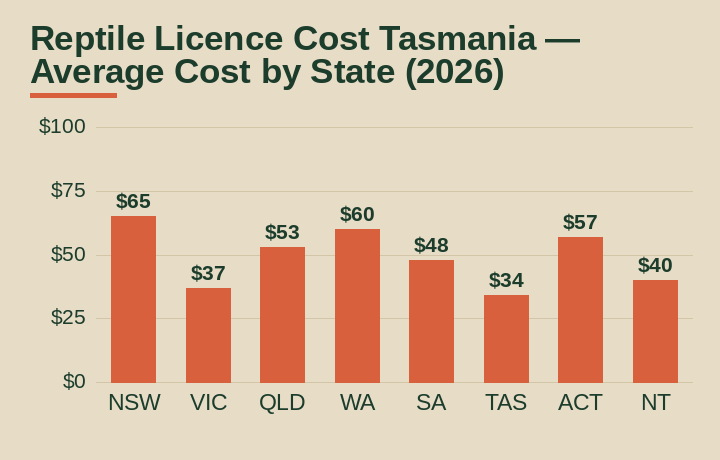
Tasmania’s Class A fee is actually one of the more affordable entry points in the country. That said, the approved species list in Tasmania is more restricted than in states like QLD or NSW, so cheaper doesn’t always mean more choice.
A real-world example: setting up a blue-tongue skink in Hobart
Let’s put real numbers to this. Sarah in Glenorchy decided she wanted a blue-tongue skink for her 12-year-old. She’d already priced up the animal, $120 from a licensed keeper in the northern suburbs, but hadn’t factored in everything else. Here’s what the full first-year cost actually looked like:
- Class A wildlife keeping licence: $34
- Second-hand glass enclosure (Gumtree, Hobart): $180
- UVB basking lamp setup: $95
- Thermostat: $65
- Substrate, hides, water dish: $55
- The blue-tongue skink itself: $120
- First vet visit (reptile check, Sandy Bay clinic): $87
- Total first year: $636
The licence was literally the cheapest line item. Annual renewal from year two onwards? Just $34, plus food and any vet costs. The MoneySmart pet ownership guide makes the point that setup costs for any pet consistently dwarf the ongoing fees, reptiles are no exception.
Licence class vs species: which one do you actually need?
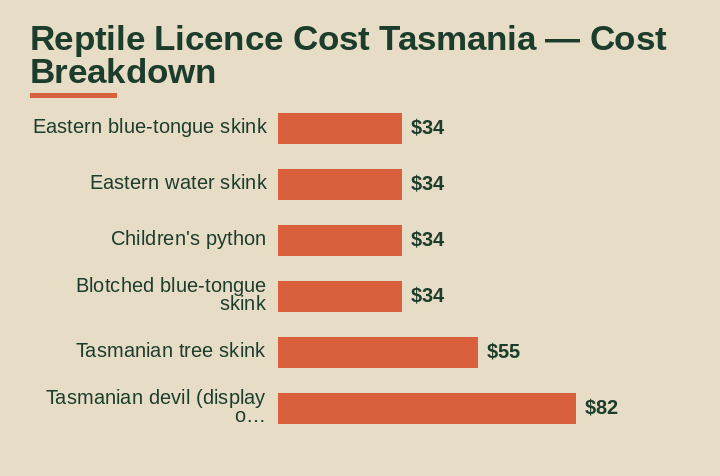
This is where people get confused. The class isn’t about your experience level, it’s about the species. Here’s a practical breakdown:
| Species | Licence Class | Annual Fee | Beginner-Friendly? |
|---|---|---|---|
| Eastern blue-tongue skink | Class A | $34 | Yes |
| Eastern water skink | Class A | $34 | Yes |
| Children’s python | Class A | $34 | Moderate |
| Blotched blue-tongue skink | Class A | $34 | Yes |
| Tasmanian tree skink | Class B | $55 | Moderate |
| Tasmanian devil (display only) | Class C+ | $82+ | No |
The approved species list changes, so treat this table as a starting point only. Confirm current classifications directly with NRE Tas before purchasing any animal. Getting a Class A licence for a species that actually requires Class B means you’re non-compliant from day one.
If you’re considering a snake specifically, also check out the broader costs of ongoing reptile veterinary care, reptile vets are harder to find in Tasmania than on the mainland, and consultation fees reflect that.
Where the money actually goes: what affects the total cost
Licence class and species choice
As covered above, Class A at $34 is the entry point. But if you’re set on a less common native species that sits in Class B or C, you’re looking at $55 to $82 per year just for the paperwork. Over five years, that’s a $240 difference compared to staying at Class A. Worth thinking about before you fall in love with a less common skink species at a reptile expo.
Enclosure size and heating requirements
Tasmania’s climate is the real wildcard. Unlike Queensland keepers who can rely on ambient warmth for much of the year, Tasmanian keepers need reliable thermostat-controlled heating year-round. A quality thermostat runs $55 to $110, and running a basking lamp plus ceramic heat emitter adds roughly $8 to $14 per month to your electricity bill. In Hobart’s south, that adds up over winter. a good reptile thermostat pays for itself quickly in avoided vet bills from temperature stress.
Veterinary access and costs
This is a real issue in Tasmania. There are a handful of reptile-competent vets in Hobart and Launceston, but options thin out considerably once you’re in regional areas like Queenstown, Scottsdale, or the Huon Valley. A standard reptile consultation at a Sandy Bay or Moonah clinic runs $85 to $130. If your animal needs specialist care, it may need to be transported, which adds cost and stress. Factor in at least one vet visit per year. The cost of mobile pet vet services is worth exploring if you’re in a more remote part of the state.
Annual renewal versus letting it lapse
The licence must be renewed annually. If you let it lapse, even by a few weeks, you’re technically keeping wildlife illegally. Reinstatement isn’t always as simple as paying the back-dated fee. Some keepers have reported needing to reapply from scratch, which means another inspection and a delay before you’re compliant. Set a calendar reminder. It’s a $34 problem that becomes a much bigger one if ignored.
The animal’s purchase price
Legally sourced reptiles in Tasmania must come from licensed keepers or registered suppliers. Blue-tongue skinks from a licensed Launceston breeder typically run $90 to $180. Children’s pythons are similar. Prices honestly bounce around depending on morph (colour variation) and the breeder’s reputation. Budget $100 to $250 for the animal itself, separate from all setup costs. If someone’s offering a native reptile for $30 cash with no paperwork, walk away. The Australian Veterinary Association has flagged that undocumented reptiles frequently arrive in poor health, generating vet costs that dwarf any savings on purchase price.
Recommended Products for Reptile Licence Cost Tasmania
If you’re tackling this yourself, here are some products from Amazon Australia that can help (these are affiliate links):
Questions to ask before you commit
Is this species actually on the approved Tasmanian list?
Not all reptiles legal to keep in NSW or QLD are approved in Tasmania. The approved species list for Tasmanian wildlife keeping is species-specific and updated periodically. Confirm the exact species name with NRE Tas before purchasing the animal. A “bearded dragon” might be fine in Queensland but require a different permit class in Tasmania, or may not be listed at all.
Does my proposed enclosure meet the NRE Tas housing standards?
Tasmania has minimum enclosure size and security requirements that are assessed before (or shortly after) your licence is granted. If your setup doesn’t comply, your licence can be withheld or revoked. Ask NRE Tas for the species-specific housing standards sheet before you build or buy anything. It’s a free document that saves a lot of expensive second-guessing.
What’s the licence renewal process, and is there a grace period?
Find out exactly when your renewal is due and what happens if you’re late. Some keepers have found there’s a short processing window before a lapse triggers full reapplication. Knowing this upfront means you can budget and schedule accordingly rather than scrambling in January when the renewal notice lands.
Is the seller a licensed keeper with records?
When buying a reptile in Tasmania, ask to see the seller’s licence and the animal’s transfer documentation. A legitimate seller will hand these over without hesitation. If there’s any reluctance, that’s your answer. The transfer of ownership must be recorded, and both parties need to keep records.
Are there reptile vets within a reasonable distance of where I live?
Seriously, check this before you commit. A reptile in Devonport has different vet access than one in Hobart. If the nearest reptile-competent vet is 90 minutes away, that’s relevant to your decision, especially for emergency care. Ring a few clinics in your area and ask directly whether they see reptiles routinely. “We see reptiles occasionally” and “we have a reptile-focused vet” are very different answers.
What are my obligations if I can no longer keep the animal?
You can’t just release a captive reptile into the wild, that’s also illegal. If you move interstate, can no longer care for the animal, or the situation changes, you need a plan. Ask NRE Tas about the legal transfer process and what happens to your licence obligations if ownership changes. It’s not complicated, but you need to know the steps.
Common mistakes to avoid
- Buying the reptile before the licence is approved. This happens constantly at expos. The excitement is real, but possessing the animal before you have written approval puts you in breach of the Nature Conservation Act 2002. Wait for the paperwork.
- Assuming your existing enclosure from another state is compliant. If you’ve moved from Victoria or Queensland and brought your setup with you, don’t assume it meets Tasmanian housing standards. The requirements differ. Get it checked before applying.
- Underestimating the heating costs in winter. A Hobart winter is not a Brisbane winter. Reptiles kept in unheated garages or poorly insulated rooms in southern Tasmania can suffer from prolonged cold stress, which leads to immune suppression and costly vet visits. Budget for adequate heating infrastructure.
- Not registering the animal transfer properly. If you sell or give away a licensed reptile without completing the transfer paperwork with NRE Tas, the animal is technically still on your licence. That creates liability if the new keeper has compliance issues. Complete the transfer formally, every time.
You’ll also want to understand the broader ongoing costs once you’re set up. Our breakdown of pet vaccination costs Australia-wide includes reptile-specific notes, and if you’re comparing reptile keeping to other pet options, the dog boarding costs guide puts the lower ongoing costs of reptiles in useful perspective. For those also considering cats, the cat grooming cost breakdown is worth a look. And if you’re moving interstate with an existing reptile, check the pet transport interstate cost guide, reptile transport has specific requirements. reptile feeding tongs and live food supplies are also worth stocking up on early, since some rural Tasmanian areas have limited pet supply access.
The reptile licence cost Tasmania is genuinely one of the more affordable in Australia at $34 for Class A, but go in with clear eyes about the full picture. Setup costs, heating in a Tasmanian winter, limited vet access outside Hobart and Launceston, and the ongoing compliance obligations add up to a commitment that’s bigger than the licence fee suggests. If you’ve done the homework and you’re ready, reptiles are genuinely rewarding pets, just get the paperwork right first. For related reading, the dog desexing cost guide gives a sense of how reptile costs compare to other pet ownership expenses, and the pet door installation cost breakdown is worth bookmarking if you’re thinking about a dedicated reptile room setup later on.
Frequently asked questions about reptile licence cost Tasmania
How much does a reptile licence cost in Tasmania in 2026?
A Class A wildlife keeping licence in Tasmania costs $34 per year. Class B and C licences attract higher fees, typically $55 to $82+, depending on the species authorised. Fees are set by the Tasmanian Department of Natural Resources and Environment and are updated periodically.
Do I need a licence to keep a blue-tongue lizard in Tasmania?
Yes. Blue-tongue skinks are native wildlife and require a Class A wildlife keeping licence in Tasmania. That’s the entry-level licence at $34 per year. You’ll also need an approved enclosure before the licence is granted.
Can I keep a snake in Tasmania with a licence?
Some non-venomous snake species are permitted under Class A or Class B licences in Tasmania. Venomous species require a higher-class licence and are generally restricted to experienced keepers or wildlife parks. Check the current approved species list with the Tasmanian NRE before purchasing any animal.
What happens if I keep a reptile in Tasmania without a licence?
Keeping native wildlife without a licence is an offence under the Nature Conservation Act 2002. Penalties can include significant fines and confiscation of the animal. It’s not worth the risk, and the licensing process itself is relatively straightforward.
How do I apply for a reptile licence in Tasmania?
Applications are lodged through the Tasmanian Department of Natural Resources and Environment (NRE Tas). You’ll need to demonstrate suitable housing before approval. Applications can be submitted online or by post, and processing generally takes 2 to 4 weeks.
People Also Ask About Reptile Licence Cost Tasmania
What reptiles can you legally keep in Tasmania without special permits?
In Tasmania, you can keep certain native reptile species under a standard Class A wildlife keeping licence, no special permit beyond that is required. Common examples include blue-tongue skinks, eastern water skinks, and some skink species from the approved NRE Tas list. Introduced (non-native) reptiles like bearded dragons and central pythons may be permitted under Class A or B depending on current regulations. Always confirm the current approved species list directly with NRE Tas before purchasing.
How long does it take to get a reptile licence approved in Tasmania?
The Tasmanian NRE typically processes wildlife keeping licence applications within 2 to 4 weeks, provided you’ve submitted all required documentation and your enclosure meets the housing standards. If an inspection is required (which is common for first-time applicants), factor in additional scheduling time, particularly in regional areas like the West Coast or Huon Valley where officer availability can be limited.
Can I breed reptiles on a standard wildlife keeping licence in Tasmania?
A standard wildlife keeping licence in Tasmania does not automatically authorise breeding. If you want to breed reptiles, you’ll likely need an additional endorsement or a higher-class licence. Selling offspring is also separately regulated. Contact NRE Tas directly to clarify what your specific situation requires before any breeding occurs.
Do reptile licences in Tasmania transfer if I move interstate?
No. A Tasmanian wildlife keeping licence is state-specific and doesn’t transfer if you move to Victoria, NSW, or another state. Each state has its own licensing framework and approved species list. If you relocate with your reptile, you’ll need to apply for the appropriate licence in your new state, and check whether your species is even permitted there, as approved lists differ significantly between jurisdictions.
Are there age restrictions for getting a reptile licence in Tasmania?
Generally, applicants must be 18 or over to hold a wildlife keeping licence in Tasmania in their own name. Minors can keep reptiles under a parent or guardian’s licence, provided the adult is the named licence holder and takes legal responsibility for the animal’s care and housing compliance.
Related Cost Guides
This guide contains affiliate links. We may earn a small commission from qualifying purchases at no extra cost to you.