
The cost of a Ragdoll cat in Australia is something a lot of people underestimate. The purchase price gets all the attention, but the ongoing bills are where the real money goes. According to Animal Medicines Australia’s 2025 Pets in Australia report, cat owners spend an average of $1,029 per year on their cats overall, but Ragdolls sit well above that average due to their size, coat and health predispositions.
Ragdoll cat cost Australia sits between $1,500 and $3,500 from a registered breeder, depending on colour, markings and lineage. Year-one ownership typically runs $3,500 to $6,500 once you add vet bills, food, litter and setup. Ongoing annual costs after the first year settle around $2,000 to $4,000.
Prices updated July 2026 from current Australian sources.
| Cost | Typical range | Notes |
|---|---|---|
| Purchase (registered breeder) | $1,500 to $3,500 | Depends on colour, markings, lineage |
| Year one | $3,500 to $6,500 | Includes vet, food, litter, setup |
| Ongoing per year | $2,000 to $4,000 |
Ragdolls are a popular pedigree breed with waitlists at reputable breeders. Adoption is occasionally available through rescues at a lower cost.
Sources (July 2026): PetRescue, Adopt a pet, RSPCA Australia, Adopt a pet, Animal Medicines Australia, Pets in Australia 2025
This isn’t a cheap breed to own well. From a registered breeder you’re looking at $1,500 to $3,500 just to get the kitten home, and that’s before a single vet visit. The MoneySmart pet ownership guide recommends budgeting for at least 12 months of ongoing costs before committing to any pet, that’s sound advice here. Let’s break down what those costs actually look like in 2026.
Year-one cost includes the kitten purchase, initial vet setup (vaccinations, microchip, desexing if not done by breeder), food, litter, insurance, and basic supplies. These figures assume a single cat in an existing household.
Where the money actually goes
Purchase price from a registered breeder is the first hit. Pet-quality Ragdolls from an ANCATS or ACF-registered breeder sit at $1,500 to $2,500 in most states. Show-quality or rare colour patterns (like blue mitted or seal bicolour) push that to $2,800 to $3,500. In Perth or Darwin, you can add another $200 to $400 simply because fewer breeders means less competition. Anything advertised for $800 to $1,200 online almost certainly skips HCM cardiac testing. That’s a risk that can cost you $1,500 to $4,000 down the track in specialist cardiology bills.
Health testing and genetics is what separates a good breeder’s price from a backyard operation’s. Reputable Ragdoll breeders test breeding cats annually for hypertrophic cardiomyopathy via echocardiogram, which costs them $300 to $500 per cat per year. DNA testing for PKD and blood group typing adds another $100 to $200. That’s real money built into your kitten’s price, and it’s worth paying. A Ragdoll from untested parents can develop HCM before age five. Echocardiograms at a veterinary cardiologist run $400 to $800 per session when the problem shows up.
Veterinary costs in year one add up fast. Your Ragdoll kitten should arrive with its F3 vaccination done. You’ll need boosters, a vet health check, microchipping if not already done, and usually desexing if the breeder hasn’t arranged it. Budget $650 to $1,200 for first-year vet costs excluding emergencies. Check out what pet vaccinations cost in Australia to get a realistic figure for the ongoing annual boosters. After year one, a standard annual vet visit with vaccinations runs $180 to $320 at most metro clinics.
Food costs more than people expect for a big breed. Ragdolls are one of the largest domestic cat breeds, with males reaching 7 to 9 kg. A quality diet, think Royal Canin Ragdoll breed-specific, or a mix of wet and dry from Hill’s or Purina Pro Plan, runs $90 to $150 per month. Budget brands cost less upfront but can contribute to urinary and weight issues that generate vet bills. The maths usually favours good food. That’s $1,080 to $1,800 per year in food alone.
Grooming is a recurring cost most first-time Ragdoll owners don’t factor in. That semi-long coat doesn’t mat as badly as a Persian, but it will mat if neglected. Professional cat grooming costs $80 to $150 per session for a Ragdoll in most metro areas. In inner-Sydney suburbs like Newtown or Surry Hills, you’ll pay $130 to $160 for a full groom including bath, blow-dry and trim. In Geelong or Toowoomba, the same service runs $75 to $110. Weekly home brushing with the right tools keeps professional grooms to two or three times a year rather than monthly.
Purchase price vs ongoing annual costs, what you’re really committing to
The purchase price is a one-off. The ongoing costs are a 12 to 17 year commitment. Here’s how the annual spend breaks down after the first year:
| Cost Category | Budget Option | Mid-Range | Premium |
|---|---|---|---|
| Food (wet + dry mix) | $780/yr | $1,200/yr | $1,800/yr |
| Litter | $300/yr | $480/yr | $720/yr |
| Vet (annual check + vaccines) | $220/yr | $320/yr | $480/yr |
| Pet insurance | $480/yr | $840/yr | $1,440/yr |
| Grooming (professional) | $160/yr | $360/yr | $720/yr |
| Flea/worm/heartworm treatment | $120/yr | $180/yr | $240/yr |
| Toys, enrichment, misc | $100/yr | $200/yr | $400/yr |
| Annual Total | $2,160 | $3,580 | $5,800 |
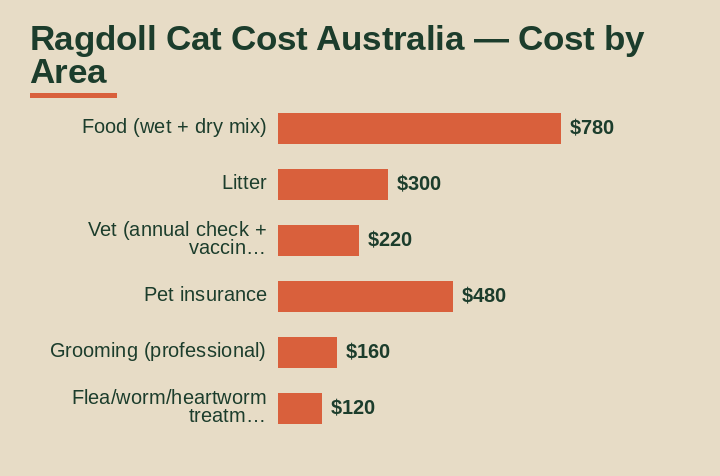
The ‘budget’ column assumes home grooming, basic insurance, and cheap litter. The ‘premium’ column assumes raw or premium wet food, comprehensive insurance, monthly litter box upgrades and regular professional grooming. Most owners land somewhere in the mid-range. Worth noting: this doesn’t include unexpected vet bills, boarding or pet accommodation costs when you travel.
Questions to ask before you book a kitten
Can I see HCM screening results for both parents?
This is non-negotiable. Hypertrophic cardiomyopathy is the Ragdoll breed’s biggest health risk, and responsible breeders test their breeding cats annually via echocardiogram. Ask to see the actual vet reports, not just a breeder’s verbal assurance. If a breeder can’t produce them, the price saving isn’t worth the cardiac specialist bills you may face at age three or four.
Is the kitten TICA or ACF registered?
Registration confirms the kitten meets breed standards and the breeder is accountable to an organisation with a code of ethics. It doesn’t guarantee health but it does mean the breeder is operating above the bare minimum. An unregistered Ragdoll kitten from an online listing is a gamble, regardless of how professional the photos look.
What vaccinations and treatments have already been done?
Most reputable breeders send kittens home with their F3 vaccination, microchip and a vet health certificate. Some also include a flea and worm treatment. Know exactly what’s been done so you can tell your vet on the first visit and avoid double-dosing or gaps. This also affects your first-year vet budget, a kitten already microchipped saves you $35 to $65.
Will the kitten be desexed before I collect it?
Some breeders desex before 12 weeks (early age desexing), others ask buyers to have it done. If the latter, get a written agreement and ask if the breeder has a preferred vet for a discounted rate. Desexing a female Ragdoll typically runs $300 to $500; a male is $200 to $350. You can compare these figures with typical desexing costs in Australia to sense-check what you’re quoted.
What food has the kitten been raised on?
Sudden food changes stress a kitten’s digestive system. Knowing what they’ve been eating means you can transition gradually, and it also tells you something about the breeder’s care standards. A kitten raised on Royal Canin Mother and Babycat or a similar premium brand is a different proposition to one raised on supermarket tinned food. Ask for a small supply to take home for the first week.
What’s your health guarantee and what does it actually cover?
Most reputable Ragdoll breeders offer a 72-hour health guarantee (vet-confirmed illness within three days) and a longer genetic health guarantee of 12 to 24 months for conditions like HCM. Read the fine print. Some guarantees require you to use a specific vet or return the kitten rather than receive financial compensation. Know what you’re agreeing to before you hand over the deposit.
Recommended Products for Ragdoll Cat Cost Australia
If you’re tackling this yourself, here are some products from Amazon Australia that can help (these are affiliate links):
How to bring the cost down
- Choose pet-quality over show-quality. Show-quality Ragdolls can cost $1,000 to $2,000 more for specific coat patterns and eye colour intensity. Pet-quality kittens from the same litter are identical in temperament and come from the same health-tested lines. Unless you’re genuinely planning to show, the premium is cosmetic.
- Insure from day one. Pre-existing conditions are excluded, so insuring your Ragdoll before the first vet visit is the only way to get full coverage. Comprehensive insurance through providers like Petsy or Bow Wow Meow runs $60 to $120 per month but a single cardiac specialist workup costs $800 to $1,500. The maths is straightforward.
- Buy food in bulk from pet supply warehouses. PETstock, Pet Circle and City Farmers all offer subscription or bulk discounts. A 4kg bag of quality dry food versus a 1kg bag typically saves 25 to 35% per kilogram. Over a year, that’s $250 to $500 back in your pocket. Keep an eye on their sale cycles, premium brands go on discount regularly.
- Set up a home grooming routine early. Ragdolls that are handled and brushed from kittenhood accept grooming easily. A 15-minute weekly brush with the right tools removes the need for professional grooming more than twice a year. Professional grooms at $100 to $150 each add up to $600 to $900 annually if you rely on them monthly.
- Ask your vet about a wellness plan. Many clinics in Sydney, Melbourne and Brisbane now offer annual wellness plans bundling vaccinations, parasite treatment and a health check for $35 to $55 per month. Bought à la carte, those same services often cost $350 to $600 per year. Check what’s included carefully before signing up. Also review pet dental cleaning costs, dental disease is common in cats and can be bundled into wellness plans at some clinics.
- Join breed-specific Facebook groups before buying anything. ‘Ragdoll Cats Australia’ and state-specific Ragdoll groups regularly have secondhand cat trees, carriers, litter boxes and enrichment items at 60 to 80% below retail. A quality cat tree that costs $300 new often goes for $60 to $100 secondhand in good condition.
- Consider a mobile vet service for routine visits. Mobile vets in metro areas often charge similar rates to clinic visits for standard consultations, but you save the travel stress for the cat and the time cost for yourself. Some charge a small travel fee of $20 to $40 but waive it if you’re booking multiple services at once.
Ragdoll cat cost Australia is genuinely front-loaded in year one, but the ongoing commitment is what determines whether this breed suits your budget long-term. The purchase price is manageable. It’s the food, insurance, and potential cardiac care that add up over 12 to 17 years. Go in with eyes open, buy from a health-tested line, insure from day one, and a Ragdoll is a genuinely rewarding long-term companion. If the annual costs look stretched, also consider whether alternative therapies or a wellness-focused vet approach fits your broader pet budget before committing.
Frequently asked questions about ragdoll cat cost Australia
How much does a Ragdoll kitten cost in Australia in 2026?
From a registered ANCATS or ACF breeder, expect to pay $1,500 to $3,500 for a pet-quality Ragdoll kitten. Show-quality kittens can go higher, sometimes reaching $4,000 to $5,000. Anything significantly under $1,500 should raise questions about breeding practices and health testing.
Are Ragdolls expensive to maintain?
Compared to the average domestic cat, yes. Their semi-long coat needs regular brushing, they eat more than a small breed due to their size, and they’re predisposed to certain health conditions like hypertrophic cardiomyopathy (HCM) that can generate significant vet bills. Budget $2,000 to $4,000 per year realistically.
Is pet insurance worth it for a Ragdoll?
Given their HCM predisposition, most Ragdoll owners I’d say should have insurance. A single cardiac workup, echocardiogram plus specialist consult, can cost $800 to $1,500. Comprehensive pet insurance typically runs $60 to $120 per month for a Ragdoll, which pays for itself fast if a health issue emerges.
Why do Ragdolls cost more than other cat breeds?
Reputable Ragdoll breeders invest heavily in HCM cardiac screening, DNA health testing, TICA or ACF registration, vaccinations, microchipping and quality nutrition for queens and kittens. That adds up to $500 to $900 in breeder costs per kitten before any profit. The premium also reflects genuine demand for the breed.
Should I get a Ragdoll from a pet shop or a breeder?
Avoid pet shops for Ragdolls. Most source kittens from high-volume operations that skip cardiac screening and proper socialisation. A kitten that’s undersocialised or carries undetected HCM can easily cost you more in vet bills and behavioural support than you ‘saved’ on the purchase price. Stick to registered breeders listed through ANCATS or ACF.
People Also Ask About Ragdoll Cat Cost Australia
How long do Ragdoll cats live in Australia?
Ragdolls typically live 12 to 17 years in Australia with proper care. Some reach 20 years. The main factor limiting lifespan is hypertrophic cardiomyopathy (HCM), which is why cardiac screening in the breeding line matters so much. Indoor-only Ragdolls generally live longer than those with outdoor access.
Do Ragdolls need a companion cat in Australia?
They’re social cats, but they don’t strictly require a companion. If you work long hours, a second cat can reduce boredom and anxiety for a Ragdoll. If you do get two, budget an extra $1,500 to $3,500 for the second kitten plus doubled ongoing costs. Some owners find two cats actually cheaper per cat once toys, trees and feeding setups are shared.
What is hypertrophic cardiomyopathy and how does it affect Ragdoll ownership costs?
HCM is a heart muscle disease that Ragdolls are genetically predisposed to. Annual cardiac screening via echocardiogram runs $300 to $600 per visit at a specialist. If a Ragdoll develops HCM, medication costs $50 to $150 per month, and specialist monitoring adds $600 to $1,200 annually. This is the single biggest financial risk of Ragdoll ownership and the main reason pet insurance is worth it.
Are Ragdolls indoor-only cats in Australia?
Most Australian breeders and vets recommend keeping Ragdolls strictly indoors. They’re docile, trusting and have no street smarts, making them vulnerable to traffic, dogs and theft. Indoor containment removes the risk of injury but does mean you need to invest more in environmental enrichment, cat trees, tunnels and interactive toys, which adds $300 to $600 to setup costs.
How do I find a reputable Ragdoll breeder in Australia?
Search through the Australian Cat Federation (ACF) or ANCATS for registered breeders. A reputable breeder should provide HCM screening results for both parents, TICA or ACF registration papers, vaccination and microchip records, and a written health guarantee. If a breeder can’t show HCM test results, walk away regardless of how cute the kittens are. The Australian Veterinary Association also has resources on selecting reputable breeders and what health checks to expect.
Related Cost Guides
This guide contains affiliate links. We may earn a small commission from qualifying purchases at no extra cost to you.