
Dog registration in Queensland is one of those annual expenses that catches new dog owners off guard. It’s not complicated, but the fee genuinely does vary a lot depending on where you live, whether your dog is desexed, and whether you qualify for a concession. According to Animal Medicines Australia’s 2025 Pets in Australia report, about 48% of Australian households own a dog, so this is a cost a huge chunk of the population deals with every single year.
Dog registration cost Queensland typically runs $15 to $55 for desexed dogs and $65 to $130 for undesexed dogs, depending on your local council. Brisbane City Council charges $57 for a desexed dog and $128 for an undesexed one. Concessions for pensioners can halve these figures. Registration is a legal requirement under the Animal Management Act and must be renewed annually.
Prices updated July 2026 from current Australian sources.
| Dog | Typical annual council fee | Brisbane City Council example |
|---|---|---|
| Desexed dog | $15 to $57 | $57 |
| Non-desexed dog | $65 to $130 | $128 |
| Pensioner concession (desexed) | About half the standard rate | $28.50 |
Dog registration in Queensland is set and collected by your local council and renewed each year under the Animal Management (Cats and Dogs) Act. Fees vary between councils, so check your own council’s schedule. Desexing and microchipping your dog first is the biggest way to lower the fee.
Sources (July 2026): Brisbane City Council, Register your dog, Business Queensland, Dog registration (Brisbane City Council)
Under the Animal Management (Cats and Dogs) Act 2008, all Queensland dogs over 12 weeks must be registered with their local council. That’s not optional. The fee is set by each council independently, which is why rates bounce around so much across the state. MoneySmart’s pet ownership guide flags registration as one of the recurring annual costs new owners often underestimate.
Here’s what Queensland councils are typically charging in 2026.
| Council / Region | Desexed Dog | Undesexed Dog |
|---|---|---|
| Brisbane City Council | $57 | $128 |
| Gold Coast City Council | $47 | $105 |
| Sunshine Coast Council | $42 | $98 |
| Townsville City Council | $38 | $88 |
| Cairns Regional Council | $35 | $82 |
| Toowoomba Regional Council | $30 | $75 |
| Logan City Council | $45 | $100 |
| Ipswich City Council | $40 | $92 |
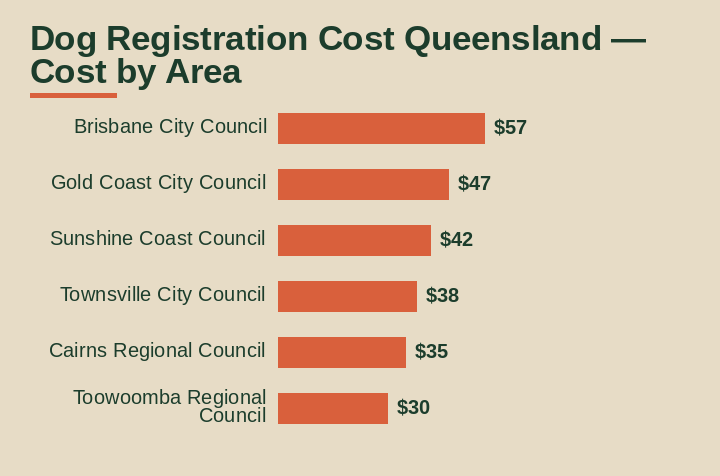
Note: these figures reflect published 2026 schedules and recent council announcements. Fees can change mid-year, so always confirm with your specific council before paying.
Why prices vary so much across Queensland councils
Desex status is the biggest factor by far. The gap between a desexed and undesexed dog is significant, Brisbane’s undesexed fee ($128) is more than double the desexed rate ($57). The logic is that councils want to discourage unplanned breeding and reduce the number of unwanted dogs ending up in shelters. If you’re planning to desex your dog anyway, doing it before you register saves a meaningful amount each year. If you’re weighing up what desexing costs in Australia, factor the lifetime registration savings into that calculation.
Your council’s fee schedule matters more than you might expect. A dog owner in Toowoomba pays $30 annually for a desexed dog. The same dog registered in Brisbane costs $57. Over ten years, that’s a $270 difference for exactly the same legal obligation. Rural and regional councils tend to charge less, partly because their enforcement infrastructure costs less per dog, and partly because they have fewer resources to run expensive registration programs.
Concession status can halve your cost. Queensland pensioner concession card holders, Commonwealth seniors card holders, and DVA card holders generally qualify for a 50% discount on registration fees. Brisbane’s concession rate for a desexed dog is $28.50, less than a tank of petrol. The catch is that councils don’t always advertise this loudly, so you need to know to ask and bring the card to your application.
Dangerous or regulated dog classifications add substantial fees. If your dog has been declared a regulated or dangerous dog under Queensland law, registration fees jump dramatically. Some councils charge $200 to $400 annually for regulated dogs, plus ongoing compliance costs for secure enclosures and signage. This isn’t an edge case either, certain breeds have faced declaration proceedings in QLD, and mixed-breed dogs can sometimes be caught up in this process.
Late fees stack up fast. Most Queensland councils set 1 July as the renewal date. Miss it by more than 30 days and you’re often looking at a $15 to $30 late fee on top of the registration cost. Some councils are stricter than others, but the fine for failing to register at all can reach $275 or more. Not worth the risk for the sake of forgetting to pay a $42 bill.
What’s included versus what costs extra
| What registration covers | What you pay separately |
|---|---|
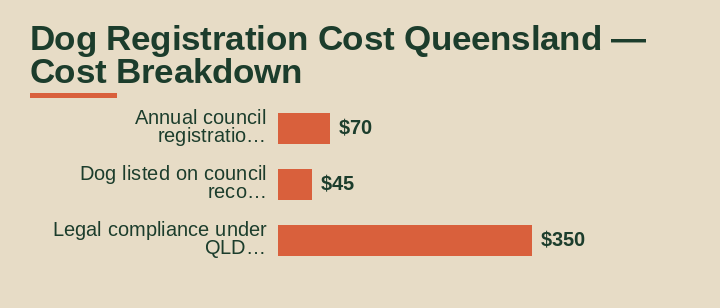
| Annual council registration disc/tag | Microchipping ($55 to $85 at a vet) |
| Dog listed on council records | National microchip registry fee ($30 to $60 lifetime) |
| Access to council pound services if dog is lost | Personalised ID tag (separate to council tag) |
| Legal compliance under QLD Animal Management Act | Desexing procedure ($200 to $500 depending on size/sex) |
| Council renewal reminders (most councils) | Vaccination certificates required at some councils |
Registration alone doesn’t cover everything you need to be legally compliant. Your dog must already be microchipped before you can register, and microchipping is a separate vet expense. The vaccination costs for pets in Australia are also separate, some councils don’t require proof of vaccination for registration, but it’s still your legal responsibility as an owner to keep vaccines current.
Questions to ask before you register
Does my council pro-rata fees for dogs registered mid-year?
Some councils charge the full annual fee regardless of when you register, even if you’re three months into the registration year. Others pro-rata the fee from the date of registration to 30 June. For a new puppy acquired in February, that difference could be $30 to $50. Worth a quick phone call before you pay.
What proof of desexing do I need to show?
Most councils want a signed certificate from the vet who performed the procedure, including the vet’s name, clinic address, and the date of the operation. A verbal claim or an old receipt generally won’t cut it. If you adopted from a rescue that arranged the desexing, ask them to provide a certificate at handover, this saves a trip back to the vet for paperwork.
Is my dog’s microchip registered on an approved registry?
Queensland requires microchips to be listed on a registry that meets state standards. Not every registry qualifies. The main approved ones are PetAddress, Central Animal Records, and the Australian Animal Registry. If your dog was chipped interstate or by a vet who used a non-approved registry, you may need to re-register the chip details. Microchip readers and home microchip scanners can help you confirm your dog’s chip is reading correctly before you head to the council.
Will my dog need to be inspected?
Generally no, for standard registration. But if your dog has been declared a menacing or dangerous dog, or if there’s a complaint-based investigation underway, a council officer may inspect the property and the dog’s enclosure before issuing registration. Don’t assume this won’t apply, some regional councils are proactive about property inspections for specific breeds.
What happens to my registration if I rehome the dog?
Registration doesn’t transfer automatically to a new owner. The current registrant remains legally responsible until the council records are updated. If you rehome your dog, notify your council in writing immediately. The new owner needs to register in their own name, and you want to make sure you’re not still listed as the responsible party if anything goes wrong.
Is there a fee reduction for working dogs on rural properties?
Some Queensland regional councils recognise a working dog category with reduced fees, sometimes as low as $15 annually. The dog typically needs to be on a rural property and used for livestock or farm work. If this applies to you, ask specifically, it’s not always listed on the standard fee schedule, and a council-compliant lead and proper enclosure documentation may still be required even for working dogs.
Recommended Products for Dog Registration Cost Queensland
If you’re tackling this yourself, here are some products from Amazon Australia that can help (these are affiliate links):
The fee structure is the same regardless of age, based on desex status and concession eligibility rather than the dog’s age. However, puppies must be registered by 12 weeks of age, and they must be microchipped first. If you’ve just bought a puppy, getting the microchip sorted quickly should be your first step.
FAQ: Dog registration in Queensland
When does dog registration need to be renewed in Queensland?
Registration runs annually. Most Queensland councils set renewal dates for 1 July each year to align with the financial year, though some councils use the anniversary of the original registration date. You’ll generally get a reminder notice, but the legal obligation sits with you as the owner regardless of whether the reminder arrives.
What happens if you don’t register your dog in Queensland?
Failing to register is an offence under the Animal Management (Cats and Dogs) Act 2008. Fines vary by council but can run from $275 up to $1,375 for repeat offenders. Some councils will also impound an unregistered dog found roaming, which adds impound fees on top of the penalty.
Does my dog need to be microchipped before I can register it?
Yes. Queensland law requires all dogs to be microchipped before or at the time of registration. If you’ve adopted from a shelter, this is almost always done before handover. For puppies bought privately, you’ll need a vet to implant a chip, expect to pay $55 to $85 for the procedure at a standard clinic. See our breakdown of dog vaccination and health check costs for what to budget alongside microchipping.
Can I register my dog online in Queensland?
Most larger councils, Brisbane, Gold Coast, Sunshine Coast, Townsville, accept online registration and renewal through their council websites. Smaller regional councils may still require you to visit a customer service centre or submit a form by post. Check your specific council’s website before assuming online is an option.
Is dog registration cheaper if my dog is a guide or assistance dog?
Yes. Accredited guide dogs, hearing dogs, and disability assistance dogs are exempt from registration fees under Queensland legislation. You’ll still need to register the dog, but the fee is waived. Documentation showing the dog’s accreditation is required at the time of registration.
How to bring the dog registration cost down
- Desex before registering. In Brisbane alone, you save $71 per year. Over a 12-year dog lifespan, that’s $852 in registration savings. Even accounting for the desexing procedure itself (typically $200 to $500 depending on size), you’re ahead within a few years. Check our guide to dog desexing costs in Australia for a full breakdown.
- Apply for a pensioner or concession rate. Bring your concession card when you register. Don’t wait to be asked, some council staff don’t automatically prompt for it.
- Register early. Avoid the late fees. Set a reminder for 15 June each year so you’re well ahead of the 1 July renewal date for most councils.
- Bundle microchipping and desexing at a single vet visit. Many clinics offer a package that saves $40 to $80 compared to booking each separately. This gets your dog registration-ready in one go and personalised ID tags can be ordered while you wait for the registration disc to arrive.
- Check whether your dog qualifies as a working dog. If you’re on a rural property and the dog genuinely works, ask your regional council about a working dog concession. Some councils charge as little as $15 for registered working dogs.
- Confirm chip registry compliance upfront. Getting this wrong means a second admin run and potential delays that push you past the deadline. Check the chip is on an approved Queensland registry before you start the registration process.
Beyond registration, there’s a broader suite of annual pet costs worth planning for. The cost of dog boarding, routine grooming, and vet checks all add up. If you’re thinking about the full picture of dog ownership costs, the Australian Veterinary Association’s data on rising pet cost pressures is worth a read before committing to a new dog.
Dog registration cost Queensland isn’t the largest line item in your pet budget, but it is a compulsory one. The variation between councils is real and worth knowing before you move suburbs or choose where to register. Get the desex status sorted, confirm your concession eligibility, and you’ll be paying at the lower end of what Queensland councils charge. If you’re also budgeting for grooming, check what mobile dog grooming versus salon grooming runs in 2026, or see what puppy school costs if you’ve got a new dog coming home soon.
People Also Ask About Dog Registration Cost Queensland
How much is dog registration in Brisbane specifically?
Brisbane City Council charges $57 for a desexed dog and $128 for an undesexed dog in 2026. Pensioner concession holders pay $28.50 for a desexed dog. These fees are among the higher end for Queensland councils, which reflects Brisbane’s urban density and the enforcement resources the council maintains.
Do you need to register a dog that stays entirely on your property?
Yes. Under Queensland’s Animal Management (Cats and Dogs) Act 2008, registration is compulsory for all dogs over 12 weeks of age, regardless of whether the dog ever leaves the property. There’s no exemption for ‘backyard only’ dogs. The requirement applies from the moment you own or keep the dog.
What documents do I need to register my dog in Queensland?
You’ll need proof of microchipping (the chip number and implanting vet’s details), proof of desexing if claiming the lower fee (usually a vet certificate), and your concession card if applicable. Some councils also ask for a recent photo of the dog for their records, though this isn’t universal.
Can I transfer my dog’s registration if I move to a different Queensland council area?
Registration is council-specific and doesn’t transfer automatically. If you move to a different local government area, you’ll need to register with your new council. The old registration doesn’t carry over. Some councils pro-rata refunds for the remaining period, but many don’t, worth checking both councils before you move.
Is there a difference between registering a puppy and an adult dog in Queensland?
Related Cost Guides
This guide contains affiliate links. We may earn a small commission from qualifying purchases at no extra cost to you.