
A gecko is the pet most first-time reptile buyers underestimate on cost. The gecko itself might be $80. The enclosure, heating, supplements, permit and first vet visit? That’s easily another $400-$600 before you’ve owned the animal for a month. According to Animal Medicines Australia’s 2025 Pets in Australia report, reptile ownership is growing steadily in Australia, and geckos are one of the most popular entry points into the hobby. That growth means more breeders, more competition, and (slowly) better prices. But setup costs haven’t dropped much.
Gecko cost Australia varies widely. A common leopard or crested gecko runs $50-$200 from a reputable breeder. Setup (enclosure, lighting, hides, substrate) adds another $150-$500. Ongoing monthly costs sit around $30-$80 depending on species and diet. Rare colour morphs and designer geckos can push $400-$800 or more.
Prices updated July 2026 from current Australian sources.
| Cost | Typical range | Notes |
|---|---|---|
| Common leopard or crested gecko | $50 to $200 | From a reputable breeder |
| Rare colour morphs / designer geckos | $400 to $800+ | |
| Setup (enclosure, lighting, hides, substrate) | $150 to $500 | |
| Ongoing per month | $30 to $80 | Depending on species and diet |
A reptile keeper licence is required in most states. The enclosure and lighting are often a bigger up-front cost than the gecko itself.
Sources (July 2026): PetRescue, Adopt a pet, RSPCA Australia, Animal Medicines Australia, Pets in Australia 2025, Pet Shop Direct
The MoneySmart pet ownership guide recommends budgeting beyond the purchase price for any pet. With geckos, that advice is especially relevant. The ongoing costs are modest, but the upfront hit can surprise people who only priced the animal.
What you’ll typically pay in 2026
Purchase price alone ranges from $50 for a basic leopard gecko to $800+ for a rare designer morph. Crested geckos sit in the $80-$250 range depending on pattern and age. Gargoyle geckos typically run $150-$350. Common day geckos (Phelsuma species) start around $120 and climb fast for striking colour forms.
Exotic morphs are where prices get serious. A high-colour leucistic crested gecko or an enigma-patterned leopard gecko can fetch $400-$800 from specialist breeders. Rare imports (legally obtained, properly permitted) sometimes push past $1,000. Most people don’t need to go near that end of the market. A standard leopard gecko at $80-$120 is genuinely a great pet.
| State | Average Purchase Price | Typical Range |
|---|---|---|
| NSW | $130 | $60 to $350 |
| VIC | $120 | $55 to $320 |
| QLD | $115 | $50 to $300 |
| WA | $140 | $65 to $380 |
| SA | $110 | $50 to $280 |
| TAS | $145 | $70 to $400 |
| ACT | $125 | $60 to $330 |
| NT | $160 | $80 to $420 |
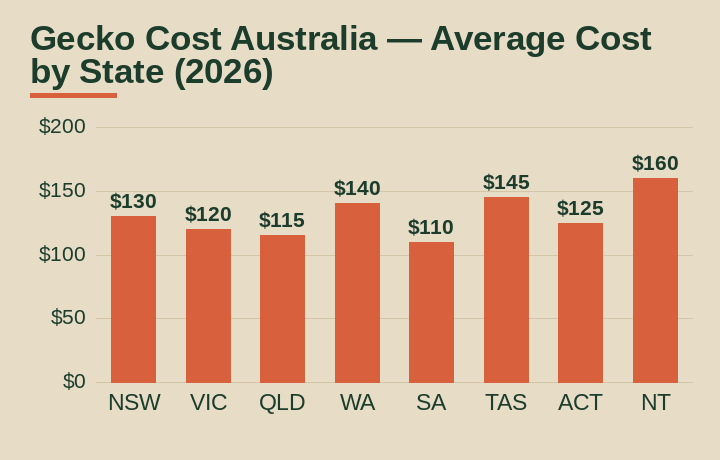
Western Australia and Tasmania tend to run higher because there are fewer breeders and shipping costs add up. Queensland and South Australia have active reptile communities, which keeps prices more competitive. In regional NT, sourcing any captive-bred gecko takes real effort and the premium reflects that.
What’s included and what costs extra
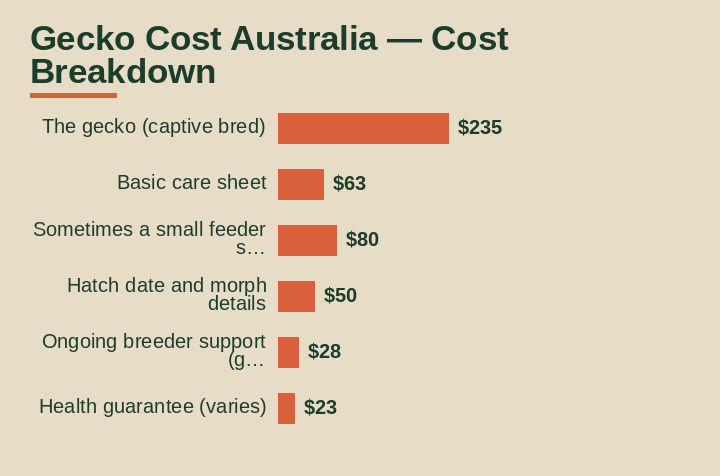
When you buy a gecko, you’re getting the animal. Everything else is your problem. Some breeders include a small tub of food or a bag of substrate as a goodwill gesture, but don’t count on it. Here’s the honest breakdown of what a full setup involves versus what you’re likely to pay extra for down the track.
| Standard Inclusion (from breeder) | You’ll Need to Buy Separately |
|---|---|
| The gecko (captive bred) | Enclosure ($120 to $350) |
| Basic care sheet | Thermostat / heat mat ($35 to $90) |
| Sometimes a small feeder sample | UVB lighting if required ($40 to $120) |
| Hatch date and morph details | Hides and décor ($20 to $80) |
| Ongoing breeder support (good breeders) | Substrate ($15 to $40 per bag) |
| Health guarantee (varies) | Calcium and vitamin supplements ($15 to $30) |
| – | Reptile keeper’s licence ($30 to $60/year) |
| – | First vet visit ($65 to $110) |
That setup list adds up quickly. Budget $250-$500 for a solid first enclosure kit. Trying to cut corners on heating or the thermostat is where beginners cause harm. A faulty heat mat without a thermostat is a fire risk and a dead gecko waiting to happen.
Where the money actually goes, 5 factors that shift the price
Prices honestly bounce around more than most buyers expect. Here’s what’s driving the variation.
1. Species and morph
Species is the single biggest driver. A standard leopard gecko in Melbourne runs $60-$90. A high-yellow albino morph from the same seller? $180-$280. A super giant carrot tail? Potentially $400+. Crested geckos follow a similar pattern, a standard hatchling might be $85, but a high-structure pinstripe or quad-stripe can push $300-$500 from a serious breeder. Rarity and visual appeal are priced in.
2. Age and sex
Adult proven breeders cost more than hatchlings. A juvenile leopard gecko at $80 becomes a $150-$200 adult female once she’s proven fertile. Males are generally cheaper because many hobbyists want females. A young hatchling is cheaper but requires more careful husbandry. Worth the trade-off if you’re confident in your setup.
3. Enclosure size and heating requirements
Leopard geckos can live comfortably in a 60x45x30cm enclosure, which you can source from Bunnings or a reptile shop for $120-$180. Crested geckos need taller enclosures for climbing, and a decent 45x45x60cm glass terrarium runs $180-$280. Add a reliable thermostat ($45-$90) and you’re already at $250+ before a single hide goes in. Larger species or multiple geckos multiply this cost fast.
4. Where you source the gecko
Pet shops in inner-city suburbs like Surry Hills or Fitzroy charge a retail premium. Expect to pay $130-$180 for a gecko that a private breeder in Penrith or Geelong sells for $80-$100. Reptile expos (held regularly in Sydney, Melbourne and Brisbane) are often the sweet spot, competitive prices, multiple breeders in one place, and you can compare animals side by side. Online classifieds vary wildly in quality.
5. Ongoing food and supplement costs
Leopard geckos eat live insects, primarily crickets and mealworms. A weekly supply costs $5-$12 depending on supplier and how many geckos you keep. Add calcium dusting powder and vitamin supplements at $15-$30 per tub (lasting 2-3 months) and you’re looking at $25-$50 per month ongoing. Crested geckos are cheaper to feed: a quality meal replacement powder costs $15-$20 per tub and lasts 4-6 weeks. For anyone nervous about handling live insects, crested geckos make financial and practical sense. You can check typical pet vaccination costs separately, though reptile vaccines aren’t standard, vet visits for geckos are more about parasite checks and general health assessments.
Recommended Products for Gecko Cost Australia
If you’re tackling this yourself, here are some products from Amazon Australia that can help (these are affiliate links):
Questions to ask before you buy
Is this gecko captive bred in Australia?
Wild-caught or illegally imported geckos carry disease risks and legal liability. Any reputable seller should confirm captive-bred status immediately. If they hesitate, walk away.
What state permit category does this species fall under?
Different states classify geckos differently. Some species need a basic Class 1 or Category 1 licence; others need higher categories. The seller should know this cold. If they don’t, that’s a red flag, it can mean they’re selling without the proper paperwork.
What has it been eating and how often?
Geckos that have only eaten one feeder type can be difficult to transition. You want to know feeding frequency, what supplements are being used, and whether the animal has ever refused food. A gap in feeding history often signals a health issue.
Has it been vet checked?
Many breeders skip this. That’s fine for healthy animals but means the risk transfers to you. A new-keeper vet check for a gecko runs $65-$110 at a reptile-experienced vet. Catching parasites early is dramatically cheaper than treating a sick gecko later. See what a mobile vet visit costs if you’d prefer a vet to come to you, though reptile-specialised mobile vets are rare.
Does the sale include any health guarantee?
Some breeders offer a 7-14 day health guarantee if the gecko arrives with an existing illness. Most don’t. Knowing upfront prevents an ugly conversation if something goes wrong within the first week.
What thermostat and heating setup do you recommend for this species?
A good breeder will have a specific answer, not a vague “just use a heat mat.” The answer tells you a lot about their expertise. If they can’t tell you the ideal temperature gradient for the species they’re selling, they probably can’t help you troubleshoot problems later.
How to bring the cost down
Buy from a private breeder, not a retail shop. This saves $30-$80 on the purchase price alone, and you’ll usually get better information about the animal’s history. Pet shops in inner-city Sydney or Melbourne mark up by 20-40% over what breeders charge. That gap is real.
Join reptile keeper communities before you buy anything. Facebook groups, AustralianReptiles.net, and state-based herp societies often have members selling healthy animals well below market rate. You might find a crested gecko for $60-$75 that retails at $150. Patience here genuinely pays off.
Don’t overbuy the enclosure. A juvenile gecko doesn’t need a massive display terrarium. Start with an appropriate-sized setup, then upgrade if you eventually keep multiple animals. Starting small saves $100-$200 upfront. For similar thinking on managing pet budgets, the dog boarding cost breakdown and cat grooming cost page show how getting setup decisions right early saves money long-term.
Breeding your own feeder insects is the most underrated money-saver in gecko keeping. A starter mealworm colony costs about $25 to establish and cuts your monthly feeder bill by $15-$25. Setup takes one afternoon and maintenance is minimal. Not glamorous, but effective.
For crested geckos specifically, choosing a species that thrives on commercial meal replacement powder means skipping the live feeder cost entirely. That’s $20-$40 per month back in your pocket versus running a cricket supply. If you’re also thinking about reptile health costs down the track, check pet hydrotherapy costs, relevant for older reptiles with mobility issues, though admittedly niche.
Get reptile insurance or set aside a dedicated emergency fund. Gecko vet bills aren’t monthly, but when they hit they can be $200-$500 at a specialist. Many standard pet insurance policies don’t cover reptiles, so a $300-$500 savings buffer is the practical alternative. For reference, pet dental cleaning costs show how specialist animal health services price out, reptile consultations follow a similar premium structure to other specialist animal vets.
If you’re weighing up gecko cost Australia against other pet options, geckos sit at the more affordable end of the spectrum once the initial setup is done. The upfront hit is real, the monthly costs are modest, and the lifespan is long enough that a $100 gecko can be a 15-year commitment. Do the setup properly, buy from a reputable breeder, get the right licence for your state, and factor in at least one vet visit in year one. That’s the formula for keeping costs predictable. For broader context on what Australian pet ownership runs annually, the dog vaccination cost page and puppy school costs show how quickly pet expenses stack up across other species.
Frequently Asked Questions
How much does a gecko cost in Australia?
A common leopard or crested gecko from a reputable breeder costs $50-$200. Rarer species like gargoyle geckos or designer morphs can run $300-$800+. Prices also depend on age, sex and where you buy, pet shops tend to charge 20-30% more than private breeders.
Do you need a licence to keep a gecko in Australia?
Yes. Most Australian states require a reptile keeper’s licence to legally own a native gecko. NSW, Victoria, Queensland and other states each have their own permit categories. Fees are typically $30-$60 per year. Check with your state’s wildlife authority before purchasing.
What is the cheapest gecko to keep in Australia?
Leopard geckos are among the cheapest to buy ($50-$120) and keep. They don’t need UVB lighting, they’re easy to feed on crickets and mealworms, and their setup costs are lower than tropical species. Ongoing monthly costs sit around $20-$35.
How much does a gecko enclosure cost in Australia?
A basic 60x45x45cm glass enclosure runs $120-$220 from reptile specialists or Bunnings. A fully kitted setup with thermostat, hides, substrate and décor adds another $100-$300. Budget $250-$500 all up for a solid first enclosure.
Are geckos expensive to keep monthly?
Monthly costs for a single gecko typically run $25-$80. This includes live feeders or meal replacement powder, supplements, substrate replacement and electricity for heating. Vet bills are the wild card, factor in $80-$200 per vet visit if something goes wrong.
People Also Ask About Gecko Cost Australia
Can I buy a gecko at Petbarn or PetStock in Australia?
Some Petbarn and PetStock locations do stock geckos, typically leopard or crested geckos priced $120-$200. Stock varies a lot by store and state. Private breeders and reptile expos generally offer more variety and better prices, and you’ll get more husbandry information directly from the breeder.
How long do geckos live in captivity in Australia?
Leopard geckos can live 15-20 years in captivity with good care. Crested geckos typically reach 15-20 years too. Day geckos and tokay geckos average 10-15 years. Lifespan depends heavily on diet, temperature management and how early health issues get caught and treated.
What gecko species can you legally own in Australia?
Australians can legally keep a range of native gecko species including leopard geckos (captive bred), crested geckos, gargoyle geckos and day geckos, as well as some exotic species with the right permit. Rules differ by state. Buying wild-caught or illegally imported geckos is illegal and carries serious penalties.
How much does a reptile vet visit cost for a gecko in Australia?
A standard reptile vet consultation costs $65-$110 in most Australian cities. Specialist reptile vets in inner-city areas like Surry Hills or Fitzroy may charge $110-$160. Diagnostics, medications and follow-up visits are on top of the consult fee and can add $100-$300 to the bill.
Is gecko ownership cheaper than owning a cat or dog?
Yes, considerably. Annual costs for a gecko run roughly $500-$900 including setup amortised over the gecko’s life. A dog costs $3,000-$6,000+ per year and a cat $1,500-$3,000. That said, reptile vet bills can be disproportionately large when illness does strike, so a dedicated savings fund still makes sense.
Related Cost Guides
This guide contains affiliate links. We may earn a small commission from qualifying purchases at no extra cost to you.