
Cat desexing in Melbourne is one of those things people assume they know until they ring around for a few quotes. Prices genuinely vary by $100 or more depending on which suburb you’re in, whether your cat is male or female, and whether you’re going to a standard suburban practice or a fancier inner-city clinic. According to the Australian Veterinary Association, cost is now one of the leading reasons Australian pet owners delay or skip routine procedures, and desexing is near the top of that list.
Cat desexing cost Melbourne typically runs $180 to $280 for a male cat and $220 to $420 for a female, with prices varying significantly by suburb and clinic type. Inner-city practices in Fitzroy or South Yarra charge at the top end; outer suburbs like Dandenong or Werribee are usually cheaper. Low-cost programs through shelters and councils can bring the price down to $100 to $150 for eligible owners.
Prices updated July 2026 from current Australian sources.
| Cat | Typical Melbourne price | Notes |
|---|---|---|
| Male cat (neuter) | $180 to $280 | Outer suburbs cheaper |
| Female cat (spey) | $220 to $420 | More complex surgery |
| Low-cost / shelter program | $100 to $150 | For eligible owners |
Prices cover a routine desexing with anaesthetic and standard pain relief. Inner-city practices in Fitzroy or South Yarra charge at the top end; outer suburbs like Dandenong or Werribee are usually cheaper. Pre-surgery bloods and take-home medication are extra.
Sources (July 2026): National Desexing Network, RSPCA Australia, PetCloud, Vet prices in Australia
This guide breaks down what Melbourne vets are actually charging in 2026, which factors push the price up, and where to find legitimate lower-cost options without compromising on care.
What cat desexing actually costs in 2026
For a straightforward procedure at a suburban Melbourne vet, you’re looking at $180 to $280 for a male cat and $220 to $420 for a female. The gap between male and female exists because a spey (ovariohysterectomy) is abdominal surgery requiring more anaesthetic time, more monitoring and more post-op care. It’s more complex. That’s fair.
What’s less fair is paying $400 in Fitzroy when the same procedure 25 kilometres south in Frankston costs $245. Both vets are qualified. Both use the same anaesthesia protocols. You’re largely paying for real estate.
Here’s how Melbourne prices compare to the rest of the country:
| State | Average Cost (Female) | Typical Range |
|---|---|---|
| NSW | $310 | $230 to $450 |
| VIC | $290 | $200 to $420 |
| QLD | $275 | $190 to $390 |
| WA | $295 | $210 to $410 |
| SA | $260 | $180 to $370 |
| TAS | $255 | $175 to $360 |
| ACT | $305 | $220 to $430 |
| NT | $280 | $195 to $395 |
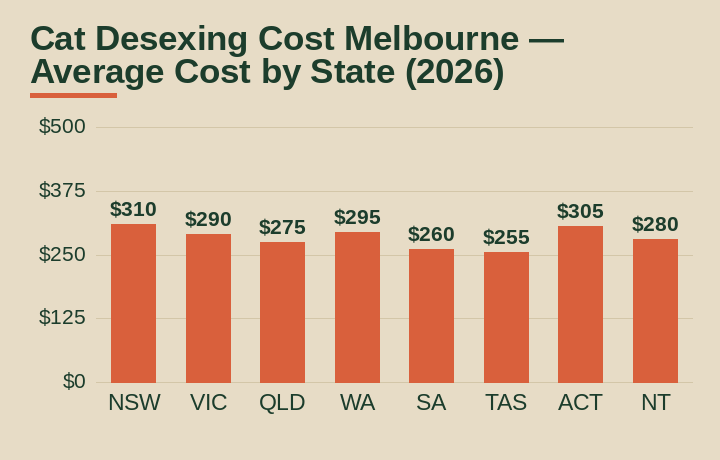
Victoria sits roughly mid-table nationally. Melbourne’s inner suburbs push the state average up; regional Victoria and outer-ring suburbs bring it back down. If you’re in Geelong or Ballarat, expect prices closer to the SA or TAS range.
Why the price varies so much across Melbourne
Male vs female, the biggest factor
A male cat neuter is a relatively quick procedure. Under 30 minutes in most cases. A female spey involves opening the abdomen, locating and removing both ovaries and the uterus, and suturing in layers. That’s 45 to 75 minutes of theatre time, more anaesthetic, more monitoring and more materials. A Tonkinese female at a Collingwood clinic might cost $385 to $410. Her male littermate costs $210 to $235 at the same practice. That $170 gap is the labour and complexity difference, and it’s legitimate.
Suburb and clinic overhead
Inner-city Melbourne practices, think Carlton, Fitzroy, Richmond, South Yarra, carry significantly higher overheads than clinics in Dandenong, Werribee or Croydon. Rent, staff wages and the client base all play a role. You’ll typically pay 25 to 35% more for the same procedure in inner Melbourne than in the outer eastern or western suburbs. A female spey in Toorak might be $400 to $420. In Pakenham, expect $240 to $270. Same anaesthesia, same surgery, different postcode.
Cat’s age and health status
A healthy 5-month-old kitten is the ideal desexing candidate and will be priced at the standard rate. An adult female cat that’s been in multiple heat cycles, or one with a uterine infection (pyometra), is a very different story. Emergency pyometra surgery in Melbourne can run $1,500 to $2,800 depending on complexity. Pre-anaesthetic blood panels add $55 to $110 to any desexing quote, and most vets strongly recommend them for cats over 7 years old. For a senior cat, the total bill including blood work might be $380 to $520 for a female.
What’s included (or not) in the quote
This is where you can be caught out. Some Melbourne practices quote an all-in price: anaesthesia, pain relief, surgical monitoring, discharge consult and one post-op cone included. Others quote a base surgical fee and then itemise everything else. That $220 quote that looks great can end up at $310 by the time you add the pre-op monitoring fee, the take-home Metacam dose and the collar. Always ask for a written breakdown before you book.
A post-surgery recovery suit for cats bought online before the appointment can save you $25 to $40 compared to buying the clinic’s version on the day.
Clinic type: standard practice vs low-cost programs
Melbourne has a handful of subsidised desexing options. The RSPCA Victoria runs periodic low-cost programs, and some councils, particularly in the north and west, have voucher schemes for concession card holders. Prices through these programs can drop to $100 to $150 for eligible owners. The Lost Dogs’ Home also offers vet services at reduced rates. These aren’t dodgy backdoor operations; they’re staffed by registered vets using standard protocols. The quality is fine. The wait times can be longer. Worth it for the saving.
According to Animal Medicines Australia’s 2025 Pets in Australia report, cost remains the single biggest barrier to routine veterinary care, including desexing. That’s exactly why these low-cost programs exist and why it’s worth checking if you qualify.
Male vs female desexing: a direct comparison
If you’ve got one of each, or you’re deciding whether to get both done, here’s a side-by-side on what you’re actually paying for:
| Factor | Male Cat (Neuter) | Female Cat (Spey) |
|---|---|---|
| Procedure type | Scrotal incision, testes removed | Abdominal surgery, ovaries and uterus removed |
| Theatre time | 20 to 35 minutes | 45 to 75 minutes |
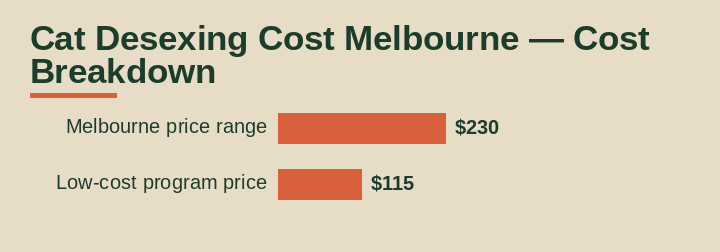
| Melbourne price range | $180 to $280 | $220 to $420 |
| Low-cost program price | $100 to $130 | $120 to $160 |
| Recovery time | 2 to 4 days | 10 to 14 days |
| Post-op restrictions | Minimal | Restricted activity, wound monitoring |
| Risk of not desexing | Roaming, spraying, aggression | Repeated heats, uterine infection, mammary cancer risk |
The risk column matters. A female cat left entire faces a real chance of pyometra, which is both life-threatening and expensive to treat. Desexing at 4 to 6 months is the practical and economical call for most Melbourne cat owners. If you’re thinking about dog desexing costs in Australia, the same general principles apply but dogs sit in a different price bracket entirely.
Recommended Products for Cat Desexing Cost Melbourne
If you’re tackling this yourself, here are some products from Amazon Australia that can help (these are affiliate links):
Questions to ask before you book
Is your quote all-in or a base price?
This is the most important question. Ask specifically: does the price include anaesthesia monitoring, pain relief to take home, and a post-op collar? Melbourne clinics vary widely here, and a quote that looks $80 cheaper might not be once the extras are itemised at pickup.
Do you recommend a pre-anaesthetic blood test?
For young, healthy kittens under 2 years, most vets say it’s optional. For older cats or any cat with health concerns, it’s strongly advisable. Knowing upfront whether the clinic will push this as routine (and charge $55 to $110 for it) helps you budget accurately.
What pain management is provided post-surgery?
Standard care includes anti-inflammatory pain relief for 3 to 5 days post-op. Ask whether this is included in the price or charged separately, and what to watch for if your cat seems uncomfortable at home. A good clinic will walk you through this without you having to ask twice.
How do you handle complications or a second check?
Complications are uncommon but do happen, wound reopening, swelling, infection. Ask whether a follow-up consult within 10 days is included or whether that’s a separate consultation fee. Most clinics include one post-op check. Some don’t.
What breed-specific considerations should I know about?
Brachycephalic cats, Persians, British Shorthairs, Exotic Shorthairs, carry a slightly higher anaesthetic risk due to their flat faces and compromised airways. If your cat falls into that category, ask whether the vet has experience with brachycephalic patients and whether the price reflects any additional monitoring. Prices for brachycephalic breeds can run $40 to $80 higher.
Are you accredited or do you have a Royal College-registered vet performing the surgery?
Standard registration means your vet is licensed to operate, but asking about their surgical case volume or whether they regularly perform desexing is a fair question. High-volume clinics doing 5 to 10 desexings per week tend to be efficient and practised. A general practice that does two a fortnight might take longer and charge more for theatre time.
How to bring the cost down
- Use a subsidised program if you’re eligible. RSPCA Victoria, council vouchers and community vet clinics in Melbourne’s north and west can cut costs to $100 to $160. Check your council’s website specifically, eligibility and availability vary by municipality.
- Go outer-ring. Clinics in Werribee, Dandenong, Craigieburn and Narre Warren consistently charge 25 to 35% less than equivalent practices in Carlton or South Yarra. The drive is worth it for a $120 saving.
- Book at 4 to 6 months. You’re not saving money by waiting. You’re adding risk. A cat in heat or with early hormonal issues costs more to desex, not less.
- Ask for an itemised quote before agreeing. Knowing exactly what’s included prevents the day-of surprise. If a second quote from a different clinic is all-in and comparable, take it.
- Adopt through a rescue. Melbourne rescue organisations almost universally desex before adoption. The adoption fee (usually $150 to $250 for a cat) includes desexing, microchipping and initial vaccinations. You’d pay more sourcing those individually. Check out the broader picture of pet vaccination costs in Australia to understand what you’re getting in an adoption package.
On the topic of ongoing care: annual vaccination costs, dental cleaning and mobile vet visits all add up over a cat’s lifetime. Desexing is a one-time cost; factoring it into a full first-year budget makes the spend feel more manageable.
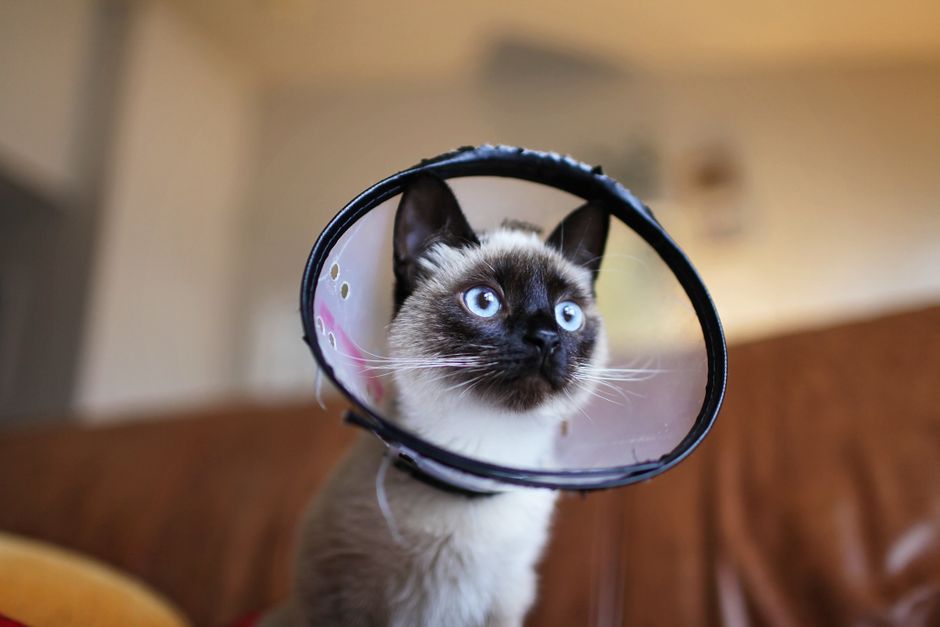
Desexing reduces hormone-driven behaviours, spraying, yowling, roaming and aggression are all less common in desexed cats. Weight gain is a real risk afterwards because metabolic rate can drop slightly. Switching to a lower-calorie food after surgery and keeping your cat active will manage that. It’s not inevitable, just something to watch.
FAQs about cat desexing cost Melbourne
How much does it cost to desex a female cat in Melbourne?
Female cat desexing (spaying) in Melbourne typically costs $250 to $420. It’s a more involved procedure than neutering a male, requiring general anaesthesia and abdominal surgery, which is why the price is higher. Inner-city practices and 24-hour clinics tend to sit at the top of that range.
How much does it cost to desex a male cat in Melbourne?
Male cat neutering in Melbourne generally runs $180 to $280. The procedure is simpler than a spey, there’s no abdominal incision, so it takes less theatre time and anaesthetic. Outer-suburb clinics and low-cost programs can bring this down to around $100 to $130 for eligible owners.
At what age should I desex my cat in Melbourne?
Most Melbourne vets recommend desexing at 4 to 6 months, before the first heat cycle for females. Some shelters and low-cost programs desex kittens as young as 8 to 12 weeks (early-age desexing), which is safe and well-supported by Australian veterinary guidelines. Waiting until adulthood doesn’t save you money, it often adds cost if the female has already come into heat.
Are there low-cost cat desexing programs in Melbourne?
Yes. The RSPCA Victoria and several Melbourne councils run subsidised desexing programs, particularly for concession card holders or rescue cats. Prices can drop to $100 to $150 for eligible owners. The Lost Dogs’ Home and some community vet clinics in outer suburbs also offer reduced rates. It’s worth checking your local council’s website, as programs vary by municipality. Also see MoneySmart’s guidance on pet ownership costs for a fuller picture of what to budget for a new cat.
Does the cost of cat desexing in Melbourne include pain relief and anaesthesia?
Most clinics include general anaesthesia and a take-home pain relief dose in their quoted desexing price. However, some itemise these separately, so always ask for a written breakdown before you book. Pre-surgical blood tests and a post-op cone are commonly charged as extras, adding $40 to $100 to the final bill.
Cat desexing cost Melbourne is a one-time spend that pays for itself many times over in avoided health costs, reduced roaming behaviour and a calmer household. Budget $180 to $280 for a male and $220 to $420 for a female at a standard Melbourne clinic; use low-cost programs if you qualify; and always ask for an all-in quote before you commit. For related ongoing care costs, the guides on cat grooming in Australia, pet hydrotherapy and pet acupuncture are worth bookmarking if you’re building a full annual care budget.
People Also Ask About Cat Desexing Cost Melbourne
Can I desex my cat for free in Melbourne?
Free desexing is rare but not impossible. Some Melbourne councils run annual low-cost or free desexing events for low-income residents, particularly targeting stray and semi-owned cats in high-density areas. The RSPCA and some rescue groups also occasionally offer free or heavily subsidised days. These programs fill up quickly and aren’t available year-round, so you’d need to watch council and RSPCA Victoria announcements closely.
Is it cheaper to desex a cat at a vet school in Melbourne?
The University of Melbourne’s Veterinary Teaching Hospital in Werribee does offer clinical services to the public, and prices can be lower than private practice for some procedures. However, teaching hospital slots are limited and scheduling can be less flexible. It’s worth ringing them directly to ask about current availability and pricing for desexing.
Does pet insurance cover cat desexing in Melbourne?
No. Desexing is considered a routine elective procedure in Australia, and virtually every pet insurer excludes it. Accident-only and comprehensive policies both exclude preventive and elective surgeries. If you’re considering pet insurance, check our guide to what’s typically covered before purchasing a policy.
How long does cat desexing recovery take?
Most cats bounce back within 3 to 5 days. Males tend to recover faster since the procedure doesn’t involve an abdominal incision. Females need 10 to 14 days of restricted activity to allow internal stitches to heal properly. You’ll need to keep the wound site dry and check it daily for signs of swelling or discharge.
Does desexing change my cat’s behaviour or weight?
Related Cost Guides
This guide contains affiliate links. We may earn a small commission from qualifying purchases at no extra cost to you.