
An animal behaviourist typically costs between $120 and $350 per session, but the range is genuinely wide. According to the Australian Veterinary Association’s report on rising pet care costs, specialist behaviour services are one of the faster-growing expenses for Australian pet owners. That’s partly because more owners are seeking help earlier, and partly because the profession itself is maturing with clearer qualifications and higher expectations.
Animal behaviourist cost Australia sits between $120 and $350 per session for a one-on-one consultation. Veterinary behaviourists (who hold a specialist vet degree) charge at the higher end, $280 to $450, while certified trainers and applied animal behaviourists typically run $120 to $220. Initial consultations are usually longer and more expensive than follow-up sessions.
Prices updated July 2026 from current Australian sources.
| Practitioner | Typical cost | Notes |
|---|---|---|
| Certified trainer or applied behaviourist | $120 to $220 / session | |
| Veterinary behaviourist (specialist vet) | $280 to $450 / session | |
| Overall range | $120 to $350 / session |
Initial consultations are longer and more expensive than follow-ups. A veterinary behaviourist can also prescribe medication, which a trainer cannot.
Sources (July 2026): Australian Veterinary Association, Airtasker AU, How much does dog training cost, RSPCA Australia
The biggest pricing split is between veterinary behaviourists (specialist vets with postgraduate qualifications in behaviour medicine) and applied animal behaviourists or certified behaviour consultants (non-vets with specialist training). Both are legitimate. Which one you need depends heavily on what’s going on with your animal.
What animal behaviourist consultations actually cost in 2026
Initial consultations are almost always more expensive than follow-ups. They’re longer (usually 60 to 90 minutes versus 30 to 45 minutes for follow-ups), require detailed history-taking, and often include a written treatment plan. That’s where most of the professional time goes.
A certified applied animal behaviourist in Sydney’s inner west or Melbourne’s inner north might charge $160 to $220 for an initial consult. The same service in Toowoomba or Hobart’s northern suburbs typically runs $120 to $170. Veterinary behaviourists are a different bracket entirely: $280 to $450 for the first appointment in most capitals, with follow-ups at $140 to $200. Prices honestly bounce around within those ranges depending on the individual practitioner and their caseload.
| State | Average Cost (initial consult) | Typical Range |
|---|---|---|
| NSW | $210 | $150 to $380 |
| VIC | $200 | $140 to $370 |
| QLD | $185 | $130 to $340 |
| WA | $190 | $135 to $350 |
| SA | $175 | $125 to $320 |
| TAS | $165 | $120 to $290 |
| ACT | $205 | $145 to $360 |
| NT | $170 | $120 to $300 |
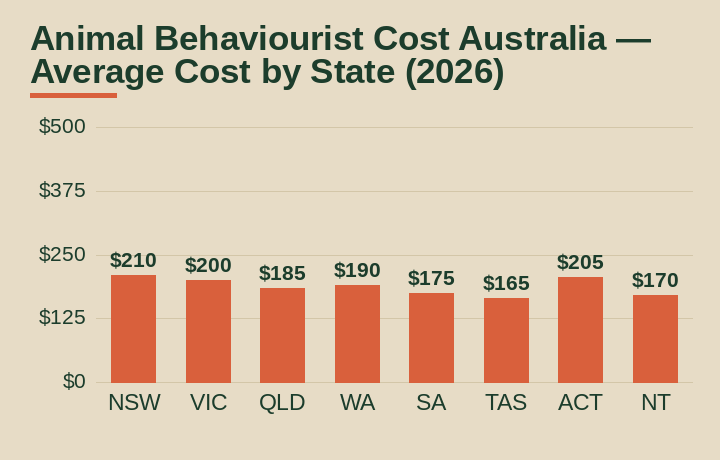

These figures reflect private consultations only. University teaching clinics and community behaviour programmes sit well below these rates, sometimes 30 to 40% lower. Worth knowing if budget is tight.
What’s included and what costs extra
There’s no industry-wide standard on what a behaviour consultation includes. Some practitioners front-load everything into a comprehensive first session. Others charge separately for the written plan, phone support, or progress check-ins. Ask before you book.
| Typically included | Often charged separately |
|---|---|
| Initial 60 to 90 minute consultation | Written behaviour modification plan |
| Behavioural history assessment | Phone or email follow-up support |
| Live observation or video review | Progress check-in sessions |
| Verbal treatment recommendations | Medication prescription and monitoring (vet behaviourists) |
| Basic handout materials | Home visit travel fee (regional areas) |
| Referral letter to your vet (if needed) | Multi-pet household surcharge |
A home visit will almost always cost more than a clinic consultation. In Fremantle or Sydney’s Surry Hills, travel and home-visit fees can add $50 to $120 on top of the session rate. If your pet’s problem is environment-specific (territorial aggression in the backyard, for instance), a home visit is genuinely worth that extra cost. For separation anxiety, sometimes a mobile vet who comes to you can coordinate with the behaviourist more efficiently.
Where the money actually goes
Understanding the pricing helps you push back on quotes that don’t add up, or recognise when a higher price is justified.
- Qualifications and specialisation level: A veterinary behaviourist completed a vet degree, years of clinical practice, and then a postgraduate specialist qualification (Fellowship of the Australian College of Veterinary Scientists or equivalent). That’s 10+ years of training. An applied animal behaviourist may have a Bachelor’s or Master’s in animal behaviour science plus supervised hours. A trainer with a short certificate course is something else again. The price reflects the training tier, and for complex cases, the tier matters.
- Consultation length and format: Behaviourists don’t work in 15-minute slots. A proper initial assessment takes real time. A 90-minute session at $220 is $147 per hour, which is reasonable for a specialist professional. Short consultations at high prices are more suspicious than long ones at the same rate.
- Location and practice type: A behaviourist running a specialist clinic in Newtown or Fitzroy has different overheads to someone operating from a home office in Geelong or Cairns Northern Beaches. Urban pricing is higher. That’s not unique to this field.
- Animal species and case complexity: Dog aggression towards humans is among the most involved cases a behaviourist handles. It requires detailed risk assessment, management protocols, and careful monitoring. A straightforward puppy reactivity case is quicker to work through. Case complexity is a legitimate pricing variable. If a behaviourist quotes the same rate for everything without asking about your situation, that’s a flag.
- Whether medication is part of the plan: Veterinary behaviourists can prescribe anti-anxiety or behaviour-modifying medications when they’re genuinely indicated. That adds a medication cost (often $40 to $120 per month depending on the drug and your dog’s weight) but it also means the treatment has a better evidence base for certain conditions. You can also pair this with other costs like pet acupuncture for anxiety management in some cases, though the evidence for that is less established. An aquatic therapy programme can also complement behaviour rehabilitation for dogs with pain-related aggression.
For dogs with severe noise phobias or generalised anxiety, many behaviourists recommend a pheromone-based calming product like ADAPTIL as part of the home management plan. It won’t replace behaviour modification but it can take the edge off while you’re working through a programme.
Recommended Products for Animal Behaviourist Cost Australia
If you’re tackling this yourself, here are some products from Amazon Australia that can help (these are affiliate links):
How to bring the cost down without cutting corners
Start with your regular vet before you book a behaviourist. Some behaviour changes have a medical root. A dog that suddenly becomes snappy may be in pain. A cat that stops using the litter box might have a urinary tract issue. A $90 to $120 vet consultation first can either rule out medical causes or identify them, saving you from misapplied behaviour treatment. It’s also worth checking whether your vet can provide a referral that includes your pet’s full history, which saves the behaviourist’s time (and yours) in the first session.
Ask specifically about package pricing. Serious behaviour cases typically require multiple sessions. Many practitioners will discount 10 to 20% for block bookings of 4 to 6 sessions. That can mean $40 to $80 saved per session. Don’t assume this is offered automatically.
Group behaviour programmes are genuinely underutilised. Reactive dog classes, fearful dog workshops, and puppy behaviour courses run by qualified behaviourists typically cost $35 to $75 per session compared to $150 to $350 for private work. They’re not appropriate for every situation, particularly where aggression risk is high, but for dogs that are socially anxious or mildly reactive on lead, a well-structured group programme delivers most of the benefit at a fraction of the price. Pairing these with quality puppy school early on can prevent many behaviour problems from developing in the first place.
Check what university veterinary behaviour clinics are available in your state. The University of Queensland’s Gatton campus and some other institutions offer behaviour consultations at reduced rates as part of their specialist training programmes. You’re seeing a student, but under close specialist supervision. Outcomes are generally solid for non-emergency cases.
Do the work between sessions. This sounds obvious but it’s the most commonly skipped money-saver. Behaviourists consistently say clients who practise daily, even just 10 to 15 minutes, resolve cases in half the sessions of those who don’t. A basic clicker and treat pouch makes consistent daily practice easier, especially for counter-conditioning exercises. Each session you don’t need is $120 to $350 you keep. Also consider pairing behaviour work with regular check-ins on your pet’s overall health costs, including keeping vaccinations current, since stressed animals with incomplete preventive care tend to have more health complications.
If your dog’s issues are specifically stress-related, check whether boarding arrangements are a contributing trigger. Sometimes an anxious dog’s behaviour escalates around kennelling, and addressing that environment directly reduces the overall behaviour load.
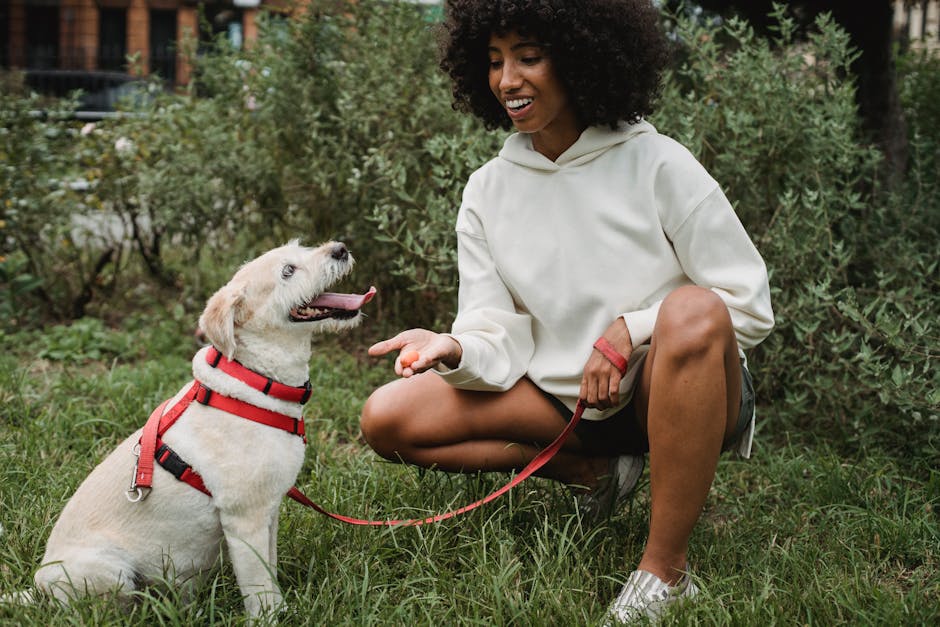
If you’re factoring animal behaviourist cost Australia into your broader pet budget, it’s worth mapping out the full picture. Factor in emergency vet expenses, dental cleaning costs, and regular preventive care alongside any behaviour treatment. Behaviour problems that go unaddressed tend to escalate, and the cost of a serious bite incident or relinquishment to a shelter is far higher than a few specialist consultations. Getting proper help early is almost always the cheaper option long-term.
Frequently Asked Questions
How much does an animal behaviourist cost in Australia?
Most people pay $120 to $350 per session. Certified applied animal behaviourists and experienced trainers sit in the $120 to $220 range. Veterinary behaviourists, who hold a specialist postgraduate veterinary qualification, typically charge $280 to $450 for an initial consultation. Follow-up sessions are usually shorter and cheaper, often $100 to $180.
What’s the difference between a dog trainer and an animal behaviourist?
A dog trainer focuses on teaching specific commands and manners. An animal behaviourist assesses the underlying cause of problem behaviours, such as anxiety, aggression, or compulsive disorders, and designs a treatment plan. A veterinary behaviourist is a vet who has completed specialist training in behavioural medicine and can prescribe medication if needed. The distinction matters a lot for serious cases.
Does pet insurance cover animal behaviourist consultations?
Some comprehensive pet insurance policies in Australia do include behavioural treatment, but it’s far from standard. You’d need to check your policy’s Product Disclosure Statement carefully. Most basic and mid-tier policies exclude it. If behaviour treatment is something you anticipate needing, look for it as a specific inclusion before you buy cover. MoneySmart’s pet ownership cost guide is a useful starting point for understanding the full financial picture before getting a pet.
How many sessions will my pet need?
Depends entirely on the issue. A dog with mild leash reactivity might see meaningful improvement in 3 to 5 sessions combined with consistent homework. Severe separation anxiety or inter-dog aggression can require 8 to 12 sessions or more, sometimes alongside medication. Behaviourists should give you a rough treatment outline after the initial assessment, not just book you in indefinitely.
Can I get a referral to a behaviourist through my vet?
Yes, and it’s worth asking. Your regular vet can refer you to a veterinary behaviourist, which is the same pathway as any other specialist referral. Some vets have working relationships with certified behaviourists too. A referral doesn’t always reduce the cost, but it means the behaviourist gets your pet’s full medical history upfront, which genuinely improves outcomes.
People Also Ask About Animal Behaviourist Cost Australia
Is a veterinary behaviourist worth the extra cost over a regular trainer?
For serious cases, yes. A veterinary behaviourist can diagnose underlying anxiety disorders, prescribe medication like fluoxetine or clomipramine if needed, and coordinate with your regular vet. For a dog with severe separation anxiety or a history of biting, that medical angle makes a real difference. For a dog that pulls on lead or won’t come when called, a good trainer is usually all you need.
How do I find a legitimate animal behaviourist in Australia?
Look for members of the Australian College of Veterinary Scientists (behaviour chapter) for veterinary behaviourists, or the Pet Professional Guild Australia and IAABC (International Association of Animal Behavior Consultants) for applied animal behaviourists. ‘Animal behaviourist’ isn’t a protected title in Australia, so credentials genuinely matter. Ask directly about their qualifications and supervised experience hours.
Can an animal behaviourist help with cat behaviour problems?
Yes, and it’s underused for cats. Feline behaviourists work on issues like inter-cat aggression, litter box avoidance, destructive scratching, and fear-based hiding. The consultation format is usually a home visit or detailed questionnaire followed by a video call, since cats don’t travel well. Expect to pay $130 to $250 for a feline behaviour consultation in most Australian cities. See also our look at cat grooming costs for a broader picture of specialist cat care expenses.
What should I expect at my first animal behaviourist appointment?
The initial consultation is usually 60 to 90 minutes and covers your pet’s full history: early socialisation, previous training, medical background, diet, daily routine, and a detailed description of the problem behaviour. The behaviourist may want to observe the behaviour directly or review video footage you’ve taken at home. You’ll leave with a written treatment plan, not just verbal advice.
Are animal behaviourist costs tax deductible in Australia?
Generally, no, not for a household pet. If your animal is a working dog used in a business (a farm dog, a guard dog for a commercial property), behaviour treatment may be deductible as a business expense. The ATO requires the animal to be used primarily for income-producing purposes. Check with your accountant if you’re in that situation, don’t assume either way.
Related Cost Guides
This guide contains affiliate links. We may earn a small commission from qualifying purchases at no extra cost to you.