
Dog food is one of those expenses that looks manageable until you actually add it up over a year. According to Animal Medicines Australia’s 2025 Pets in Australia report, food is consistently the largest single ongoing cost for dog owners, ahead of vet visits and grooming. And prices have moved in 2026, with premium and raw options especially pushing higher.
Dog food cost Australia typically runs $20 to $80 per month for dry kibble, $60 to $150 per month for wet or mixed diets, and $150 to $350+ per month for raw or fresh-prepared food. A medium-sized dog on a mid-range brand lands most owners around $55 to $90 per month in 2026. Size, diet type and brand tier are the three biggest variables.
Prices updated July 2026 from current Australian sources.
| Diet type | Typical monthly cost | Notes |
|---|---|---|
| Dry kibble | $20 to $80 / month | |
| Wet or mixed diet | $60 to $150 / month | |
| Raw or fresh-prepared | $150 to $350+ / month | |
| Medium dog, mid-range brand | $55 to $90 / month |
Size, diet type and brand tier are the three biggest variables. Buying larger bags and subscribing through online retailers usually lowers the monthly cost.
Sources (July 2026): Petbarn, Pet Circle, Animal Medicines Australia, Pets in Australia 2025
The honest range is wide. A small dog on Woolworths homebrand dry kibble might cost you $22 a month. A large Labrador on a raw diet sourced from a Sydney-based meal prep service could run $280 to $340 a month. Most owners land somewhere in the middle, though plenty underestimate what they’re actually spending until they check their bank statements.
NT and remote WA sit higher mostly due to freight costs passed through to shelf prices. Capital city prices are fairly stable, with Sydney running about 5 to 8% higher than Adelaide or Brisbane for the same products. If you’re buying online through PetCircle or Budget Pet Products, state differences largely disappear.
Diet type comparison: what each option actually costs
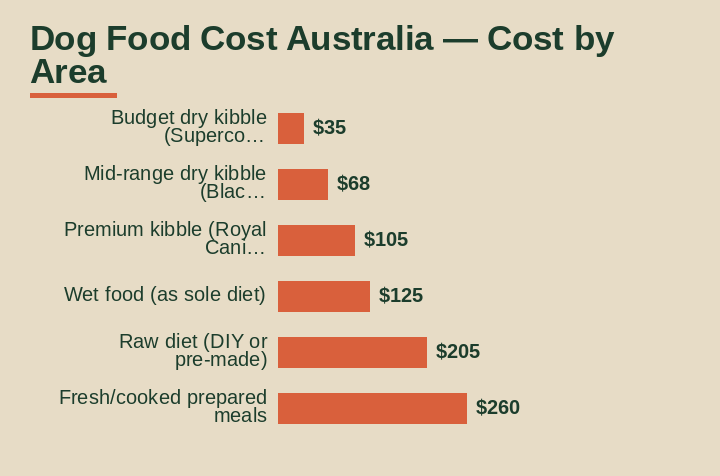
Choosing a diet is the single biggest cost decision you’ll make as a dog owner. Dry kibble and raw aren’t just different price points, they involve different storage, preparation time and vet opinions. Before committing, here’s what each tier genuinely costs and what you’re getting for it.
| Diet Type | Monthly Cost (medium ~20kg dog) | Notes |
|---|---|---|
| Budget dry kibble (Supercoat, homebrand) | $25 to $45 | Basic nutrition, widely available at Coles/Woolworths |
| Mid-range dry kibble (Black Hawk, Advance) | $50 to $85 | Better protein sources, good for most healthy adult dogs |
| Premium kibble (Royal Canin, Hills Science Diet) | $80 to $130 | Breed/life-stage specific formulas, vet-recommended |
| Wet food (as sole diet) | $90 to $160 | Expensive at volume; most owners use it as a topper |
| Raw diet (DIY or pre-made) | $130 to $280 | Big Dog, Frontier Pets, or self-prepared with supplements |
| Fresh/cooked prepared meals | $180 to $340 | Subscription services, highest convenience, highest cost |
| Prescription/veterinary diet | $100 to $200 | For health conditions; Royal Canin Renal, Hills k/d etc. |
Dog Food Cost Calculator
Estimate your annual dog food bill based on breed size, food type, and quality tier. All prices in AUD, based on 2026 Australian market data.
Estimates based on average feeding guidelines and Australian retail pricing as of 2026. Actual costs vary by brand, retailer, and your dog’s individual needs. Puppies under 12 months eat approximately 25% more than adults. Data sourced from major Australian pet retailers including Pet Circle, PetBarn, My Pet Warehouse, and Pet Shop Direct.
Most owners mixing wet food as a topper with dry kibble land around $75 to $120 per month for a medium dog. That’s probably the most common real-world spend. Pure wet-food diets are costly enough that most vets will suggest against them for budget reasons alone.
Recommended Products for Dog Food Cost Australia
If you’re tackling this yourself, here are some products from Amazon Australia that can help (these are affiliate links):
Where the money actually goes: 5 factors that shift the price
Dog size
This is the most obvious factor and also the biggest lever. A Chihuahua or Maltese on mid-range kibble costs $20 to $35/month. A Golden Retriever on the same brand costs $75 to $110/month. A Great Dane or Saint Bernard on a quality diet? Easily $130 to $180/month just on kibble, before any wet food or treats. Size scales cost more than linearly because large breeds also need higher-protein formulas to support joints and muscle mass.
Diet type and brand tier
Jumping from budget kibble to a premium raw subscription is a 5 to 8x cost difference for the same-sized dog. A 20kg Labrador on Supercoat costs roughly $38/month. The same dog on Big Dog raw patties costs $190 to $230/month. Whether that jump is worth it depends on your dog’s health, your vet’s advice and your budget. The Australian Veterinary Association’s cost pressure report found that food spending is one area where owners are actively trading down in 2026, often with their vet’s blessing.
Where you buy
This one surprises people. The same 13kg bag of Black Hawk Adult can be $89 at a physical Petbarn in Surry Hills or $69 on PetCircle with an auto-ship discount. That’s $240 a year saved on one product with no change in diet. Independent pet stores in Newtown, Geelong or Fremantle sometimes run loyalty discounts that compete, but online wins consistently on price. For owners managing multiple pet care costs, this gap is worth acting on.
Life stage and health conditions
Puppy food and senior food both cost more than adult maintenance formulas. Royal Canin’s puppy range runs about 20% more than their adult equivalent per kilogram. Prescription diets for kidney disease, joint issues or food allergies are a different category entirely, Hills k/d or Royal Canin Renal runs $140 to $200/month for a medium dog and isn’t optional if your vet prescribes it. Budget for this possibility. It’s not rare, especially in dogs over 8. You might also want to factor in dental cleaning costs, since diet directly affects dental health.
Treats, toppers and supplements
This is the sneaky category. People track their main food spend carefully and completely ignore the $25 to $50/month going on dental chews, training treats, food toppers and joint supplements. Puppy training alone can burn through treat bags quickly. An effective dental chew product might cost $18 to $25/month but can reduce vet bills for dental cleaning down the track, so the spend isn’t always wasteful. Just know it’s part of the real monthly cost.
Questions to ask before you commit to a dog food
Is the protein source named specifically?
Labels that list “chicken meal” or “lamb” as the first ingredient are more transparent than those listing “meat meal” or “animal derivatives.” The more specific the labelling, the better you can assess quality. Ask the pet store or check the brand’s website, vague ingredient lists are usually a red flag.
What’s the cost per kilogram, not just per bag?
Marketing loves the $19.99 price point on a 2kg bag. Work it out per kilogram. That same $19.99 bag is $9.99/kg; a 15kg bag of similar quality food at $85 is $5.66/kg. Always compare by weight, especially for dry kibble where portion sizes are consistent.
Has my vet weighed in on this diet?
If you’re considering a raw diet, a home-cooked diet, or a prescription food, get a vet opinion first. Switching a dog to an unbalanced homemade diet causes long-term health problems that cost far more to fix than the food would have saved. One vet visit to discuss nutrition is worth the consult fee.
Does this food require supplements to be nutritionally complete?
Raw and home-prepared diets almost always do. Omega-3s, calcium, zinc and vitamin E are commonly deficient in DIY raw diets. Factor in supplement costs, which add $15 to $40/month, before calculating whether raw is actually cheaper than premium kibble. Often it isn’t.
Am I being upsold on boutique branding?
Some of the most expensive dog foods on Australian shelves are priced on packaging and marketing, not nutrition. A few independent studies have found mid-range brands like Black Hawk or Advance perform comparably to premium European imports costing twice as much. Grain-free premium marketing is especially aggressive right now. Check the AAFCO or similar nutritional adequacy statement rather than the lifestyle photography on the bag. For an omega-3 supplement for dogs, you can buy it separately for a fraction of what “premium enriched” food charges.
What’s the transition plan if I’m switching foods?
Abrupt food changes cause digestive upset. Most dogs need a 7 to 10 day gradual transition. If you’re switching from cheap kibble to raw or a premium brand, expect a period of adjustment. Factor in potential vet costs if the transition goes badly, particularly for dogs with sensitive stomachs.
How to bring the cost down without feeding your dog badly
The biggest money-saver most owners miss is simply feeding the correct portion. The recommended daily amount on a bag is a guideline, often calibrated for moderately active dogs. A low-activity indoor dog needs 10 to 20% less. Weigh your dog’s food for two weeks and adjust. You’ll likely cut $10 to $20/month without changing anything else.
Buying in bulk consistently beats small-bag pricing. A 20kg bag of mid-range kibble typically costs $5.50 to $6.50/kg versus $9 to $11/kg for a 2 to 3kg bag. If storage is the concern, an airtight food bin solves it for a one-off $25 to $40 cost. The payback period is about six weeks.
Auto-ship subscriptions from PetCircle, Petbarn or Budget Pet Products take 5 to 10% off and remove the inconvenient trip to the store. On a $90/month budget, that’s $54 to $108/year. Not life-changing, but it’s genuinely free money.
If you want better nutrition without going full raw, mix a quality mid-range kibble with cooked sweet potato, pumpkin or green beans. These are cheap, digestible and extend the food budget by 15 to 20% for healthy adult dogs. It’s not a shortcut vets will always endorse, but plenty use it themselves. Check with your vet first if your dog has any health conditions.
Also compare food costs against your other pet expenses. If you’re spending on dog boarding, grooming or hydrotherapy, it’s worth having a total pet budget rather than optimising food in isolation. MoneySmart’s pet ownership cost page has a decent overview of total annual spend that’s worth bookmarking.
Dog food cost Australia is genuinely one of the most variable line items in pet ownership. A bit of research upfront, a bulk-buy strategy and a honest chat with your vet about what your specific dog actually needs can save you $200 to $600 a year without any reduction in your dog’s health or quality of life. The premium tier isn’t automatically better. And the budget tier isn’t automatically worse. It depends on your dog.
Frequently asked questions about dog food cost Australia
How much does dog food cost per month in Australia?
For a medium-sized dog on mid-range dry food, expect to spend $45 to $90 per month. Small dogs can cost as little as $20 to $35/month. Large or giant breeds on premium or raw diets can run $150 to $350/month. The range is genuinely wide, and diet type matters more than brand alone.
Is raw dog food worth the extra cost?
Raw diets typically cost $150 to $350/month compared to $40 to $90 for quality kibble. Some dogs do show improvements in coat condition, digestion and energy on raw, but the evidence from vets is mixed. If your dog is doing well on a good-quality dry food, switching to raw for cost savings doesn’t really add up, it’s the opposite. It’s a lifestyle choice as much as a health one.
What is the cheapest dog food option in Australia?
Budget dry kibble from Coles, Woolworths or Petbarn’s house brands runs $20 to $40 per month for a medium dog. These aren’t necessarily bad options for healthy adult dogs, but check the protein source and avoid foods where grain or corn is listed as the first ingredient. For pups, seniors or dogs with health issues, spending a bit more on a vet-recommended brand is worthwhile.
Do dog food costs vary much between states?
Not dramatically, but you’ll pay 5 to 10% more in the NT and remote WA where freight adds to shelf prices. Capital city prices are fairly consistent across Sydney, Melbourne and Brisbane. The biggest variation comes from where you buy, online subscription services are typically 10 to 20% cheaper than buying the same bag in-store.
Can I reduce dog food costs without compromising nutrition?
Yes. Buying in bulk (10 to 20kg bags), using auto-ship subscriptions from retailers like PetCircle or Petbarn, and feeding to the correct portion size for your dog’s weight all help. Overfeeding is one of the biggest hidden costs, most owners feed 10 to 20% more than the label recommends. Fix that first.
People Also Ask About Dog Food Cost Australia
How much should I budget for dog food annually in Australia?
Annual dog food costs in Australia range from around $240 for a small dog on budget dry food to $3,600+ for a large dog on a premium raw or fresh diet. Most medium-dog owners land somewhere between $600 and $1,200 per year. It’s one of the bigger ongoing pet costs, so it’s worth getting right early rather than changing your dog’s diet every few months.
Is it cheaper to make homemade dog food in Australia?
Homemade dog food sounds cheaper but often isn’t when you factor in protein costs, vegetables, supplements and preparation time. A nutritionally complete homemade diet for a 20kg dog typically costs $120 to $200/month in ingredients alone, plus vet consultation fees to get the balance right. It’s not cheaper than mid-range kibble, and getting the nutrition wrong long-term causes real health problems.
What dog food brands are most popular in Australia and what do they cost?
Black Hawk, Advance, Royal Canin and Hills Science Diet dominate the mid-to-premium segment in Australia, with monthly costs of $55 to $130 depending on dog size. Budget-friendly brands like Supercoat and Purina One sit in the $35 to $70/month range. Raw brand providers like Big Dog and Frontier Pets charge $150 to $280/month. Where you buy matters as much as the brand.
Does the cost of dog food increase as dogs get older?
Often, yes. Senior dogs sometimes require prescription or specialised diets for joint support, kidney health or weight management, which cost more than standard adult formulas. Royal Canin’s senior range, for example, runs about 15 to 25% more than their adult equivalent. Dogs with health conditions can also end up on vet-prescribed food costing $100 to $180/month for a medium dog. Thinking ahead about complementary treatments like acupuncture for ageing dogs is worth doing before costs escalate.
How does dog food cost compare to cat food cost in Australia?
Cat food typically costs less per month than dog food simply because cats are smaller and eat less volume. A cat on mid-range wet and dry food costs around $40 to $80/month. Medium dogs on equivalent quality food run $55 to $110/month. Large dogs cost significantly more. For a broader look at cat-specific expenses, see our breakdown of cat grooming costs in Australia.
Related Cost Guides
This guide contains affiliate links. We may earn a small commission from qualifying purchases at no extra cost to you.