
Reptile licence cost Northern Territory is one of those things that sounds bureaucratic until you realise the NT is home to some of the most spectacular native reptiles in the country, and keeping them legally is actually pretty accessible. According to Animal Medicines Australia’s 2025 Pets in Australia report, reptile ownership has grown steadily across the country, and the NT has one of the more streamlined licensing systems of any Australian jurisdiction. The baseline fee is low. The paperwork, less so.
Reptile licence cost Northern Territory sits at $26.50 for a basic wildlife keeper licence in 2026, with higher-tier commercial or advanced keeper licences running $55 to $105. The exact fee depends on the category of licence, the species you're keeping, and whether you're a private keeper or operating commercially. Budget at least $30 to $50 for a straightforward pet reptile setup once admin fees are factored in.
Prices updated July 2026 from current Australian sources.
| Permit type | Fee | What it covers |
|---|---|---|
| Basic wildlife keeper licence | $26.50 | Beginner-friendly protected species |
| Advanced or commercial keeper | $55 to $105 | Higher-category species and commercial keeping |
You need a permit to keep protected wildlife in the NT, issued by the Parks and Wildlife Commission. The fee depends on the category and species, and some species are exempt. The permit fee does not include the enclosure or the animal.
Sources (July 2026): NT.GOV.AU, Keeping protected and prohibited wildlife
Before you commit to a bearded dragon or a children’s python, you need to understand exactly what licences exist, what they cost, and what traps catch first-time applicants. Getting this wrong doesn’t just delay your new pet, it can result in fines and the animal being seized.
The $26.50 basic fee is genuinely cheap by any standard. The real costs show up elsewhere: enclosure setup, feeding, and vet bills. But the licence itself won’t break you.
What it looks like in practice: a Darwin keeper scenario
Take someone in Palmerston wanting to keep a pair of central bearded dragons. They’d apply for a basic private keeper licence at $26.50, list both animals on the licence once acquired, and need to demonstrate a compliant enclosure setup. No site inspection is required for basic-category species in most cases. Total government cost for year one: $26.50. Year two renewal: another $26.50.
The same person wanting to keep a scrub python, which sits in a more restricted category, would be looking at $55 for the advanced licence. Some experienced keepers in Darwin’s rural outskirts keep a mix of basic and advanced-category animals under a single advanced licence, which makes sense economically if you’re planning to expand your collection anyway.
For a commercial breeder in Katherine who’s selling offspring to pet stores, the commercial dealer licence at $85 to $105 is mandatory. That’s still a small overhead relative to the income from a productive breeding pair of carpet pythons.
State-by-state comparison: reptile keeper fees around Australia
The NT sits at the more affordable end of the national spectrum. Here’s how the basic private keeper licence fees compare across jurisdictions in 2026. Note that each state has different species lists and conditions, so this is purely a fee comparison.
| State/Territory | Basic Keeper Fee | Typical Range (all categories) |
|---|---|---|
| NSW | $61.00 | $61 to $255 |
| VIC | $40.30 | $40 to $170 |
| QLD | $48.90 | $48 to $180 |
| WA | $50.00 | $50 to $220 |
| SA | $36.00 | $36 to $140 |
| TAS | $36.50 | $36 to $130 |
| ACT | $44.00 | $44 to $160 |
| NT | $26.50 | $26 to $105 |
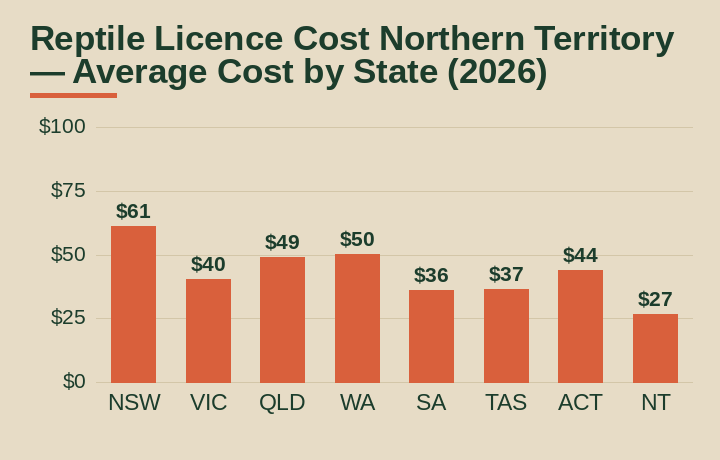
The NT’s $26.50 baseline is the cheapest in the country. NSW is more than double. If you’re moving to Darwin from Sydney and already hold a reptile keeper licence, you’ll pay significantly less to maintain your hobby in the NT.
What drives the cost up
The species category you choose
This is the biggest variable. A basic keeper licence at $26.50 covers a solid list of commonly kept species. Move up to a woma python, a black-headed python, or other species that attract more regulatory scrutiny, and you’re in advanced keeper territory at $55. That’s still not expensive, but it does mean your first year has a higher entry cost, especially when you add enclosure setup. A decent python enclosure in Darwin will cost $300 to $600 before you buy the animal.
Renewal timing
NT reptile keeper licences run for one year. There’s no multi-year option that saves you money. Let it lapse by even a week and you risk falling into the late renewal or fresh application category, adding $50 to $80 to what should have been a $26.50 transaction. Set a calendar reminder. Seriously.
Commercial versus private intent
If you breed and sell reptiles, even occasionally, you technically need a commercial licence. Some keepers try to fly under the radar selling animals through Facebook groups, but the NT Department of Environment, Parks and Water Security does follow up on reports. The commercial licence at $85 to $105 is still cheap insurance compared to the fines under the Territory Parks and Wildlife Conservation Act, which can run into thousands of dollars.
Number of species tiers you hold
Keepers who want animals from multiple restricted categories sometimes end up holding two separate licences. This is uncommon but does happen with serious collectors who want both standard native species and more regulated ones. Holding both a basic and advanced licence means paying both fees, roughly $82 combined. For most hobbyists, one licence covers everything.
Administrative processing delays
Not a fee exactly, but delays cost money in practice. If your application is incomplete, you’ll be chasing it up and potentially waiting weeks, during which time you can’t legally acquire animals. If you’ve already paid a deposit on a reptile from a breeder, delays can create awkward situations. Getting the paperwork right first time matters.
For broader context on the ongoing costs of reptile ownership beyond the licence, MoneySmart’s pet ownership cost breakdown is a useful reality check on what new pet owners tend to underestimate.
Questions to ask before you apply
Is the species I want on the NT permitted list?
Not every Australian reptile can be kept privately in the NT, and the permitted species list is updated periodically. Before spending money on an enclosure or putting down a deposit on an animal, download the current NT permitted species list from the Department of Environment, Parks and Water Security. Finding out a species is restricted or off-limits after you’ve set up a $400 enclosure is an expensive lesson.
What enclosure documentation do I need to include?
Some licence applications require you to describe or photograph your enclosure setup before approval. Know what standard is expected for your species before you build. An enclosure that’s fine for a bluetongue won’t cut it for a large python. Getting this wrong means a rejected application and a resubmission fee.
Do I need to record acquisitions separately from my licence?
Yes, in most cases. NT keeper licences come with record-keeping obligations. You’ll typically need to log when you acquire or dispose of animals, including transfers between keepers. Ask specifically what records you need to maintain and in what format. Some keepers have been caught out during audits not because they did anything wrong, but because their records were incomplete.
What happens to my animals if I move interstate?
This is worth understanding upfront, especially if you’re in Darwin on a fixed-term work contract. If you relocate to QLD, WA, or NSW, you’ll need a new licence in that state, and the permitted species lists differ. Some animals kept legally in the NT are restricted in other states. Pet relocation costs can add up quickly if you’re moving reptiles across jurisdictions.
Is there an inspection process, or is the licence paperwork only?
For basic-category animals in the NT, the licence is generally paperwork-based, no home inspection required. Advanced and commercial licences may involve a site assessment. Ask the department directly whether your application will require a physical inspection, as this affects your timeline and, if you’re in a remote area like Tennant Creek or Katherine, potentially your transport costs too.
Can I breed animals on a private keeper licence?
Breeding for personal interest, meaning keeping the offspring yourself or gifting them, is generally permitted on a private licence. The moment you sell offspring, you’re in commercial territory and need the appropriate licence. This line is enforced, so be clear about your intentions before applying. A commercial licence costs $85 to $105, not $26.50.
Recommended Products for Reptile Licence Cost Northern Territory
If you’re tackling this yourself, here are some products from Amazon Australia that can help (these are affiliate links):
Common mistakes new NT reptile keepers make
- Buying before licensing. It happens constantly. Someone finds a bearded dragon for sale online, pays a deposit, and then realises they haven’t applied for a licence yet. You cannot legally take possession of the animal without an approved licence. The seller should refuse the sale, but not all do, leaving the buyer exposed to fines.
- Applying for the wrong tier. Basic licence holders sometimes buy animals that sit in the advanced category because they didn’t check. The animal then has to be surrendered or the keeper has to apply for the correct licence, pay again, and wait. Check the permitted species schedule before choosing your animal, not after.
- Ignoring record-keeping requirements. The licence fee is cheap. The compliance obligation isn’t optional. NT keepers are expected to maintain acquisition and disposal records. Failing a spot audit isn’t just embarrassing, it can lead to licence cancellation.
- Letting the licence lapse during holiday periods. Christmas and January are the most common lapse periods. Applications and renewals submitted through the NT Government portal can take a few weeks to process. Submit your renewal a month before expiry, not on the expiry date.
If you’re weighing up the total cost of reptile ownership, it’s worth looking at the ongoing care side too. Pet vaccination costs in Australia cover dogs and cats, but the same principle applies: vet bills for reptiles are real and often underestimated. For a more specific comparison of ongoing pet care costs, the mobile vet cost guide gives a sense of what in-home consultations run, which is relevant for reptile owners in remote NT locations where clinic access is limited.
Reptile keepers who also own dogs or cats should be aware that some reptile species carry salmonella, and general household hygiene matters. For other pet costs you might be juggling, the dog boarding cost breakdown and the dog vaccination fees guide are worth bookmarking.
One thing worth having before your application is approved: a digital thermometer and hygrometer for reptile enclosures so you can demonstrate and maintain compliant temperature gradients from day one.
Generally, NT wildlife keeper licences are issued to adults aged 18 and over. Minors living in the same household as a licence holder may be covered under the adult’s licence for basic care purposes, but the legal responsibility remains with the licensed adult. Check directly with the NT Department of Environment, Parks and Water Security for the current policy.
Frequently asked questions about reptile licences in the NT
How much does a reptile licence cost in the Northern Territory in 2026?
A basic private wildlife keeper licence in the NT costs $26.50 in 2026. Advanced keeper or commercial licences range from $55 to around $105 depending on category. There may also be small processing or renewal administration fees on top.
Do I need a licence to keep a reptile in the NT?
Yes. Under the Territory Parks and Wildlife Conservation Act, any person keeping a native reptile in the NT must hold a current wildlife keeper licence. This applies to popular species like bearded dragons, blue-tongue lizards, and pythons.
What reptiles can I keep on a basic licence in the NT?
A basic private keeper licence covers a range of common species including bearded dragons, bluetongues, and several python species. More restricted or venomous species require an advanced keeper licence and are not available to beginners.
How long does a reptile keeper licence last in the NT?
NT reptile keeper licences are typically issued for one year and must be renewed annually. Renewal fees are generally the same as the original application fee, so factor in $26.50 to $55 per year as an ongoing cost.
Can I buy a reptile in the NT without a licence first?
No. You need a current, approved wildlife keeper licence before you can legally acquire a reptile. Purchasing an animal before your licence is granted can result in fines and the animal being seized. Always get the paperwork sorted first.
Before you commit to the full keeper setup, it’s also worth knowing what other ongoing costs look like. The pet acupuncture cost page is admittedly more relevant to mammals, but the pet hydrotherapy cost breakdown gives useful context on how specialist animal treatment costs stack up, something to bear in mind if your reptile ever needs veterinary intervention beyond a standard consult. And if you’re looking at reptile heating mats with thermostats, having one before your inspection makes your application much more credible.
Reptile licence cost Northern Territory: the bottom line
Reptile licence cost Northern Territory is genuinely one of the cheapest entry points to legal reptile keeping in Australia. At $26.50 for a basic keeper licence, the NT government fee shouldn’t be the reason you hesitate. The real cost of reptile keeping is the ongoing care: enclosures, heating, lighting, feeding and vet bills. The licence is almost an afterthought by comparison. Just make sure you apply before you buy the animal, get the right category for the species you actually want, and keep your records tidy. The NT’s wildlife licensing team is generally responsive, but the framework exists for a reason, and the penalties for ignoring it are not proportionate to the small cost of doing it properly.
People Also Ask About Reptile Licence Cost Northern Territory
What happens if you keep a reptile without a licence in the NT?
Keeping a native reptile without a licence in the Northern Territory is an offence under the Territory Parks and Wildlife Conservation Act. Penalties can include substantial fines and seizure of the animal. The NT Government has actively enforced these rules, and it’s genuinely not worth the risk given the low cost of a legal licence.
Can I transfer my reptile keeper licence if I move interstate?
No, licences are issued by each state or territory independently. If you relocate from the NT to Queensland or NSW, you’ll need to apply for a new licence in that state. Each jurisdiction has its own species lists, fees and conditions, so check the relevant state wildlife authority before moving with your reptile.
Are there any reptiles that are completely banned in the NT?
Yes. Exotic reptiles, meaning non-native species like corn snakes, chameleons and boa constrictors, are illegal to keep in the NT and across all of Australia without specific research or zoo permits. The permitted list only covers native Australian species. Fines for keeping exotic reptiles can reach tens of thousands of dollars.
Do I need a separate licence for each reptile I keep?
No, one wildlife keeper licence generally covers multiple animals of the permitted species. However, you are typically required to log each animal on your licence and keep records of acquisitions. Some advanced-category species may have individual holding limits written into the licence conditions.
Can children hold a reptile keeper licence in the NT?
Related Cost Guides
This guide contains affiliate links. We may earn a small commission from qualifying purchases at no extra cost to you.