
The real cost of owning a staffy doesn’t get enough honest airtime. Staffordshire Bull Terriers are consistently one of the most popular breeds in the country, affectionate, sturdy, and genuinely good with families, but the full financial picture surprises a lot of first-time owners. According to Animal Medicines Australia’s 2025 Pets in Australia report, dogs are the most common pet in Australian households, and the cost of keeping them has risen sharply. Staffies aren’t exempt from that.
In a hurry? Skip straight to our live Australian dog cost calculator → Drag the sliders for a price that fits your pet.
Staffy ownership cost Australia typically runs $2,800 to $5,500 in the first year when you factor in purchase price, vaccinations, desexing, food, and vet bills. Ongoing annual costs settle around $2,200 to $4,000 depending on whether your dog stays healthy and how much you spend on grooming, training, and boarding. Rescue Staffies cut the upfront figure significantly, often under $1,500 in year one.
Prices updated July 2026 from current Australian sources.
| Cost | Typical range | Notes |
|---|---|---|
| First year, all up | $2,800 to $5,500 | Purchase, vaccinations, desexing, food, vet |
| Ongoing per year | $2,200 to $4,000 | Depends on health, grooming, training, boarding |
| Rescue Staffy (year one) | under $1,500 | Adoption cuts the upfront cost sharply |
Staffies are a popular, generally hardy breed, so ongoing costs are moderate. Adopting from a rescue is the cheapest way in.
Sources (July 2026): Animal Medicines Australia, Pets in Australia 2025, RSPCA Australia, Adopt a pet, PetRescue, Adopt a pet
Year one is the expensive part. Between the purchase price, vaccinations, desexing, microchipping, food, and basic gear, you’re typically looking at $2,800 to $5,500 before your dog has had a single sick day. After that, ongoing annual costs settle at $2,200 to $4,000 depending on health, lifestyle, and how much you spend on extras like boarding and training.
What you’ll typically pay in 2026
The ranges here reflect what real Staffy owners in Australian capital cities and regional areas are actually spending, not manufacturer suggested figures or optimistic estimates. Rescue Staffies dramatically cut year-one costs. A pup from a registered breeder pushes the top of the range.
| State | Average Annual Cost (Year 1) | Typical Range |
|---|---|---|
| NSW | $4,200 | $3,000 to $5,500 |
| VIC | $4,000 | $2,900 to $5,200 |
| QLD | $3,700 | $2,700 to $4,900 |
| WA | $3,800 | $2,800 to $5,000 |
| SA | $3,500 | $2,600 to $4,700 |
| TAS | $3,200 | $2,400 to $4,400 |
| ACT | $4,100 | $3,000 to $5,300 |
| NT | $3,600 | $2,600 to $4,800 |
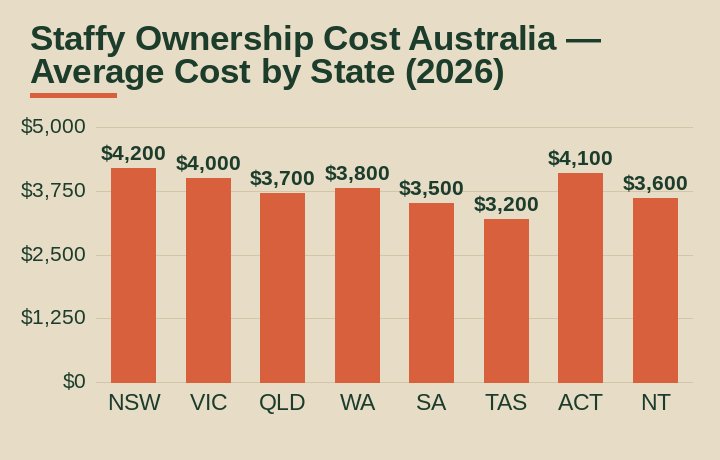
NSW and ACT sit highest due to vet consultation fees, boarding day rates, and the general cost of living in Sydney and Canberra. Queensland and SA come in cheaper, though vet fees in Brisbane have crept up. Regional areas within each state are usually 15 to 25% cheaper than capital city prices for the same services.
Where the money actually goes
Breaking down staffy ownership cost Australia into components makes it easier to see where you have control and where you don’t.
Purchase price or adoption fee
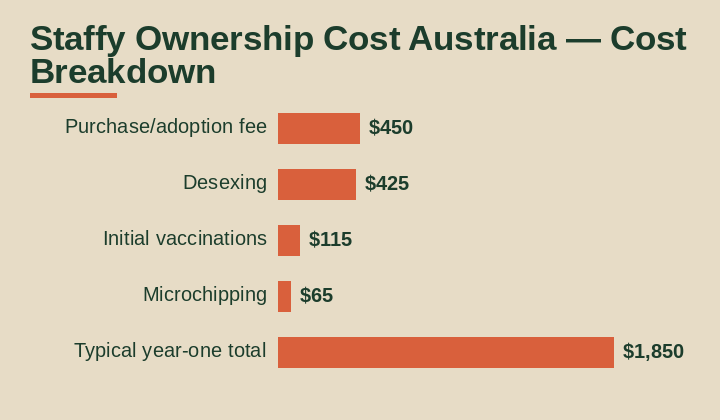
A registered Staffy from a reputable ANKC-affiliated breeder costs $2,000 to $3,500 in most states. In Sydney’s inner suburbs or Melbourne’s southeast, you’ll hit the top of that range without much trouble. Unregistered pups sold through online classifieds are advertised at $800 to $1,500, but buyers frequently encounter undisclosed health issues that generate vet bills quickly. Rescue adoption fees run $300 to $600 and almost always include desexing, initial vaccinations, and microchipping. That’s genuinely good value if you’re open to an adult dog.
Desexing
Desexing a male Staffy costs $250 to $450 at most suburban vet clinics. Females are higher due to surgical complexity, typically $350 to $600. Low-cost desexing clinics, several operate in Western Sydney, outer Melbourne, and Brisbane’s north, charge $180 to $280. If your Staffy came from a rescue, this is already done. For everyone else, it’s a year-one expense worth budgeting. See our breakdown of dog desexing costs in Australia for state-by-state detail.
Food costs
Staffies are medium-sized but muscular and eat accordingly. A 14 to 17 kg Staffy needs 250 to 350g of quality dry food per day. Mid-range dry food (think brands like Royal Canin, Advance, or Black Hawk) costs $85 to $130 for a 13 to 15 kg bag, which lasts roughly 6 to 7 weeks. That works out to $650 to $1,000 annually just for dry food. Raw feeding or premium wet food diets push the annual food bill to $1,400 to $2,200. Add $200 to $500 for treats, chews, and training rewards, and food is consistently the biggest ongoing line item. heavy-duty chew toys built for power breeds also help redirect a Staffy’s need to chew away from your furniture.
Vet bills and preventive care
A routine annual health check and C5 vaccination costs $130 to $190 at a private Sydney or Melbourne clinic. The same appointment in regional SA or TAS runs $90 to $140. Heartworm prevention, flea/tick treatment, and intestinal worming together add $250 to $450 per year depending on which products you use. Staffies are prone to skin allergies, which is where vet costs can spike hard. A single allergy flare-up requiring a vet consultation, skin scrape, antibiotics, and medicated shampoo can cost $350 to $700. Two or three episodes in a year and you’re looking at $1,000 to $2,000 in vet bills from one health issue alone. The Australian Veterinary Association has noted rising vet costs are putting pressure on pet owners, and Staffy owners dealing with chronic skin issues feel that acutely.
For more on what to expect from routine vet visits, our pet vaccination cost breakdown has current clinic-by-clinic comparisons. And if you’re weighing up a mobile vet, that’s worth considering for annual checkups if you’re in a suburb with long clinic wait times.
Pet insurance
This is the line item most new owners skip and later regret. Comprehensive pet insurance for a Staffy puppy costs $45 to $75 per month, or $540 to $900 annually. That sounds steep until your dog needs emergency surgery ($3,000 to $6,000) or develops a chronic skin condition requiring ongoing specialist care. Insurers price Staffies similarly to other non-restricted breeds, so there’s no penalty for the breed itself. Premiums increase with age. A seven-year-old Staffy will cost $90 to $140 per month to insure comprehensively. Lock in coverage early. MoneySmart’s pet ownership guide has a solid overview of what to look for in a policy before you sign up.
Grooming
Good news here. Staffies are about as low-maintenance as dogs get on the grooming front. Their short, dense coat doesn’t need professional clipping. A basic bath and brush from a grooming salon runs $45 to $75 every 6 to 8 weeks if you want professional help, but most Staffy owners handle bathing at home without drama. A decent brush, dog shampoo, and a pair of nail clippers covers most of the grooming budget. Professional grooming for a Staffy might cost $150 to $300 annually if you visit 3 to 4 times per year. Compare that to the cost of cat grooming or long-coated breeds, it’s significantly cheaper. You can also use a well-fitted harness for a Staffy during regular walks to reduce strain, which prevents some orthopedic wear over time.
Training
Staffies are smart and eager to please, but they’re also strong and can be reactive around other dogs if not socialised properly. Puppy school is a worthwhile expense. Group courses run $150 to $300 for a 4 to 6 week program. If your Staffy develops leash reactivity or behaviour issues, private training sessions cost $90 to $150 per hour. Our breakdown of puppy school costs in Australia covers what to expect from different training formats.
Boarding and pet-sitting
When you travel, your Staffy needs care. Dog boarding kennels charge $40 to $75 per night across most Australian cities. In-home pet-sitting through services like Mad Paws runs $50 to $90 per night in Sydney and Melbourne. An annual two-week holiday costs $560 to $1,050 just in boarding fees. If you have family nearby who can help, this is one cost that genuinely varies a lot. Our dog boarding cost breakdown has state-by-state kennel rates.
Recommended Products
A few items from Amazon Australia worth having on hand (these are affiliate links):
Rescue vs breeder vs pet shop: the real cost comparison
The source of your Staffy affects year-one costs more than any other single factor. Here’s how the three main options compare across the expenses that matter most in the first 12 months.
| Expense | Rescue Staffy | Registered Breeder | Unregistered/Backyard Bred |
|---|---|---|---|
| Purchase/adoption fee | $300 to $600 | $2,000 to $3,500 | $800 to $1,500 |
| Desexing | Included | $250 to $600 | $250 to $600 |
| Initial vaccinations | Included | $80 to $150 | $80 to $150 |
| Microchipping | Included | $50 to $80 | $50 to $80 |
| Health screening | Basic check done | Thorough, documented | Often none |
| Year-one vet risk | Low to moderate | Low | Higher |
| Typical year-one total | $1,200 to $2,500 | $3,500 to $5,500 | $1,800 to $4,000 |
The unregistered pup column deserves a closer look. The lower purchase price looks appealing, but the absence of health screening and documented lineage means you’re flying blind on genetic risk. Staffies from responsible breeders are tested for hereditary cataracts and L-2-HGA (a neurological condition). Backyard-bred pups often aren’t. The first vet bill from an undisclosed health issue can close that price gap fast.
Questions to ask before you commit
Has the puppy been health-tested for breed-specific conditions?
Reputable Staffy breeders test for hereditary cataracts and L-2-HGA. Ask to see the documentation. If a breeder can’t produce test results, that’s a clear warning sign and a potential future vet bill sitting in front of you.
What does the adoption or purchase price actually include?
Some breeders include first vaccinations and microchipping; others don’t. Some rescue groups include desexing; others require you to arrange it post-adoption. Get a written list of what’s covered so you can budget the gap accurately.
Does the dog have any known health conditions or allergies?
Skin allergies in Staffies can be managed but not cured, and the ongoing cost is real. Ask directly. For rescue dogs, ask the foster carer specifically about skin, ears, and diet sensitivities they’ve observed. A dog already showing allergy signs will cost more to manage from day one.
What food is the dog currently eating?
Switching food abruptly causes digestive upset. Knowing what the dog is currently eating lets you transition gradually and avoids an unnecessary early vet visit. It also signals whether the previous owner was feeding a quality diet or the cheapest bag available.
What’s the council registration process and cost for this suburb?
Registration fees vary by council and desexed status. In some councils, failing to register within 30 days attracts a fine. Asking your local council before you bring the dog home saves an annoying admin scramble and confirms the actual cost for your specific area.
Is the property lease pet-friendly?
If you’re renting, confirm your lease allows dogs before you commit. Staffies have a reputation that makes some landlords hesitant despite the breed’s actual temperament. Moving to a pet-friendly rental mid-ownership is a genuine hidden cost, and one that’s entirely avoidable with one conversation upfront.
How to bring the cost down
- Adopt rather than buy, Rescue Staffies arrive desexed, vaccinated, and chipped, saving $600 to $1,200 upfront. Breed-specific Staffy rescue groups in NSW and VIC regularly have dogs available.
- Get pet insurance while they’re young, Premiums are cheapest before any pre-existing conditions appear. Locking in early avoids exclusions and saves $200 to $500 compared to insuring an older dog.
- Buy food in bulk, Large bags from pet wholesalers or Costco cost 25 to 35% less per kilogram than smaller supermarket bags. That saves $150 to $300 annually for a typical Staffy’s diet.
- Handle basic grooming at home, Staffies genuinely don’t need much. Weekly brushing, regular ear cleaning, and monthly nail trims at home saves $150 to $250 annually. A good set of dog nail clippers pays for itself in a single month.
- Use council vaccination clinics, Many local councils run subsidised vaccination days for $25 to $45. That’s $50 to $90 cheaper than a private clinic appointment for the same C5 vaccination.
- Bundle annual vet appointments, Booking vaccinations, heartworm testing, and a health check in one visit avoids duplicate consultation fees. Saves roughly $60 to $90 per year.
If you’re also thinking about dental care costs, our pet dental cleaning cost breakdown is worth reading. Dental disease is common in Staffies and preventive home care dramatically reduces the professional cleaning bill over a dog’s life.
Staffy ownership cost Australia is genuinely manageable if you go in with eyes open. The breed itself is hardy, low-maintenance on grooming, and doesn’t need expensive specialist food. The financial risk sits in health issues, particularly skin, and in the costs that catch new owners off guard, like pet insurance premiums and boarding fees. Budget honestly, get insurance early, and consider a rescue if the breeder price stretches your first-year budget too thin. These are good dogs. They’re worth the investment when you plan for it properly.
Questions We Get Asked Most
How much does a Staffy puppy cost in Australia?
A registered Staffordshire Bull Terrier from a reputable breeder costs $2,000 to $3,500 in most states. Unregistered or backyard-bred pups are often advertised at $800 to $1,500, but lower purchase price doesn’t mean lower overall cost. Rescue Staffies through shelters typically cost $300 to $600 in adoption fees.
What are the ongoing annual costs of owning a Staffy?
Realistically, plan for $2,200 to $4,000 per year after the first year. That covers food ($700 to $1,200), routine vet care and parasite prevention ($400 to $700), pet insurance ($500 to $900), grooming ($150 to $300), council registration ($50 to $200), and miscellaneous costs like toys, beds, and boarding.
Are Staffies expensive to insure?
Staffies aren’t listed as dangerous dogs in most Australian states, so they don’t attract a breed-specific insurance penalty. Expect $45 to $85 per month for a comprehensive pet insurance policy. Premiums rise as your dog ages and typically jump after age seven. Shopping around via comparison sites saves $100 to $200 annually.
Do Staffies have high vet bills?
Staffies are generally robust, but they’re prone to skin allergies, hip problems, and eye conditions. Skin allergy management, including specialist consults, medicated shampoos, and prescription diet trials, can cost $500 to $2,000 per episode. Pet insurance or a dedicated savings buffer is worth having from day one.
Is it cheaper to adopt a Staffy than buy from a breeder?
Yes, significantly. Adoption fees from the RSPCA or rescue groups typically run $300 to $600, and the dog usually arrives desexed, vaccinated, and microchipped. That saves $600 to $1,200 compared to covering those costs after buying a pup. The tradeoff is less visibility into early history and less control over age and temperament.
Other Questions Worth Asking
How much does it cost to register a Staffy with council in Australia?
Council registration fees vary by state and whether your dog is desexed. Desexed dogs typically cost $30 to $80 per year. Entire dogs are charged at a higher rate, often $150 to $250 annually, which is one reason desexing pays off over time. Some councils offer lifetime registration options that work out cheaper long-term.
Are Staffies high-maintenance dogs to own?
In terms of grooming, Staffies are very low maintenance. Their short coat needs minimal professional attention. Where they cost time and money is in exercise, mental stimulation, and training. An under-stimulated Staffy will destroy furniture, which has a real dollar cost. Budget for puppy school and ongoing enrichment.
How much does Staffy puppy school cost in Australia?
Puppy school in Australia typically costs $150 to $350 for a 4 to 6 week group course. Private one-on-one sessions run $80 to $150 per hour. Staffies are intelligent and respond well to positive reinforcement training, so a group puppy school course is usually money well spent and sets good foundations without the premium price of private lessons.
What do Staffies typically eat and how much does it cost per week?
A medium-sized Staffy weighing 13 to 17 kg needs roughly 250 to 350g of dry food daily, or a raw/mixed diet equivalent. Good quality dry food costs $14 to $22 per week. Raw feeding or premium wet food diets push that to $30 to $55 per week. Add $5 to $15 weekly for treats and training rewards depending on how much training you’re doing.
Does Staffy pet insurance cover breed-specific health problems like skin allergies?
That depends on the insurer and when you take out the policy. Skin conditions diagnosed before you take out coverage are usually excluded as pre-existing. If you insure a Staffy pup before any symptoms appear, most comprehensive policies will cover allergy management including specialist visits and prescription foods. Read the PDS carefully before signing.
Related Cost Guides
This guide contains affiliate links. We may earn a small commission from qualifying purchases at no extra cost to you.