
Pet hip dysplasia surgery cost in Australia is one of the bigger financial shocks in pet ownership. We’re talking $2,800 on the low end for a basic FHO procedure, up to $12,000 per hip for a total hip replacement in a large breed dog. According to the Australian Veterinary Association’s cost pressure report, vet expenses are among the fastest-rising pet ownership costs in the country. Hip dysplasia surgery sits firmly at the sharp end of that trend.
Pet hip dysplasia surgery cost in Australia ranges from $3,500 to $9,000 per hip for most dogs, with complex procedures like total hip replacement reaching $9,000 to $12,000 per side. Less invasive options like FHO surgery can come in at $2,800 to $4,500. The total cost for bilateral (both hips) surgery often lands between $7,000 and $18,000 all up.
Prices updated July 2026 from current Australian sources.
| Procedure | Typical cost | Notes |
|---|---|---|
| FHO surgery (less invasive) | $2,800 to $4,500 | |
| Standard surgery (per hip) | $3,500 to $9,000 | |
| Total hip replacement (per side) | $9,000 to $12,000 | |
| Both hips (bilateral), all up | $7,000 to $18,000 |
This is one of the costs that most justifies pet insurance, since it commonly strikes large breeds. Rehabilitation and follow-up imaging add to the total.
Sources (July 2026): PetCloud, Vet prices in Australia, Forbes Advisor Australia, Vet fees in Australia, RSPCA Australia
This isn’t a procedure you can shop around for based on price alone. The surgery type matters enormously, as does your dog’s size, age, and whether both hips need work. But knowing what’s realistic to pay means you won’t get blindsided by a quote.
What hip dysplasia surgery typically costs in Australia
Prices honestly bounce around depending on where you live and which specialist you see. Here’s what you’re looking at in 2026 across different surgery types before we break things down by state.
| Surgery Type | Typical Cost (per hip) | Best For |
|---|---|---|
| FHO (Femoral Head Ostectomy) | $2,800 to $4,500 | Small/medium dogs, severe arthritis, budget-conscious |
| TPO (Triple Pelvic Osteotomy) | $4,500 to $6,500 | Young dogs under 10 months, no arthritis yet |
| DPO (Double Pelvic Osteotomy) | $4,000 to $6,000 | Similar to TPO, younger patients |
| THR (Total Hip Replacement) | $9,000 to $12,000 | Large breeds, advanced disease, best long-term outcome |
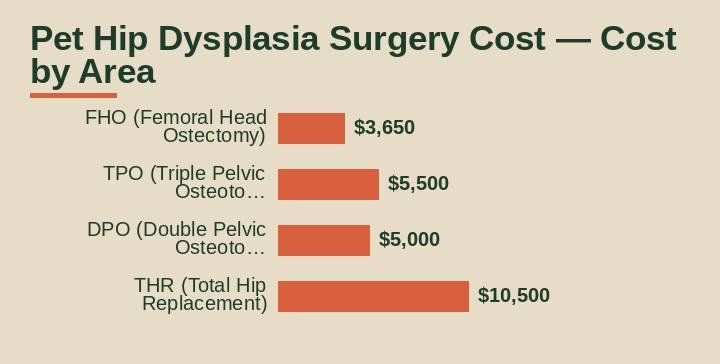
In Sydney specifically, a large-breed THR at a specialist centre in Surry Hills or St Leonards tends to land near the top of the NSW range. Head out to Penrith or Campbelltown and the same surgery might quote $1,500 to $2,000 less. Brisbane’s specialist practices in Newstead or Fortitude Valley sit mid-range, while Toowoomba tends to come in slightly lower again.
These figures cover the total hip replacement. FHO and TPO/DPO will follow roughly the same geographic spread but at their respective lower price points.
What’s included in the surgical cost (and what will cost extra)
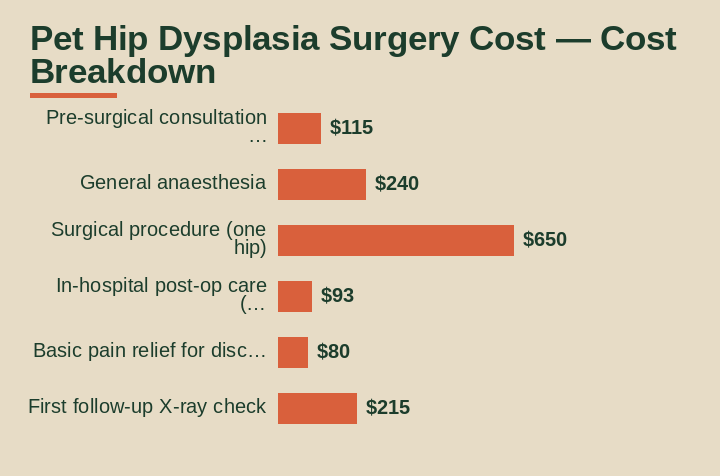
Knowing what’s in the quote before you say yes prevents nasty surprises. Here’s what’s standard versus what gets added on.
| Typically Included | Often Extra |
|---|---|
| Pre-surgical consultation with specialist | Initial GP vet referral ($80 to $150) |
| General anaesthesia | Pre-op blood panel ($180 to $300) |
| Surgical procedure (one hip) | X-rays/CT imaging ($400 to $900) |
| In-hospital post-op care (1 to 2 nights) | Post-op physiotherapy sessions ($75 to $110 each) |
| Basic pain relief for discharge | Hydrotherapy during recovery ($65 to $95 per session) |
| First follow-up X-ray check | Extended hospitalisation ($150 to $280 per night) |
| Specialist nurse monitoring | Prescription anti-inflammatories long-term ($60 to $120/month) |
The imaging costs catch a lot of people off guard. A CT scan for surgical planning on a large-breed dog can add $700 to $900 to the pre-op bill. That’s before anyone picks up a scalpel. Budget for the full picture, not just the surgical quote.
If you’re thinking about pet hydrotherapy as part of recovery, factor in 8 to 12 sessions minimum. It makes a real difference to outcome but adds $600 to $1,100 to the total spend.
Where the money actually goes
Five factors move the needle more than anything else on pet hip dysplasia surgery cost.
- Surgery type: This is the biggest variable. FHO at $2,800 to $4,500 vs THR at $9,000 to $12,000 is a $6,000 to $8,000 difference for essentially treating the same underlying problem. The choice isn’t just financial though. A German Shepherd or Rottweiler will generally do far better long-term with THR. An older, smaller dog with reduced activity needs might genuinely do well with FHO at a fraction of the price.
- Dog’s size and weight: Larger dogs require larger implants, more anaesthetic, longer surgical time, and more complex post-op management. A 12kg Cocker Spaniel and a 42kg Labrador are not the same job. The Labrador procedure routinely costs 20 to 35% more, and that’s before factoring in that Labradors often need bilateral surgery.
- Bilateral vs single hip: If both hips are affected (common in German Shepherds and Labradors), you’re potentially doubling the surgical cost. Some specialists operate on both hips in one session at a reduced combined rate. Others strongly recommend staging the surgeries 6 to 8 weeks apart to reduce recovery complexity. Ask explicitly which approach your specialist recommends and why.
- Specialist vs GP vet: Hip dysplasia surgery should be performed by a veterinary specialist in small animal surgery, not a general practitioner. In Australia, this means a Fellow of the Australian and New Zealand College of Veterinary Scientists (FANZCVS) in surgery. Their fees are higher than general practice but appropriate for the complexity involved. Don’t cut corners here. Emergency vet costs from a botched procedure will far exceed the specialist’s fees.
- Post-op rehabilitation requirements: A well-managed recovery isn’t just nice to have. It directly affects whether the surgery achieves its goal. Rehabilitation physiotherapy and hydrotherapy are legitimate cost items. Skipping them to save money often costs more in the long run through reduced outcomes and follow-up procedures. A quality joint supplement started before and continued after surgery is also commonly recommended.
How to bring the cost down without compromising care
Start with multiple quotes. Specialist fees genuinely vary and a $1,500 to $2,500 difference between two equally qualified surgeons is not uncommon. Three quotes is reasonable. It’s not rude to ask. This is a $10,000 decision.
Vet school teaching hospitals are seriously underrated. The University of Sydney, University of Melbourne, and University of Queensland all have specialist surgical programs where residents perform procedures under direct supervision of senior specialists. Costs can run 25 to 35% below private specialist practices. The trade-off is potentially longer appointment lead times and less flexible scheduling. Not a fit for every situation, but worth asking about.
Ask specifically about FHO if you have a medium or smaller dog. Many vets lead with the recommendation that delivers the best long-term functional outcome (often THR), which is correct. But if your dog is 14kg and seven years old with moderate arthritis, FHO may be equally appropriate at a third of the cost. You deserve that conversation. Have it directly.
Weight management before surgery is one of the few things entirely in your control. Every kilogram of excess weight your dog carries increases surgical risk and extends recovery. It also wears down whatever healthy joint tissue remains. A dog that’s 3kg overweight going into surgery is a harder, riskier case. Talk to your vet about a pre-surgery weight target. It’s free to work on and genuinely affects outcomes.
Pet insurance is the obvious vehicle for managing these costs, but the fine print is everything. Many policies list hip dysplasia as a hereditary condition and exclude it entirely. Others have 6-month waiting periods after policy inception. The MoneySmart pet ownership guidance is worth reading before you buy a policy, not after your dog gets a diagnosis. If you’re getting a high-risk breed, get insurance in place before the puppy is even 12 weeks old and read the exclusions section carefully.
Consider a dog ramp for car or furniture access during the recovery period. Jumping in and out of cars or onto furniture post-surgery is a genuine re-injury risk, and some owners end up back at the specialist because of preventable incidents during recovery.
Joint supplements and physiotherapy used early in mild cases can sometimes delay or avoid the need for surgery altogether. If your dog has been diagnosed but isn’t at the surgical threshold yet, managing the condition aggressively at the conservative end can buy years. The full picture on related ongoing care is worth understanding alongside routine costs like dog vaccinations when budgeting for a high-risk breed long-term.
Recommended Products for Pet Hip Dysplasia Surgery Cost
If you’re tackling this yourself, here are some products from Amazon Australia that can help (these are affiliate links):
If your dog has been diagnosed with hip dysplasia, the financial reality is that pet hip dysplasia surgery cost is significant no matter which way you look at it. The right approach is to understand all your options, get multiple specialist quotes, explore vet school hospitals, and have a frank conversation about FHO vs THR based on your dog’s specific situation. For those with high-risk breeds, check out our broader breakdown of ongoing dog care costs and desexing costs in Australia to get a full picture of what responsible ownership of a large breed will run you. Pet hip dysplasia surgery cost is painful, but manageable if you plan for it before the diagnosis lands.
Frequently asked questions about pet hip dysplasia surgery cost
How much does pet hip dysplasia surgery cost in Australia in 2026?
Pet hip dysplasia surgery cost in Australia ranges from about $2,800 for an FHO (femoral head ostectomy) to $9,000 to $12,000 per hip for a total hip replacement. Bilateral surgery (both hips) commonly runs $7,000 to $18,000 in total. Specialist vet fees, your dog’s size, and which city you’re in all affect the final figure.
What are the different types of hip dysplasia surgery for dogs?
The main surgical options are FHO (femoral head ostectomy), triple pelvic osteotomy (TPO), double pelvic osteotomy (DPO), and total hip replacement (THR). FHO removes the ball of the hip joint and suits smaller dogs or those with severe arthritis. TPO and DPO are generally used in younger dogs before arthritis sets in. THR is the gold standard for larger breeds with advanced disease.
Is pet insurance worth it for hip dysplasia surgery?
It depends heavily on the policy and when you took it out. Many insurers classify hip dysplasia as a hereditary or breed-specific condition and may exclude it. Policies taken out before any symptoms appear may cover it if the insurer doesn’t list it as an exclusion. Read the product disclosure statement carefully before assuming you’re covered. If you already have a diagnosed dog, it’s too late for that condition.
Can hip dysplasia in dogs be managed without surgery?
Yes, in mild to moderate cases, conservative management is a genuine option. This typically involves anti-inflammatory medications, physiotherapy, hydrotherapy, weight management, and joint supplements. Some dogs live comfortably for years on this approach. It won’t fix the structural problem, but it can keep pain manageable. Your vet will advise based on your dog’s age, weight, and severity of disease.
Which dog breeds are most at risk of hip dysplasia in Australia?
Larger breeds carry the highest risk. German Shepherds, Labrador Retrievers, Golden Retrievers, Rottweilers, and Bernese Mountain Dogs are among the most commonly affected in Australia. Bulldogs are also disproportionately affected despite being smaller. The condition is largely inherited, so buying from a breeder who screens breeding stock for hip scores is the best prevention.
People Also Ask About Pet Hip Dysplasia Surgery Cost
How long does recovery take after hip dysplasia surgery in dogs?
Recovery varies by procedure. FHO typically takes 8 to 12 weeks for the dog to return to near-normal function, though muscle rebuilding continues for months. Total hip replacement has a stricter protocol: strict rest for 6 to 8 weeks, followed by gradual controlled exercise over another 8 to 12 weeks. Most dogs reach full activity by 4 to 6 months post-THR. Physiotherapy and hydrotherapy speed this up significantly.
Does Medicare or any government scheme help with vet bills in Australia?
No government scheme covers private vet costs in Australia. Medicare is strictly for human medical expenses. Pet insurance is the closest equivalent, and even that has breed exclusions and waiting periods. Some state-based RSPCA and animal welfare organisations offer subsidised veterinary care for low-income pet owners, but specialist orthopaedic surgery is rarely included.
At what age should hip dysplasia surgery be done in dogs?
For TPO and DPO, the window is generally 5 to 10 months of age, before significant arthritis develops. THR can be performed at any age but is most effective in dogs with fully developed bones (typically over 10 months). FHO can be done at any stage. Waiting too long for TPO or DPO closes the surgical window for those options, which is why early diagnosis via hip scoring matters.
Can a dog live a normal life after FHO surgery?
Many do, particularly smaller dogs under 20kg. The femoral head is removed and the surrounding muscle creates a ‘false joint’. Functional outcomes are generally good, though the hip won’t have the same range of motion as a healthy hip. Larger, more active dogs tend to do better with THR if the budget allows. Most FHO dogs achieve a pain-free, active life within 3 to 6 months.
How do I know if my dog needs hip dysplasia surgery vs conservative management?
Your vet will assess via physical examination and X-rays. Key factors include the dog’s age, degree of joint laxity, presence of arthritis, pain levels, and response to medication. Young dogs with no arthritis yet are usually surgical candidates (TPO/DPO). Dogs with severe arthritis and chronic pain in larger breeds are usually recommended THR. Older dogs or those with mild symptoms often do well on conservative management first. If you’re managing costs across multiple health needs, it’s also worth understanding what pet dental cleaning costs and other specialist services run so you can plan your annual vet budget realistically.
Related Cost Guides
This guide contains affiliate links. We may earn a small commission from qualifying purchases at no extra cost to you.