
Reptile licence cost Queensland is one of those topics where the official information is scattered across multiple government pages, and the actual dollar figures aren’t always easy to find upfront. I’ve pulled together the real 2026 fees, what each licence category covers, and the ongoing costs that don’t get mentioned nearly enough.
Reptile licence cost Queensland is $57.25 for a basic Category 1 keeper licence (up to a handful of common species). More advanced categories run $103 to $180+, with annual renewal fees applying. All licences are issued through the Queensland Department of Environment and Science under the Nature Conservation Act.
Prices updated July 2026 from current Australian sources.
| Licence category | Fee | What it covers |
|---|---|---|
| Category 1 keeper licence | $57.25 | A handful of common, beginner-friendly species |
| Category 2 and above | $103 to $180+ | More advanced species and larger collections |
| Specialist / advanced keeper | Up to about $355 | Higher-risk and specialist species |
Queensland licences are issued by the Department of Environment, Tourism, Science and Innovation under the Nature Conservation Act. Fees are reviewed each year on 1 July. The licence fee is separate from the enclosure, heating and the cost of the animal.
Sources (July 2026): Queensland Government, Licences to keep native animals, DETSI Queensland, Fees and services
According to Animal Medicines Australia’s 2025 Pets in Australia report, reptiles are now kept in around 11% of Australian pet-owning households, and Queensland’s warm climate makes it one of the most popular states for reptile keeping. That popularity hasn’t made the licensing process simpler, though.
What you’ll typically pay in 2026
Queensland issues wildlife keeper licences through the Department of Environment and Science under the Nature Conservation Act 1992. Licences are categorised by species complexity and keeper experience. Here’s the breakdown for 2026:
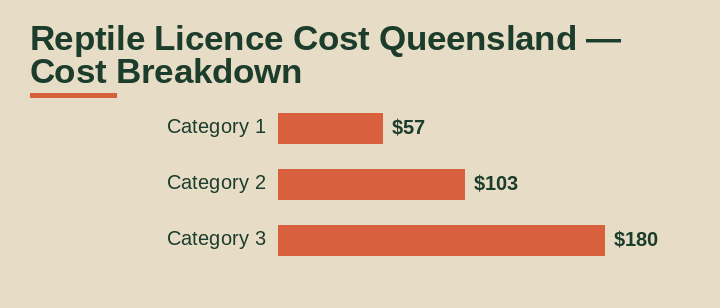
Category 1 (common species, beginners): $57.25 initial application. This covers animals like bearded dragons, blue-tongue lizards, and eastern water dragons. Most first-time keepers start here.
Category 2 (intermediate species, including non-venomous pythons): around $103. You’ll need to demonstrate some prior keeping experience or knowledge before this is approved.
Category 3 (advanced species, including some venomous reptiles): approximately $180. This is a more involved application with stricter enclosure and experience requirements.
Renewal fees are slightly lower than initial fees, typically 10 to 15% less, but you’ll pay them every year, so they add up. A Category 1 keeper renewing annually pays around $48 to 52 per year after the first year.
| State | Average Licence Cost | Typical Range |
|---|---|---|
| NSW | $65 | $55 to $190 |
| VIC | $68 | $52 to $175 |
| QLD | $57 | $57 to $180 |
| WA | $72 | $60 to $200 |
| SA | $55 | $45 to $160 |
| TAS | $62 | $50 to $155 |
| ACT | $70 | $60 to $185 |
| NT | $50 | $40 to $140 |
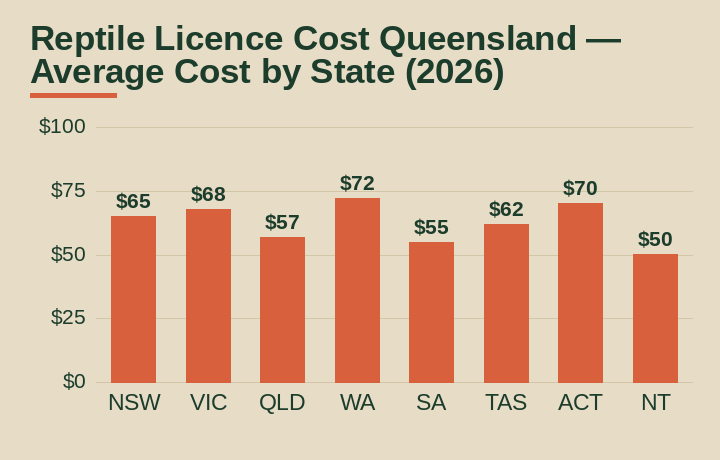
Queensland’s entry-level fee is actually on the lower end compared to most other states. That said, the ongoing compliance costs (enclosures, heating, vet care) dwarf the licence fee itself, more on that below.
Where the money actually goes
The licence fee is just the start. Here’s what genuinely affects the total cost of getting set up as a licensed reptile keeper in Queensland.
Licence category and species complexity
Moving from Category 1 to Category 2 adds $45 to 50 to your upfront cost and substantially increases what’s expected of your enclosure. A Category 1 keeper housing a bearded dragon in a 120cm enclosure is fine. A Category 2 keeper with a Carpet Python needs a larger, more secure setup that could cost $400 to $800 to do properly. The licence fee is the small part of that equation.
Enclosure setup costs
This is the real budget hit. A basic enclosure for a blue-tongue lizard in Brisbane or the Sunshine Coast might cost $300 to $500 all up. A purpose-built python enclosure in inner Brisbane suburbs like Paddington or Newstead, purchased from a specialist reptile supplier, can run $600 to $1,200. If you’re in regional Queensland, Toowoomba, Cairns, Mackay, you may pay more for shipping on specialist gear. A reptile starter enclosure kit can cut setup costs compared to buying components separately, though you’ll still need to confirm it meets QLD’s minimum size requirements for your chosen species.
Veterinary compliance costs
You don’t need a vet inspection to get licensed, but you will need reptile-specific vet care if your animal gets sick, and not all vets treat reptiles. In Queensland, a reptile vet consultation typically costs $95 to $160 in metro areas like Brisbane or the Gold Coast. Regional areas can be more expensive due to fewer specialists. If you’re budgeting seriously, factor in at least one vet visit per year. You can see typical costs in our guide to pet vaccination costs in Australia for a sense of ongoing preventative care expenses.
Ongoing equipment: heating and UV lighting
Reptiles need specific temperature gradients and UV exposure. A UVB basking lamp costs $45 to $90 and needs replacing every 6 to 12 months even if it’s still glowing, because UV output degrades before the visible light does. Add a thermostat ($60 to $120) and a digital thermometer, and you’re looking at $150 to $250 in lighting and monitoring equipment before you even buy the animal. Wildlife compliance officers have been known to check for adequate UV provision during inspections, so this isn’t optional.
The animal purchase price itself
Reptiles must be purchased from a licensed QLD keeper or authorised dealer, you can’t collect them from the wild. A captive-bred bearded dragon from a reputable keeper costs $80 to $200. A Carpet Python hatchling runs $250 to $600 depending on colour morph and lineage. Rarer species on higher category licences can hit $1,000 to $3,000+. These prices are separate from your licence fee but are part of the real upfront cost. See our overview of what pet ownership actually costs for a broader picture if you’re comparing pets.
Licence category comparison
Not sure which category fits your plans? This table shows the key differences. Pick the lowest category that covers the species you actually want, there’s no benefit in over-applying.
| Category | Typical Species | 2026 Fee | Experience Required |
|---|---|---|---|
| Category 1 | Bearded dragon, blue-tongue lizard, eastern water dragon, common scink species | $57.25 | None, suitable for first-time keepers |
| Category 2 | Carpet python, Stimson’s python, woma python, larger lizard species | ~$103 | Demonstrated knowledge of reptile husbandry |
| Category 3 | Advanced pythons, select venomous species (with additional conditions) | ~$180 | Significant experience, often prior Category 2 holding |
If you’re after a bearded dragon for the first time, Category 1 is the answer. Don’t let anyone talk you into a higher category licence than you need, it costs more and invites closer scrutiny of your setup.
Recommended Products for Reptile Licence Cost Queensland
If you’re tackling this yourself, here are some products from Amazon Australia that can help (these are affiliate links):
Questions to ask before you commit
Which category covers the exact species I want?
The Queensland Department of Environment and Science publishes a species list for each category. Check this before you apply. Buying an animal that requires a higher category than your licence covers is an offence, and “I didn’t know” doesn’t hold up well as a defence.
Is my enclosure already compliant, or does it need modification?
The department can reject your application if your described enclosure doesn’t meet minimum size or security requirements. Find out the specific dimensions required for your target species before spending money on a setup that might need to change. Some keepers in the Ipswich and Logan areas have had applications delayed specifically over enclosure documentation.
How long will processing take right now?
Processing times genuinely vary. Call the department directly and ask their current processing estimate before you commit to a purchase date for your animal. Buying a reptile before your licence arrives is illegal. This sounds obvious, but it catches more people than you’d expect.
Are there any additional local council restrictions?
Queensland’s state licence covers you under state law. Some councils have separate rules about keeping reptiles in residential properties, particularly for larger pythons. Worth a five-minute call to your council before you get too far down the track.
What documentation do I need for ongoing record-keeping?
Ask the department exactly what your animal register needs to contain. Some keepers set up a simple spreadsheet, others use dedicated apps. Either works, but you need to know the minimum required fields upfront. Getting this wrong after the fact is avoidable with one phone call.
What are the transfer requirements if I sell or rehome an animal?
If you ever sell or give away a licenced reptile, there’s a formal transfer process involving paperwork between licenced keepers. Understanding this before you buy means you won’t get caught out if circumstances change. The Australian Veterinary Association also has resources on responsible reptile ownership that cover some of these compliance basics.
How to bring the cost down
- Start with Category 1 and build up. At $57.25, this is the lowest-risk entry point. Keep a bearded dragon or blue-tongue for 12 to 18 months, understand the husbandry, then upgrade. Don’t spend $180 on a Category 3 licence for a species you’re not ready for.
- Get your enclosure right before applying. Rejected applications mean wasted fees. Build or source your enclosure, photograph it, and confirm it meets requirements before lodging anything. This can save you $57 to $180 in reapplication costs.
- Source your animal locally. Buying from a licenced keeper in Brisbane, Toowoomba, or Rockhampton means simpler transfer paperwork and no interstate transport costs. Importing from NSW or VIC can add $150 to $400 in compliance and logistics. If you’re already spending money on moving animals, our guide on interstate pet transport costs breaks down what to expect.
- Renew promptly. Late renewal means your licence lapses and you’ll pay a full new-application fee. Set a calendar reminder 6 weeks before expiry. That’s a $40 to $80 saving for literally zero effort.
- Join a QLD reptile keeper group. The Queensland Herpetological Society and similar groups share practical, up-to-date information on what inspectors look for and how to navigate the application process. Free membership often pays for itself in avoided mistakes.
For broader context on managing pet-related costs, MoneySmart’s pet ownership guide has a good section on budgeting for ongoing animal care that applies just as well to reptiles as it does to dogs or cats.
Also worth noting: the licence fee itself is just one expense in a longer chain. If you’re comparing this against other pet costs, our guides on dog desexing costs and pet hydrotherapy give you a sense of how reptile expenses stack up against more conventional pet ownership.
Reptile licence cost Queensland is genuinely affordable at the entry level, $57.25 is less than many people spend on a single vet visit for a dog. The real costs are in the setup: enclosures, lighting, heating, and the animal itself. Get those right before you apply, and the licence process is fairly straightforward. Rush it, submit incomplete paperwork, or buy your animal before your licence arrives, and you’re looking at delays, reapplication fees, or worse. Do it properly and reptile keeping in Queensland is one of the more rewarding, and surprisingly manageable, pet choices you can make.
FAQs about reptile licence cost Queensland
How much does a reptile licence cost in Queensland?
A Category 1 keeper licence costs $57.25 as of 2026. Category 2 licences run around $103, and Category 3 (advanced) licences are approximately $180. Renewal fees apply annually and are slightly lower than initial application fees. All fees are set by the Queensland Department of Environment and Science.
Do I need a licence to keep a bearded dragon in Queensland?
Yes. All reptiles kept in Queensland require a wildlife keeper licence, including bearded dragons, blue-tongue lizards, and commonly kept pythons. There are no exemptions for ‘domestic’ reptile species the way there are for cats or dogs. You’ll need at least a Category 1 licence before you bring one home.
How long does it take to get a reptile licence in QLD?
Processing times are typically 4 to 8 weeks, though this can stretch to 10 to 12 weeks during busy periods or if your application is incomplete. Getting your enclosure set up and documentation in order before you apply helps avoid delays.
Can I keep a python in Queensland without a licence?
No. All pythons, including common species like the Carpet Python and Stimson’s Python, require a minimum Category 2 keeper licence in Queensland. Keeping a python without a valid licence is an offence under the Nature Conservation Act and can attract significant fines.
What happens if my reptile licence application is rejected?
If your application is rejected, you generally won’t receive a full refund of the application fee. Common rejection reasons include inadequate enclosures, incomplete documentation, or failing to meet the minimum experience requirements for higher categories. It’s worth calling the Department of Environment and Science to check requirements before submitting.
People Also Ask About Reptile Licence Cost Queensland
Can I transfer my reptile licence from another state to Queensland?
There’s no automatic interstate transfer. If you move to Queensland from NSW, Victoria or any other state, you’ll need to apply for a QLD keeper licence from scratch and pay the full application fee. Some interstate experience may be considered for higher category applications, but there’s no fee waiver. Budget for the full amount and allow 4 to 8 weeks for processing.
How many reptiles can I keep on a Category 1 Queensland licence?
A Category 1 licence allows you to keep a limited number of common native reptile species, typically up to a handful of individual animals from an approved species list. The exact numbers and species permitted are defined by Queensland’s Nature Conservation (Wildlife) Regulation. If you want more animals or rarer species, you’ll need to apply for a higher category licence.
Do children need their own reptile licence in QLD?
A person under 18 can’t hold a wildlife keeper licence in their own name in Queensland. The licence must be held by an adult household member who takes legal responsibility for the animals. This means if the family wants to keep reptiles, a parent or guardian applies and holds the licence, the fee is the same regardless of who’s actually doing the feeding.
What records do I need to keep as a licensed reptile keeper in Queensland?
You’re required to maintain a register of your animals, including their species, acquisition date, source (keeper name and licence number), and any disposals or deaths. This register must be available for inspection by wildlife officers. Failing to maintain accurate records is a separate offence from licence-related breaches and can result in fines even if your licence is current.
Are venomous snakes allowed on a standard Queensland reptile keeper licence?
No. Venomous snakes require a specialised Category 3 or higher licence, and in many cases you’ll also need to demonstrate significant prior experience with non-venomous species first. Antivenom access arrangements and enclosure standards for venomous reptiles are considerably stricter than for Category 1 or 2 animals, and the application process is more involved.
Related Cost Guides
This guide contains affiliate links. We may earn a small commission from qualifying purchases at no extra cost to you.