
The cost of a Maine Coon has two very different answers, depending on whether you mean the purchase price or what you’ll actually spend over the cat’s lifetime. The purchase price is the smaller part. A Maine Coon kitten from a registered breeder runs $1,500 to $3,500. The annual cost of keeping one healthy, well-fed, and properly groomed sits somewhere between $3,000 and $5,500, and that’s not counting the expensive surprises this breed is prone to.
Maine Coon cost Australia typically starts at $1,500 to $2,500 for a pet-quality kitten from a registered breeder, with show-quality cats reaching $3,500 or more. Ongoing costs run $3,000 to $5,500 per year once you factor in premium food, vet bills, grooming, and insurance. Budget at least $5,000 to $8,000 in year one.
Prices updated July 2026 from current Australian sources.
| Cost | Typical range | Notes |
|---|---|---|
| Pet-quality kitten (registered breeder) | $1,500 to $2,500 | |
| Show-quality cat | $3,500+ | |
| Year one | $5,000 to $8,000 | |
| Ongoing per year | $3,000 to $5,500 | Premium food, vet, grooming, insurance |
Maine Coons are large, long-haired cats, so food and grooming cost more than an average cat. Their size also means higher vet and medication costs.
Sources (July 2026): PetRescue, Adopt a pet, RSPCA Australia, Adopt a pet, Animal Medicines Australia, Pets in Australia 2025
According to Animal Medicines Australia’s Pets in Australia 2025 report, cat ownership costs have risen considerably over the past three years, with vet expenses the biggest driver. Maine Coons, with their known cardiac predispositions, sit at the higher end of that curve. Worth being clear-eyed about before you fall in love with photos online.
What you’ll typically pay in 2026
Let’s separate the one-off costs from the ongoing ones, because they look very different.
Purchase price: $1,500 to $3,500 from a registered TICA or ANCATS breeder. Pet-quality kittens (not destined for showing or breeding) sit in the $1,500 to $2,500 band. Show-quality or rarer colour patterns like silver tabby or smoke push toward $2,800 to $3,500.
Year one setup: Add $1,500 to $2,500 on top of the purchase price. This covers desexing ($300 to $600), initial vet workup and vaccinations ($200 to $400), microchipping (usually included by breeders but worth confirming), cat furniture, litter trays, bedding, and a quality carrier. Maine Coons need sturdier gear than average cats given their size, which adds to setup costs.
Annual ongoing costs: $3,000 to $5,500 per year. That figure isn’t padded, it reflects what Maine Coon owners genuinely report spending.
| State | Average Annual Cost | Typical Range |
|---|---|---|
| NSW | $4,800 | $3,800 to $5,800 |
| VIC | $4,600 | $3,600 to $5,500 |
| QLD | $4,200 | $3,200 to $5,200 |
| WA | $4,400 | $3,400 to $5,400 |
| SA | $3,900 | $3,000 to $4,800 |
| TAS | $3,700 | $2,900 to $4,600 |
| ACT | $4,700 | $3,700 to $5,600 |
| NT | $3,800 | $3,000 to $4,700 |
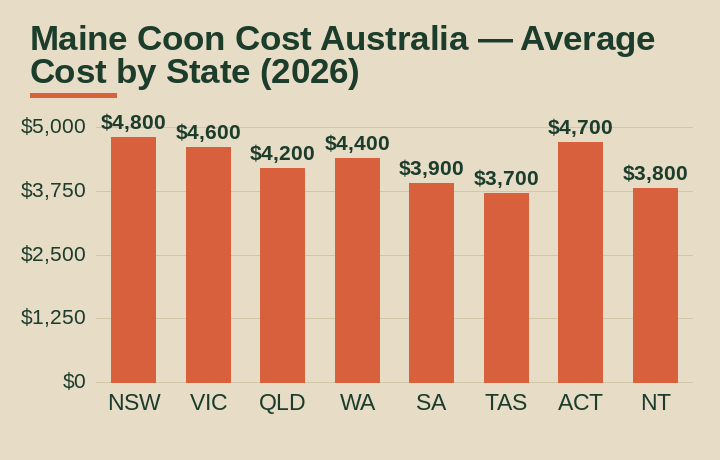
Sydney and Canberra sit at the top of this range, driven by higher vet consultation fees and premium food costs at local stores. In regional South Australia or Tasmania’s north, you can get closer to that lower bound if you’re disciplined about where you shop and which vet you use.
Where the money actually goes
Understanding what drives the cost helps you figure out where you have genuine control and where you don’t.
Food
An adult Maine Coon is a big cat. Males regularly hit 7 to 9 kg; females are slightly smaller at 5 to 7 kg. They eat proportionally more than a standard domestic cat, and most vets strongly recommend against cheap supermarket biscuits as a primary diet for this breed. Expect to spend $55 to $90 per month on premium wet food, quality dry food, or a raw/prey model diet. That’s $660 to $1,080 per year just on food. In comparison, feeding an average-sized cat on a mid-range diet might cost you $35 to $50 per month. Maine Coons are not a budget-food breed.
Veterinary care
Routine annual care (health check, vaccinations, flea and worm prevention) runs $350 to $600 per year in most Australian states. The bigger financial risk is the breed’s predisposition to hypertrophic cardiomyopathy (HCM). A cardiac specialist consultation at a Sydney or Melbourne referral hospital costs $400 to $800 for an initial workup, and if your cat develops the condition, ongoing medication and monitoring adds $800 to $2,500 per year. The AVA’s recent report on rising vet costs noted specialist cardiology as one of the fastest-growing expense categories for cat owners. Hip dysplasia treatment, if severe, can involve orthopaedic consultation and potentially surgery at $3,000 to $6,000. This is why pet insurance for Maine Coons isn’t optional thinking, it’s basic financial planning.
If you’re comparing vet costs more broadly, our pet vaccination cost breakdown for Australia covers what to expect across different states in 2026.
Pet insurance
Comprehensive pet insurance for a Maine Coon costs $60 to $100 per month ($720 to $1,200 per year). That’s higher than the average cat policy because insurers price based on breed-specific risk. Accident-only policies start around $25 to $35 per month but won’t cover the cardiac or orthopaedic conditions that are this breed’s main financial exposure. Get a comprehensive policy. Lock it in when the kitten is young and healthy to avoid pre-existing condition exclusions.
Grooming
Maine Coons have a semi-longhaired double coat that mats if neglected. Professional grooming (bath, blow-dry, brush-out, nail trim) costs $90 to $160 per session from a cat-specialist groomer in most cities. A groomer in Newtown or South Yarra charges toward the top of that range; someone in outer Geelong or Logan might be closer to $85 to $110. Three to four professional grooms per year, combined with regular home brushing, keeps the coat manageable. Budget $300 to $600 annually. For a detailed breakdown of cat grooming prices across Australia, that guide has state-by-state figures worth comparing.
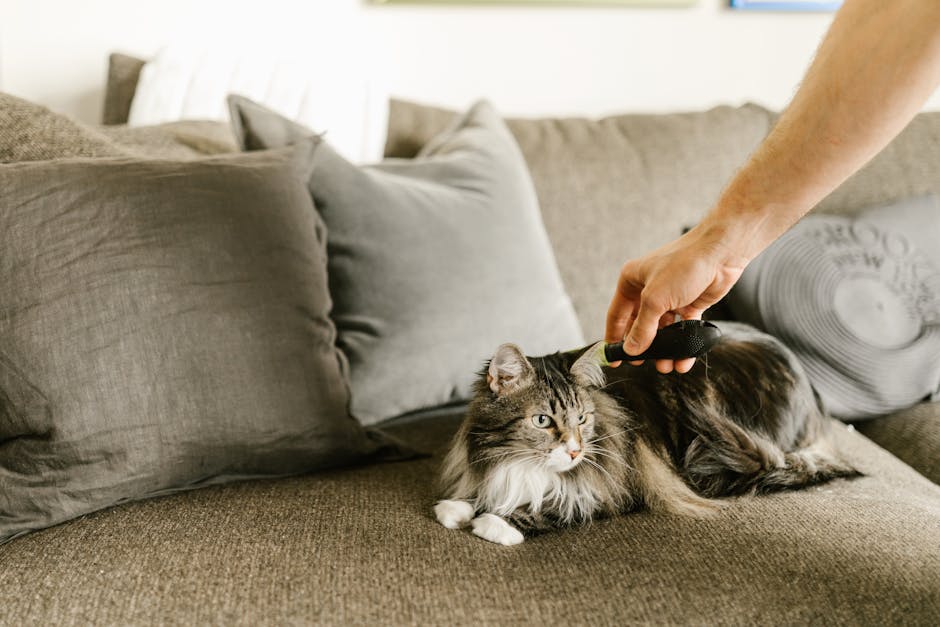
Using a quality Maine Coon grooming brush at home between professional appointments genuinely reduces how often you need a groomer, and saves real money over a year.
Enrichment and equipment
Maine Coons are active, intelligent, and need stimulation. They’re also large enough to destroy cheap cat furniture fast. A quality cat tree rated for large breeds costs $180 to $400. Add interactive toys, puzzle feeders, and scratching posts and you’re spending $300 to $600 in year one on equipment. Annual replacements and additions run $100 to $200. They genuinely benefit from a heavy-duty cat tree built for larger breeds, rather than the standard options that tip over under their weight.
Year one vs ongoing: a side-by-side comparison
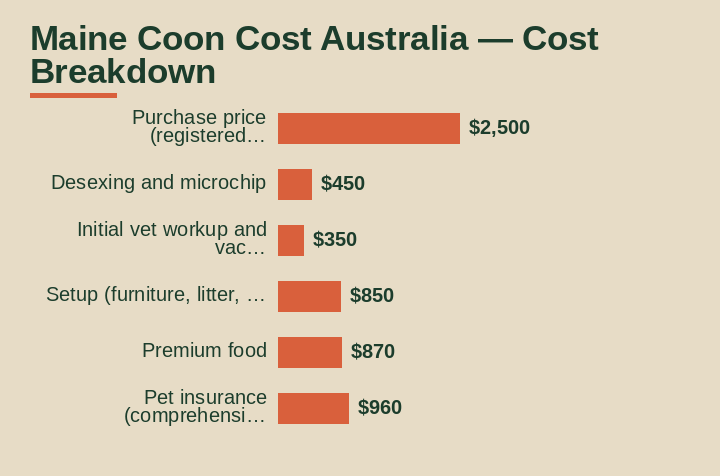
| Cost Category | Year One | Subsequent Years |
|---|---|---|
| Purchase price (registered breeder) | $1,500 to $3,500 | , |
| Desexing and microchip | $300 to $600 | , |
| Initial vet workup and vaccinations | $250 to $450 | $150 to $300 (boosters) |
| Setup (furniture, litter, carrier, bedding) | $500 to $1,200 | $100 to $300 (replacements) |
| Premium food | $660 to $1,080 | $660 to $1,080 |
| Pet insurance (comprehensive) | $720 to $1,200 | $720 to $1,200 |
| Grooming (3 to 4 sessions) | $300 to $600 | $300 to $600 |
| Flea, worm, parasite prevention | $120 to $200 | $120 to $200 |
| Toys and enrichment | $150 to $300 | $80 to $180 |
| Total estimate | $4,500 to $8,130 | $2,130 to $3,860 |
Year one is genuinely expensive. There’s no way around the purchase price plus setup plus early vet costs landing in the same calendar year. After that, it settles into the $3,000 to $5,500 range depending on health events.
Recommended Products for Maine Coon Cost Australia
If you’re tackling this yourself, here are some products from Amazon Australia that can help (these are affiliate links):
Questions to ask before you book a Maine Coon kitten
What health testing have the parents undergone?
Responsible Maine Coon breeders in Australia genetic test their breeding cats for HCM (hypertrophic cardiomyopathy) and SMA (spinal muscular atrophy). Ask to see the actual test results, not just a verbal assurance. If a breeder hesitates or says testing “isn’t necessary,” walk away. The downstream vet bills from an untested lineage can be brutal.
Is the kitten registered with TICA or ANCATS?
Registration with a recognised body means the kitten is genuinely purebred and the breeder has agreed to a code of ethics around health and welfare. An unregistered kitten at a lower price point is not automatically a bargain. You’re removing most of the quality safeguards for a saving that often evaporates in vet bills within two years.
What is included in the purchase price?
Reputable breeders typically include the first vaccination, microchipping, a desexing contract (or already desexed for older kittens), and a health guarantee period. Some include a starter pack of food and a breeder’s preferred litter. Knowing exactly what’s included tells you how to budget the remaining setup costs accurately.
What food is the kitten currently on?
Switching a young kitten’s diet abruptly causes digestive upset. A responsible breeder will tell you exactly what the kitten eats and send some home with them. If the breeder is feeding very low-quality food, that’s also useful information about their general care standards.
What is the waiting list situation, and what deposit is required?
Quality Maine Coon breeders in Australia often have waiting lists of 6 to 18 months. A deposit of $200 to $500 is standard and typically non-refundable if you pull out. Be clear on deposit terms in writing before paying. Breeders who have kittens immediately available at low prices with no waiting list should prompt questions, not excitement.
Does the breeder offer post-purchase support?
The best breeders stay available by email or phone for questions about diet, behaviour, or health concerns in the first year. It’s not a formal service, but it matters when you’re navigating a breed-specific issue at 10pm and don’t want to pay an emergency vet consult fee for something that turns out to be a food sensitivity.
How to bring the cost down
- Get insurance early. Locking in a comprehensive policy while your kitten is young and healthy avoids pre-existing exclusions. Premiums are also lower for younger cats. Waiting until a health problem appears is costly.
- Brush weekly to reduce grooming appointments. Three 10-minute brush sessions per week cuts mat formation significantly. You can comfortably stretch to 3 to 4 professional grooms per year instead of monthly, saving $300 to $500 annually.
- Buy food in bulk online. Retailers like PetCircle and VetSupply discount premium cat food by 20 to 30% compared to bricks-and-mortar pet stores. On $70 to $90/month food spend, that’s a genuine $190 to $320 annual saving.
- Use a registered breeder even if it costs more upfront. Health-tested parents significantly reduce the likelihood of expensive cardiac conditions emerging early. The $500 to $1,000 premium over an unregistered kitten is genuine cost avoidance, not a luxury.
- Combine vet visits strategically. Book annual health checks at the same time as booster vaccinations. Most vets charge $80 to $120 per consult; combining avoids doubling up and saves one consultation fee per year.
- DIY enrichment where possible. Cardboard boxes, Bunnings timber shelving as cat walkways, and basic wand toys engage Maine Coons effectively. You don’t need a $350 designer cat tree to keep this breed happy.
If you’re comparing ongoing care costs with a dog, our dog boarding cost breakdown gives a sense of how the annual spend differs between species when you factor in travel and care arrangements.
Maine Coon cost Australia is genuinely higher than most cat breeds when you account for the full picture. The purchase price alone doesn’t tell the story. What you’re really signing up for is 12 to 15 years of premium food, regular grooming, comprehensive insurance, and the real possibility of specialist cardiac care. Done properly, it’s a significant but entirely manageable financial commitment. Done without planning, it’s how people end up in difficult positions when a $5,000 vet bill arrives and there’s no insurance in place. Get the sums right upfront, and this breed is worth every dollar.
FAQs about Maine Coon cost Australia
How much does a Maine Coon kitten cost in Australia?
From a registered TICA or ANCATS breeder, expect to pay $1,500 to $2,500 for a pet-quality kitten. Show-quality or rare-coloured cats push $2,800 to $3,500. If you see ‘Maine Coon kittens’ advertised for $800 or less, that’s a significant red flag. They’re likely unregistered, possibly unhealthy, and may not be purebred at all.
What is the annual cost of owning a Maine Coon in Australia?
Plan for $3,000 to $5,500 per year. That covers premium food ($660 to $1,080), annual vet visits and vaccinations ($350 to $600), professional grooming 3 to 4 times per year ($300 to $600), pet insurance ($720 to $1,200), and miscellaneous costs like toys, litter, and enrichment. Year one is more expensive, add desexing, initial vet workup, and setup costs on top.
Are Maine Coons expensive to insure in Australia?
Yes, more so than the average domestic cat. Maine Coons have a known predisposition to hypertrophic cardiomyopathy and hip dysplasia, which insurers factor into premiums. Expect to pay $60 to $100 per month ($720 to $1,200 per year) for comprehensive cover. A bare-bones accident-only policy costs less but won’t cover the breed’s most common health risks. For broader context, our guide to pet acupuncture costs covers what some owners use as a complementary treatment for joint conditions.
Can I find a Maine Coon through rescue in Australia?
Occasionally, yes. Breed-specific rescue groups and general cat rescues do see Maine Coons and Maine Coon crosses come through. Adoption fees are typically $200 to $500 and usually include desexing and vaccinations. It’s not common, and waiting times can be long, but it’s worth checking with RSPCA state branches and dedicated Maine Coon Facebook groups if budget is a concern.
Do Maine Coons eat more than average cats?
Significantly more. An adult Maine Coon typically weighs 6 to 9 kg, compared to 4 to 5 kg for a standard domestic cat. They need proportionally more food, and most owners feeding premium wet or raw food spend $55 to $90 per month on food alone. Budget accordingly. This isn’t a cat you can get away with feeding generic supermarket biscuits long-term without consequences for their coat and joint health.
People Also Ask About Maine Coon Cost Australia
How much does it cost to import a Maine Coon into Australia?
Importing a Maine Coon into Australia is expensive and complex. You’re looking at $5,000 to $15,000 or more when you factor in airfare, mandatory quarantine (a minimum of 10 days at a government facility), import permits, and veterinary compliance. Most buyers find it far simpler and cheaper to source from an Australian registered breeder, even at $2,500 to $3,500. For context on how pet transport logistics work domestically, our pet relocation overseas cost breakdown is worth reading first.
Are Maine Coons high-maintenance compared to other cat breeds?
Relative to short-haired breeds, yes. Their semi-longhaired double coat needs regular brushing to prevent matting, and their size means higher food costs and sturdier (more expensive) furniture. Compared to full-longhaired breeds like Persians, Maine Coon grooming is more manageable. The bigger commitment is time and attention. They’re social cats that don’t do well left alone for long stretches.
What health problems do Maine Coons in Australia commonly face?
The two most significant are hypertrophic cardiomyopathy (HCM), a heart condition that can develop from age 2 onwards, and hip dysplasia, which is partly hereditary. Spinal muscular atrophy (SMA) is also present in the breed but less common. Reputable Australian breeders genetically test for HCM and SMA before breeding. Ask for documented test results before purchasing any kitten. Our pet dental cleaning cost guide is also worth bookmarking, as Maine Coons benefit from regular dental care given their size and diet.
Is it cheaper to buy a Maine Coon from a backyard breeder in Australia?
Cheaper upfront, yes. Cheaper overall, almost certainly not. Unregistered breeders typically don’t genetically test for HCM or conduct health screening. Treating heart disease in a cat can cost $3,000 to $10,000+ over the animal’s lifetime, including specialist cardiology consults, ECGs, and ongoing medication. The initial saving of $500 to $1,000 disappears fast when health problems emerge.
How long do Maine Coons live in Australia, and how does that affect lifetime cost?
Maine Coons typically live 12 to 15 years, with well-cared-for cats sometimes reaching 16 to 18 years. At $3,000 to $5,500 per year in ongoing costs, you’re looking at a lifetime spend of $36,000 to $82,500 beyond the purchase price. Vet costs tend to increase significantly in the last 3 to 4 years of life, particularly if cardiac conditions develop, so factoring in senior care costs from the start is sensible. The MoneySmart pet ownership calculator is a good tool for modelling the total lifetime cost before you commit.
Related Cost Guides
This guide contains affiliate links. We may earn a small commission from qualifying purchases at no extra cost to you.