
Owning a cat costs a lot more than the adoption fee and a couple of food bowls, as I found out myself. First-year expenses typically range from $1,200 to $2,800, covering everything from initial vet work to establishing your home as a cat-friendly environment. Understanding these costs upfront helps you budget realistically and ensures your feline companion receives proper care throughout their 12-18 year lifespan.
The owning a cat cost Australia typically ranges from $1,200 to $2,800 in the first year, covering adoption fees, desexing, vaccinations, microchipping, food, litter, and basic supplies. Ongoing annual costs settle to $800 to $2,000 depending on your cat's health, breed, and lifestyle. Premium breeds, indoor-only cats, and those with chronic conditions push costs higher, while healthy moggies with basic care stay at the lower end.
Prices updated July 2026 from current Australian sources.
| Cost | Typical range | Notes |
|---|---|---|
| First year | $1,200 to $2,800 | Adoption, desexing, vaccinations, microchip, supplies |
| Ongoing per year | $800 to $2,000 | Food, litter, vet, insurance |
Premium breeds, indoor-only cats and those with chronic conditions push costs higher, while a healthy moggie sits at the lower end.
Sources (July 2026): Animal Medicines Australia, Pets in Australia 2025, RSPCA Australia, Adopt a pet, PetRescue, Adopt a pet
Many new cat owners underestimate ongoing annual expenses, which settle between $800 and $2,000 after the first year. This guide breaks down every expense category, reveals hidden costs most guides skip, and shows you exactly what to expect across different Australian states.
Average Owning a Cat Cost Australia: What to Expect
The owning a cat cost Australia varies significantly based on whether you’re adopting a kitten or adult cat, choosing a purebred or moggie, and keeping your cat indoors or allowing outdoor access. First-year costs include one-time setup expenses like desexing, microchipping, and purchasing essential supplies, while ongoing annual costs focus on food, litter, preventive vet care, and replacements.
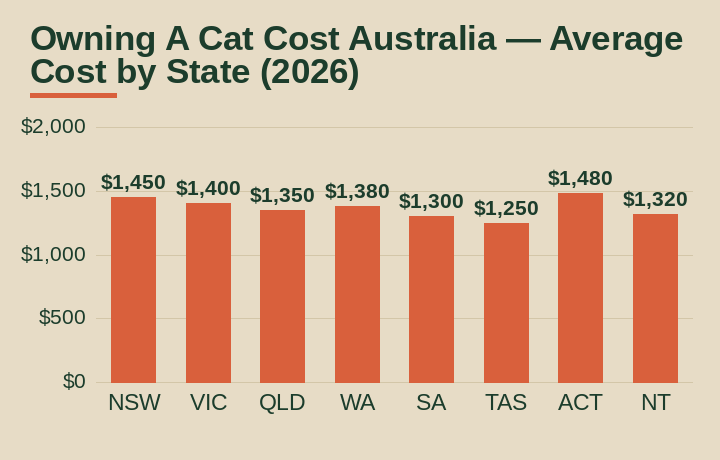
According to the Australian Competition and Consumer Commission, pet ownership costs have increased 8-12% since 2023 due to inflation in veterinary services and premium pet food prices. Regional variations also play a role, with metropolitan areas generally charging 15-25% more for vet services than rural locations.
| State | Average Annual Cost | Typical Range |
|---|---|---|
| NSW | $1,450 | $1,100 to $2,200 |
| VIC | $1,400 | $1,050 to $2,100 |
| QLD | $1,350 | $1,000 to $2,000 |
| WA | $1,380 | $1,050 to $2,050 |
| SA | $1,300 | $950 to $1,900 |
| TAS | $1,250 | $900 to $1,850 |
| ACT | $1,480 | $1,150 to $2,250 |
| NT | $1,320 | $980 to $1,950 |
Many Australians find that investing in preventive care and quality food reduces long-term costs by minimising health issues. The mobile vet option offers convenient checkups for $120-$200 per visit, eliminating transport stress for anxious cats while costing only slightly more than traditional clinics.
5 Factors That Influence Owning a Cat Cost Australia
Understanding what drives the owning a cat cost Australia higher or lower helps you make informed decisions and budget appropriately for your cat’s specific needs throughout their life.
1. Cat age and source: Kittens require multiple vaccination rounds ($150-$300 total), desexing ($150-$350), and microchipping ($30-$80) in the first year. Adult shelter cats often come already desexed, vaccinated, and microchipped for $100-$300 total. Purebred kittens from registered breeders cost $600-$5,000 initially but may have genetic health issues adding $500-$2,000 annually in vet costs. Senior cats adopted from shelters cost less upfront ($50-$150) but require more frequent vet monitoring and medication averaging $500-$1,500 yearly.
2. Indoor versus outdoor lifestyle: Indoor-only cats need more environmental enrichment including cat trees ($80-$300), multiple scratching posts, interactive toys ($50-$150 yearly), and potentially a window perch for mental stimulation. However, they face fewer injuries, parasites, and infectious diseases, reducing vet bills by an estimated $300-$800 annually. Outdoor cats need less entertainment but require stronger flea/tick prevention ($180-$300 yearly) and face higher injury risks from fights, cars, and snakes, with emergency vet visits averaging $500-$3,000 per incident.
3. Diet quality and type: Basic supermarket dry food costs $300-$500 annually for an average cat. Premium grain-free or high-protein brands run $600-$900 yearly. Prescription diets for allergies, urinary issues, or kidney disease cost $800-$1,500 annually but prevent costly health complications. Wet food costs 50-100% more than dry but provides better hydration, particularly important for cats prone to urinary problems. Raw or fresh food diets range from $1,000-$2,000 yearly but may reduce long-term health issues according to some veterinarians.
4. Health status and breed predispositions: Healthy mixed-breed cats typically cost $800-$1,200 annually in basic care. Purebreds with genetic issues like Persian cats (respiratory problems), Maine Coons (heart disease), or Scottish Folds (joint issues) often require specialist care costing $1,500-$3,500 yearly. Cats developing chronic conditions like diabetes ($800-$1,500 yearly for insulin and monitoring), kidney disease ($600-$2,000 yearly), or hyperthyroidism ($500-$1,200 yearly) significantly increase the owning a cat cost Australia. Dental disease affects 70% of cats over age 3, with cleanings costing $300-$800 every 2-3 years.
5. Geographic location and service availability: Metropolitan Sydney, Melbourne, and Brisbane vet clinics charge 20-30% more than regional areas for the same procedures. However, rural areas may lack specialist services, requiring travel to cities for complex treatments. States with higher costs of living like NSW and ACT see correspondingly higher pet care expenses. Access to discount vet clinics, community programs, or university veterinary hospitals can reduce costs by 30-50% compared to premium private practices. Some councils also offer subsidised desexing programs reducing that one-time cost from $250-$350 to $50-$100.
How to Get Better Value on Owning a Cat Cost Australia
Strategic planning and preventive care significantly reduce the long-term owning a cat cost Australia without compromising your cat’s health or quality of life. These approaches focus on preventing expensive problems rather than just finding the cheapest options.
Prioritise preventive veterinary care: Annual checkups ($80-$150) catch health issues early when treatment costs hundreds rather than thousands. Regular dental checkups prevent periodontal disease requiring $500-$800 extractions. Maintaining vaccination schedules and parasite prevention avoids diseases costing $800-$3,000 to treat. Weight management through proper feeding prevents diabetes and joint issues requiring lifelong medication. Investing $200-$400 yearly in preventive care typically saves $1,000-$5,000 in emergency treatments over your cat’s lifetime.
Choose quality food appropriate to life stage: Premium cat food costs $200-$400 more annually than cheap supermarket brands but reduces vet bills through better nutrition. High-protein, grain-free diets prevent obesity, urinary issues, and digestive problems common with filler-heavy foods. Kitten food supports proper development, adult maintenance food prevents weight gain, and senior formulas support kidney and joint health. Consult your vet about the most cost-effective quality option rather than the cheapest available. Some owners find a programmable feeder helps control portions and prevent obesity-related health costs.
Invest in environmental enrichment upfront: Spending $200-$400 on quality scratching posts, cat trees, and interactive toys prevents destructive behaviour costing hundreds in furniture damage. Proper enrichment reduces stress-related health issues like cystitis or over-grooming. Window perches and outdoor enclosures let indoor cats experience nature safely without outdoor risks. Puzzle feeders and rotation of toys prevent boredom without constantly buying new items. Initial investment pays off through reduced behavioural problems and vet visits for stress-related conditions.
Build an emergency fund incrementally rather than scrambling when crisis hits. Setting aside $30-$50 monthly creates a $360-$600 annual buffer for unexpected vet visits. This prevents having to choose between your cat’s health and your budget during emergencies. Many Australians use a separate savings account specifically for pet expenses, ensuring funds aren’t diverted to other uses. Consider the installation of a pet door if you have a secure outdoor area, giving your cat safe outdoor access without the behavioural issues of full outdoor roaming.
Compare pet insurance options carefully during the first year when premiums are lowest. Policies costing $20-$40 monthly ($240-$480 yearly) for young healthy cats can save thousands on accidents or sudden illnesses. However, exclusions, waiting periods, and benefit limits vary dramatically between providers. Some policies cover 80-90% of costs after a $100-$200 excess, while others cap annual benefits at $5,000-$10,000. Read policy documents thoroughly, particularly regarding pre-existing conditions, hereditary issues, and dental coverage. For healthy mixed-breed cats, a high-deductible emergency-only policy may offer better value than comprehensive coverage.
Recommended Products for Owning A Cat Cost Australia
If you’re tackling this yourself, here are some products from Amazon Australia that can help (these are affiliate links):
The owning a cat cost Australia represents a significant long-term financial commitment, but proper planning and preventive care make cat ownership accessible to most Australian households. Whether you’re adopting your first kitten or adding another feline to your family, understanding these costs ensures you can provide excellent care throughout your cat’s life. Ready to welcome a cat into your home? Start building your emergency fund today and research local shelters offering affordable adoption programs that include initial vet work in their fees.
Frequently Asked Questions
What’s included in the first-year owning a cat cost Australia?
First-year costs include adoption fees ($50-$400), desexing if not done ($150-$350), initial vaccinations ($80-$150), microchipping ($30-$80), flea/tick treatments ($120-$250), food ($300-$800), litter supplies ($150-$350), bowls and toys ($50-$150), scratching posts ($40-$120), and bedding ($30-$100). Emergency vet fund recommended at $500-$1,000.
How much does owning a cat cost Australia annually after the first year?
Annual costs typically range from $800 to $2,000 including food ($300-$800), litter ($150-$350), annual vet checkups ($80-$150), vaccinations ($50-$120), flea/tick prevention ($120-$250), pet insurance ($200-$600), and toy replacements ($50-$150). Cats with health conditions or on prescription diets cost significantly more.
Is pet insurance worth it for the owning a cat cost Australia?
Pet insurance typically costs $20-$50 monthly ($240-$600 annually) and can save thousands on unexpected vet bills. A single emergency surgery can cost $2,000-$5,000. Insurance is most valuable for purebred cats, indoor-only cats living longer, and owners who can’t afford sudden $3,000+ bills. Compare policies carefully as waiting periods and exclusions vary significantly.
Do indoor cats cost more than outdoor cats in Australia?
Indoor cats typically cost more initially ($100-$300 extra for environmental enrichment like cat trees, toys, and scratching posts) but save money long-term through fewer injuries, illnesses, and lost-cat incidents. Indoor cats live 12-18 years versus 2-5 years for outdoor cats, meaning higher lifetime costs but better value per year of companionship.
What are the hidden costs of owning a cat in Australia?
Hidden costs include dental cleanings every 2-3 years ($300-$800), emergency vet visits averaging $500-$2,000, cat-sitting when travelling ($25-$50 daily), property damage from scratching or spraying ($100-$500), premium foods for allergies or sensitivities ($600-$1,200 annually), and senior cat care including medications and frequent vet visits ($500-$1,500 extra annually after age 10).
People Also Ask About Owning a Cat Cost Australia
What’s cheaper to own in Australia: a cat or a dog?
Cats are generally 30-50% cheaper than dogs over their lifetime. The owning a cat cost Australia averages $800-$2,000 annually while dog ownership costs $1,500-$3,500 yearly. Cats require less food, no council registration in most areas, smaller vet medication doses, and no professional grooming for most breeds. However, purebred cats can match dog expenses.
How much does it cost to adopt a cat versus buying from a breeder?
Shelter adoption costs $50-$300 and usually includes desexing, microchipping, and initial vaccinations. Buying from a registered breeder costs $600-$2,500 for common breeds and $2,000-$5,000 for premium breeds like Bengals or Ragdolls. Purebreds may have higher ongoing vet costs due to genetic health issues, while mixed-breed cats tend to be hardier.
Do certain cat breeds cost more to own in Australia?
Yes, significantly. Persian and Himalayan cats need professional grooming ($60-$120 every 6-8 weeks). Sphynx cats require frequent bathing and skin care products. Maine Coons and Ragdolls eat 50% more food due to size. Breeds prone to health issues like Scottish Folds (joint problems) or Bengals (digestive issues) face higher vet bills averaging $500-$1,500 extra annually.
What’s the most expensive part of owning a cat over its lifetime?
Veterinary care dominates lifetime costs. Over a 15-year lifespan, routine vet visits total $1,200-$2,250, vaccinations add $750-$1,800, and unexpected illnesses or injuries average $3,000-$8,000. Senior cat care in the final 3-5 years can add $2,000-$7,500 for chronic conditions like kidney disease, diabetes, or hyperthyroidism requiring medications and frequent monitoring.
Can you own a cat on a tight budget in Australia?
Yes, but it requires careful planning. Budget around $70-$90 monthly minimum ($840-$1,080 annually) for basic needs. Choose shelter adoption over breeders, use preventive care to avoid costly emergencies, buy quality food in bulk, use clumping litter economically, and join vet discount programs. Set aside $30-$50 monthly for an emergency fund. Avoid ownership if you can’t cover unexpected $500-$1,000 vet bills.
Related Cost Guides
This guide contains affiliate links. We may earn a small commission from qualifying purchases at no extra cost to you.