
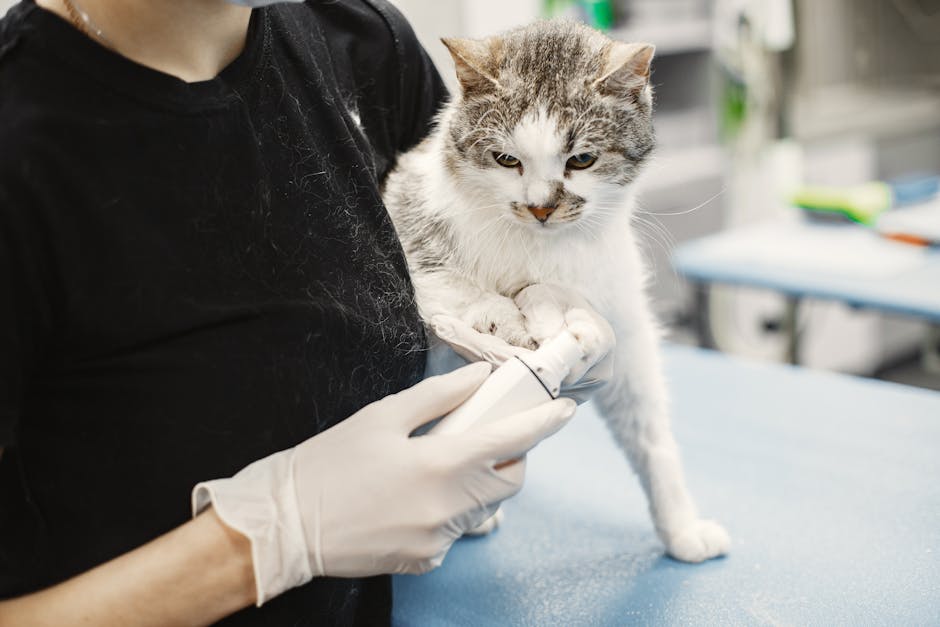
Cat microchipping cost Australia hits most owners somewhere between $30 and $90 in 2026, depending on whether you book through a council program or a private vet. The procedure itself takes under a minute, a vet or trained professional injects a rice-grain-sized chip between your cat’s shoulder blades using a pre-loaded syringe. What you’re really paying for isn’t the chip (which costs practices $8-$15 wholesale) but the professional handling, sterile technique, and initial registry setup.
Cat microchipping cost Australia sits between $30 and $90 in 2026. Council-run clinics charge $30-$50, standard vet practices charge $50-$70, and emergency or mobile services can reach $90. The chip itself costs vets $8-$15 wholesale, you're paying for the implantation procedure, registration, and professional handling.
Prices updated July 2026 from current Australian sources.
| Provider | Typical cost | Notes |
|---|---|---|
| Council-run clinic | $30 to $50 | |
| Standard vet practice | $50 to $70 | |
| Emergency or mobile service | up to $90 |
Microchipping is a one-off cost, not annual. You are paying for the implantation, registration on the pet registry and professional handling, not just the chip itself.
Sources (July 2026): RSPCA Australia, PetCloud, Vet prices in Australia, Animal Medicines Australia, Pets in Australia 2025
Prices vary wildly by provider type. Council-subsidised clinics charge $30-$50 and often waive registration fees. Standard vet practices charge $50-$70 for the same service. Emergency vets or mobile services can hit $90 because you’re paying for convenience or after-hours availability.
Cat Microchipping Cost Australia Across Australia
Here’s what you’ll actually pay in each state. These figures reflect typical private vet pricing, council programs usually sit $15-$30 cheaper.
| State | Average Cost | Typical Range |
|---|---|---|
| NSW | $62 | $35 to $85 |
| VIC | $58 | $30 to $80 |
| QLD | $55 | $32 to $75 |
| WA | $67 | $40 to $90 |
| SA | $53 | $30 to $70 |
| TAS | $48 | $30 to $65 |
| ACT | $64 | $38 to $82 |
| NT | $71 | $45 to $90 |
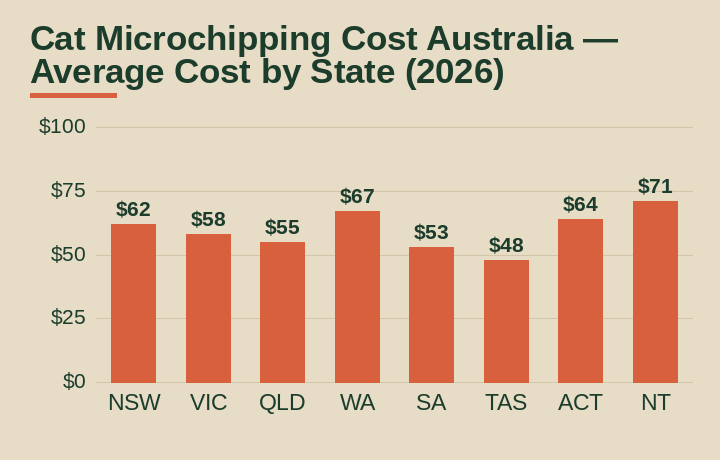
Sydney and Perth vets typically charge the most, while regional SA and TAS clinics often undercut metro rates. Around Brisbane’s outer suburbs, you’ll find council events offering $32 microchipping twice a year, significantly cheaper than the $70 private clinics charge in Fortitude Valley.
Real-World Example: A Typical Cat Microchipping Cost Australia Scenario
Emma in Geelong adopted a 10-week-old kitten from a local rescue. The shelter required microchipping before finalising the adoption. She compared three options:
Option 1, Greater Geelong Council clinic: $35 for implantation, free registration through PetLink. The clinic runs monthly Saturday sessions at the council offices. Emma booked online, waited 12 minutes in a queue of other pet owners, and the whole appointment took under 5 minutes. Total cost: $35.
Option 2, Local vet practice: $68 for microchipping, plus the vet offered a $22 health check bundled discount if booked together. Emma would have paid $90 total but received a full kitten health assessment including weight check, ear mite inspection, and worming advice. She chose the council option since the shelter had already vet-checked the kitten three days earlier.
Option 3, Mobile vet service: $95 for at-home microchipping. Convenient but Emma decided the $60 premium over the council wasn’t worth it for a 4-minute procedure.
She went with the council clinic and registered the chip herself online that evening using the paperwork provided. No ongoing fees, no upsells, and the kitten barely flinched during implantation.
What Affects Your Cat Microchipping Cost Australia
Provider type and service model
This is the biggest price driver. Council-run programs operate on cost-recovery subsidies funded by registration fees, so they charge $30-$50. Private vets run for-profit businesses with higher overheads, rent, staff wages, equipment maintenance, so they charge $60-$80 for the same ISO-compliant chip. Emergency or after-hours services add convenience premiums, pushing prices to $90. Mobile vets factor in travel time and fuel, which explains their $80-$95 rates even though the procedure is identical.
Chip brand and features
Most vets use standard Datamars or Allflex chips costing them $8-$12 each. Some stock Trovan chips ($15 wholesale) marketed as ‘premium’ with anti-migration polymer coatings. In practice, migration happens in under 2% of cases regardless of brand, and all ISO chips work with universal scanners. If a vet charges $20 extra for a Trovan chip, you’re paying for marginal benefits most cats never need. Honestly, the standard chip works fine.
Bundled services and timing
Vets often discount microchipping to $20-$30 when performed during desexing because your cat’s already sedated. This beats paying $65 separately and avoids a second stressful trip. Some practices also bundle microchipping with initial kitten grooming or vaccination packages, knocking $10-$15 off each service. Ask about package deals when booking, it’s common but not always advertised.
Registration fees and paperwork handling
The chip implantation is one cost; registry enrollment is another. Most vets include free registration in their $60-$70 price, but some charge $15-$25 extra to submit paperwork on your behalf. Council clinics usually include registration automatically. You can always register yourself for free through registries like CAR (Central Animal Records) or PetLink, it takes 10 minutes online and saves the admin fee.
Geographic location and demand
Metro areas have more competition, which should lower prices, but higher operating costs often cancel that out. Around Sydney’s inner west, vets charge $70-$85 because rent and wages are steep. In regional WA or rural NSW, you might find $45-$55 rates at smaller clinics with lower overheads. That said, some rural areas have fewer vets, reducing competition and pushing prices back up. Your best bet is comparing 3-4 local providers, prices can vary $30 within the same postcode.
Concession and subsidy eligibility
Pensioners, seniors, healthcare card holders, and low-income families often qualify for 25-50% discounts through council programs or animal welfare organisations. RSPCA and AWL clinics frequently offer $25-$35 microchipping for concession holders. Some councils even run free microchipping days during National Desexing Month or Adopt a Shelter Pet campaigns. Check your council website or call ahead, these subsidies can drop your cost from $65 to $15.
Common Mistakes to Avoid with Cat Microchipping Cost Australia
- Not updating registry details after moving: The chip is useless if your contact info is outdated. Around 40% of lost cats have unregistered or outdated chips. Log into your registry whenever you move house, change phone numbers, or switch to a new email. It’s free and takes 3 minutes.
- Assuming the shelter or vet registered for you: Some do, some don’t. Always verify by checking the registry yourself within a week of microchipping. If you can’t find your cat’s record online, contact the vet or clinic immediately, late registration can cost $20-$40 extra.
- Paying for ‘lifetime registration’ upsells: Vets sometimes push $60-$80 premium registry packages with features like SMS alerts or online vet records. The standard free registries (CAR, PetLink) already store your details permanently. Unless you genuinely want the extra features, skip this, it’s a profit add-on.
- Skipping microchipping because your cat is indoor-only: Indoor cats escape. Doors get left open, screens tear, movers create chaos. Around 30% of lost cats are indoor-only according to PetRescue data. Microchips are often the only way shelters can reunite owners with cats who’ve lost collars or never wore one.
Recommended Products for Cat Microchipping Cost Australia
If you’re tackling this yourself, here are some products from Amazon Australia that can help (these are affiliate links):
Cat microchipping cost Australia shouldn’t blow your budget. Whether you pay $32 at a council event or $68 at your regular vet, the chip does the same job, reuniting you with your cat if they ever go missing. Shop around, check for subsidies, and register the chip yourself to keep costs down. For most owners, the council or RSPCA option hits the sweet spot between affordability and convenience. At the higher end, private vets offer bundled health checks that justify the $70 price if your cat needs a checkup anyway. Either way, it’s a one-time cost that lasts your cat’s lifetime, and it’s legally required in most of Australia. Taking your cat in a sturdy cat carrier makes the trip less stressful for everyone involved.
FAQs About Cat Microchipping Cost Australia
Is cat microchipping mandatory in Australia?
Yes, in most states. NSW, VIC, QLD, WA, SA, and ACT all require cats to be microchipped, though the age requirement varies (usually by 12 weeks to 6 months). TAS and NT strongly recommend it but don’t legally mandate it. Councils can fine owners who don’t comply, penalties range from $200 to over $5,000 depending on your state.
Does microchipping hurt my cat?
It’s about as uncomfortable as a vaccination. The needle is slightly larger than a standard vaccine needle, and the chip goes under the skin between the shoulder blades. Most cats react with a brief flinch. No anaesthetic is needed for the actual implantation, though some vets offer it during desexing to bundle procedures.
Can I microchip my cat myself to save money?
No. Only registered vets, vet nurses under supervision, or authorised council officers can legally implant microchips in Australia. DIY kits aren’t available to the public, and incorrect placement can make the chip unreadable or cause complications. The $30-$90 you’ll pay includes professional placement and initial registration.
How long does a cat microchip last?
Microchips last the cat’s entire lifetime, there’s no battery or expiry date. The chip is a passive RFID device that only activates when scanned. However, you must keep your contact details updated in the microchip registry. If you move house or change phone numbers, log into your registry and update it, or your cat can’t be returned if lost.
What’s the difference between a $30 council chip and a $70 vet chip?
Often just the setting and service level. Council clinics use the same ISO-compliant chips as vets but operate high-volume subsidised programs. Private vets may use premium brands like Trovan or offer bundled health checks. Both chips work identically when scanned, the price gap reflects the service model, not chip quality.
People Also Ask About Cat Microchipping Cost Australia
Can a cat microchip move around the body?
Rarely, but it can happen. The chip is implanted between the shoulder blades in loose skin, and occasionally it migrates a few centimetres down the back or shoulder. This doesn’t harm the cat, and scanners still detect it, vets just need to scan a slightly wider area. Proper implantation technique minimises migration risk.
Do I need to microchip my indoor-only cat?
Yes, in states where it’s mandatory, and strongly recommended everywhere else. Indoor cats escape more often than owners expect, through open doors, torn screens, or during moves. Around 30% of lost cats are indoor-only, and microchips are often the only way to prove ownership if your cat ends up at a shelter without a collar.
Can pet shops or groomers scan for microchips?
Most can’t. Universal scanners cost $300-$800, so only vets, councils, and shelters typically have them. Some Petbarn stores have scanners available, but it’s not standard. If you need to check if your cat is chipped or verify the number, your local vet will scan for free, it takes 30 seconds.
What happens if I forget to register the microchip after implantation?
The chip becomes useless for reunion purposes. When someone scans your lost cat, the registry shows no contact details, just the vet’s clinic as the implanter. You’ll need to prove ownership through vet records, then register retrospectively. Some registries charge $20-$40 for late registration, another reason to do it immediately after the appointment.
Are there different types of cat microchips in Australia?
All legal chips in Australia must be ISO 11784/11785 compliant, meaning any universal scanner can read them. Brands like Trovan, Datamars, and Allflex differ slightly in size (10-13mm long) and anti-migration coating, but they all work the same way. Some vets stock premium chips, but the price difference rarely justifies the marginal benefits for most cat owners.
How to Save Money on Cat Microchipping Cost Australia
Microchipping doesn’t need to cost $70-$90 if you’re strategic. Here’s how to get the same chip and service for less.
Book through your local council’s subsidised program
Most councils run monthly or quarterly microchipping events charging $30-$40 instead of the $60-$80 private vets charge. Check your council website, some even offer free chipping during Adopt a Shelter Pet Month (saves up to $70).
Bundle microchipping with desexing
Vets often discount microchipping to $20-$30 when done during a desexing procedure since your cat’s already under anaesthetic. This beats paying separately and avoids a second vet visit (saves $30-$50). If you’re planning desexing anyway, always ask about bundling.
Use RSPCA or AWL low-cost clinics
Animal welfare organisations run clinics charging $35-$50 for microchipping with no membership required. They use the same chips as private vets but operate on a cost-recovery model rather than profit (saves $20-$40).
Register the chip yourself online
Some vets charge $15-$30 to handle registration paperwork. Most registries let you create an account and enter details yourself in under 10 minutes. You’ll receive the chip number and paperwork at the appointment, just do it when you get home (saves $15-$30).
Skip premium ‘lifetime registration’ upsells
Vets sometimes push $50-$80 lifetime registry packages. The standard registry your vet uses (usually PetLink or CAR) already stores your details permanently for free. You only pay if you want premium features like SMS alerts, which most owners never use (saves $50-$80). Keeping a pet health records organiser at home covers the same function for under $20.
Ask about pensioner or concession discounts
Many councils and animal welfare clinics offer 25-50% discounts for pensioners, seniors, or concession card holders. Bring your card when booking, this can drop the price from $60 to $30 (saves $30).
Related Cost Guides
This guide contains affiliate links. We may earn a small commission from qualifying purchases at no extra cost to you.