
What you’ll pay for a blue tongue lizard depends heavily on which species you’re after and where you source it. Eastern blue tongues are by far the most affordable, with hatchlings going for around $150 and adults reaching $250. Shinglebacks, on the other hand, will set you back closer to $450 because they’re rarer in the breeding circuit.
A blue tongue lizard in Australia costs between $150 and $450 depending on species, age and source. Eastern blue tongues are cheapest at $150-$250, while shinglebacks reach $350-$450. Initial setup adds $300-$600 for enclosure, heating and lighting. Annual care costs around $400-$700 for food, substrate and vet checks.
Prices updated July 2026 from current Australian sources.
| Cost | Typical range | Notes |
|---|---|---|
| Eastern blue tongue | $150 to $250 | Cheapest and most common |
| Shingleback | $350 to $450 | |
| Setup (enclosure, heating, lighting) | $300 to $600 | |
| Ongoing per year | $400 to $700 | Food, substrate, vet checks |
A reptile keeper licence is required in most states. Blue tongues are hardy and beginner-friendly, but the enclosure setup is the biggest starting cost.
Sources (July 2026): PetRescue, Adopt a pet, RSPCA Australia, Animal Medicines Australia, Pets in Australia 2025, Pet Shop Direct
Beyond the lizard itself, setup costs hit hard if you’re starting from scratch.
You’re looking at $300-$600 for everything: enclosure, heating, lighting, substrate, hides and bowls. Then there’s the ongoing care, food, electricity for heating, substrate changes, vet checks. It adds up to about $400-$700 per year once you’re established. Pet Shop Direct has a full range of reptile enclosures, lighting, food and accessories.
Blue Tongue Lizard Cost Australia Across the States
Prices shift a bit depending on where you live, mostly due to breeder availability and transport costs. Remote areas see higher prices because getting lizards there costs more. Around Sydney and Melbourne you’ve got the most breeders competing, which keeps prices reasonable. Regional areas in Queensland and WA often pay $20-$50 more per lizard.
| State | Average Cost | Typical Range |
|---|---|---|
| NSW | $220 | $150 to $400 |
| VIC | $235 | $160 to $420 |
| QLD | $245 | $170 to $430 |
| WA | $280 | $180 to $450 |
| SA | $250 | $170 to $410 |
| TAS | $270 | $180 to $440 |
| ACT | $230 | $160 to $400 |
| NT | $290 | $190 to $450 |
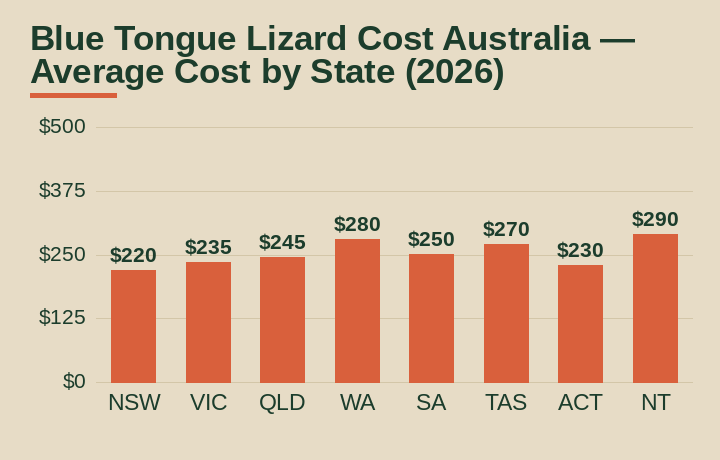
These figures cover both eastern and northern blue tongues, which explains the wide ranges. If you’re specifically hunting a shingleback, add another $80-$120 to the upper end. Licensed breeders charge more than private hobbyists, but you get health guarantees and proper lineage records.
Real-World Example: Setting Up for an Eastern Blue Tongue
Let’s walk through what someone in Brisbane actually paid last year for a complete setup. Sarah wanted an eastern blue tongue and bought a four-month-old juvenile from a licensed breeder at a reptile expo.
Purchase costs:
- Juvenile eastern blue tongue: $180
- Reptile keeper licence (QLD): $63 initial fee
- Transport container for the trip home: $15
Enclosure and equipment:
- 120cm melamine enclosure: $210
- Ceramic heat emitter (100W) plus holder: $68
- UV tube light and fitting: $72
- Thermometer/hygrometer combo: $24
- Cypress mulch substrate (large bag): $18
- Two hides (one cool end, one warm): $35
- Ceramic water bowl: $14
- Flat basking rock: $12
First month supplies:
- Calcium powder and multivitamin: $28
- Initial food shop (greens, snails, mince): $22
Total initial outlay: $761
Sarah’s setup sits right in the middle of typical costs. She saved a bit by buying the enclosure secondhand through a reptile Facebook group (knocked $90 off retail price). Her ongoing costs run about $45 monthly for electricity, food and substrate, working out to roughly $540 per year.
What Affects Your Blue Tongue Lizard Cost Australia
Species and Subspecies
Eastern blue tongues are the budget option at $150-$250 because they’re prolific breeders and widely kept. Northern blue tongues cost $200-$350, they’re a bit fussier about humidity. Shinglebacks (also called sleepy lizards or bobtails) hit $350-$450 due to slower breeding cycles and higher demand in WA where they’re most common. Blotched blue tongues and centralian species occasionally pop up for $280-$380, but they’re uncommon in captivity.
Age and Size
Hatchlings and juveniles cost $50-$100 less than adults. A three-month-old eastern costs around $150, while a two-year-old breeding-age adult reaches $220-$250. Adults are more expensive because breeders have invested 18+ months of feeding and care. Juveniles need more frequent feeding initially but adapt better to new homes and handling.
Captive-Bred vs Wild-Caught
All legal pet blue tongues in Australia must be captive-bred or legally rehomed. Wild-caught is illegal without permits. That said, prices vary between established breeders and hobby breeders. Established breeders with health guarantees charge $20-$60 more but you get vet checks, feeding records and ongoing support. Private sales through reptile groups can be cheaper but carry more risk.
Colour Morphs and Genetics
Standard-coloured blue tongues sit at base prices. Breeders occasionally produce unusual colour variations, high-yellow easterns, hypo (reduced pattern) northerns, or particularly vibrant shinglebacks. These designer morphs fetch $100-$200 premiums. Proven breeding pairs cost significantly more at $600-$900 for the pair, aimed at people entering breeding themselves.
Enclosure Type and Quality
Your biggest setup variable is the enclosure. A basic 120cm glass tank costs $150-$200 at pet shops. Melamine enclosures with sliding glass fronts run $200-$300. Custom-built timber enclosures with proper ventilation and viewing panels reach $400-$600. You can slash costs by building your own from melamine sheets, plenty of online guides exist. Factor in whether you want front-opening (easier for handling) or top-opening (cheaper but awkward).
Heating and Lighting Equipment
Blue tongues need basking spots at 35-40°C and UV lighting. Ceramic heat emitters and daylight lamps cost $40-$60, plus a thermostat at $45-$80 to regulate temperature. UV tube lights run $50-$80 and need replacing yearly. The quality heat lamp setup makes a huge difference to running costs as cheap emitters fail faster. Arcadia is a German brand which products high quality reptile heating and lighting supplies and is by far the best for reptiles.
Location and Transport
Buying locally saves transport fees. Breeders shipping interstate charge $60-$120 for courier services with heat packs in winter. Remote areas like northern WA or regional Queensland see fewer breeders, pushing local prices up $30-$70. Reptile expos in capital cities offer the best selection and competitive pricing since breeders compete directly.
Common Mistakes to Avoid with Blue Tongue Lizard Cost Australia
- Underestimating enclosure size needs. Blue tongues are ground-dwelling and need floor space, not height. Skimping on enclosure size means upgrading within a year, doubling your costs. Start with adult-sized housing even for juveniles.
- Forgetting licence and permit costs. Most states require a reptile keeper licence costing $60-$120 initially plus annual renewals. Factor this into your budget before buying, owning without a licence where required risks fines.
- Buying the cheapest heat and UV equipment. Budget heat lamps fail within months, and cheap UV bulbs lose output quickly without visible signs. You’ll replace them twice as often, spending more long-term. Invest in reputable brands like Exo Terra or Zoo Med.
- Not budgeting for emergency vet costs. Reptile vets are specialists and charge accordingly. Initial health checks cost $80-$150, and emergency visits for respiratory infections or impaction reach $200-$400. Put aside $300 yearly for unexpected vet expenses.
Recommended Products for Blue Tongue Lizard Cost Australia
If you’re tackling this yourself, here are some products from Amazon Australia that can help (these are affiliate links):
How to Save Money on Blue Tongue Lizard Costs
Buy Juvenile Lizards Instead of Adults
Juveniles cost $50-$100 less than adults and you’ll watch them grow. They adapt better to new environments too, though they need slightly more frequent feeding initially.
Build Your Own Enclosure from Melamine
A DIY melamine enclosure costs $80-$120 versus $150-$300 for commercial ones. Plenty of online plans exist, and you can customise the size. Saves around $70-$180.
Grow Your Own Greens
Blue tongues love dandelion greens, kale and bok choy. Growing these in your garden cuts food costs by $3-$5 weekly, saving roughly $150 yearly.
Source Substrate in Bulk from Landscape Suppliers
Pet shop cypress mulch costs $15-$25 per small bag. Landscape suppliers sell bulk bags for $8-$12 that last six months instead of two. Annual saving around $40.
Join Reptile Keeper Groups for Secondhand Equipment
Facebook groups and reptile forums often have members selling enclosures, lights and equipment when upgrading. You can save 40-60% on setup costs buying quality used gear.
Buy UV Bulbs in Multi-Packs Online
UV bulbs need replacing every 6-12 months. Multi-pack purchases from online reptile suppliers like Pet Shop Direct cost $15-$20 per bulb versus $30-$40 at pet shops. Saves $15-$20 per replacement.
The key is not cutting corners on heating and UV equipment, since poor environments lead to health issues that cost far more to fix. Buy quality gear once, maintain it properly, and your blue tongue will thrive without breaking the bank. Check out the NSW Environment Department’s blue tongue lizard guide for care specifics that’ll keep vet costs down long-term.
Frequently Asked Questions
How much does a blue tongue lizard cost in Australia?
Blue tongue lizard cost Australia ranges from $150 to $450. Eastern blue tongues are the cheapest at $150-$250, northern blues cost $200-$350, and shingleback lizards reach $350-$450. Juveniles cost less than adults, and captive-bred lizards from licensed breeders cost more than wild-caught specimens.
What’s the total cost to set up a blue tongue lizard enclosure?
Initial setup costs $300-$600 for a proper blue tongue lizard enclosure. This includes the enclosure itself ($150-$300), heat lamp and ceramic emitter ($60-$100), UV lighting ($50-$80), thermometer and hygrometer ($20-$30), substrate ($15-$25), hides and décor ($30-$50), and water dish ($10-$20). Larger enclosures for adults push costs higher.
Are eastern blue tongues cheaper than shinglebacks?
Yes, eastern blue tongue lizards are significantly cheaper at $150-$250 compared to shinglebacks at $350-$450. Eastern blues are more common in the pet trade and easier to breed in captivity. Shinglebacks are rarer, grow larger, and have more specific care requirements which drives up their price.
How much does blue tongue lizard food cost per year?
Food costs run $200-$350 annually for a blue tongue lizard. They eat a mix of vegetables, fruits, and protein like snails, insects and occasional lean meat. Budget around $4-$7 weekly for fresh produce and protein sources. Most keepers also use a calcium and vitamin supplement that adds another $30-$50 per year. Rotating between different protein sources keeps costs manageable.
Do I need a reptile licence to own a blue tongue lizard in Australia?
Licence requirements vary by state. NSW, Victoria, Queensland and South Australia require a basic reptile keeper licence costing $60-$120 initially with annual renewals around $40-$80. Western Australia requires a licence for most species. Tasmania and ACT have different regulations. Check your state’s wildlife authority before purchasing.
People Also Ask About Blue Tongue Lizard Cost Australia
How long do blue tongue lizards live in captivity?
Blue tongue lizards typically live 15-20 years in captivity with proper care, though some reach 25 years. Shinglebacks can live even longer, sometimes 30+ years. This long lifespan means the initial blue tongue lizard cost Australia spreads across decades, making them cost-effective pets compared to shorter-lived reptiles.
Can you keep wild blue tongue lizards as pets in Australia?
Taking wild blue tongue lizards from the bush is illegal across Australia without permits. All pet blue tongues must be captive-bred from licensed breeders or rehomed through legal channels. Wild-caught lizards also adapt poorly to captivity, carry parasites, and removing them harms local ecosystems.
What size enclosure does a blue tongue lizard need?
Adult blue tongue lizards need minimum 120cm x 60cm x 60cm enclosures (roughly 4ft x 2ft x 2ft). Larger is better, especially for shinglebacks which can reach 40cm long. Juveniles can start in smaller 90cm x 45cm setups. Enclosures must have proper heat gradients, UV lighting and secure lids.
Do blue tongue lizards make good pets for beginners?
Yes, blue tongue lizards are excellent beginner reptiles. They’re hardy, handleable, and less demanding than many lizards. Eastern blue tongues particularly suit first-time keepers. They don’t need live insects daily like bearded dragons, tolerate handling well, and rarely bite when properly socialised.
Where can I buy a blue tongue lizard in Australia?
Buy from licensed reptile breeders listed on state wildlife authority websites, reptile expos, or specialist reptile shops. Avoid Gumtree and Facebook unless the seller provides proof of legal breeding. Reptile rescue organisations sometimes rehome surrendered blue tongues for $50-$100 adoption fees.
Understanding the full blue tongue lizard cost Australia picture helps you budget properly for these rewarding pets. Yes, the upfront investment feels steep when you tally enclosure, equipment and the lizard itself. But spread across 15-20 years of ownership, you’re looking at roughly $50-$70 monthly once established, less than many other pet options.
Related Cost Guides
This guide contains affiliate links. We may earn a small commission from qualifying purchases at no extra cost to you.