
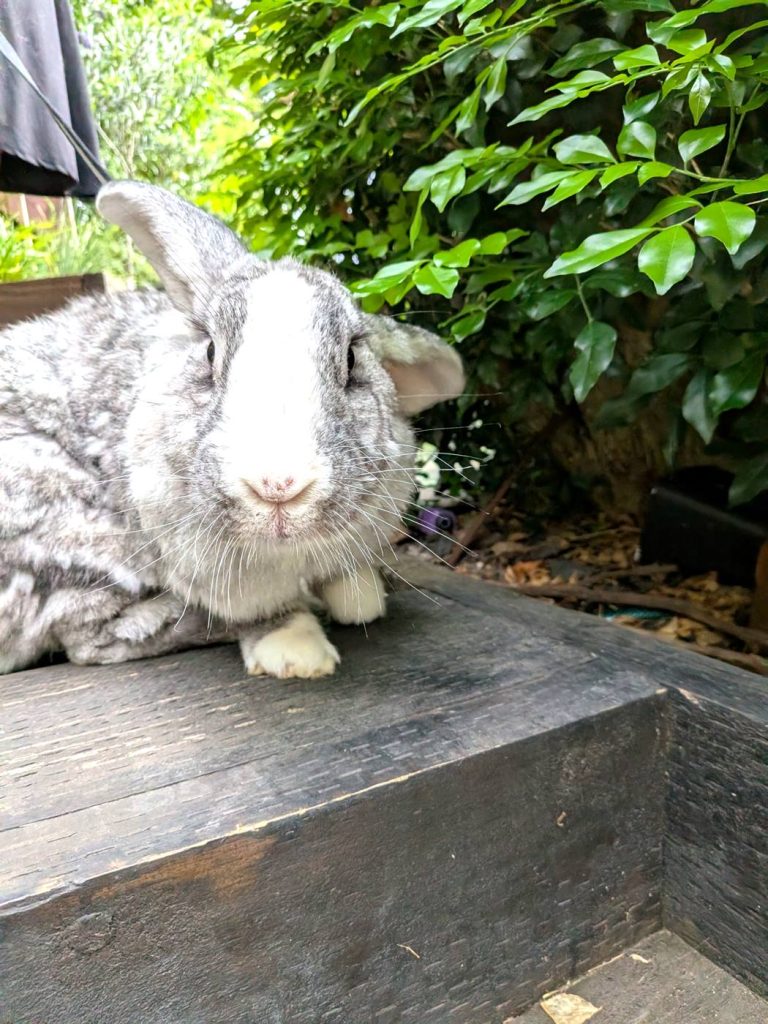
I keep three rabbits: a Flemish giant and a mini lop who are bonded, and a Rex who lives separately with his own big space. I also work in a pet store, which means I spend a lot of my week talking to people about what their rabbit eats.
If I could get one thing across to every new rabbit owner it would be this: hay is not a side dish, it is the diet. It should make up around 70 to 80 percent of what your rabbit eats, and it should be there all day, every day. That is the thing people get wrong all the time, and it is behind a lot of the dental and gut problems that end up at the vet.
The best hay for most adult rabbits in Australia is a good quality grass hay such as timothy or oaten, fed constantly so the rabbit never runs out. I use Oxbow Western Timothy, which costs about $120 for a 4kg box in store, and oaten hay, which I use as both bedding and food. Hay should be 70 to 80 percent of the diet, with pellets and fresh greens as the smaller extras. Alfalfa (lucerne) hay is for young, pregnant or nursing rabbits only, because it is too rich in calcium and protein for most adults.
If you only buy one hay, buy a good timothy. Oxbow Western Timothy is what I use and what I recommend at work. It is consistent from box to box, which matters more than people think, because rabbits are fussy about change and a bale that is suddenly dusty or stalky is a bale they stop eating.
Affiliate link. I may earn a small commission at no extra cost to you.
| Hay | Best for | Rough price | My take |
|---|---|---|---|
| Timothy | Adult rabbits | $25 for 425g, about $120 to $145 for 4kg | The everyday staple. Mine get it constantly. |
| Oaten hay | Adult rabbits | Cheap in bulk from produce stores | What I use as bedding and food, and cheap in bulk |
| Orchard grass / timothy blend | Fussy adults | About $100 for 2.5kg | Softer, handy for a rabbit bored of plain timothy |
| Meadow hay | Adult rabbits, bedding | Cheap | Varies a lot bale to bale |
| Alfalfa (lucerne) | Under 6 months, pregnant or nursing does | Similar to timothy per kilo | Too rich for most adults, not an everyday hay |
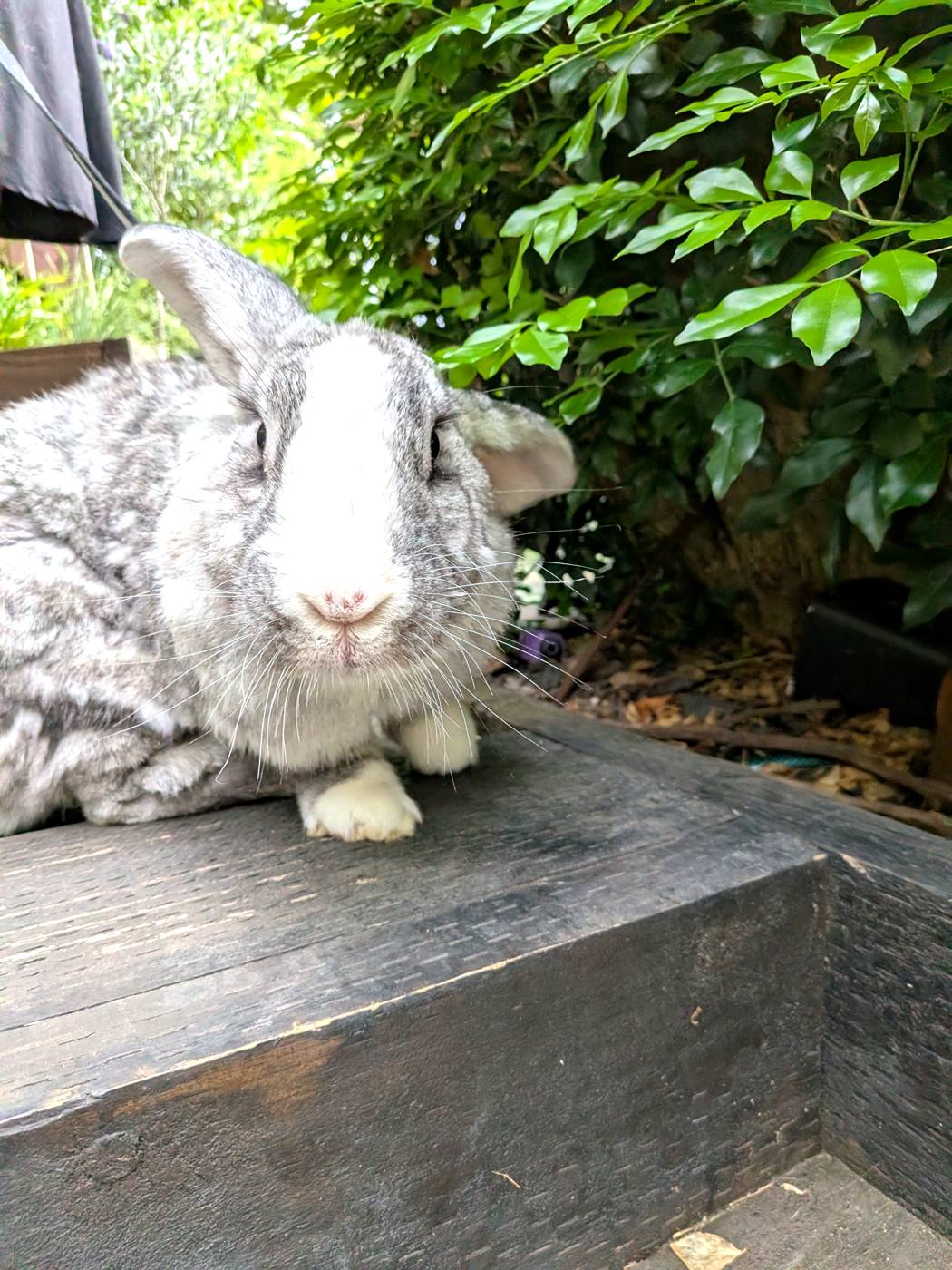
Why Hay Has to Be Most of the Diet
A rabbit’s teeth never stop growing. The only thing that wears them down properly is hours and hours of side to side chewing on long, fibrous stalks, which is exactly what grazing on hay does. Pellets are crunched quickly and do not do the same job, which is why a rabbit on a mostly pellet diet so often ends up with overgrown teeth and spurs that need a vet to file them.
The second reason is the gut. Rabbits need a constant flow of long fibre to keep everything moving. When that slows down you can get gut stasis, which is an emergency rather than a tummy ache. A rabbit that stops eating and stops producing droppings needs to see a vet the same day.
So when I say feed hay constantly, I mean it literally. The rack should never be empty. If you check in the evening and it has been picked clean, you are not feeding enough.
What I Actually Feed
Oxbow Western Timothy is the main hay in my house. It is about $120 for a 4kg box in store, a bit more online. That sounds like a lot until you work out how long a box lasts and compare it to a vet bill for teeth.
I also use oaten hay, and I use it for two jobs at once: it is their bedding and it is their food. It just builds up, they sleep in it, they eat it, and honestly it is the best system I have found. Oaten hay is grown here, it is cheap in bulk from a produce store, and using an edible hay as bedding means there is always something to graze within reach, which is exactly the point.
For litter I use Back to Nature, and the rabbits are on tiles and pavers rather than dirt, because on dirt they dig straight through and escape. Putting a good handful of hay in or right next to the litter tray also helps with litter training, because rabbits like to eat and go at the same time.
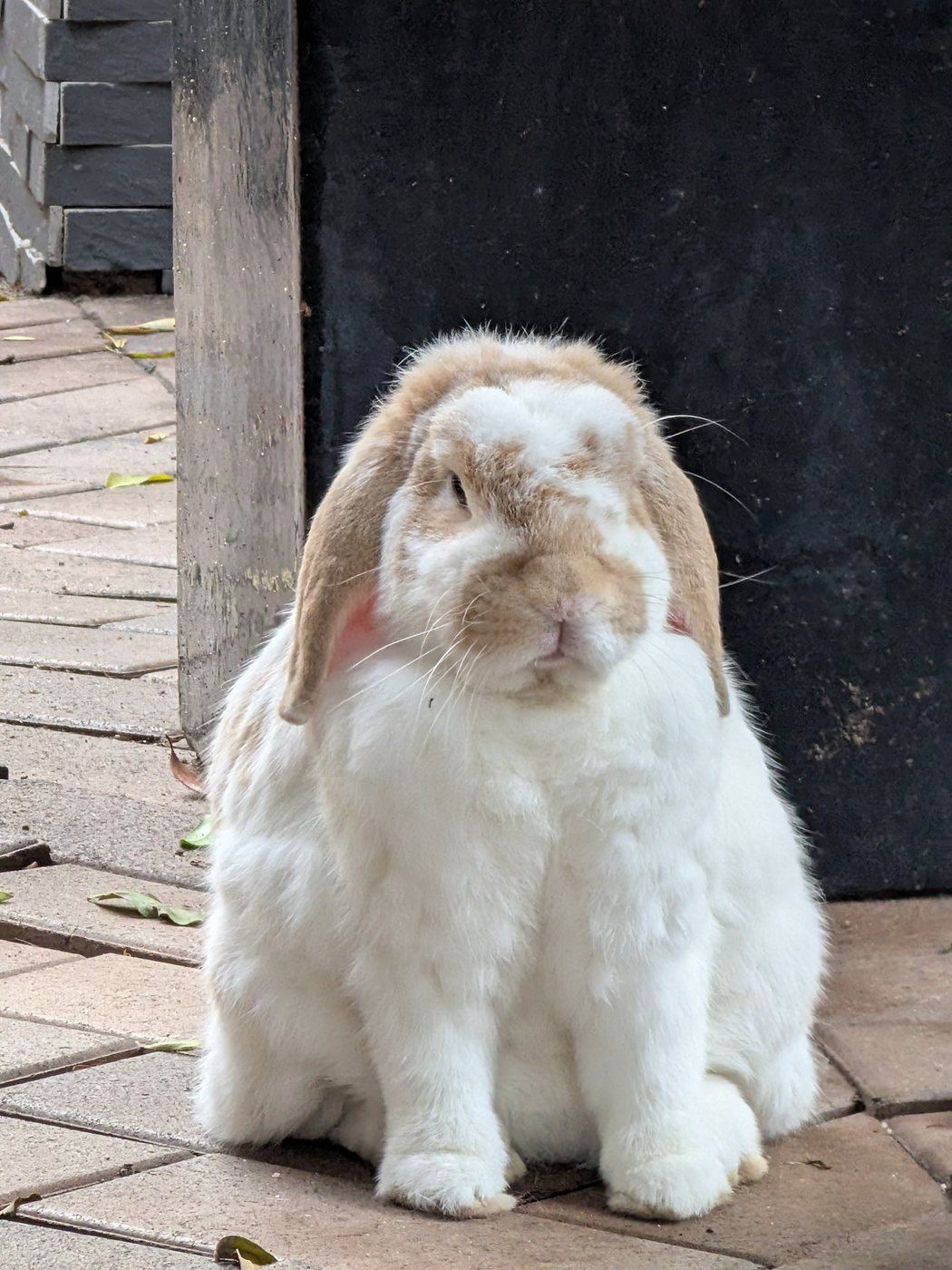
Experienced Keepers Buy More Hay Than Beginners Think Is Reasonable
This is one of the clearest patterns I see at work. Someone new to rabbits buys a small bag of hay and a big bag of pellets. Someone who has kept rabbits for years does the opposite and walks out with a box of hay that looks almost silly for one animal.
The experienced person is right. A small bag goes in days, and the moment hay starts being rationed, the rabbit eats less of it, fills up on pellets or treats instead, and you are back to the teeth and gut problems. Buy the big box. It is cheaper per kilo anyway.
Young Rabbits Need Something Different
Growing rabbits are the exception to the timothy rule. Under about six months, and for pregnant or nursing does, alfalfa (lucerne) hay and a pellet made for young rabbits give them the extra protein and calcium they need to grow.
I strongly recommend a proper young rabbit formula rather than just feeding a baby the adult food. Then move them across gradually to timothy hay and an adult timothy based pellet as they mature. Leaving an adult on alfalfa is a common mistake, because the extra calcium can contribute to bladder sludge and stones, which are painful and expensive to treat.
Pellets and Greens: The Smaller Part
Pellets are a supplement, not the main meal. A plain, uniform pellet is better than a muesli style mix, because rabbits will pick out the tasty bits from a mix and leave the rest, which means they are not getting a balanced diet at all. Your vet can give you a daily amount for your rabbit’s size, and it is usually a lot less than people pour into the bowl.
Fresh leafy greens and herbs round it out. Treats like fruit and carrot should be small and occasional. Carrot in particular is more of a sugary treat than the cartoons suggest.
How to Tell If Your Hay Is Any Good
- Smell it. Good hay smells sweet and fresh. Musty or mouldy smelling hay goes in the bin.
- Look at the colour. Green to pale green is good. Brown or grey patches can mean it got wet.
- Check the dust. A little is normal. A cloud of it when you open the bag is bad for their airways.
- Look for long stalks. Lots of short chopped bits and powder at the bottom is not doing the chewing job.
- Watch your rabbit. If they pick through it and leave most of it, try a different cut or a blend before you give up.
Store It Inside
Keep hay dry, off the ground and somewhere with airflow. Damp hay goes mouldy fast. The other reason to store hay and pellets inside is rats. We have had rat problems at my place that came straight from rabbit pellets and chicken feed being left out, and the fix was storing all of it inside at all times.
Hay Feeders: Worth It or Not?
A hay rack keeps hay clean and off the floor, which means less of it gets soiled and thrown out. It is a cheap buy that pays for itself in hay you do not waste. The catch is that some racks are so tight that rabbits struggle to pull hay out, and then they eat less. Pick one with enough room for a mouth to get in, and still put loose hay down as well.
What It Costs Per Month
| Option | Approx cost per month | Notes |
|---|---|---|
| Imported timothy, small bags | $40 to $70 | The most expensive way to feed hay |
| Imported timothy, 4kg box | $25 to $40 | What I would recommend for most people |
| Local oaten or meadow hay, bulk | $10 to $20 | Cheapest, but check quality every bale |
Bigger rabbits eat more. My Flemish giant goes through noticeably more than the mini lop. Rabbits are also not cheap at the vet: my Flemish giant ran up around $3,000 recently for a suspected liver problem. He pulled through and it was absolutely worth it, but it is a good reminder that cheap hay is a false economy when the vet bill for a diet related problem is in the thousands.
What I Use
The hay and feeding gear I would actually buy. (these are affiliate links)
Want to see everything I run? Here is all the gear I actually use across my reptiles, tanks, rabbits and caique.
Frequently Asked Questions
How much hay should a rabbit eat a day?
As much as it wants. Hay should be available all day and make up around 70 to 80 percent of the diet. A common guide is a pile of hay roughly the size of the rabbit’s own body every day, but the simpler rule is that the rack should never be empty. If it is picked clean by the evening, you need to put more in.
What is the best hay for rabbits in Australia?
For adult rabbits, a good quality grass hay. I use Oxbow Western Timothy as the everyday hay and oaten hay as bedding that doubles as food. Oaten and meadow hay from a produce store are the cheaper Australian options and are fine as long as the quality is good. Alfalfa or lucerne hay is only for young, pregnant or nursing rabbits.
Can adult rabbits eat lucerne hay?
Not as their main hay. Lucerne (alfalfa) is high in calcium and protein, which young rabbits need for growth, but in adults the extra calcium can contribute to bladder sludge and stones. A little as an occasional treat is fine. The everyday hay for an adult should be a grass hay like timothy or oaten.
Why will my rabbit not eat its hay?
The most common reasons are that the hay is poor quality (dusty, stalky, old), the rabbit is filling up on pellets and treats instead, or the hay feeder is too hard to pull from. Cut back the pellets, try a fresher bag or a different cut or blend, and put loose hay down as well. A rabbit that stops eating altogether needs a vet the same day, because that can be gut stasis.
How much does it cost to feed a rabbit hay in Australia?
Roughly $25 to $40 a month for one adult rabbit on imported timothy bought in a 4kg box, which is about $120 in store. Small bags cost far more per kilo. Local oaten or meadow hay bought in bulk can bring that down to $10 to $20 a month.