
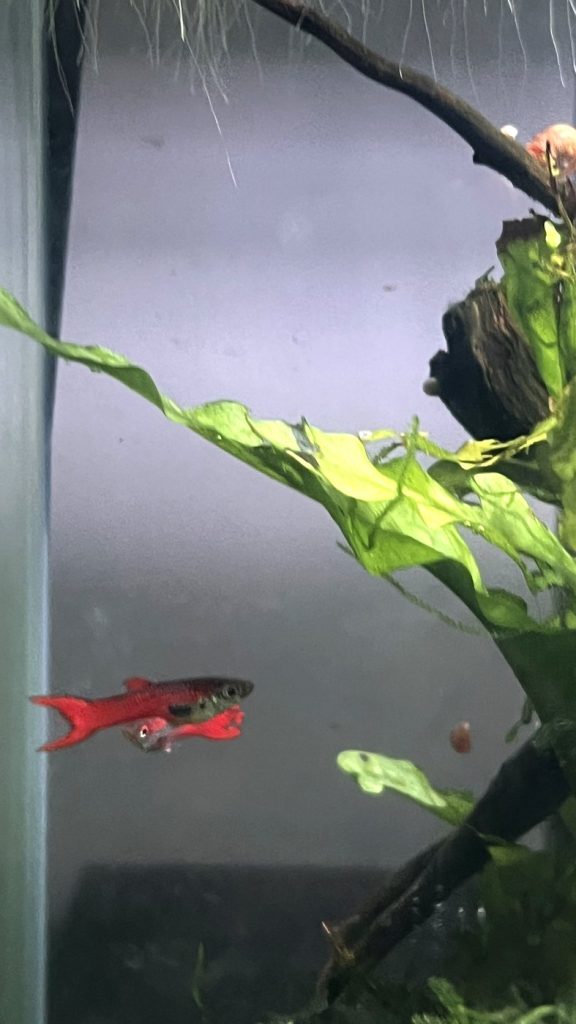
I run five tanks at home: four shrimp tanks and a 40 litre indoor pond with tropical fish in it, including a betta, a bristlenose and tetras. I also sell aquarium gear at the pet store I work in, so I see what fails and what people come back in for.
This is what I actually run and why, including the problem nobody warned me about, which turned out to be a mould issue in the room rather than anything in the tanks. If you are planning more than one open-top tank indoors, read that section before you buy anything.
I run four shrimp tanks and a 40 litre indoor pond with a betta, a bristlenose and tetras. I use Marina and Aqua One filters and prefer Marina, because they are far easier to clean and change, and clogged impellers are the most common filter problem I see at work. My heaters are glass Aqua One units, and the critical safety rule is never to lift a heater out of the water while it is switched on, because they can shatter. The thing nobody tells you is that multiple open-top tanks put a lot of moisture into a room, and mine caused a mould problem.
If you just want the short answer, I would start with a Marina hang on back filter. Marina is the brand I prefer and recommend at the shop, it is the outside filter I run, and it is easy to clean and change.
Check price on AmazonAffiliate link. I may earn a small commission at no extra cost to you.
| Item | What I use | Typical AU cost |
|---|---|---|
| Tank | 40L indoor pond plus four shrimp tanks | $80 to $400 |
| Filter | Marina, preferred over Aqua One for cleaning | $30 to $90 |
| Heater | Aqua One glass | $25 to $70 |
| Water conditioner | Every water change, no exceptions | $15 to $30 |
| Test kit | Liquid, not strips | $45 to $70 |
| Live or silk plants | Never plastic, especially with a betta | $10 to $40 |
| Dehumidifier | Bought after the mould | $200 to $400 |
The Mould Problem Nobody Warns You About
This is the section I most want people to read, because it is not about the fish at all.
I ended up with a mould problem in the room because of the fish tanks. Five tanks, all open topped, evaporating constantly into one indoor space. That water goes somewhere, and where it goes is into the air, and then onto cold surfaces, walls and ceilings.
It crept up gradually, which is what makes it dangerous. There is no single day where you notice the humidity, you just eventually notice the mould.
What fixed it: a dehumidifier, and keeping windows open. Yes, the ventilation makes evaporation worse and means topping up more often, and yes it slightly undermines the point of a heater. I would still do it, because it is not worth sacrificing your health over. Mould in a bedroom is a genuine respiratory issue and it is not something to trade away for a slightly more stable water level.
If you are planning multiple tanks indoors, particularly in a bedroom or a small closed room, plan for humidity from the start. A dehumidifier is a real running cost that no aquarium setup guide includes, and depending on your situation it may be more important than anything you put in the tank.
Lids: My Honest Trade-Off
I do not run lids. I prefer the look of an open top, and I am not going to pretend that is the responsible choice, because it is a trade-off and there are two real costs.
Fish jump. I have not lost one, but it absolutely happens, and it happens more when water parameters are off. A fish leaving the water is often a fish trying to leave conditions it does not like, so a jumper is frequently a water quality warning rather than bad luck. Bettas in particular are known jumpers.
Evaporation is fast. Much faster than people expect with an open top, which means topping up regularly, and it is also the direct cause of the humidity problem above.
If you want the open look, go in with your eyes open. Keep your parameters stable, do not overfill so there is less of a leap available, and accept the topping up. If you have a known jumper or a species prone to it, a lid or a mesh top is the sensible answer and I would not argue with anyone who chooses it.
Filters: Why I Recommend Marina
I run both Marina and Aqua One filters, and I prefer Marina. I recommend them at the shop too, and it comes down to one thing: they are much easier to care for and change.
That sounds minor. It is not. A filter you find annoying to clean is a filter you clean less often, and filter maintenance is most of what keeps a tank healthy. The easiest good filter beats the theoretically better one you resent servicing.
The most common filter problem I see at work is a clogged impeller. Someone brings in a filter that has “stopped working” or gone noisy, and it is almost never broken. The impeller, the little magnetic rotor that actually moves the water, is jammed with gunk, hair or gravel.
So build it into your routine:
- Pull the impeller out and clean it when you service the filter, including the housing it sits in. A cotton bud does the job
- Rinse filter media in tank water, never tap water. Chlorine kills the beneficial bacteria that make the filter work, and that is how people accidentally cycle their tank back to zero
- Do not replace all the media at once for the same reason. Stagger it
A filter that suddenly goes quiet or weak is usually asking for a five minute clean, not a replacement.
Heaters: Never Lift It Out While It Is On
My heaters are glass Aqua One units, and this is the one hard safety rule in the whole setup.
Never take a heater out of the tank while it is switched on. Glass heaters can shatter.
The mechanism is simple thermal shock. The glass is hot, and lifting it into cooler air, or worse touching it with cool water, can crack or explode it. It is a genuine injury risk with your hands in the tank, and it is an easy mistake to make during a water change when you are not thinking about it.
The habit to build: switch the heater off at the wall and give it ten to fifteen minutes to cool before it comes out or before the water level drops below it. That last part matters during water changes, because a heater left running while exposed to air is the same problem.
Then remember to turn it back on. Setting a phone reminder during a water change is not silly, it is how you avoid a cold tank overnight.
Plants: Never Plastic, Especially With a Betta
This one is simple and I feel strongly about it. Do not use fake plastic plants, particularly with a betta. Use real or silk.
Plastic aquarium plants have hard, often sharp moulded edges. Bettas have long, delicate, trailing fins, and they like to rest on and weave through plants. Those fins snag and tear, and a torn fin is an opening for fin rot.
Silk plants are the easy compromise. They look reasonable, they cost about the same as plastic, they need no light or fertiliser, and crucially they are soft. If you do not want the commitment of live plants, buy silk.
Live plants are better again if you are willing. They use up nitrate, give shrimp somewhere to graze and hide, and make the whole system more stable. They also need appropriate lighting and a substrate that supports them, so it is a bigger commitment than dropping an ornament in.
The test is simple: run it across the back of your hand. If it feels like it would catch on a fin, it will.
Shrimp Tanks Are a Different Job
Four of my five tanks are shrimp, and they are not simply small fish tanks.
The main things that differ:
- Stability matters more than perfection. Shrimp cope poorly with swings. A steady set of parameters beats chasing ideal numbers with constant adjustment
- Copper is the one to watch. Copper is toxic to invertebrates and it appears in places people do not expect, including some fish medications and some plant fertilisers. Check labels before anything goes in a shrimp tank
- Filtration needs to be gentle. Shrimplets are tiny and get pulled into intakes, so a sponge filter or a covered intake is standard
- They need surfaces to graze. Plants, moss and botanicals give them biofilm to eat, which is most of their natural diet
The upside is that a settled shrimp tank is one of the lowest maintenance things you can keep, and they breed readily once they are happy.
Water Parameters Are the Whole Game
Almost every problem in this guide traces back to water. Jumping fish, stressed shrimp, fin rot, algae. It is all water.
Two habits worth building.
Use a water conditioner on every water change. Australian tap water is chlorinated or chloraminated, and both harm fish and wipe out your filter bacteria. Standing water overnight does not deal with chloramine.
Buy a liquid test kit rather than strips. Strips are cheap and vague. A liquid master kit tests ammonia, nitrite, nitrate and pH properly, and those four numbers explain most of what happens in a tank. If a fish is behaving oddly, test before you change anything.
And cycle the tank before adding livestock. A new tank needs weeks to build the bacteria that process ammonia, and stocking on day one is the single most common beginner failure. It is also the reason a lot of first fish die and people conclude they are bad at this.
What I Would Tell a Beginner
- Plan for the humidity if you are running open tops indoors, especially more than one tank
- Buy the filter you will actually maintain, and clean the impeller
- Switch the heater off and let it cool before it leaves the water
- Silk or live plants, never plastic
- Cycle the tank first, and test with liquid rather than strips
None of it is complicated. It is just that the failure modes are slow and quiet, so you find out you got something wrong weeks later.
What I Use
The gear I actually run, plus the two things I would tell anyone to buy at the start: a liquid test kit and a water conditioner. (these are affiliate links)
This guide contains affiliate links. If you buy through them we may earn a small commission at no extra cost to you. I only point to gear I would actually use or sell.
Want to see everything I run? Here is all the gear I actually use across my reptiles, tanks, rabbits and caique.
Frequently Asked Questions
Do fish tanks cause mould in a room?
They can, and mine did. Multiple open-top tanks evaporate constantly into one indoor space, and that moisture ends up on walls and ceilings. It builds gradually so you notice the mould before you notice the humidity. The fix is a dehumidifier plus ventilation, and yes, opening windows increases evaporation and means topping up more often. It is still worth it, because mould in a bedroom is a genuine respiratory problem. Plan for humidity from the start if you are running more than one open-top tank indoors.
Do I need a lid on my fish tank?
It is a trade-off. I run open tops because I prefer the look, and the two costs are that fish jump and that evaporation is fast. Jumping is more likely when water parameters are off, so a jumper is often a water quality warning rather than bad luck, and bettas are known for it. If you want the open look, keep parameters stable, avoid overfilling and accept the topping up. If you have a known jumper, a lid or mesh top is the sensible choice.
Why has my aquarium filter stopped working?
Nine times out of ten it is a clogged impeller rather than a broken filter. The impeller is the small magnetic rotor that moves the water, and it jams with gunk, hair or gravel, which shows up as a filter that goes noisy, weak or stops. Pull the impeller and its housing out and clean them with a cotton bud. Also rinse filter media in tank water rather than tap water, because chlorine kills the beneficial bacteria the filter depends on.
Can you take an aquarium heater out of the water while it is on?
No. Glass heaters can shatter from thermal shock if they are lifted into cooler air or touched with cool water while hot, which is a real injury risk with your hands in the tank. Switch the heater off at the wall and give it ten to fifteen minutes to cool before removing it. The same applies during water changes, since a heater left running while the water level drops below it is exactly the same problem. Then remember to switch it back on.
Are plastic plants bad for bettas?
Yes, and it is one of the easiest mistakes to avoid. Plastic aquarium plants have hard moulded edges, and bettas have long delicate fins that they drape over and weave through plants. The fins snag and tear, and a torn fin is an opening for fin rot. Use silk plants, which cost about the same, need no light or fertiliser and are soft, or use live plants. A good test is to run the plant across the back of your hand, and if it feels like it would catch on a fin, it will.