
Quail are the most underrated backyard bird in Australia. They take up a fraction of the space chickens do, they lay from about six to eight weeks old, they are quiet enough for suburban blocks, and hardly anyone writes about keeping them properly here.
I keep quail alongside my chickens, in roughly 3 square metres. This is what I run, what I feed them, and the one mistake that cost me birds. If you read nothing else, read the worming section. I lost quail before I understood how important it was, and it is the thing I now tell everyone.
Quail need far less space than chickens, and mine live in roughly 3 square metres. Feed them a high protein chick or game bird starter, not chicken layer pellets, because quail need considerably more protein. Supplement calcium for laying hens. The single most important thing is worming. Intestinal worms kill quail and I learned that the hard way, so worm them regularly, typically spring and autumn, using a product labelled for quail. Live mealworms and fresh vegetables make good supplementary feeding. Get the sex ratio right too, because surplus males fight and can kill each other, and an all female group works fine if you only want eggs.
If you just want the short answer, I would start with Peckish Game Bird Starter 7.5kg, the high protein starter quail actually need, suitable for quail and other game birds.
Check price on AmazonAffiliate link. I may earn a small commission at no extra cost to you.
| Item | What I use | Typical AU cost |
|---|---|---|
| Housing | Around 3 square metres | $150 to $400 |
| Chick or game bird starter | Their staple, high protein | $25 to $50 |
| Calcium carbonate powder | For laying hens | $10 to $25 |
| Poultry wormer | Non-negotiable, spring and autumn | $15 to $35 |
| Live mealworms | Treat, not a staple | $10 to $20 |
| Feeder and waterer | Shallow, quail-safe | $30 to $90 |
| Quail (purchase) | I bought mine rather than hatching | $10 to $30 each |
Worm Them. This Is the Section That Matters
I will be blunt because this cost me birds. We had a few deaths from worms before I understood how susceptible quail are.
Intestinal worms in quail are not a minor health niggle. A heavy worm burden affects the gut so the crop does not empty properly, and the bird effectively starves while still eating. The signs are a bird that is getting very thin despite appearing to feed, and often loose droppings. By the time it is obvious, it is usually well advanced.
What makes quail particularly vulnerable is that they live on the ground. They forage, scratch and dust bathe in the same soil they defecate in, so reinfection is constant in a way it is not for a bird that roosts up high.
Worm them on a schedule, not when you notice a problem. The general Australian guidance for poultry is regular worming, commonly spring and autumn, and more often if your birds are on soil that has held birds for a while.
Use a product actually labelled for quail rather than assuming a chicken wormer is appropriate. In-water poultry wormers such as Aristopet Worm-Enda list quail explicitly and treat the common intestinal worms, and Kilverm is another widely available Australian option. Treatments are usually repeated about two weeks after the first dose to catch the next generation, and you should follow the label rather than my summary of it. If you are unsure, or you have a bird already looking thin, talk to a vet.
This is the cheapest insurance in quail keeping. A bottle of wormer costs less than a single bird.
They Need a Fraction of the Space, But the Right Shape
Mine are in roughly 3 square metres, which comfortably suits a small covey. That is the great advantage of quail: you can keep a productive little group in the space a single chicken coop would occupy.
The important thing is the shape. Quail are ground birds and floor area is what they use, so wide and low beats tall.
There is one quirk that catches new keepers out. When startled, quail flush straight upwards, hard and fast. In a tall enclosure with a solid roof they can injure their heads doing it. Keepers deal with this either by keeping the roof low enough that they cannot build up speed, or by using a soft or mesh top rather than something they will hit at full force.
Other things that matter more for quail than for chickens:
- Cover. They are prey animals and a bare run leaves them stressed. Hides, brush, upturned pots, anything to duck under
- A dust bath. Not optional. It is how they manage mites and keep their feathers in order
- Small gaps matter. They fit through spaces you would not believe, and so do the things that want to eat them. Rats and snakes will take quail
Feed: Not Chicken Feed
This is the mistake I see most often after worming. Quail are not small chickens and layer pellets are not the right feed for them.
Quail need considerably more protein. I feed a chick starter, and a game bird starter does the same job. Both sit well above the protein level of standard chicken layer feed, which is formulated for a much larger, slower growing bird.
Feed quail on chicken layer pellets long term and you get poor growth, poor laying and generally unthrifty birds. It is a slow problem rather than a dramatic one, which is exactly why it goes unnoticed.
Alongside that:
- Calcium. I supplement with plain calcium carbonate powder. A laying quail lays remarkably often for her size and needs the calcium available, or she draws it from her own bones and you get thin shells
- Live mealworms as a snack. They love them and they are excellent for tempting a bird you want to check on. Treats, not a staple, because they are rich
- Fresh vegetables. Mine get greens and veg regularly and it visibly improves condition
Also make the feed and water shallow and safe. Quail chicks in particular drown easily in an ordinary poultry drinker, so use a shallow dish or add marbles or pebbles so they can drink at the edges without falling in.
Buying Versus Hatching
I bought mine rather than hatching them, and for a first covey I would suggest the same.
Hatching quail is genuinely appealing and the incubation period is short, about 17 to 18 days against 21 for chickens. But you are taking on the incubator, the brooder, and the fact that roughly half of what hatches will be male. Male quail crow, they harass the hens, and in a small suburban setup a surplus of males becomes a problem you have to solve fairly quickly.
Buying lets you start with the sex ratio you actually want. A common approach is one male to several females, or an all-female group if you only want eggs and no fertility.
Quail reach laying age at around six to eight weeks, which is startlingly fast compared with chickens. You are not waiting long either way.
Get the Sex Ratio Right, and Keep an Eye on Them
This is the other thing that caused us real trouble, and it is closely tied to the point above about buying rather than hatching.
We had males picking on the females, and males that killed each other. Not squabbling. Actual deaths. It is the part of quail keeping that surprises people most, because they look like such gentle little birds.
Male quail are territorial and they do not sort out a hierarchy and settle down the way chickens eventually do. Put too many males in a confined space and they will fight, persistently, and they go for the head and the back of the neck. In an enclosure there is nowhere for the loser to get away to.
The females get it too, from a different direction. Too few hens per male means each one is over-mated, and you see it as bare patches on her back and head, sometimes with scabbing or open wounds where he has been gripping her.
What to do about it:
- Keep the ratio wide. The usual guidance is around one male to four or five females. Fewer hens than that per male and the hens suffer
- Do not keep spare males together and assume they will work it out. They often will not
- Consider an all female group. Quail hens lay perfectly well without a male. If you only want eggs and are not breeding, this sidesteps the entire problem, and it is what I would suggest to most people keeping a few birds in a backyard
- Watch them properly. Check backs and heads regularly rather than glancing at the run. Bare patches and head scabs are the early warning
- Separate at the first sign of blood. Quail will keep going at an open wound exactly like chickens do, and an injured bird left in with the others usually does not recover
This is the strongest practical argument against hatching your own for a first covey. A hatch gives you roughly half males, and then you have to house or rehome the surplus quickly, before they do damage.
Free Roaming Quail Actually Worked
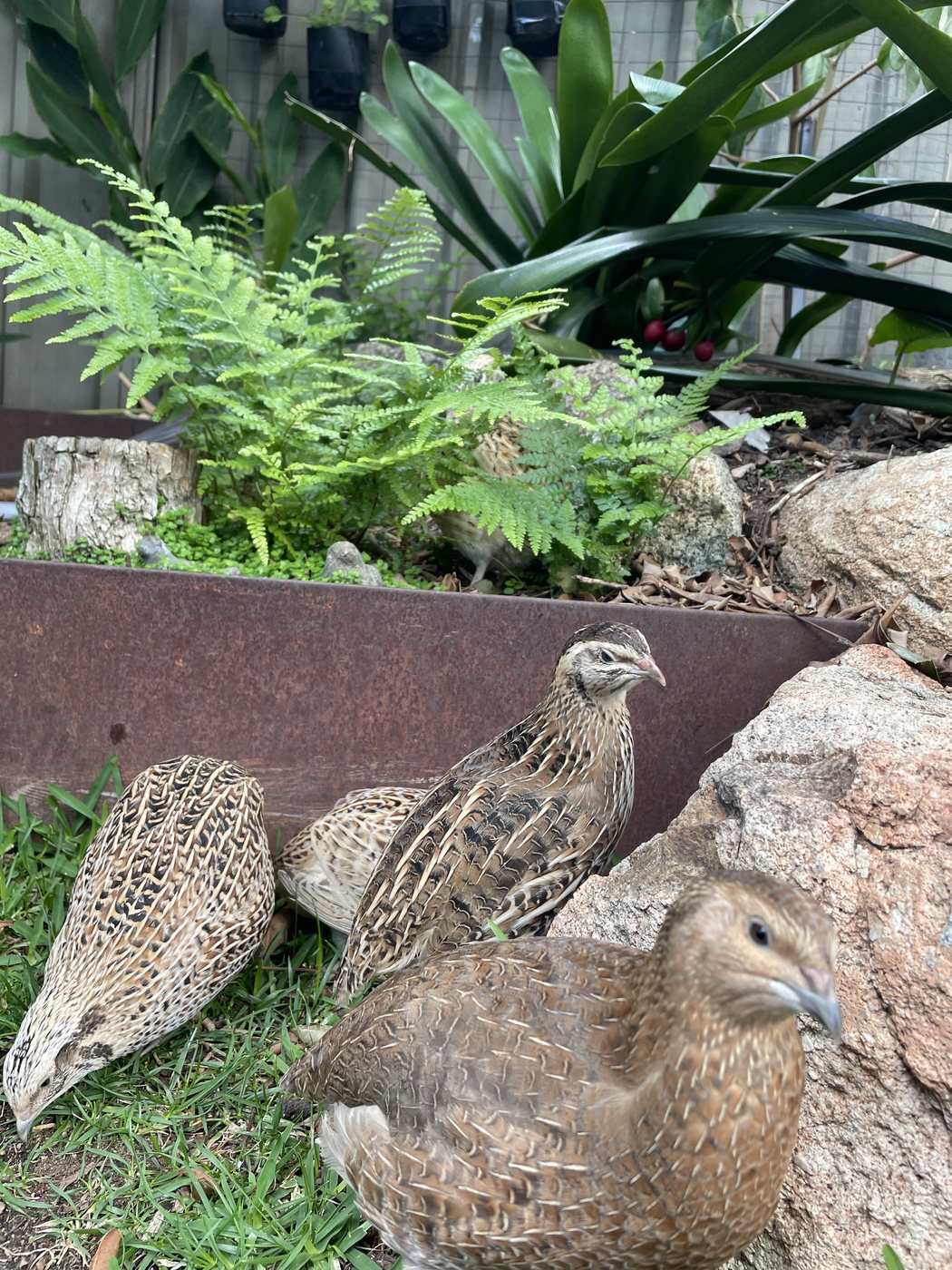
This is the part that surprises people. We had free roaming quail for a year or so and it worked really well.
It is not the standard advice, and I would not pretend it is risk free, but it went better than expected. They are excellent foragers, they eat a lot of insects, and given cover to disappear into they are less flighty and stressed than you might think.
If you are considering it, the honest caveats:
- They can and will fly. Coturnix are not strong fliers but they get airborne when startled, so a fence is not a boundary
- Cover is everything. A yard with dense planting and things to hide under works. An open lawn does not
- Predators are the real limit. Cats, dogs, snakes and birds of prey all take quail, and a free roaming quail has very few defences beyond hiding
- Eggs get laid wherever they happen to be, because quail do not use nesting boxes the way hens do. Expect an egg hunt
It suited our yard. It would not suit every yard, and I would not do it somewhere with a cat problem. But it is worth knowing it is possible, because most guides assume quail can only live in a hutch.
What I Would Tell a New Quail Keeper
Three things, in order.
Worm them from the start. Do not wait for a problem. I did and it cost me birds.
Feed them properly. High protein starter, not chicken layer feed, plus calcium for the hens.
Give them cover and a dust bath. They are prey animals and both of those do more for their wellbeing than anything else you can add.
Beyond that they are genuinely easy, productive and good company, and they fit into a suburban backyard in a way chickens sometimes cannot.
Quail Keeping Gear
What I use, plus the things I would prioritise for a new setup. The wormer is the one thing I would not put off, though buy it from a produce store or vet where you can check the label covers quail. (these are affiliate links)
This guide contains affiliate links. If you buy through them we may earn a small commission at no extra cost to you. I only point to gear I would actually use or sell.
Frequently Asked Questions
How much space do quail need?
Far less than chickens. Mine live in roughly 3 square metres, which comfortably suits a small covey. What matters more than the total is the shape, because quail are ground birds that use floor area rather than height. Wide and low beats tall. Provide cover to hide under, since they are prey animals and a bare run leaves them stressed, and include a dust bath, which is how they manage mites and feather condition.
How often should you worm quail?
Regularly and on a schedule, commonly spring and autumn in Australia, and more often if they are on soil that has held birds for a while. Quail are especially vulnerable because they live, forage and defecate on the same ground, so reinfection is constant. Worms can kill them, as a heavy burden stops the crop emptying properly and the bird starves while still eating. Use a product labelled for quail such as an in-water poultry wormer, follow the label, and repeat as directed.
What should I feed quail?
A high protein chick starter or game bird starter, not chicken layer pellets. Quail need considerably more protein than chickens, and feeding standard layer feed long term produces poor growth, poor laying and generally unthrifty birds. Supplement calcium for laying hens, since a quail lays remarkably often for her size. Live mealworms and fresh vegetables are good supplementary feeding. Keep water shallow or add pebbles, because quail chicks drown easily in ordinary drinkers.
Is it better to buy quail or hatch them?
For a first covey, buying. Hatching is appealing and quick, at about 17 to 18 days against 21 for chickens, but you take on the incubator, the brooder, and the fact that roughly half of what hatches will be male. Male quail crow and harass the hens, and a surplus becomes a problem quickly in a suburban setup. Buying lets you choose your sex ratio from the start. Either way they reach laying age at around six to eight weeks.
Can quail free range?
It can work. We free roamed ours for about a year and it went well, though it is not standard advice and it is not risk free. They forage well and are calmer than you would expect when given cover. The caveats are that they fly when startled so fencing is not a boundary, dense planting is essential because an open lawn does not work, predators including cats, snakes and birds of prey are the real limit, and they lay wherever they happen to be rather than in nesting boxes.
How many male quail should you keep?
Keep the ratio wide, around one male to four or five females, or keep an all female group if you only want eggs, because quail hens lay perfectly well without a male. Surplus males are a genuine problem. They are territorial, they do not settle into a hierarchy the way chickens do, and in a confined run they fight persistently and can kill each other. Too few hens per male also means the hens get over-mated, which shows as bare patches and scabbing on the back and head. Check your birds regularly and separate any bird that is bleeding.