
A harness spreads the pressure of the lead across your dog’s chest and shoulders instead of yanking on its throat, and for a lot of dogs that is not a small thing. Small breeds are prone to a collapsing windpipe, and flat faced breeds like pugs and frenchies already struggle to breathe, so pulling against a collar makes it worse. Even a big strong dog is easier and kinder to walk on a well fitted harness. Choosing the best dog harness in Australia is mostly about the right style for your dog, a proper fit, and whether you need help with pulling.
The best dog harness in Australia costs about $25 to $80. A padded no pull harness with a front clip is the best all rounder for everyday walks at $30 to $60, a step in or vest harness suits small dogs, and a sturdy handle harness helps with large or reactive dogs. A harness protects your dog’s neck far better than a collar for walking, especially for breeds prone to windpipe and breathing problems.
If you just want the short answer, I would start with No Pull Dog Harness, padded front and back clip harness that takes the power out of pulling.
Check price on AmazonAffiliate link. I may earn a small commission at no extra cost to you.
| Harness type | Typical cost | Best for |
|---|---|---|
| No pull front clip harness | $30 to $60 | Dogs that pull, everyday walks |
| Padded back clip harness | $25 to $50 | Calm walkers and small dogs |
| Step in harness | $20 to $45 | Small dogs, quick on and off |
| Handle and dual clip harness | $50 to $80 | Large, strong or reactive dogs |
Why a Harness Beats a Collar for Walking
A flat collar is fine for holding an ID tag and for a dog that walks nicely, but the moment a dog pulls, all that force lands on its neck. Over time that is linked to windpipe damage in small breeds, and it makes breathing harder for short nosed dogs that are already compromised. It can also aggravate neck and spine issues. A harness moves the load to the chest and shoulders, which are built to take it, so the dog can pull into it without hurting itself and you have more control. I still keep a collar on for the ID tag and council registration, I just clip the lead to a harness for the actual walk.
Front Clip, Back Clip or Step In?
Where the lead clips changes how the harness behaves. A back clip, where the ring sits between the shoulder blades, is comfortable and simple and great for dogs that already walk well, but it does nothing to discourage pulling, in fact it can trigger the same instinct that makes sled dogs pull harder. A front clip, with the ring on the chest, gently turns the dog back towards you when it pulls, which takes the power out of pulling without any pain, and it is what I recommend for most dogs that drag you down the street.
Step in harnesses that the dog stands into and you clip over the back are quick and easy for small dogs that wriggle. Many good harnesses now have both a front and a back ring so you can use whichever suits the walk.
Getting the Fit Right
A harness only works if it fits, and a loose one is both an escape risk and a rubbing risk. You should be able to slide two fingers flat under any strap, snug but not tight. The common problem areas are behind the front legs, where a badly shaped harness rubs the armpit raw, and around the neck opening, where too loose lets a determined dog back out of it and bolt. Measure your dog’s chest girth at the widest part behind the front legs and check it against the size chart, do not just guess by weight, because two dogs the same weight can be very different shapes. Check the fit again after a few wears, especially on a growing puppy or a fluffy dog whose coat hides a looser fit than you think.
Harnesses for Pullers and Strong Dogs
If you have a big, strong or reactive dog, the harness itself becomes a safety tool. A sturdy harness with a padded grab handle on the back lets you take hold of the dog quickly if you need to, at the vet, near traffic, or if another dog rushes you. Dual clip harnesses let you use a double ended lead, one end on the chest and one on the back, which gives real steering control on a powerful dog without hurting it. For a dog that lunges or is being trained out of reactivity, that control makes walks safer and less stressful for everyone. Whatever you pick, a strong dog needs strong hardware, so check the stitching and the clips, not just the padding.
Collar, Harness or Both? What to Use When
People often think it is a choice between a collar and a harness, but for most dogs the answer is both, used for different jobs. Keep a flat collar on your dog day to day for its ID tag and council registration, because that is the tag that gets your dog home if it slips away, and by law your dog needs to be identifiable. Use the harness for the actual walk, when the pulling and control matter.
Avoid retractable leads on a strong dog, especially clipped to a collar, because the constant tension teaches the dog to pull and a sudden bolt on a thin cord can cause a nasty neck injury. A fixed length lead on a well fitted harness gives you far better control and a calmer walk.
Introducing a Harness to a Dog That Hates It
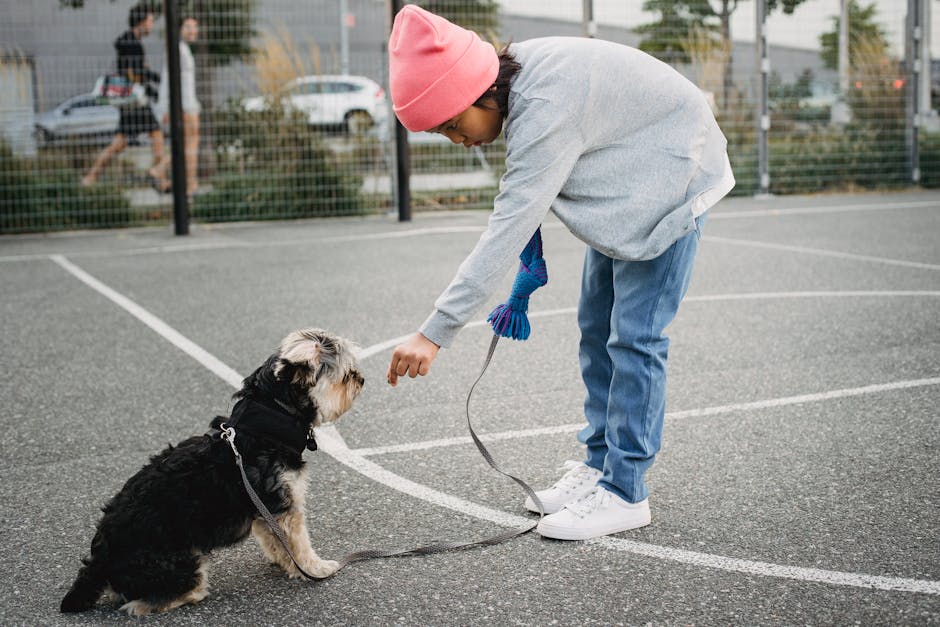
Some dogs, especially rescues and pups who have never worn one, freeze, flatten or wriggle like mad the first time a harness goes on, and forcing it just teaches them to dread it. Go slowly instead. Start by showing the harness and giving a treat, then hold it out so the dog puts its own nose towards or through the neck loop for a treat, so it learns to walk into it rather than being wrapped up. Do up the buckles, give a treat, and take it straight off again, keeping the first few sessions short and always ending on a good note.
Once the dog is comfortable wearing it around the house, add the lead and let them potter about indoors before you head out, so the harness is old news by the time it matters. A dog that associates the harness with treats, and then with walks, will soon come running when it sees it, which is exactly what you want.
Harness Features Worth Paying For
Harnesses vary a lot in quality, and a few features genuinely earn their money. Good padding across the chest and around the leg openings stops rubbing on longer walks, which matters most for dogs that lean into the harness. Look for strong, well stitched webbing and solid metal or quality plastic buckles, because the clip and the stitching are what actually hold a strong dog, not the padding. A back mounted grab handle is worth it on a big or reactive dog for those moments you need to take hold fast.
Beyond that, reflective stitching or piping is a real safety win for early morning and evening walks in winter, adjustable straps at both the neck and the chest let you dial in the fit as a puppy grows or a coat thickens, and a machine washable harness stays far nicer than one you can only sponge off. You do not need every bell and whistle, but paying a little more for solid hardware and a proper fit beats replacing a cheap harness that rubs or fails.
Recommended Gear for Dog Harness
This is the walking setup I would put on most dogs. A well fitted no pull harness and a decent lead makes walks better for both ends of the lead. (these are affiliate links)
Related Cost Guides
For most dogs, a well fitted no pull harness with a front clip is kinder on the neck, gives you more control, and makes pulling much easier to manage than any collar can. Measure properly, check the fit at the armpits and neck, and match the strength of the harness to the strength of your dog. Get that right and the daily walk becomes something you both look forward to.
This guide contains affiliate links. If you buy through them we may earn a small commission at no extra cost to you. I only point to gear I would actually use or sell.
Recommended next: Dog cost calculator · Puppy school cost