
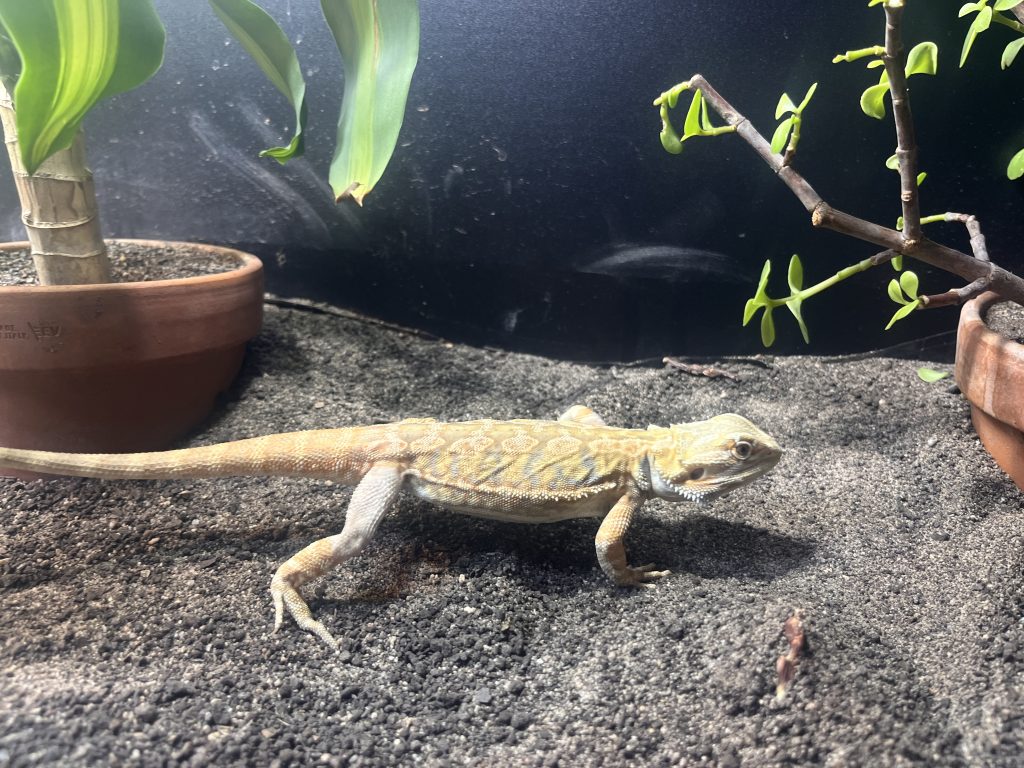
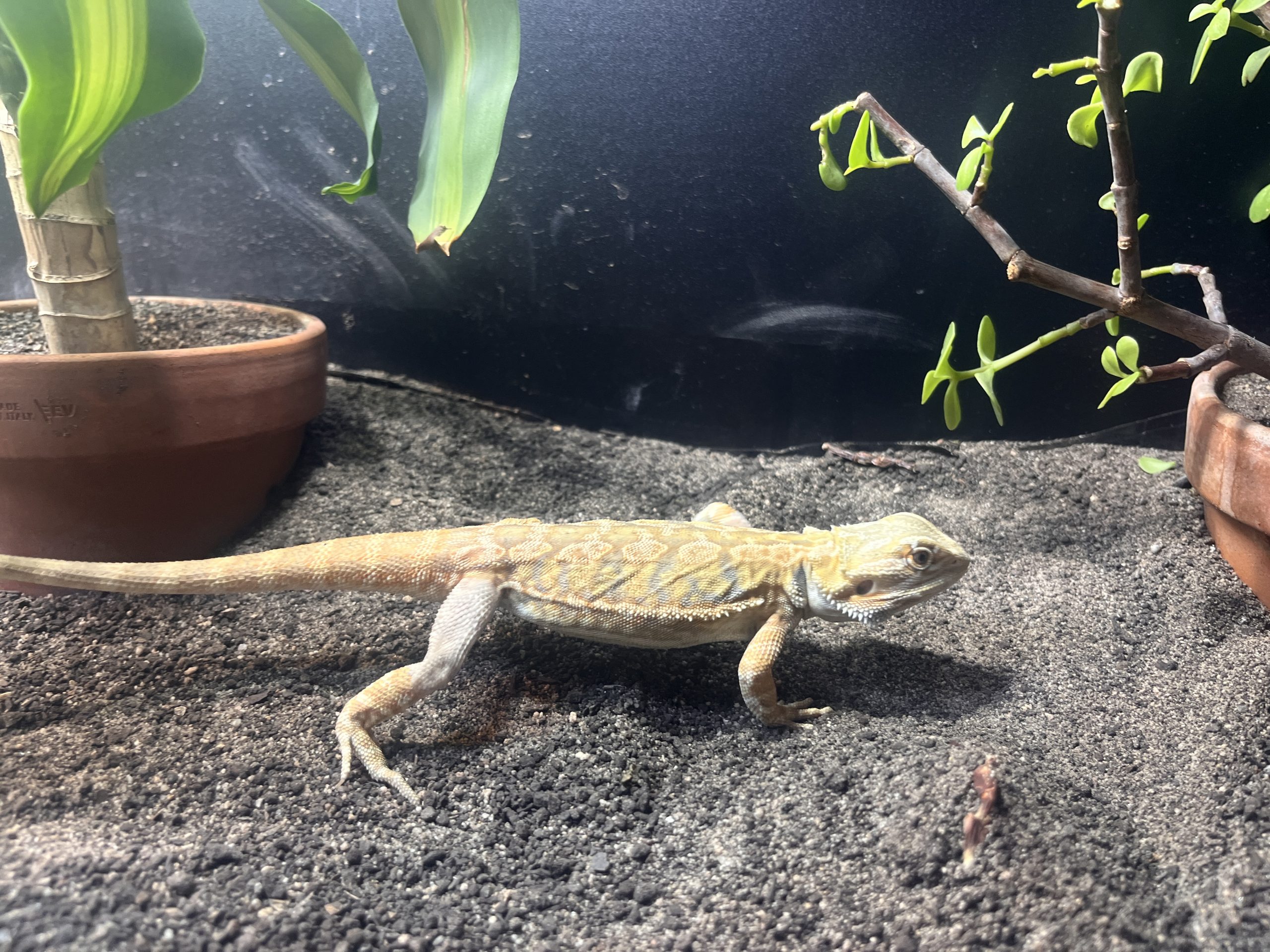
If you keep reptiles, UVB lighting is not the place to cut corners. I keep bearded dragons and green tree frogs, and I sell reptile gear at the pet store I work in, so I see both sides of this. A dragon on poor UVB slowly develops metabolic bone disease, and by the time you notice the wobbly legs or the soft jaw it is already serious. Getting the best reptile UVB lighting in Australia sorted from day one is one of the kindest things you can do for your animal.
The short version of my advice is this: for almost anything that basks, buy a good linear T5 tube, and I would spend the money on an Arcadia. This guide covers why, what a real setup actually costs, how to match the strength to your species, and the yearly replacement rule that catches everyone out.
A proper reptile UVB setup in Australia costs about $90 to $200. The setup I recommend is a linear T5 kit, which combines the fixture, reflector and tube in one unit, and the Arcadia ProT5 range runs about $100 to $185 depending on length and wattage. A genuine Arcadia T5 tube holds its UVB for a full 12 months before it needs replacing, and a replacement tube is about $40 to $70. Cheap compact and coil bulbs cost $25 to $45 but I steer people away from them for any reptile with a real basking need.
If you just want the short answer, I would start with Arcadia ProT5 12% Desert UVB Kit, the complete linear T5 kit I recommend for bearded dragons and desert species, fixture, reflector and tube in one.
Check price on AmazonAffiliate link. I may earn a small commission at no extra cost to you.
| Setup option | Typical AU price | Notes |
|---|---|---|
| Linear T5 kit (Arcadia ProT5) | $100 to $185 | Fixture, reflector and tube in one, what I recommend |
| Replacement Arcadia T5 tube | $40 to $70 | Once every 12 months |
| Budget T8 tube and fitting | $45 to $90 | Okay for low UV species kept close |
| Compact or coil bulb | $25 to $45 | Small tanks only, not for baskers |
| Solarmeter UV index meter | $250 to $350 | Optional, for setting the dose exactly |
If you have narrowed it down to Arcadia, I have run three of their units for about two years now. My honest LumenIZE review covers the one recurring fault I have had with them and whether the app controlled version is worth the extra eighty dollars.
Why UVB Matters More Than Any Other Piece of Gear
UVB is not lighting for the sake of looks, it is doing a real biological job, and it is worth understanding exactly what that job is. Reptiles make vitamin D3 in their skin using UVB light, the same way we do in sunlight. That vitamin D3 is the key that lets their body absorb calcium from their food. Here is the part people miss: without enough UVB, and therefore without enough D3, a reptile cannot absorb calcium properly no matter how much calcium powder you dust on its food. The calcium simply passes through.
When calcium cannot be absorbed, the body starts pulling it out of the bones to keep the heart, muscles and nerves working. That is metabolic bone disease, and it is one of the most common and most heartbreaking conditions we see in captive reptiles, because it is painful, it deforms the animal, and it is completely preventable. Indoors there is essentially no usable UVB reaching your reptile, because ordinary window glass and the glass or plastic of the enclosure block it. So the UVB lamp you provide is quite literally standing in for the sun, and getting it right is what lets everything else, the calcium, the diet, the growth, actually work.
Why I Recommend Linear T5 Tubes, and Arcadia in Particular
If you take one thing from this guide, let it be this: for almost every reptile with a basking need, a linear T5 high output tube is the right choice, and I would spend the money on a good one rather than saving a few dollars on a compact bulb. A T5 tube throws strong, even UVB right along the length of the enclosure, so your animal gets a proper dose whether it is basking or wandering, not just in one small spot.
You can still use compact and coil bulbs, and for a tiny arboreal setup like a single crested gecko or a small frog tank where a tube will not fit, they will do. But I steer people away from them for anything that basks. Coils only light a small circle directly underneath, the output is often weaker and less even, and the older designs earned a poor reputation. For a bearded dragon, a compact bulb is a false economy.
My go to brand is Arcadia. Their ProT5 kits come as a complete unit, the fixture, a built in reflector and the tube together, so there is no guessing about fittings, and the reflector matters because it pushes far more of the UVB down to the animal instead of wasting it on the enclosure roof. The other big reason I stick with Arcadia is that their T5 tubes are made to hold their UVB output for a genuine 12 months, which makes the replacement schedule simple. Zoo Med make good T5 kits too, and Reptile One is a fair budget option you will find in most Australian pet shops, but Arcadia is what I run at home and recommend first at the counter. The older T8 tubes are thinner and cheaper and fine for a low requirement species kept close to the light, but T5 high output is brighter, reaches further and lasts longer.
Matching the Strength to Your Species
UVB strength is quoted either as a percentage or as a UV index number, and getting it roughly right for your species matters, because a desert lizard and a shade loving frog need very different amounts. Here is where I would start:
- Bearded dragons and desert lizards: high output, a 12 to 14 percent tube such as the Arcadia ProT5 Desert 12% or the Dragonlamp 14%.
- Water dragons and most skinks: medium, a 6 percent Forest tube.
- Green tree frogs and tree frogs: low, a ShadeDweller 7% or a 6% Forest tube kept dim with plenty of cover.
- Crested and other forest geckos: low, a ShadeDweller 2.4% arboreal tube.
- Most snakes: low, a 6 percent Forest tube if you choose to provide UVB at all.
If in doubt for your exact species, follow the recommendation on the tube maker’s own guide, and remember that distance changes the effective dose just as much as the tube strength does, which brings us to setup.
Setting It Up: Distance, Coverage and Shade
Distance is everything with UVB, because the strength drops off fast the further your reptile sits from the tube. As a rough guide, a 12 percent T5 tube gives a bearded dragon the right dose when the basking branch or rock sits about 30 to 40 cm below the light. Too close and you risk over exposure, too far and it may as well not be there. If you want to get it exactly right, a UV index meter such as a Solarmeter takes the guessing out of it, though at $250 to $350 it is a splurge for a single tank.
Never mount the UVB outside the enclosure shining through mesh, glass or plastic, because all of those cut the UVB dramatically. Fine flywire mesh on its own can block a third of it. Mount the tube inside, or use a coarse wide mesh. Pair the UVB with a separate basking heat lamp so your animal has a warm spot to soak up the light, and always leave shade at the other end so it can choose to get out of the light. Reptiles self regulate their UV exposure when you give them the option.
Arcadia Tubes Last a Year: The Replacement Rule
Here is the mistake I see most often at the shop. A UVB tube keeps producing visible light long after it has stopped producing useful UVB. People assume that because it still glows it is still working, so they run the same tube for two or three years while their reptile slowly goes downhill. This is exactly why I like Arcadia T5 tubes: they are made to hold their UVB for a full 12 months, so the rule is simply to replace the tube once a year, even if it looks perfectly fine. Cheaper T8 and compact bulbs fade faster and should be swapped every 6 months. Write the install date on the tube in marker, or set a yearly reminder in your phone, so you never have to guess. It is the cheapest bit of preventative care in the whole hobby, so do not skip it.
Signs Your Reptile Is Not Getting Enough UVB
Because UVB problems come on slowly, it helps to know the early warning signs of a calcium and vitamin D3 shortage, so you can act before it becomes advanced metabolic bone disease. In lizards, watch for a soft or rubbery lower jaw, a jaw that looks swollen or puffy, trembling or twitching in the legs, difficulty lifting the body to walk, or a reluctance to bask. In more advanced cases you see bent or bowed limbs, a kinked spine or tail, and bones that break from nothing more than normal movement. Frogs and smaller species show weakness, poor growth and bent legs.
If you spot any of these, book in with a reptile vet, because early metabolic bone disease can often be turned around with corrected lighting, calcium and D3, while left too long it causes permanent deformity. The good news is that none of it happens when the UVB is right from the start, which is the whole reason to get the lighting sorted before anything else.
What About Frogs and Nocturnal Species?
Frogs and nocturnal geckos are a special case. For years the advice was that they do not need UVB at all, but the current thinking is that a low level, around 2 to 6 percent, helps them process calcium and generally do better, especially growing froglets. My green tree frogs get a low output tube on a day and night timer and it has made a noticeable difference to their colour and how active they are. Keep it gentle, give them plenty of leafy cover to hide from it, and you get the benefit without stressing them.
Recommended Gear for Reptile UVB Lighting
This is the exact style of kit I use and recommend at the shop. If you only upgrade one thing, make it a proper linear T5 tube. (these are affiliate links)
Related Cost Guides
Good UVB lighting is not expensive when you compare it to the vet bills for treating metabolic bone disease, or the heartbreak of losing an animal you could have kept healthy. Buy a proper linear T5 kit matched to your species, an Arcadia if you can, set the basking distance right, and put a yearly reminder in your phone to swap the tube. Do that and you have covered the single most important part of keeping reptiles well.
This guide contains affiliate links. If you buy through them we may earn a small commission at no extra cost to you. I only point to gear I would actually use or sell.