Dog training in Melbourne varies more than you’d expect, even within the same suburb. According to the Animal Medicines Australia 2025 Pets in Australia report, around 69% of Australian households own a pet, and dogs remain the most popular. That means there’s a lot of demand for trainers in Melbourne, and with demand comes a pretty wide price spread.
Dog training cost Melbourne typically runs $25 to $60 per group class session, $85 to $200 for a one-on-one private session, or $1,800 to $4,500 for a residential board-and-train program. Prices vary based on trainer experience, the training format, and your dog's breed and behaviour issues. Expect to pay at the higher end for in-home sessions in inner suburbs like Fitzroy or South Yarra.
Prices updated July 2026 from current Australian sources.
| Training type | Typical Melbourne price | Notes |
|---|---|---|
| Group class | $25 to $60 per session | Best value per session |
| Private one-on-one session | $85 to $200 per session | Higher for in-home inner-suburb sessions |
| Board-and-train (residential) | $1,800 to $4,500 | Dog stays with the trainer |
Prices vary with the trainer’s experience, the training format, and your dog’s breed and behaviour. Expect the higher end for in-home sessions in inner suburbs like Fitzroy or South Yarra. Package deals lower the per-session cost.
Sources (July 2026): Airtasker AU, How much does dog training cost, Mad Paws
Group obedience classes run $25 to $60 per session. Private in-home trainers charge $85 to $200+. Specialist behaviour consultants can hit $300 to $350 per session. And board-and-train programs? That’s a different category entirely. The format you need depends entirely on your dog’s situation, not on what sounds most convenient.
What dog training typically costs in Melbourne in 2026
Melbourne sits at the pricier end of the Australian dog training market, mostly because inner-city trainers carry higher overheads and demand is strong. That said, there’s genuine competition, so rates are reasonably competitive if you shop around.
Here’s what to expect across different training formats in Melbourne specifically:
- Puppy school (group, 4 to 6 weeks): $180 to $320 for the full program
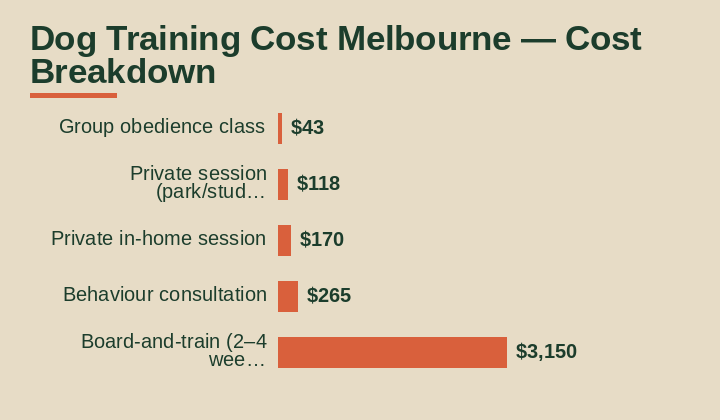
- Group obedience classes (per session): $25 to $60
- Private sessions (studio or park-based): $85 to $150 per session
- Private in-home sessions: $120 to $220 per session
- Behaviour consultation (initial, specialist): $180 to $350
- Board-and-train (2 to 4 weeks residential): $1,800 to $4,500
Inner suburbs like Fitzroy, Richmond, and South Yarra tend to sit at the top end of those ranges. Out in Frankston, Berwick, or Werribee, you’ll often pay 15 to 25% less for equivalent service quality.
Dog training costs across Australia by state
If you’re moving interstate or just want context on whether Melbourne is good value, here’s how it compares. These figures are for a standard one-hour private obedience session.
| State | Average Cost | Typical Range |
|---|---|---|
| NSW | $155 | $95 to $230 |
| VIC | $145 | $85 to $220 |
| QLD | $130 | $75 to $195 |
| WA | $135 | $80 to $200 |
| SA | $120 | $70 to $180 |
| TAS | $110 | $65 to $160 |
| ACT | $150 | $90 to $210 |
| NT | $105 | $60 to $155 |
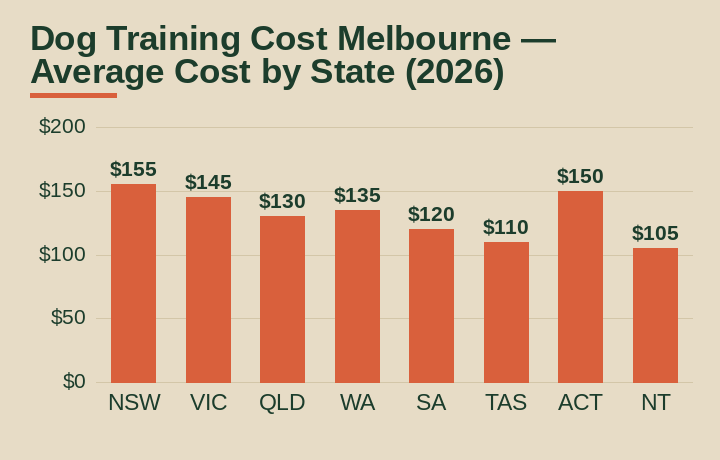
Melbourne is roughly in line with Sydney but noticeably cheaper. Regional Victoria sits well below metro Melbourne rates, usually $65 to $110 for a private session.
Group class vs private training vs board-and-train: the real trade-offs
This is where most Melbourne dog owners get confused. More expensive doesn’t automatically mean better outcomes. Each format suits different dogs and situations.
| Format | Typical Cost (Melbourne) | Best For | Limitations |
|---|---|---|---|
| Group obedience class | $25 to $60/session | Puppies, basic obedience, socialisation | Less individual attention; not suitable for reactive dogs |
| Private session (park/studio) | $85 to $150/session | Targeted skills, owner education | Requires owner follow-through at home |
| Private in-home session | $120 to $220/session | Behavioural issues in the home environment | More expensive; not needed for general obedience |
| Behaviour consultation | $180 to $350 initial | Aggression, anxiety, reactivity | Specialist rates; ongoing sessions add up |
| Board-and-train (2 to 4 weeks) | $1,800 to $4,500 | Fast results, busy owners, complex cases | Skills may not transfer without owner training at end |
The board-and-train option gets a lot of marketing attention. Worth noting: the training your dog does with the trainer doesn’t automatically stick once they’re home with you. Good programs include handler sessions at the end. If the one you’re looking at doesn’t, ask why not.
Where the money actually goes: what drives dog training cost Melbourne
Trainer qualifications and experience
Australia’s dog training industry is completely unregulated. Anyone can hang up a shingle and charge $200/session with zero formal training. Trainers with a Certificate IV in Companion Animal Services or Delta Society accreditation have completed genuine study and practical assessment. They typically charge $120 to $220/session versus $70 to $110 for unaccredited trainers. The gap is often worth it, especially for complex behavioural issues. Cheap training that doesn’t work ends up costing more than getting it right the first time.
Dog breed and behaviour complexity
A well-socialised 10-week-old Labrador in a group class? Straightforward. A 3-year-old German Shepherd with leash reactivity and resource guarding? That’s specialist territory. Trainers price for complexity. Reactive or aggressive dogs require individual sessions with higher liability, typically $150 to $350/session in Melbourne. Even within private sessions, a Staffy puppy learning basic manners will be resolved faster than a rescue with unknown history. Fewer sessions means lower total cost. A puppy school program for basic socialisation sits in a completely different category to adult behaviour modification work.
Session format and location
In-home sessions cost more because the trainer travels to you and works in your actual environment. That’s genuinely useful if the issue is home-specific (door dashing, aggression towards visitors, etc.), but overkill for teaching loose-lead walking. Park or studio-based private sessions are $25 to $70 cheaper per appointment. Over 8 sessions, that’s $200 to $560 in savings. Worth thinking about what you actually need.
Inner Melbourne vs outer suburbs
Trainer overheads in inner-city suburbs are higher. A private session in Fitzroy or St Kilda runs $150 to $220. The same quality trainer operating out of Dandenong or Melton typically charges $95 to $140. Travel fees can also apply if you’re booking a mobile trainer from inner Melbourne to come to an outer suburb. Check whether the quoted rate includes travel or adds it separately. Using mobile pet services generally adds a travel component regardless of the service type.
Program length and package structure
One-off sessions are more expensive per unit than packaged programs. A single private session might cost $160, but a 6-session package with the same trainer might work out to $115/session. That’s a saving of $270 over the program. Most Melbourne trainers offer packages; ask before assuming you have to pay per-session. If you have a dog with ongoing needs, the package maths usually stack up well. You can also keep training costs in perspective alongside other pet expenses like dog vaccination costs and desexing costs when budgeting for the year.
Recommended Products for Dog Training Cost Melbourne
If you’re tackling this yourself, here are some products from Amazon Australia that can help (these are affiliate links):
Questions to ask before you book a dog trainer in Melbourne
What training methods do you use?
This matters more than most people realise. Force-free, positive reinforcement-based training has the strongest evidence base and is less likely to worsen anxiety or aggression. Trainers who use punishment-based tools (prong collars, e-collars, alpha rolls) can make behavioural problems worse, not better. Listen for clear language about reward-based methods. Vague answers like “balanced training” often mean aversive tools are in the toolkit.
What qualifications or accreditations do you hold?
A legitimate answer includes a specific certification: Certificate IV in Companion Animal Services, Delta Society accreditation, PPGA membership, or similar. “I’ve been training dogs for 20 years” is not a qualification. Experience matters, but so does formal knowledge of animal learning theory, especially for behaviour cases. The Australian Veterinary Association recommends trainers who work collaboratively with vets on behaviour issues.
Is the quoted price per session or for a full program?
Some Melbourne trainers quote a low per-session rate but assume you’ll need 12+ sessions. Others quote a flat program fee. These aren’t comparable on face value. Ask specifically: what does a typical dog like mine need, and what’s the likely total cost? A trainer who won’t estimate total cost is either unsure of their method or not being straight with you.
Will you teach me how to handle my dog, not just train the dog?
This is the question that separates average trainers from good ones. Training the dog without training the owner produces results that evaporate within weeks. A good Melbourne trainer will spend significant time teaching you the commands, timing, and consistency required. If the answer is vague, that’s a red flag. With board-and-train especially, handler sessions at the end are non-negotiable for lasting results.
Do you offer follow-up support between sessions?
Some trainers include brief email or message support between sessions; others charge for every contact. If your dog has a setback between appointments, knowing you can check in quickly without a $150 consult fee is genuinely valuable. Ask what’s included before you commit.
Can you provide references or recent client results?
Reputable Melbourne trainers will have client references or verifiable reviews. Google reviews, Facebook recommendations, and word-of-mouth in local dog owner groups are all worth checking. Be cautious of trainers with only testimonials on their own website. That’s not independent verification.
How to bring the dog training cost Melbourne down
- Start with group classes for basic obedience: Most Melbourne dogs doing basic manners training don’t need private sessions. Group classes at $25 to $60 per session versus $120 to $220 for private in-home is a substantial difference over 6 to 8 weeks. Save the private sessions for specific behavioural issues that genuinely need individual attention.
- Buy a session package upfront: Packages typically save $20 to $40 per session compared to casual rates. Over a 6-session program, that’s $120 to $240 back in your pocket. Most trainers offer them. Ask before assuming casual rates are the only option.
- Practise consistently at home: Dogs that get 15 minutes of daily reinforcement between sessions learn faster and need fewer total sessions. Using a clicker training kit at home to reinforce session work costs under $20 and could easily cut 2 to 3 sessions off your program. That’s $170 to $450 in savings.
- Check council programs: Several Melbourne councils run subsidised or free basic obedience programs tied to responsible pet ownership schemes. Yarra, Moreland, and Whitehorse have run these in recent years. Worth a quick check on your council’s website before paying full commercial rates.
- Invest early in puppy school: Skipping puppy school and hoping for the best tends to create expensive problems later. Reactivity and anxiety cases in adult dogs cost $1,500 to $3,000+ to address properly. A $250 puppy program is cheap insurance. The MoneySmart guide to getting a pet explicitly flags training as one of the ongoing costs owners underestimate. Worth factoring in before you bring a dog home.
- Consider the location trade-off: If you live in inner Melbourne but your dog doesn’t have location-specific issues, driving 30 minutes to a trainer in Dandenong or Sunshine can save $30 to $80 per session. Over 8 sessions, that’s $240 to $640 for potentially identical training quality. Use a good treat pouch and you’re set for the commute practice too.
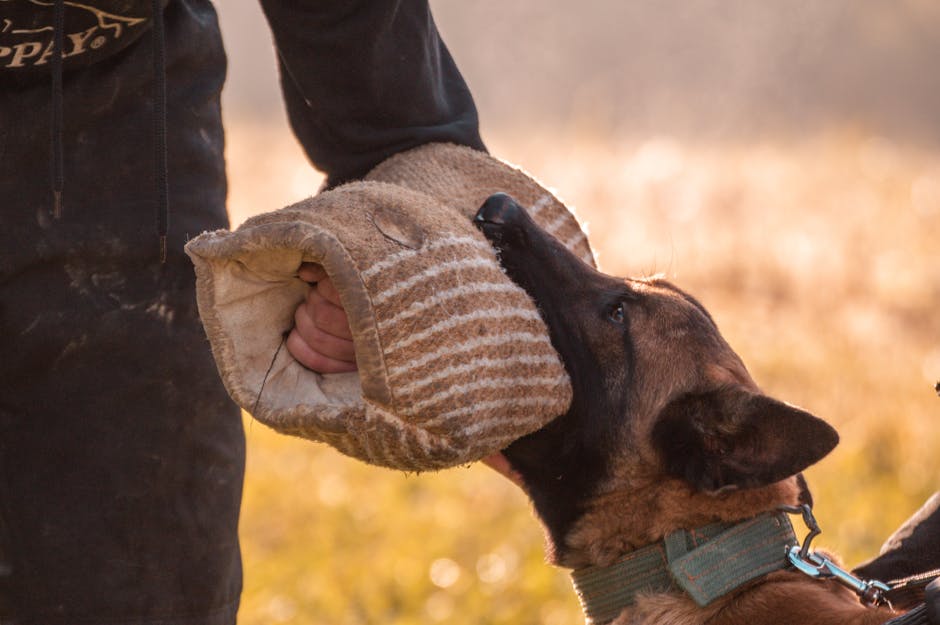
Dog training cost Melbourne honestly depends on what your dog needs, not just what’s convenient. For a puppy with no behavioural issues, group classes are excellent value and cover the fundamentals well. For a reactive adult dog or a breed with complex drives, invest in a qualified specialist rather than cycling through cheap sessions that don’t move the needle. Get the qualifications question answered before you book, compare package rates against casual pricing, and practise consistently at home. That combination will keep your total cost well below what most Melbourne dog owners end up spending.
FAQs about dog training cost Melbourne
How much does a dog trainer cost in Melbourne per session?
A private dog trainer in Melbourne typically charges $85 to $200 per session for in-home visits, and $60 to $120 for studio-based one-on-ones. Group classes are far cheaper, usually $25 to $60 per session. Trainers with specialist qualifications or aggression experience often charge $150 to $250 per session.
Are group dog training classes worth it in Melbourne?
For most dogs, yes. Group classes cover the core obedience fundamentals (sit, stay, recall, loose-lead walking) at a fraction of the private session cost, and the social environment is genuinely useful for young dogs. If your dog has specific behavioural issues like reactivity or aggression, you’ll need private sessions regardless. You can read more about the broader puppy school costs across Australia to compare formats.
How many training sessions does a dog typically need?
A well-socialised puppy working through basic obedience usually needs 6 to 8 group class sessions. Dogs with reactivity, anxiety, or aggression issues can need 8 to 15 private sessions spread over several months. Honest trainers will give you a rough timeline upfront; be cautious of anyone who won’t commit to even a ballpark figure.
What’s the difference between board-and-train and private sessions in Melbourne?
Board-and-train means your dog lives with the trainer for 2 to 4 weeks and receives daily intensive training, costing $1,800 to $4,500 in Melbourne. Private sessions are cheaper per unit but require you to do the follow-up work at home. Board-and-train can produce faster results, but the skills don’t always transfer if you don’t do the handler training at the end. It’s not a set-and-forget solution.
Does Melbourne have cheap or free dog training options?
Some Melbourne councils subsidise basic obedience classes or include them in responsible ownership programs. The RSPCA and some rescue organisations also run low-cost classes. Community Facebook groups sometimes organise informal group sessions in local parks. These are worth exploring if the budget is tight, though consistency and qualified instruction matter a lot for results. You might also want to budget for related costs like dog boarding or mobile dog grooming as your dog gets more socialised and active.
People Also Ask About Dog Training Cost Melbourne
Is dog training tax deductible in Australia?
Generally no, not for household pets. Dog training costs are considered personal expenses. The exception might be working dogs used in a business (like a farm dog), where some training costs could potentially be claimed. Talk to your accountant if this applies to your situation.
How do I find a certified dog trainer in Melbourne?
Look for trainers accredited through the Delta Society Australia, the Pet Professional Guild Australia, or those holding a Certificate IV in Companion Animal Services. The Pet Industry Association of Australia maintains a directory of registered professionals. These credentials mean the trainer has completed formal study, not just accumulated years of experience.
Can I train my dog myself instead of paying a Melbourne trainer?
For basic obedience, yes. There are solid online courses and books that cover sit, stay, recall, and loose-lead walking adequately. Where self-training falls short is with behavioural issues like reactivity, fear, or aggression, which genuinely need a professional’s eyes on the dog in context. DIY for the basics; get help for the serious stuff.
What age should I start dog training in Melbourne?
Puppies can start socialisation and basic training from 8 weeks, and most Melbourne puppy schools accept dogs from 8 to 16 weeks. The earlier you start, the easier and cheaper the overall process tends to be. Adult dogs can still be trained, but ingrained behaviours take longer to address, which usually means more sessions and higher total cost over time.
Do Melbourne dog trainers charge more for aggressive dogs?
Yes, typically. Trainers who specialise in aggression, reactivity, or fear-based behaviour usually charge $150 to $350 per session because the work requires specialist knowledge and higher liability. Some trainers won’t take on aggressive dogs at all, so budget for a specialist if this applies. It’s also worth knowing what other dog care costs to expect, like pet vaccination costs and grooming costs, to get a complete picture of annual dog ownership expenses.
Related Cost Guides
This guide contains affiliate links. We may earn a small commission from qualifying purchases at no extra cost to you.