
Dog desexing cost Sydney is one of those things that varies far more than most owners expect. The same procedure on a similar-sized dog can cost $220 at a Western Sydney clinic and $580 at a Newtown vet around the corner from a café with exposed brick walls. The dog doesn’t care about the décor. You probably shouldn’t either. According to the Australian Veterinary Association’s report on rising pet ownership costs, more Australian households are feeling the financial pressure of routine procedures like desexing, and shopping around is now genuinely necessary.
Dog desexing cost Sydney typically runs $250 to $500 for females and $180 to $380 for males, depending on the dog's size and the vet's location. Inner-city clinics in Newtown or Surry Hills often charge $380 to $600+, while outer suburbs like Penrith or Liverpool can be $50 to $120 cheaper. Rescue and low-cost programs can bring the price down to $150 to $220 for eligible owners.
Prices updated July 2026 from current Australian sources.
| Dog | Typical Sydney price | Notes |
|---|---|---|
| Male dog (neuter) | $180 to $380 | Varies with dog size |
| Female dog (spey) | $250 to $500 | More complex surgery |
| Inner-city clinics | $380 to $600+ | Newtown, Surry Hills |
| Rescue / low-cost program | $150 to $220 | For eligible owners |
The price depends heavily on your dog’s size and weight (more anaesthetic for bigger dogs) and the clinic’s location. Outer suburbs like Penrith or Liverpool run $50 to $120 cheaper. Pre-surgery bloods, pain relief and any complications are extra.
Sources (July 2026): National Desexing Network, RSPCA Australia, PetCloud, Vet prices in Australia
This guide breaks down realistic Sydney prices by dog size, sex and location. No fluff. If you want the full national picture, check the dog desexing cost across Australia overview as well.
What desexing a dog in Sydney actually costs in 2026
For most Sydney dogs, the realistic price range sits between $180 and $600. Males are cheaper. Small dogs are cheaper. Inner-city vets are more expensive. That’s the short version.
A male Cavoodle in Parramatta might be quoted $195 to $240. A large female Kelpie at a Bondi Junction clinic could run $520 to $650. The procedure itself is the same, anaesthesia, surgical sterilisation, recovery monitoring, discharge with pain relief. What changes is the overhead cost of running that clinic.
| Dog Size | Male (Castration) | Female (Spay) |
|---|---|---|
| Small (under 10kg) | $180 to $280 | $280 to $400 |
| Medium (10 to 25kg) | $240 to $350 | $350 to $500 |
| Large (25 to 40kg) | $300 to $420 | $430 to $600 |
| Extra Large (40kg+) | $380 to $500 | $520 to $750+ |
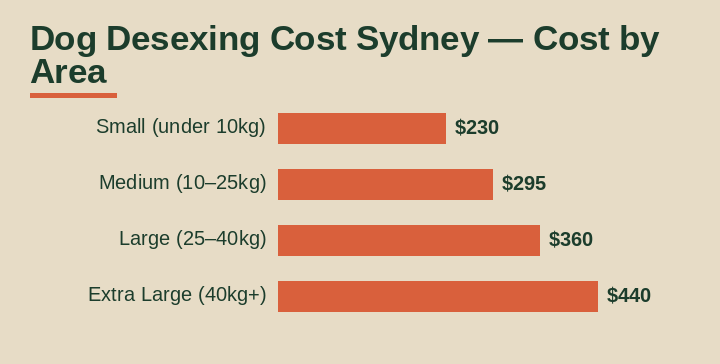
Females cost more across the board because spaying is an internal abdominal procedure requiring longer anaesthesia time. Castration is comparatively straightforward. That’s not a vet upsell, it’s just the nature of the surgery.
Sydney prices by suburb and region
Geography matters more in Sydney than in any other Australian city, largely because the cost of running a vet clinic in Surry Hills versus Campbelltown is dramatically different. Those rent and wage differences flow directly to your invoice.
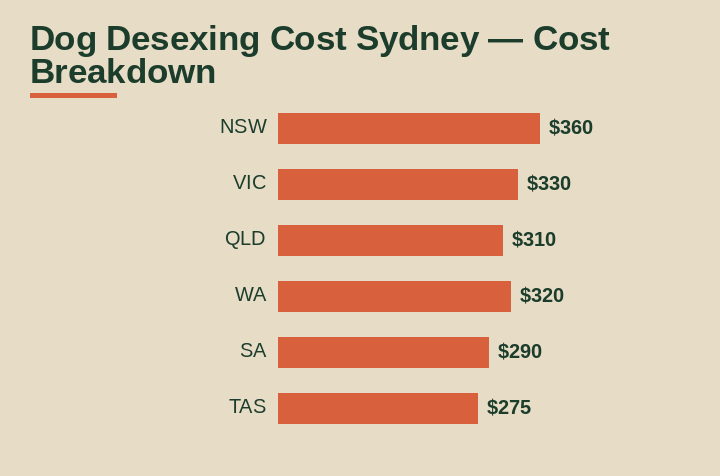
| State | Average Cost | Typical Range |
|---|---|---|
| NSW | $360 | $180 to $750 |
| VIC | $330 | $180 to $680 |
| QLD | $310 | $160 to $620 |
| WA | $320 | $170 to $640 |
| SA | $290 | $160 to $580 |
| TAS | $275 | $150 to $520 |
| ACT | $340 | $200 to $650 |
| NT | $300 | $170 to $560 |
Sydney consistently sits at the top of Australian vet pricing. The inner suburbs (Newtown, Balmain, Surry Hills, Paddington) tend to run 25 to 35% above what you’d pay in outer western suburbs like Penrith, Blacktown or Campbelltown. Same procedure. Different postcode.
Where the money actually goes
Dog size and the anaesthesia factor
Bigger dogs need more anaesthetic agent, longer monitoring time and more consumables. A 6kg Maltese Shih Tzu might be under for 35 to 45 minutes. A 38kg Rottweiler could be under for 75 to 90 minutes. That difference in nursing time, drug volume and surgeon focus time is real, and it’s why size-based pricing isn’t just price-gouging. An extra-large female in Sydney can legitimately cost $600 to $750 at a mid-range clinic.
Clinic location within Sydney
Inner-eastern suburbs like Double Bay and Woollahra routinely quote $480 to $650 for a mid-sized female spay. Head out to Mount Druitt or St Marys and the same procedure runs $280 to $380. The difference comes down to commercial rent and wage costs, not surgical quality. Worth knowing: a busy suburban vet in Western Sydney often performs more desexing procedures per week than a boutique inner-city clinic, which means more practice, not less.
Pre-surgical blood testing
Many Sydney vets now recommend (or require for older dogs) a pre-anaesthetic blood panel to check kidney and liver function before going under. This typically adds $80 to $120 to the total cost. Some clinics bundle it into their quoted price; others list it separately. For dogs under 2 years in good health, some vets consider it optional, but ask the question rather than assuming it’s included.
Pain relief and take-home medications
Post-operative pain relief, anti-inflammatories and sometimes antibiotics are standard. The issue is whether they’re wrapped into the quoted price or charged separately at pickup. A standard course of post-op meloxicam in Sydney runs $25 to $55. Ask upfront. You can also check out the mobile vet cost breakdown if you’d prefer a vet to do the post-op check at home.
In-heat or pregnant females
If your female dog is desexed while in season or pregnant, expect to pay an additional $80 to $200 on top of the standard spay price. The surgery is more complex due to increased blood supply to reproductive organs. At some inner-city Sydney clinics this surcharge can push the total past $750 for a large breed. Desexing before the first heat genuinely saves money, not just medically but financially.
For context on what full preventative care costs across a dog’s lifetime, the MoneySmart pet ownership cost overview is worth a look before you add up all the line items.
Recommended Products for Dog Desexing Cost Sydney
If you’re tackling this yourself, here are some products from Amazon Australia that can help (these are affiliate links):
Questions to ask before you book
Is the quoted price all-inclusive or a base rate?
Some Sydney vet quotes cover surgery, anaesthesia, monitoring and one night of post-op care. Others are bare-bones and exclude blood work, pain relief, the e-collar and the follow-up check. The gap between an all-in price and an itemised one can be $100 to $200. Ask them to itemise everything before you confirm.
Does your dog need pre-anaesthetic blood work?
For puppies under 12 months in good health, some vets consider it optional. For dogs over 5 years or with any known health conditions, it’s usually non-negotiable. Knowing this upfront prevents bill-shock at checkout. A basic at-home dog health screening kit won’t replace a vet blood panel, but it can flag anything obvious before the appointment.
What happens if there are complications during surgery?
Most routine desexing goes smoothly, but complications do occur. Ask the clinic whether any complication costs are absorbed into the original quote or charged additionally. A cryptorchid male dog (undescended testicle) requires a more invasive procedure that can add $150 to $300 to the quoted price, this isn’t always flagged pre-operatively unless the vet has done a physical exam first.
Is a follow-up check included in the price?
Most Sydney vets include a post-op stitch check at 10 to 14 days. Not all do. At clinics that charge separately, an additional consultation runs $65 to $95. Confirm this is included before you hand over your card.
Do you offer any concession or multi-pet discounts?
Some clinics offer 10 to 15% discounts for pensioner card holders or if you’re booking two pets at once. It’s rarely advertised, you have to ask. If you have a second dog or a cat due for desexing, booking together can save $60 to $120. See how cat-related vet costs add up too if you’re a multi-pet household.
How experienced is the vet performing the procedure?
This isn’t about distrust, it’s about knowing who’s operating. Larger clinics sometimes use rotating junior vets for elective procedures. There’s nothing wrong with that, but if you’d prefer a senior vet or one you know, ask when booking. It might change which time slot you pick.
How to bring the cost down
- Use a subsidised program if you qualify. RSPCA Sydney and select council programs offer desexing from $150 to $220 for concession card holders. That’s a saving of $100 to $250 compared to a standard suburban vet.
- Compare outer-suburb clinics first. Vets in Penrith, Liverpool or Campbelltown typically charge 20 to 35% less than inner-city clinics. Driving an extra 30 minutes can realistically save $80 to $150.
- Get at least three written quotes. Ring around with your dog’s breed, age and approximate weight. Prices for the same procedure genuinely vary $150 to $200+ across Sydney clinics. Don’t assume your local vet is the cheapest.
- Ask what’s included in the quoted price. Some quotes wrap the pre-anaesthetic blood panel, pain relief and an e-collar into the base fee. Others don’t. Knowing this upfront prevents a $120 surprise at pickup. A soft recovery collar from a pet store runs $15 to $30 if yours isn’t included.
- Desex before the first heat. Spaying before your female’s first season is medically simpler and some vets charge $20 to $50 less for it. Long term, it also dramatically reduces the risk of mammary tumours and pyometra, which are far more expensive to treat.
- Check council registration discounts. Several Sydney councils offer cheaper annual registration rates for desexed dogs. In some LGAs the saving is $50 to $100 per year, which offsets a chunk of the upfront surgery cost over time.
If you’re weighing up other ongoing pet health costs, the dog vaccination cost breakdown and the full pet vaccination cost overview are worth reading back to back.
Is it worth going to a lower-cost vet for desexing?
Honestly, yes, with caveats. A bulk-billing suburban vet that does 10 desexing procedures a week is often more experienced with the routine than a boutique inner-city clinic that does two. Price doesn’t equal quality here. What matters is that the clinic is accredited, the vet is experienced with the procedure, and the post-op care is solid.
What you shouldn’t do is choose purely on price without checking reviews or asking about the vet’s experience. A $180 quote that leads to a complication and a $900 corrective procedure isn’t a saving. Check Google reviews, ask for recommendations in local Facebook groups, and don’t be afraid to ask the clinic direct questions.
For more context on what pet ownership actually costs across the board, Animal Medicines Australia’s 2025 Pets in Australia report has solid data on what Australians are spending. Related guides worth reading: pet dental cleaning costs, puppy school prices in Australia, and if you’re ever moving interstate with your dog, the pet transport interstate cost breakdown is genuinely useful.
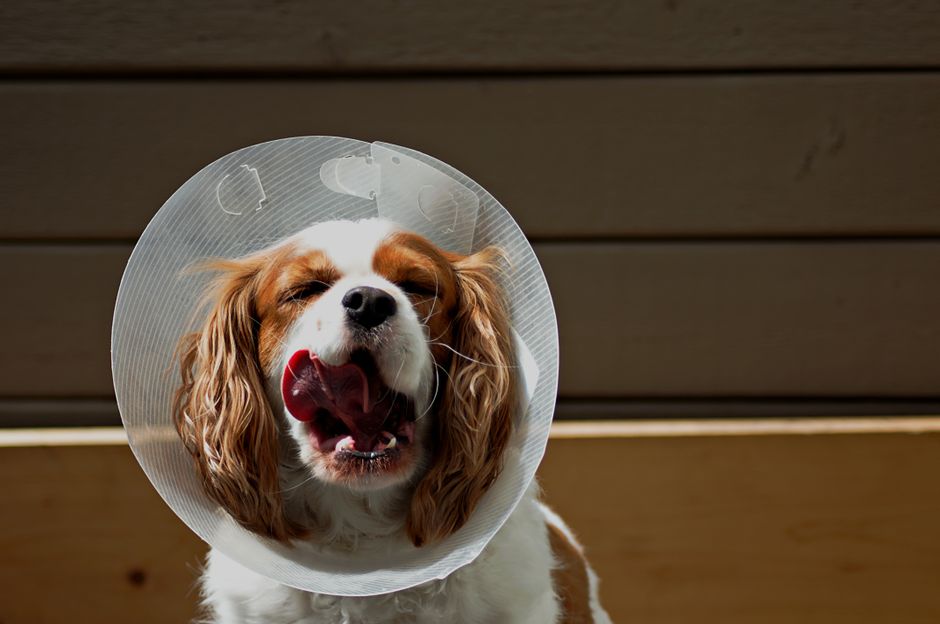
Cat desexing in Sydney is generally cheaper, female cats typically run $150 to $280 and males $120 to $200, compared to higher dog prices. If you have both pets due for desexing, booking them on the same day at the same clinic sometimes unlocks a small discount worth asking about.
FAQs about dog desexing cost Sydney
How much does it cost to desex a female dog in Sydney?
Spaying a female dog in Sydney typically costs $280 to $600 depending on size and clinic location. A small female under 10kg runs $280 to $380 at most suburban vets. A large breed female over 30kg can push $500 to $750 at inner-city clinics, partly due to the longer anaesthesia time and complexity of the procedure.
How much does it cost to desex a male dog in Sydney?
Castrating a male dog in Sydney generally costs $180 to $450. Small males are at the lower end, around $180 to $280 at outer-suburb vets. Larger breeds like Labradors or German Shepherds typically run $300 to $450. The procedure is simpler than spaying, which is why males are consistently cheaper to desex.
Is there cheap dog desexing available in Sydney?
Yes. The RSPCA Sydney and a handful of community vet programs offer subsidised desexing from $150 to $220 for eligible owners, including pensioners and concession card holders. Some councils also run periodic low-cost desexing days. Wait times can be 4 to 8 weeks, but the savings are real.
What age should I desex my dog in Sydney?
Most Sydney vets recommend desexing between 5 to 6 months of age for small to medium breeds. For larger breeds like Rottweilers or Great Danes, some vets now suggest waiting until 12 to 18 months to allow for skeletal development. Ask your vet for a breed-specific recommendation rather than going by general age guides alone.
Does pet insurance cover desexing in Sydney?
Most standard pet insurance policies in Australia do not cover desexing because it’s classified as an elective procedure. Some wellness add-on packages do include it, so check the product disclosure statement before assuming. If you’re buying insurance, compare policies before your dog reaches the typical desexing age.
People Also Ask About Dog Desexing Cost Sydney
Can I desex my dog at a vet school in Sydney?
The University of Sydney’s Faculty of Veterinary Science doesn’t offer public clinical services for routine desexing. Your best bet for reduced-cost procedures remains community vet programs or RSPCA clinics rather than teaching hospitals, which are typically referral-based.
How long does dog desexing recovery take?
Most dogs are back to normal activity within 10 to 14 days. The first 48 to 72 hours post-surgery are the most critical, dogs need to be kept calm and prevented from licking the incision. Full internal healing takes around 4 to 6 weeks, so no vigorous running or jumping during that period.
Will my dog’s personality change after desexing?
Desexing reduces hormone-driven behaviours like roaming, mounting and territory marking, particularly in males. It doesn’t change a dog’s core personality. Some owners notice their dog becomes slightly calmer, which is generally seen as a positive rather than a negative outcome.
Do I need a follow-up vet visit after desexing?
Most Sydney vets include a complimentary post-op check 10 to 14 days after surgery to inspect the incision site and remove any external stitches. Confirm this is included in your quoted price before booking, since some clinics charge a separate consultation fee for the follow-up.
Is it cheaper to desex a dog or a cat in Sydney?
Related Cost Guides
This guide contains affiliate links. We may earn a small commission from qualifying purchases at no extra cost to you.