
Owning a Labrador catches a lot of first-time owners off guard on price. The purchase price is just the beginning. In 2026, a registered Labrador pup from a reputable ANKC breeder runs $2,500 to $4,500, and you’ll spend nearly that much again in the first year once food, vet bills, setup gear and training are factored in. According to Animal Medicines Australia’s 2025 Pets in Australia report, dogs remain the most commonly owned pet in the country, and Labradors consistently rank among the most popular breeds.
Labrador ownership cost Australia sits at roughly $3,000 to $6,500 in the first year, dropping to $2,500 to $4,500 per year after that. Food runs $900 to $1,800 annually, vet costs vary widely but budget at least $600 to $1,200 in a healthy year, and one-off setup costs like crates, beds and leads add $400 to $800 upfront. A registered breeder pup costs $2,500 to $4,500 in 2026.
Prices updated July 2026 from current Australian sources.
| Cost | Typical range | Notes |
|---|---|---|
| First year | $3,000 to $6,500 | |
| Ongoing per year | $2,500 to $4,500 | |
| Food per year | $900 to $1,800 | Labs are large and food-motivated |
| Purchase (registered breeder) | $2,500 to $4,500 |
One-off setup like crates, beds and leads adds $400 to $800 up front. Labs are prone to weight gain and joint issues, so budget for good food and vet care.
Sources (July 2026): Animal Medicines Australia, Pets in Australia 2025, RSPCA Australia, Adopt a pet, PetRescue, Adopt a pet
That popularity hasn’t made them cheap to own. If anything, the demand keeps breeder prices high. The MoneySmart pet ownership guide recommends budgeting well beyond the purchase price, and with a breed as food-driven, exercise-dependent and health-prone as a Labrador, that advice is particularly relevant.
What you’ll typically pay: Labrador costs across Australia in 2026
Prices vary by state, driven mostly by breeder density, local vet competition and the cost of living in each area. Regional Queensland breeders often list pups at the lower end of the range; Sydney and Melbourne breeders tend to sit higher. Here’s a state-by-state breakdown covering first-year total cost (purchase price plus year-one running costs).
| State | Average First-Year Cost | Typical Range |
|---|---|---|
| NSW | $5,200 | $3,800 to $7,500 |
| VIC | $5,000 | $3,700 to $7,200 |
| QLD | $4,600 | $3,200 to $6,800 |
| WA | $4,800 | $3,400 to $7,000 |
| SA | $4,400 | $3,100 to $6,500 |
| TAS | $4,200 | $2,900 to $6,200 |
| ACT | $5,100 | $3,600 to $7,300 |
| NT | $4,500 | $3,000 to $6,600 |
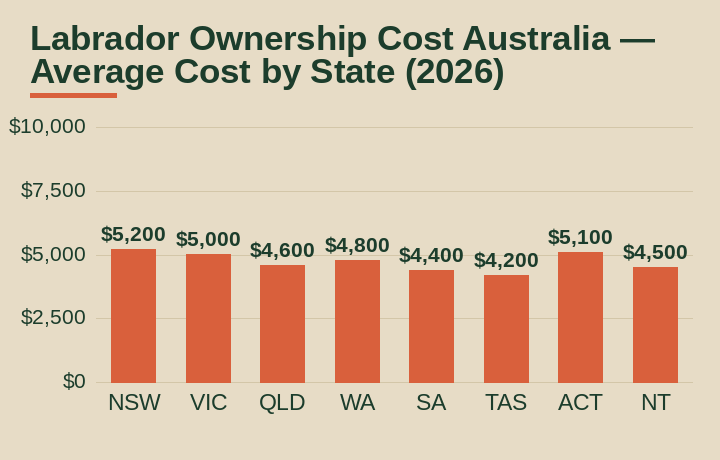
After the first year, annual ongoing costs (excluding major health events) typically land between $2,500 and $4,500 across most states. Sydney and Canberra owners consistently report the higher end due to vet consultation fees and boarding rates.
What’s included and what costs extra
There’s a common misconception that once you buy the dog, the big costs are done. They’re not. The purchase price is one line item in a much longer list. Some costs are predictable and annual; others are one-off but significant. Here’s how they split up.
| Standard / Recurring Cost | One-Off or Optional Extra |
|---|---|
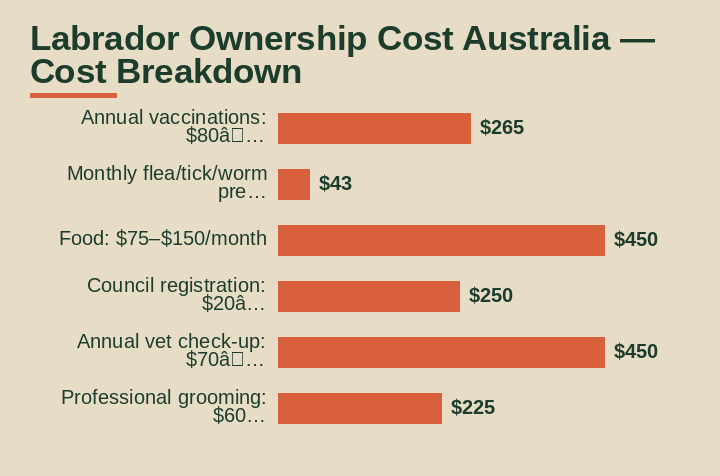
| Annual vaccinations: $80 to $170 | Initial puppy vaccination course: $180 to $350 |
| Monthly flea/tick/worm prevention: $30 to $60 | Microchipping (once): $25 to $60 |
| Food: $75 to $150/month | Desexing: $250 to $650 (once) |
| Council registration: $20 to $250/year | Dog crate and bed: $150 to $350 |
| Annual vet check-up: $70 to $140 | Hip/elbow x-ray screening: $300 to $600 |
| Professional grooming: $60 to $90 per session | Obedience training course: $150 to $300 |
| Pet insurance: $600 to $1,400/year | Hip dysplasia surgery: $3,000 to $7,000 per joint |
| Dog walking or daycare: $25 to $55/day | Emergency vet visit: $300 to $2,500+ |
The optional column is where people get stung. A cruciate ligament surgery, an emergency bloat presentation, or a week of dog boarding while you travel, these aren’t rare events for Labrador owners. Budget for at least one per year.
Where the money actually goes: five factors that drive the cost
1. Purchase price and source
A registered ANKC Labrador breeder in NSW or VIC charges $2,800 to $4,500 in 2026. Some with show champion bloodlines or imported sires push past $5,000. That’s for a puppy with health-tested parents, a vet check and usually first vaccinations included.
Rescue Labs are a different story. Breed-specific rescues like Labrador Rescue Australia charge $350 to $600 in adoption fees. That typically includes desexing, microchipping, vaccinations and a basic health check. For the budget-conscious, this is genuinely hard to beat on value. See our guide to dog vaccination costs in Australia to understand what’s covered at those initial vet visits.
2. Food quality and feeding method
Labradors are large dogs with big appetites and an absolute inability to self-regulate. A 30kg adult Lab needs roughly 400 to 500g of dry kibble per day, depending on activity level. On a mid-range brand like large breed dry food for Labradors, that’s around $90 to $120 per month.
Raw feeders typically spend more, $130 to $180 per month for a Lab-sized dog, though costs vary by what meat sources you use. Switching to premium prescription food for weight management (common in the breed) can add another $30 to $50 per month. Obesity in Labs is genuinely common and leads to expensive joint and metabolic problems down the track.
3. Health issues specific to the breed
This is the one most people underestimate. Labradors carry a higher-than-average genetic risk for hip dysplasia, elbow dysplasia, exercise-induced collapse and obesity-related conditions. A single total hip replacement in a dog under 10 costs $5,500 to $8,000 at a specialist centre in Sydney or Melbourne. Even a less invasive procedure like a femoral head osteotomy runs $2,500 to $3,500.
Comprehensive pet insurance for a Labrador puppy typically costs $55 to $115 per month in 2026, that’s $660 to $1,380 per year. Worth it? For this breed specifically, yes. The AVA has flagged that cost pressures are causing owners to delay or avoid treatment, insurance removes that dilemma. Check our breakdown of pet vaccination costs to understand what’s typically covered by insurers versus what you’ll pay out of pocket.
4. Location and lifestyle
An owner in Paddington or Surry Hills with a full-time job is looking at dog walker fees ($25 to $40 per walk, five days a week), potential doggy daycare ($40 to $55 per day) and professional grooming at inner-city rates. That easily adds $4,000 to $7,000 per year in lifestyle costs alone.
The same dog in regional SA or outer Hobart, with a big backyard and a work-from-home owner, costs far less to maintain. Location doesn’t just affect vet and breeder prices; it affects how you have to manage the dog’s exercise and social needs. Labs need a lot of both.
5. Training and containment
Labradors are mouthy, energetic puppies that need proper training or they’ll destroy your house. Puppy school runs $150 to $300 for a 5 to 6 week group course. If your Lab develops reactive behaviour or aggression (rare but not unheard of), private sessions at $100 to $150 each add up fast. Proper fencing, especially for a dog that can jump or dig, can cost $1,500 to $3,500 to install correctly.
Our guide to puppy school costs in Australia covers group versus private options in detail, including what to look for in a trainer.
Recommended Products for Labrador Ownership Cost Australia
If you’re tackling this yourself, here are some products from Amazon Australia that can help (these are affiliate links):
Questions to ask before you bring one home
Can I see the hip and elbow scores for both parents?
OFA or AVA hip scores for parent dogs are the single most useful predictor of whether your pup will face expensive joint surgery later. A responsible breeder will have these on hand. If they can’t provide them, walk away. Seriously.
What does the puppy contract cover if health issues emerge?
Some reputable breeders offer a health guarantee for the first 12 to 24 months covering genetic conditions. The terms vary widely. Ask specifically what’s covered and what the process is, you don’t want to be negotiating this after a $4,000 vet bill.
What’s included in the purchase price?
Find out whether the price includes first vaccinations, microchipping, vet health certificate and puppy pack. Some breeders include all of this; others don’t. A pup that arrives without first vaccinations adds $180 to $350 to your immediate costs.
Is the vet you’re using ANKC-registered and familiar with Labs?
Not all vets have equal experience with Labrador-specific conditions. A vet who works regularly with large breeds will pick up early signs of joint problems faster, potentially saving you from costly late-stage interventions. Ask at the consultation, a good vet won’t be offended.
What’s the realistic cost of boarding or dog-sitting if I travel?
Dog boarding for a Labrador runs $45 to $85 per night at a reputable kennel, depending on location. A Lab in a home-stay via Madpaws or similar runs $40 to $70 per night. If you travel three times a year for two weeks total, that’s $630 to $1,190 in boarding costs annually. Worth factoring in before you commit. See our dog boarding cost breakdown for state-by-state rates.
Have I budgeted for an emergency vet fund?
An emergency after-hours vet visit in Sydney or Melbourne starts at $250 to $400 just to walk through the door, before any treatment. Labs eat things they shouldn’t (socks, corn cobs, rocks, all genuine risks). Set aside $1,000 to $2,000 as a dedicated emergency fund, separate from your insurance excess.
How to bring the cost down
Adopt instead of buying if you’re open to an adult dog. Rescue Labs are often two to five years old, past the destructive puppy phase, already trained and significantly cheaper. Adoption fees of $350 to $600 versus a $3,500 breeder pup is a meaningful difference. They’re also often already desexed, check our desexing cost guide to see what that saves you.
Get insurance early and don’t wait until problems appear. Every Australian pet insurer excludes pre-existing conditions. A Lab diagnosed with mild hip dysplasia at 18 months is suddenly uninsurable for orthopaedic conditions forever. Lock in cover before the first annual health check.
Buy a slow feeder bowl for your Lab from the start. Labs are prone to eating too fast, which increases bloat risk and contributes to obesity. A slow feeder costs $20 to $40 and genuinely reduces the amount of food needed to keep a dog satiated, which translates to lower monthly food bills.
Brush regularly at home to reduce professional grooming frequency. Labs have a short, dense double coat that sheds constantly. Weekly brushing with a deshedding tool keeps it manageable and means professional grooming two to three times a year instead of monthly. That’s a $200 to $350 annual saving. For context on what professional grooming actually costs, see our mobile vs salon grooming comparison.
Join a local Labrador owners’ group on Facebook or Meetup. These communities are genuinely useful for finding affordable, trusted local vets, group-buy opportunities on food, and dog-sitting swaps that avoid boarding fees entirely. Sounds minor, but I’ve seen owners save $400 to $600 a year just through informal networks.
You can also look at mobile vet services for routine check-ups, in some areas they’re competitively priced compared to clinic visits and save you the stress of getting a large dog in and out of a car.
Labrador ownership cost Australia is genuinely manageable if you go in with clear numbers and a realistic emergency fund. The breed is loyal, trainable and great with families, but they’re not a cheap pet. Budget honestly, insure early, and adopt if you can. The dogs that need homes are just as good as the ones in a breeder’s litter, and the savings are real.
Frequently Asked Questions
How much does a Labrador puppy cost in Australia in 2026?
From a registered ANKC breeder, expect $2,500 to $4,500 depending on lineage and location. Show-quality or imported bloodlines can push past $5,000. Rescue Labs through shelters or breed-specific rescues run $300 to $600 in adoption fees, which is worth considering.
What is the total annual cost of owning a Labrador in Australia?
After the first year, most Labrador owners spend $2,500 to $4,500 per year. Food is the biggest ongoing cost at $900 to $1,800, followed by vet care. If your dog develops a health condition like hip dysplasia or obesity-related issues, common in the breed, costs can climb significantly higher.
Is pet insurance worth it for a Labrador?
Honestly, yes. Labradors have a higher-than-average rate of hip dysplasia, elbow dysplasia and ligament injuries. A single cruciate repair surgery can cost $3,500 to $6,000. Comprehensive pet insurance runs $600 to $1,400 per year for a Lab, that’s cheaper than one major orthopaedic procedure.
How much does it cost to feed a Labrador per month?
Budget $75 to $150 per month depending on whether you feed premium dry food, raw, or a mix. A 30kg adult Lab on a mid-range kibble (like Hill’s Science Diet or Advance) will get through roughly 15 to 18kg of food per month.
Are Labradors expensive to groom compared to other breeds?
Not particularly. Labs have short, dense double coats that don’t need professional cuts, but they do shed heavily and need regular brushing and occasional professional baths. A professional bath and brush for a Lab runs $60 to $90 at most grooming salons, two to four times a year. Compare that to cat grooming costs, Labs are genuinely cheaper on this front.
People Also Ask About Labrador Ownership Cost Australia
How much do Labradors cost to desex in Australia?
Desexing a female Labrador typically costs $350 to $650 and a male $250 to $450, depending on the vet and your location. Inner-city Sydney and Melbourne vets sit at the higher end; regional or outer-suburban clinics are noticeably cheaper. Some councils and rescue organisations offer subsidised desexing programmes worth checking before you book.
What is the lifespan of a Labrador and how does that affect total ownership cost?
Labradors live an average of 10 to 12 years. Over a full lifetime, total ownership costs, excluding the purchase price, typically run $30,000 to $55,000 depending on health, insurance choices and lifestyle. Senior years (8 onwards) tend to be the most expensive due to increased vet visits, medications and potential specialist care.
How much does Labrador training cost in Australia?
Group puppy school costs $150 to $300 for a 4 to 6 week course. Private obedience training runs $80 to $150 per session. Labradors are generally easy to train, so most owners get good results from group classes rather than needing expensive one-on-one sessions. One round of puppy school is strongly recommended, it’s money well spent.
Are there ongoing council registration fees for owning a Labrador in Australia?
Yes. Council registration is mandatory in all Australian states and territories. Annual fees vary: a desexed dog typically costs $20 to $60 per year depending on the council, while an undesexed dog costs $100 to $250. Microchipping is a one-off cost of around $25 to $60 and is legally required in all states.
What health problems do Labradors commonly get and how much do they cost to treat?
Hip and elbow dysplasia are the most common serious conditions, with surgical treatment costing $3,000 to $7,000 per joint. Cruciate ligament ruptures are also common, running $3,500 to $6,000 per leg to repair. Obesity-related conditions are frequent too, Labs are notoriously food-motivated, and managing weight issues can add $300 to $800 in vet consultations and diet food annually.
Related Cost Guides
This guide contains affiliate links. We may earn a small commission from qualifying purchases at no extra cost to you.