Owning a husky is one of those things where the Instagram reality and the financial reality are very different. These dogs are striking, athletic and genuinely entertaining to live with. They’re also expensive, demanding and capable of destroying a backyard in an afternoon. According to Animal Medicines Australia’s 2025 Pets in Australia report, cost pressures are the number one reason Australian pet owners report struggling with ongoing ownership, and Huskies sit firmly at the expensive end of the spectrum.
Husky ownership cost Australia typically runs $3,800 to $6,500 in year one, dropping to $2,400 to $4,200 annually from year two onward. The purchase price alone ranges from $1,500 to $3,500 for a registered breeder pup. Add food, vet care, grooming and exercise needs and this is one of the more expensive breeds to run properly.
Prices updated July 2026 from current Australian sources.
| Cost | Typical range | Notes |
|---|---|---|
| First year | $3,800 to $6,500 | |
| Ongoing per year (year two on) | $2,400 to $4,200 | |
| Purchase (registered breeder) | $1,500 to $3,500 |
Huskies are high-energy, heavy-shedding dogs, so exercise, grooming and secure fencing all add to the real cost of running one properly.
Sources (July 2026): Animal Medicines Australia, Pets in Australia 2025, RSPCA Australia, Adopt a pet, PetRescue, Adopt a pet
This breakdown covers what you’ll actually spend across purchase price, food, vet bills, grooming, exercise and the bits people forget to budget for. MoneySmart’s pet ownership guide recommends factoring in at least 10 years of costs before committing to any dog, for a Husky, that calculation matters more than most.
What You’ll Typically Pay in 2026
The purchase price is just the entry fee. A Siberian Husky from a registered ANKC breeder costs $1,500 to $3,500 depending on lineage, health testing and breeder reputation. Backyard-bred dogs show up on Gumtree for $800 to $1,200, the saving is real, the risk is also real.
Year one costs are the steepest, combining the purchase price with setup costs, puppy vaccinations, desexing and all the gear. From year two, annual ongoing costs stabilise but stay high.
| State | Average Annual Cost (Yr 2+) | Typical Range |
|---|---|---|
| NSW | $3,400 | $2,600 to $4,800 |
| VIC | $3,200 | $2,500 to $4,500 |
| QLD | $3,100 | $2,400 to $4,300 |
| WA | $3,000 | $2,300 to $4,200 |
| SA | $2,900 | $2,200 to $4,000 |
| TAS | $2,700 | $2,000 to $3,700 |
| ACT | $3,300 | $2,500 to $4,500 |
| NT | $3,000 | $2,300 to $4,200 |
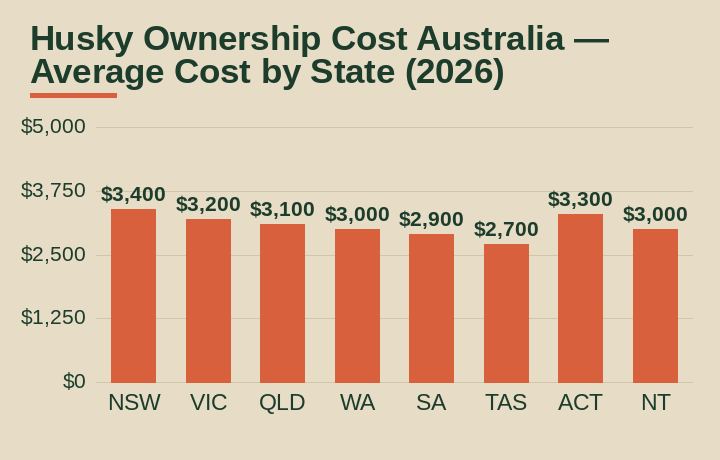
NSW costs sit higher because inner-Sydney vet clinics in suburbs like Surry Hills and Newtown charge significantly more for consultations and procedures than clinics in Penrith or the outer west. Inner-Melbourne is similar. Queensland’s lower average partly reflects more competitive vet pricing in outer Brisbane and the Gold Coast.
What’s Included, and What Costs Extra
People budget for the obvious stuff: food, vet checkups, a collar. The extras are what catch them off guard. This table separates what you can expect as a standard ownership cost from what typically shows up as an unplanned expense.
| Standard Annual Cost | Common Unexpected Extras |
|---|---|
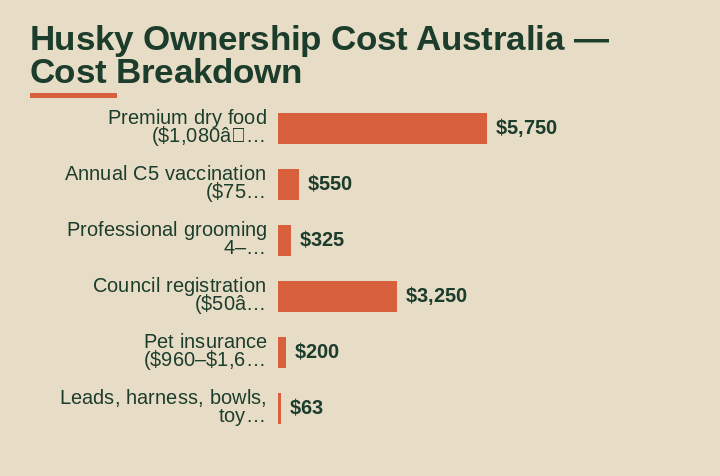
| Premium dry food ($1,080 to $1,680/yr) | Orthopaedic surgery for hip dysplasia ($4,000 to $7,500) |
| Annual C5 vaccination ($75 to $130) | Emergency vet visit ($300 to $800+) |
| Heartworm/flea/tick prevention ($180 to $280) | Destructive behaviour damage (fencing, furniture) |
| Professional grooming 4 to 6x/yr ($400 to $960) | Specialist eye or skin consultation ($200 to $450) |
| Council registration ($50 to $150) | Escape-proofing yard upgrades ($1,500 to $5,000) |
| Pet insurance ($960 to $1,680/yr) | Dog training or behaviourist ($150 to $250/session) |
| Leads, harness, bowls, toys ($150 to $300) | Kennel/boarding during travel ($45 to $80/night) |
The destructive behaviour and escape categories deserve a special mention. Huskies are escape artists, genuinely talented ones. Standard suburban fencing is not enough. A properly escape-proofed backyard in Sydney or Melbourne typically costs $2,500 to $5,000 to install. That’s a cost most first-time Husky owners don’t see coming, and it’s not optional.
Where the Money Actually Goes
Food and feeding costs
Huskies have an unusual metabolism for a large breed. They’re efficient, often eating less per kilogram of body weight than comparably-sized dogs like Labradors. That said, they’re still a 20 to 27kg dog requiring quality nutrition. Budget $90 to $140 per month for a solid dry food like Advance Large Breed or Taste of the Wild. Raw diet owners typically spend $150 to $220 monthly covering meat, raw meaty bones and supplements.
Don’t cheap out on food. Poor nutrition shows up fast in a Husky’s coat condition, energy levels and long-term joint health.
Veterinary care
Siberian Huskies are predisposed to several conditions that add up over a lifetime: hip and elbow dysplasia, progressive retinal atrophy (an inherited eye disease), autoimmune skin conditions and hypothyroidism. Routine annual vet costs, one wellness check, vaccinations, parasite prevention, run $400 to $650 per year. That’s the baseline.
One orthopaedic surgery changes the entire financial picture. Hip dysplasia surgery in Australia costs $4,000 to $7,500 per hip. Bilateral cases (both hips, not uncommon) can exceed $12,000. This is the single strongest argument for pet insurance from puppyhood. For details on what vaccination alone costs each year, see this breakdown of dog vaccination costs in Australia.
Grooming
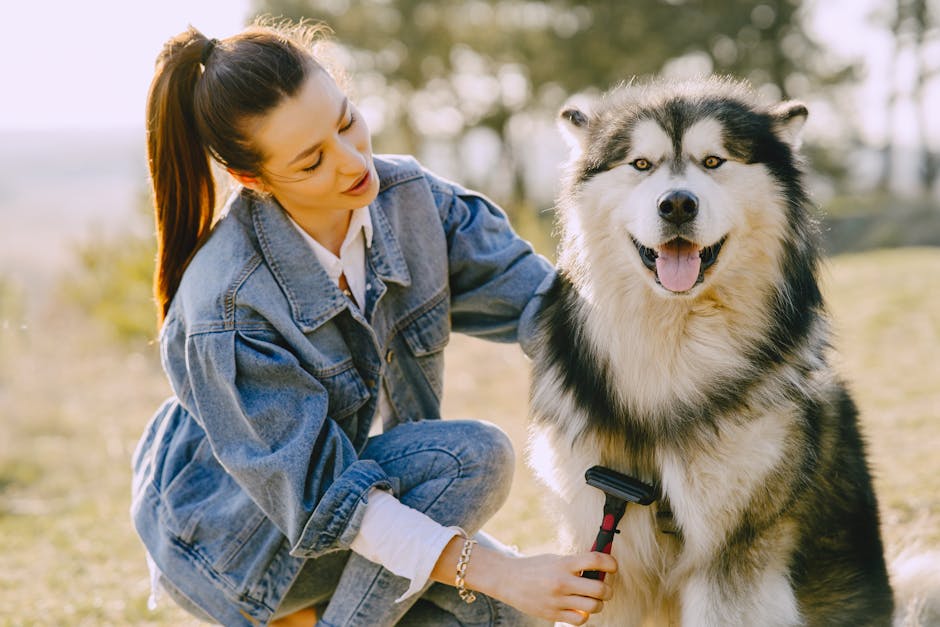
The double coat is the Husky’s defining feature and its biggest grooming cost driver. Professional grooming for a Husky runs $100 to $160 per session, compare that to $55 to $85 for a short-coated Staffy. The volume of undercoat, the time required for drying and the sheer square footage of dog explains the gap. A quality deshedding brush for home use is genuinely one of the best investments a Husky owner can make.
Most owners book professional grooming 4 to 6 times per year, adding $400 to $960 annually. In Geelong or Toowoomba you might pay $90 to $110 per session. In inner Melbourne or Sydney’s eastern suburbs, expect $130 to $160. See the full breakdown on mobile dog grooming vs salon pricing if you’re weighing up convenience.
Exercise and mental stimulation
This is a working sled dog. They need 2+ hours of vigorous exercise daily. That’s not a suggestion. Huskies that don’t get adequate exercise become destructive, anxious and vocal in ways your neighbours will not appreciate. If your schedule doesn’t support that, professional dog walking ($25 to $45 per 45-minute walk, daily) or daycare ($40 to $75 per day) becomes a real cost line. That’s $500 to $1,500 per month in some cases. Worth being honest with yourself about before you commit.
Training
Huskies are intelligent and stubborn. That combination means training takes longer and often requires more sessions than breeds eager to please. Puppy school runs $200 to $380 for a 5 to 6 week course. Beyond that, many Husky owners invest in private obedience training ($150 to $250 per session). You can get a detailed look at what puppy school costs across Australia before booking.
Skipping training with a Husky is a false economy. A badly-trained Husky is a genuinely difficult dog to live with.
Recommended Products for Husky Ownership Cost Australia
If you’re tackling this yourself, here are some products from Amazon Australia that can help (these are affiliate links):
Questions to Ask Before You Commit
Has the breeder health-tested the parents for hip dysplasia and eye conditions?
Ask for the OFA (Orthopedic Foundation for Animals) or PennHIP scores for both parents, and CAER eye certification. A reputable Siberian Husky breeder will have these on file and will share them without hesitation. If they hesitate, walk away. The cost of treating dysplasia in an untested-line dog is not worth the saving on purchase price.
What does your yard look like, and is it actually Husky-proof?
Be honest about this before you buy, not after. Standard 1.2m to 1.5m colourbond fencing is not enough. You need 1.8m minimum, ideally with a coyote roller or inward lean at the top. If your yard isn’t already secured, price the upgrade before you commit. It changes the first-year budget significantly.
Is your home air-conditioned?
Huskies in Queensland, inland NSW or the Northern Territory need air conditioning during summer. This isn’t optional welfare; it’s genuine health risk territory. If you’re renting without climate control or your aircon only covers one room, factor in the cost of upgrading, or reconsider the breed.
What’s the full cost of pet insurance for this breed, and what are the exclusions?
Get quotes from at least three insurers before you pick up your dog. Ask specifically whether hip dysplasia, progressive retinal atrophy and autoimmune conditions are covered, and whether there’s a waiting period. Some policies exclude hereditary conditions entirely. Comprehensive cover for a Husky runs $80 to $140 per month, know what you’re actually buying.
Do you have a plan for exercise on days you’re busy?
Everyone has the time to walk their dog when they first get one. What happens during a heavy work week, or when you’re sick? Dog walkers, daycare and trusted neighbours are real budget items for Husky owners. If none of those are viable options, that’s worth knowing before you bring the dog home.
What are the council registration requirements in your area?
Registration fees vary $50 to $150 per year across Australian councils, and some councils have specific requirements around enclosure standards for active or working breeds. Worth checking your local council’s website, particularly in NSW and QLD where regulations have tightened in recent years.
How to Bring the Cost Down
Adopt from a Husky rescue before buying from a breeder. Husky rescue groups operate in most Australian states, adoption fees run $300 to $600 and typically include desexing, vaccination and microchipping already completed. You’re potentially saving $1,800 to $2,500 compared to buying a puppy and completing everything separately. The dogs aren’t “damaged goods”; most are surrendered because their owners underestimated exactly what this guide is telling you.
Invest in home grooming tools properly. A decent deshedding brush for double-coated dogs costs $40 to $65 and pays for itself in the first month if it reduces your professional grooming visits from six to three per year. The Furminator or similar undercoat tools are genuinely worth the money for this breed.
Buy food in bulk from pet warehouse chains. The per-kilogram price difference between a 3kg and 15kg bag of premium dog food is typically 25 to 35%. At Pet Barn or Petstock with a loyalty card, this saves $30 to $50 per month, roughly $400 to $600 per year. Doesn’t sound exciting, but across a 12-year lifespan that’s real money.
For dental health, regular at-home care reduces the need for professional cleaning under anaesthetic, which runs $300 to $800 per session for a large dog. See what pet dental cleaning costs in Australia to understand the stakes there.
Get insurance young and keep it. The temptation to cancel pet insurance once your dog reaches a few years old is understandable, premiums creep up. But Husky health issues often emerge at 4 to 7 years of age. Cancelling early is exactly when you’re most likely to need it. If cost is the issue, increase the excess rather than dropping cover entirely.
If your Husky needs to travel interstate for any reason, understanding pet transport interstate costs in advance prevents expensive last-minute decisions.
Husky ownership cost Australia is genuinely high, higher than most first-time owners expect. The dogs themselves are extraordinary. They’re athletic, funny, loyal and capable of making a complete mess of your garden in the time it takes to make a cup of tea. If you go in with eyes open, a realistic budget and a properly secured yard, they’re worth every dollar. If you’re still building the full picture, the cost of dog boarding in Australia and what dog desexing costs are both worth reading before your pup arrives home.
Frequently Asked Questions About Husky Ownership Cost Australia
How much does a Husky puppy cost in Australia?
From a registered ANKC breeder, expect to pay $1,500 to $3,500 for a Siberian Husky puppy. Show-quality or working-line dogs from proven kennels sit at the upper end. Backyard breeders advertise $800 to $1,200 but the health and temperament risks aren’t worth it. Adoption through Husky rescue groups costs $300 to $600 including vaccinations and desexing.
Are Huskies expensive to feed?
Yes, relative to their size. Huskies have a quirky metabolism and often eat less than comparably-sized breeds, but they’re still a large dog. Budget $90 to $140 per month for a quality dry food like Advance or Taste of the Wild. Raw feeders typically spend $150 to $220 monthly on meat, bones and supplements.
Can Huskies handle the Australian heat?
They cope better than most people expect, but they need shade, cool water, air conditioning during heatwaves and exercise limited to cooler parts of the day. Vet visits for heat-related issues aren’t uncommon in Queensland and inland NSW. Do not shave their coat, the double coat actually insulates against heat as well as cold.
How much does Husky grooming cost in Australia?
Professional grooming for a Husky runs $100 to $160 per session due to their thick double coat and heavy shedding. Most owners book 4 to 6 times per year, adding $400 to $960 annually to costs. Investing in a quality deshedding brush and learning to do maintenance brushing at home can cut this significantly.
Is pet insurance worth it for a Husky?
Given Huskies’ susceptibility to hip dysplasia, eye conditions and autoimmune issues, yes, insurance makes sense. A single hip surgery can cost $4,000 to $7,000. Comprehensive cover for a Husky runs $80 to $140 per month depending on the insurer and excess. Getting cover while they’re a pup avoids pre-existing condition exclusions.
People Also Ask About Husky Ownership Cost Australia
How much does it cost to desex a Husky in Australia?
Desexing a male Husky typically costs $350 to $550 at a private vet; females run $450 to $700 due to the more complex surgery. Low-cost vet clinics and RSPCA programmes can bring this down to $200 to $380. It’s worth doing around 12 to 18 months for Huskies, many vets recommend waiting until skeletal maturity for large breeds.
Do Huskies cost more to insure than other breeds?
Yes. Huskies sit in a moderate-to-high risk category for insurers due to their susceptibility to hip dysplasia, eye conditions like progressive retinal atrophy, and skin issues. Expect to pay $80 to $140 per month for comprehensive cover versus $55 to $90 for lower-risk breeds like Labradors.
What’s the most expensive part of owning a Husky long-term?
Vet bills, particularly if orthopedic issues develop. Hip dysplasia surgery in Australia runs $4,000 to $7,500 per hip. Beyond medical, the ongoing cost that surprises owners most is exercise infrastructure, whether that’s fencing upgrades, dog daycare or professional walking when schedules get busy.
How much does it cost to fence a yard for a Husky?
Huskies can clear a 1.5m fence and will dig under standard fencing. Most owners need 1.8m fencing minimum, often with a coyote roller or inward-angled top rail to prevent climbing. A standard suburban backyard in Sydney or Melbourne typically costs $2,500 to $5,000 to properly secure, depending on the size and existing fencing condition.
Is it cheaper to own a Husky in regional Australia versus a city?
Somewhat. Food and basic supplies are similar nationwide, but vet costs in regional areas can be 10 to 20% lower than inner-city clinics in Sydney or Melbourne. Grooming is also cheaper in regional towns. The offset is that specialist veterinary care, if your Husky needs an orthopaedic surgeon or ophthalmologist, often requires travel to a major city, adding cost.
Related Cost Guides
This guide contains affiliate links. We may earn a small commission from qualifying purchases at no extra cost to you.