
Moving a pet overseas from Australia can cost anywhere from $2,500 to $15,000 or more, depending on your destination, the pet’s type and size, quarantine requirements, and whether you use a professional relocation service. Moving your beloved companion overseas involves complex logistics including veterinary certificates, import permits, IATA-approved travel crates, international flights, and potentially quarantine periods. Understanding these costs helps Australian pet owners budget properly and ensure their furry family members travel safely and legally.
Prices updated July 2026 from current Australian sources.
| Item | Typical cost | Notes |
|---|---|---|
| Total overseas relocation | $2,500 to $15,000+ | Varies hugely by destination and pet size |
| Flights / air freight | $1,500 to $6,000+ | Depends on route and crate size |
| Vet certificates and export paperwork | $300 to $1,000 | |
| Quarantine and import requirements | Varies by destination country |
Costs rise sharply for destinations with strict quarantine and import rules. Check the destination country’s requirements early, as some need months of preparation.
Sources (July 2026): Jetpets, Dogtainers, Australian Government, Exporting cats and dogs
How Much Does Pet Relocation Overseas Cost in Australia?
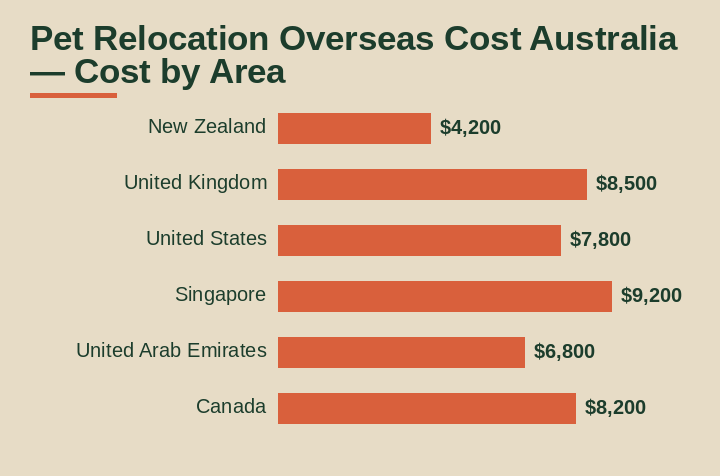
Pet relocation overseas costs vary significantly based on your destination country and their specific import requirements. Australia’s rabies-free status helps in some cases, but each country has unique protocols. The following table shows typical pet relocation overseas cost in Australia for popular destination countries, including all major expenses such as flights, documentation, quarantine where required, and basic professional services for a medium-sized dog (10 to 20kg).
| Destination Country | Average Total Cost | Typical Range |
|---|---|---|
| New Zealand | $4,200 | $3,500 to $6,000 |
| United Kingdom | $8,500 | $6,500 to $12,000 |
| United States | $7,800 | $6,000 to $11,000 |
| Singapore | $9,200 | $7,000 to $13,000 |
| United Arab Emirates | $6,800 | $5,000 to $9,500 |
| Canada | $8,200 | $6,500 to $11,500 |
| Japan | $10,500 | $8,000 to $15,000 |
| Germany | $8,800 | $7,000 to $12,500 |
What Affects Pet Relocation Overseas Cost in Australia?
Destination Country Requirements and Pet Relocation Overseas Cost Australia
The destination country is the single biggest factor determining your pet relocation overseas cost in Australia. Countries with strict biosecurity requirements like Japan, Singapore, and Hong Kong impose lengthy quarantine periods (10 to 30 days) costing $1,000 to $4,000 additional. European Union countries require specific tapeworm treatments and rabies titre blood tests ($300 to $600). Some destinations like New Zealand have streamlined processes for Australian pets due to similar biosecurity standards, reducing costs significantly. Always check the destination country’s official government website for their specific pet import requirements, as these change regularly and non-compliance can result in extended quarantine or even refusal of entry.
Pet Size and Weight
Your pet’s size dramatically impacts international airfare costs, as airlines charge based on the combined weight of your pet and their travel crate. Small pets under 10kg typically cost $1,500 to $3,000 for international flights, medium pets 10 to 20kg cost $2,000 to $5,000, while large dogs over 30kg can cost $3,500 to $8,000 or more. Very large breeds may require special freight arrangements rather than standard pet cargo services, increasing costs by 30 to 50%. Travel crates must meet International Air Transport Association (IATA) standards and be large enough for your pet to stand, turn, and lie down comfortably, with larger crates costing $300 to $600 compared to $150 to $250 for small crates.
Quarantine Requirements
Quarantine costs vary enormously by destination. Some countries like New Zealand may not require quarantine at all for Australian pets meeting health requirements, while others mandate government facility stays. UK quarantine typically costs $150 to $250 per day for 10 days minimum ($1,500 to $2,500 total), Singapore charges approximately $80 to $120 per day for up to 30 days ($2,400 to $3,600), and Japan’s quarantine can cost $50 to $80 per day for 12+ days ($600 to $2,500). These facilities provide accommodation, feeding, and daily care, but you’ll need to factor this substantial cost into your budget. Private quarantine facilities where available often cost 20 to 40% more but may offer better conditions.
Veterinary Certificates and Health Requirements
Pre-departure veterinary requirements are mandatory for all international pet relocation. You’ll need an international health certificate issued by an accredited veterinarian ($200 to $350), current vaccinations including rabies where required ($80 to $200), microchipping if not already done ($50 to $80), and parasite treatments ($50 to $150). Some countries require rabies titre blood tests to prove immunity levels ($200 to $400), conducted at least 6 months before travel. An export permit from the Australian Department of Agriculture, Fisheries and Forestry costs $170 to $485 depending on the destination. Multiple veterinary visits over several months add up quickly, so budget $600 to $1,500 total for all health-related requirements.
Professional Pet Relocation Services
While you can arrange pet relocation yourself, professional pet relocation companies charge $800 to $2,500 for their expertise and convenience. These services handle all documentation, coordinate with airlines, arrange quarantine bookings, provide door-to-door transport, and ensure compliance with all regulations. For complex destinations or first-time relocators, this investment can prevent costly mistakes and reduce stress significantly. DIY relocation saves these service fees but requires substantial research, time, and attention to detail. If you are also moving pets domestically, our guide to interstate pet transport costs is a useful companion read.
Flight Routes and Timing
Direct flights are always preferable for pet welfare but cost more than routes with connections. Peak travel seasons (November to February, June to August) see pet airfare increase by 20 to 40% due to limited cargo space. Some airlines restrict pet travel during extreme weather months, forcing you to book during more expensive periods. Transit through certain countries may trigger additional requirements or quarantine, substantially increasing costs. Booking 3 to 6 months ahead typically secures better rates. Emergency or last-minute pet relocation can double costs due to urgent documentation processing, premium flight booking, and expedited services.
Detailed Cost Breakdown: Pet Relocation Overseas From Australia
Pre-Departure Costs
- Veterinary health certificate: $200 to $500 depending on destination requirements and number of visits
- Microchipping: $50 to $80 if not already done
- Vaccinations and boosters: $80 to $250 including rabies where required
- Rabies titre blood test: $200 to $400 for countries requiring proof of immunity
- Parasite treatments: $50 to $150 for ticks, fleas, and worms
- Import permit application: $100 to $400 paid to destination country
- Export permit from Australia: $170 to $485 from Department of Agriculture
- IATA-approved travel crate: $150 to $600 depending on pet size
Transportation Costs
- International pet airfare: $1,500 to $8,000 depending on destination, route, pet size, and season
- Domestic transport to international airport: $150 to $400 if required
- Airport handling fees: $100 to $300 for check-in and processing
- Customs clearance at destination: $150 to $500
Destination Costs
- Quarantine facility fees: $0 to $4,000 depending on country and duration
- Post-arrival veterinary check: $100 to $300
- Transport from airport to home: $100 to $400
Professional Services (Optional)
- Pet relocation company: $800 to $2,500 for full-service coordination
- Documentation preparation assistance: $200 to $500 if doing most yourself
- Pet travel insurance: $150 to $400 for coverage during transit
Recommended Products for Pet Relocation Overseas Cost Australia
If you’re tackling this yourself, here are some products from Amazon Australia that can help (these are affiliate links):
Popular Destination-Specific Costs
New Zealand Pet Relocation
New Zealand is one of the most affordable destinations for pet relocation overseas cost in Australia due to similar biosecurity standards and no quarantine required in most cases. Total costs range from $3,500 to $6,000 including flights ($1,800 to $3,500), import permits ($250 to $350), veterinary certificates ($200 to $400), and professional services if used ($800 to $1,200). Pets must have microchips, rabies vaccinations, and parasite treatments, but the streamlined process makes this the most budget-friendly overseas option for Australian pet owners.
United Kingdom and Europe Pet Relocation
Relocating pets to the UK or EU countries costs $6,500 to $12,000 on average. Flights to London typically cost $3,000 to $6,000, with additional costs for rabies titre blood tests ($300 to $500), tapeworm treatments ($50 to $100), and EU pet passports ($100 to $200). The UK may require 10 days quarantine ($1,500 to $2,500) unless all requirements are perfectly met. European destinations have similar requirements under EU pet travel regulations. Professional services add $1,000 to $2,000 but are highly recommended given the complexity of EU compliance requirements.
United States Pet Relocation
The USA has relatively straightforward pet import requirements, with total costs ranging from $6,000 to $11,000. International flights to major US cities cost $2,500 to $5,000, health certificates cost $200 to $400, and import permits where required cost $100 to $200. The US doesn’t typically require quarantine for pets from Australia, significantly reducing costs. However, individual states may have additional requirements, particularly for certain dog breeds. Hawaii has the strictest requirements with mandatory quarantine, adding $1,000 to $3,000 to costs.
Asian Destinations (Singapore, Japan, Hong Kong)
Asian countries typically have the highest pet relocation overseas costs from Australia due to strict quarantine requirements. Singapore requires up to 30 days quarantine ($2,400 to $3,600), Japan requires 12+ days ($600 to $2,500 plus extensive pre-arrival testing), and Hong Kong requires 4+ months of preparation plus potential quarantine. Total costs range from $8,000 to $15,000 including flights ($2,000 to $4,500), extensive veterinary requirements ($800 to $1,500), quarantine fees, and mandatory professional relocation services ($1,500 to $2,500). These destinations require the longest planning periods, typically 6 to 9 months.
How to Save on Pet Relocation Overseas Cost in Australia
- Book flights well in advance during off-peak seasons: Avoid school holidays and peak summer/winter periods to save 20 to 40% on pet airfare. Book 4 to 6 months ahead when possible and be flexible with travel dates to secure the best cargo rates. Mid-week flights often cost less than weekend departures.
- Handle documentation yourself with careful research: Save $500 to $2,000 in professional service fees by managing paperwork independently. Use official government websites for accurate requirements, join expat forums for destination-specific advice, and maintain a detailed checklist with deadlines. This requires significant time investment but is achievable for organised individuals.
- Compare multiple airlines and routes: Pet cargo rates vary substantially between airlines, with differences of $500 to $1,500 common for identical routes. Some airlines specialise in pet transport with better facilities and pricing. Consider routing through pet-friendly transit hubs, but ensure transit countries don’t impose additional requirements that could increase overall costs.
- Choose destinations with minimal quarantine requirements: If you have flexibility in your destination, countries like New Zealand, the USA (excluding Hawaii), and Canada have simpler requirements saving $1,500 to $3,500 compared to high-quarantine destinations. Research biosecurity requirements early when considering overseas opportunities to factor pet relocation into your decision.
- Bundle services with your own relocation: If using international moving companies, ask if they have partnerships with pet relocators for bundled discounts (typically 10 to 15% off). Some corporate relocations include pet transport allowances. Coordinate with your overall household move to consolidate transport where possible.
- Consider pet travel insurance carefully: While insurance costs $150 to $400, evaluate whether it’s necessary based on your pet’s age, health, and destination. Young, healthy pets on straightforward routes may not benefit significantly, while older pets or complex destinations make insurance worthwhile. Compare policies for coverage of delays, veterinary care during transit, and quarantine extensions.
- Start vaccinations and treatments early: Some requirements like rabies titre tests must be completed 6+ months before travel. Starting early avoids expensive rush fees for expedited testing ($100 to $300 extra) and gives flexibility in scheduling. Spread veterinary costs over several months rather than clustering them before departure, easing budget strain.
Cats vs Dogs: Cost Differences
Cats typically cost 10 to 30% less to relocate overseas than dogs of similar weight due to smaller crate requirements, lower flight costs (averaging $1,500 to $4,000 vs $2,000 to $6,000 for dogs), and simpler handling. However, cats face identical documentation, quarantine, and health certificate requirements, so the main savings come from transportation rather than administrative costs. Multiple pets traveling together may qualify for discounts of 10 to 20% with some pet relocation services, though airline cargo fees are charged per pet individually.
Pet Relocation Companies vs DIY
Professional pet relocation companies charge $800 to $2,500 but provide comprehensive services including documentation preparation, airline booking, quarantine coordination, customs clearance, and door-to-door transport. They have established relationships with airlines and quarantine facilities, sometimes accessing better rates than individuals. DIY relocation saves these service fees but requires 40 to 60 hours of research, coordination, and administration. First-time relocators often underestimate the complexity, with mistakes potentially costing more than professional services would have. For destinations with complex requirements like Japan, Singapore, or EU countries, professional services are strongly recommended. For straightforward destinations like New Zealand or the USA, competent DIY is achievable. The decision between DIY and professional pet relocation ultimately depends on your time, confidence, and the complexity involved.
Timeline and Planning for Pet Relocation
Most international pet relocations require 4 to 12 weeks of preparation, with complex destinations needing 6 to 9 months. Start by researching your destination country’s specific requirements on their official agricultural or biosecurity department website. Book veterinary appointments for required vaccinations and health certificates 8 to 12 weeks before travel. Apply for import permits 6 to 8 weeks before departure, as processing times vary. Book flights 3 to 6 months ahead for best availability and pricing. Arrange quarantine bookings 2 to 3 months in advance for destinations requiring it. Order IATA-approved travel crates 4 to 6 weeks before departure to allow your pet to acclimate. Final veterinary inspections typically occur 3 to 10 days before travel depending on requirements. This extended timeline requires careful planning alongside your own relocation preparations.
Additional Considerations and Hidden Costs
Budget for unexpected costs including potential quarantine extensions if paperwork issues arise ($100 to $300 per day), additional veterinary treatments if health issues develop ($200 to $800), re-booking fees if travel dates change ($300 to $800), and temporary pet boarding if your overseas accommodation isn’t immediately available ($30 to $80 per day). Some destinations require pet registration upon arrival ($50 to $200). Special handling for anxious pets, medications, or additional comfort items in crates add $100 to $300. If traveling with multiple pets, costs don’t simply double; some expenses like professional services offer multi-pet discounts, while others like individual health certificates and permits apply per pet. Factor in post-arrival settling costs including new local veterinary registration ($100 to $300), replacement of food and supplies in new location ($150 to $400), and potential behavior consultation if your pet struggles with the transition ($150 to $400 per session).
Understanding the pet relocation overseas cost in Australia helps you budget appropriately for this significant expense when moving internationally with your beloved companion. While costs range dramatically from $2,500 to $15,000+ depending on destination and circumstances, careful planning, early preparation, and comparing quotes from multiple pet relocation specialists can help control expenses. Whether you choose professional services or manage the process yourself, ensuring your pet’s safe, legal, and comfortable international journey is worth the investment. If you’re considering pet relocation alongside other major household decisions, explore our guides on pet care costs in Australia to understand ongoing expenses, or our guides to owning a cat and the cost of owning a dog as you settle into your new home.
Frequently Asked Questions
How much does it cost to relocate a dog overseas from Australia?
Relocating a dog overseas from Australia typically costs between $3,500 and $12,000 depending on the destination, dog size, and quarantine requirements. Popular destinations like New Zealand cost $3,500 to $6,000, while the UK or USA can cost $6,000 to $12,000 including flights, import permits, veterinary certificates, and quarantine fees.
Do all countries require pet quarantine from Australia?
No, not all countries require quarantine for pets from Australia. New Zealand typically doesn’t require quarantine if all health requirements are met, while countries like the UK may require 10+ days, and others like Singapore or Japan can require 30+ days. Australia’s rabies-free status helps reduce quarantine times in many destinations.
What’s included in pet relocation overseas costs?
Pet relocation overseas costs typically include veterinary health certificates ($200 to $500), import permits ($100 to $400), IATA-approved travel crate ($150 to $600), international pet airfare ($1,500 to $8,000), quarantine fees if required ($1,000 to $4,000), and professional pet relocation services ($500 to $2,000). Additional costs may include microchipping, vaccinations, and customs clearance.
Can I relocate my pet overseas myself without using a pet relocation service?
Yes, you can arrange pet relocation overseas yourself, which can save $500 to $2,000 in professional service fees. However, you’ll need to research destination requirements thoroughly, arrange airline bookings directly, complete all veterinary paperwork correctly, and coordinate quarantine if required. Using a professional pet relocator ensures compliance and reduces stress but increases overall costs.
How long does pet relocation overseas take from Australia?
Pet relocation overseas from Australia typically takes 4 to 12 weeks of preparation time to complete all health certificates, vaccinations, and import permits. The actual travel time is usually 1 to 3 days depending on the destination and connections. Quarantine periods, if required, add another 10 to 30 days upon arrival. Start planning at least 3 to 6 months before your intended relocation date.
This guide contains affiliate links. We may earn a small commission from qualifying purchases at no extra cost to you.