
A locksmith in Australia costs between $80 for a quick key cut and $450 or more for an after-hours lockout with new hardware. The spread is huge because ‘locksmith’ covers everything from cutting a $4 key at the shopping centre to programming a transponder for a late-model Mazda. When I researched current call-out rates for this guide using Finder Australia’s home services data and operator quotes across the eastern states, the pattern was consistent: the time of day matters almost as much as the job itself.
Locksmith cost Australia typically runs $80-$180 for a basic call-out, $150-$300 for a house lockout, and $200-$450 for rekeying a standard 3-bedroom home. After-hours work adds 50-100% on top, and regional jobs cost more once travel is factored in.
Most households only call a locksmith twice in a decade, usually in a panic. That’s exactly when you’re least equipped to compare prices. The figures below should give you a sense of what’s reasonable before you ring around. For broader cost benchmarks across home trades, MoneySmart’s household budgeting tools are a sensible reference point.
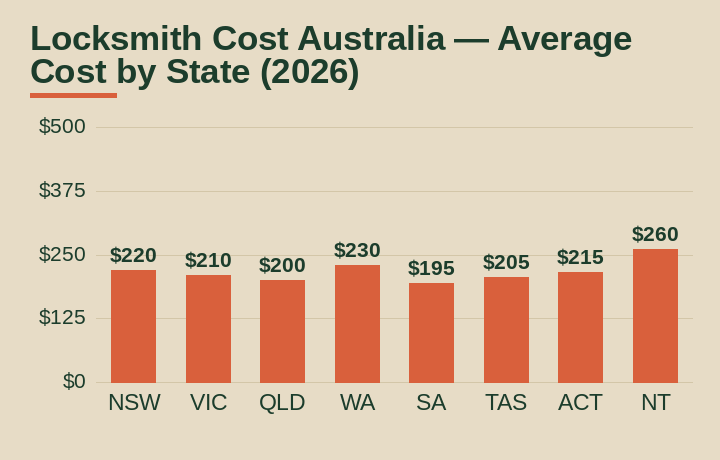
| State | Average Cost | Typical Range |
|---|---|---|
| NSW | $220 | $90 to $450 |
| VIC | $210 | $85 to $430 |
| QLD | $200 | $85 to $410 |
| WA | $230 | $95 to $470 |
| SA | $195 | $80 to $400 |
| TAS | $205 | $90 to $420 |
| ACT | $215 | $90 to $440 |
| NT | $260 | $110 to $520 |
Why locksmith prices swing so wildly
Five factors do most of the heavy lifting on your final bill. The good news: knowing what they are means you can usually predict the quote before the locksmith even arrives.
Time of day. A standard lockout in Newtown at 2pm on a Tuesday costs $150-$180. The same job at 11pm on a Saturday? $280-$380. Operators charge penalty rates after 6pm and on weekends, and most apply a flat after-hours surcharge of $80-$150 on top of normal labour. If you can wait, wait.
Job complexity. Picking a basic pin tumbler on a sliding back door takes five minutes. Picking a restricted-key deadlock with security pins can take 45. A simple Lockwood 001 deadbolt swap is roughly $180-$250 supply and fit; a high-security replacement with a restricted key system runs $350-$600 per door.
Travel distance. Metro operators in Sydney, Melbourne and Brisbane usually fold travel into their call-out fee within 15 kilometres of base. Beyond that, expect $1.50-$3 per kilometre each way. In Toowoomba or Geelong the base call-out is lower, but the catchment is bigger, so the kilometre fee bites harder.
Hardware involved. Standard residential locks are cheap. Smart locks, restricted keyways, electronic strikes and car transponders add real money to the parts bill. A basic key cut is $4-$8. A laser-cut car key with chip can be $250-$600. Same trade, totally different numbers.
Licensing and insurance. Properly licensed operators in NSW, WA and SA carry overheads unlicensed cowboys skip. The ‘cheapest locksmith Sydney’ Google ads are often interstate call centres dispatching contractors with little vetting. Master Locksmiths Association members charge more, but the work is insured and the pricing is transparent. Worth the extra $30-$50 in my view.
What you’ll pay for the most common jobs
The state table above is broad. Below is the comparison most readers actually want, what a specific job costs at each tier. The ‘budget’ column reflects local sole-traders during business hours; ‘premium’ reflects MLAA members, after-hours, or specialty work.
| Job Type | Budget | Mid-Range | Premium / After-Hours |
|---|---|---|---|
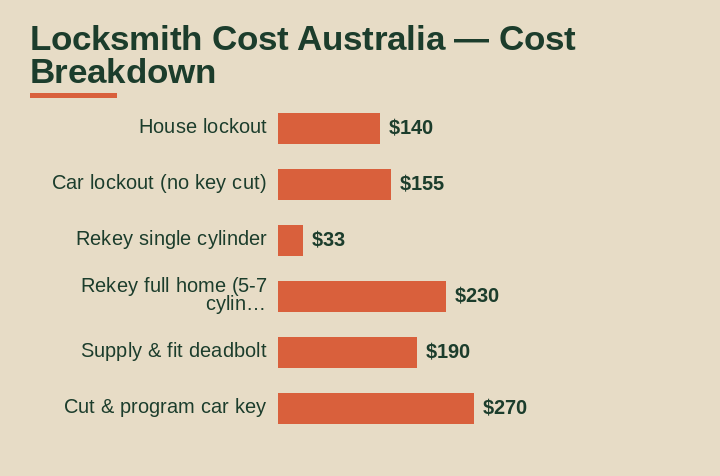
| House lockout | $120 to $160 | $170 to $230 | $280 to $450 |
| Car lockout (no key cut) | $130 to $180 | $200 to $280 | $320 to $480 |
| Rekey single cylinder | $25 to $40 | $45 to $70 | $80 to $120 |
| Rekey full home (5-7 cylinders) | $180 to $280 | $300 to $420 | $450 to $650 |
| Supply & fit deadbolt | $160 to $220 | $230 to $320 | $380 to $550 |
| Cut & program car key | $220 to $320 | $350 to $500 | $550 to $850 |
| Safe opening (non-destructive) | $200 to $300 | $320 to $480 | $500 to $750 |
The gap between budget and premium isn’t always about quality. Sometimes it’s just about timing. A rekey booked two days out for a Wednesday morning will cost you a third of what an emergency Sunday call-out runs.
Recommended Products for Locksmith Cost Australia
If you’re tackling this yourself, here are some products from Amazon Australia that can help:
Questions to ask before you book
If you’ve got time to make a phone call rather than tapping the first Google ad, these five questions will save you money and grief. I’d push on each one.
Is the price you’ve quoted the final total?
Some operators quote a call-out only, then add labour, parts, GST and after-hours loadings separately. Ask for the all-in number including GST. If they won’t give one, ring the next on the list.
Are you locally based or a dispatch service?
Dispatch services advertise ‘Sydney locksmith’ but route the job to whichever subcontractor’s nearest. The middleman markup adds $50-$120 to the bill, and accountability gets murky if something’s damaged.
Do you hold a current security licence for this state?
In NSW this is a SLED licence; in WA it’s through the Department of Mines. Licensed operators are insured and police-checked. If they hesitate, that’s your answer.
Will rekeying solve my problem, or do I need new locks?
A good locksmith will recommend rekeying where it fits, even though replacement earns them more. If they push straight to new hardware without asking about the existing locks, get a second opinion.
What’s your guarantee on parts and labour?
Reputable operators offer 12 months on labour and pass through the manufacturer warranty on hardware (usually 5-10 years). Anything less than 12 months on labour is below industry standard.
Can you provide an itemised invoice?
You want call-out, labour hours, parts and GST broken out. This matters if you’re claiming on insurance or a landlord’s reimbursing you.
FAQ
Will the locksmith damage my door to get in?
Almost never for residential locks. Standard pin tumbler locks are picked or bumped without damage in under 15 minutes. Drilling is a last resort and a licensed operator will quote it before doing it. If a locksmith opens a tool bag and reaches straight for the drill on a normal Lockwood deadlock, ask them to try picking first.
Can a locksmith make a key from a photo of the original?
Technically yes for basic pin tumbler keys, but most won’t without proof of ownership. Expect to show ID matching the property address. For restricted keyways (the ones stamped ‘do not duplicate’), you’ll need authorisation from the key system’s registered holder.
How do I avoid locksmith scams?
The classic scam: an ad promises ‘$39 lockouts’. The operator arrives, says your lock is ‘high security’ and the real price is $400. Avoid by getting a written quote over SMS before they leave base, checking the operator has a fixed street address in your state, and using Canstar Blue’s customer reviews or MLAA’s directory rather than the top Google ad.
Do I need a locksmith or can I DIY a lock change?
Swapping a like-for-like deadbolt is a 30-minute job with a screwdriver and a strike plate reinforcement kit. If you’re rekeying, fitting new mortice locks, or anything involving alignment of strikes and latches, call a pro. The cost of fixing a botched install usually exceeds the original quote.
Does landlord or tenant pay for a lockout?
If you locked yourself out, you pay. If the lock failed through wear, the landlord pays. Get the locksmith to note the cause on the invoice. For rental property guidance generally, the Fair Work Ombudsman isn’t the right resource, your state tenancy authority is, but the invoice wording is what determines reimbursement.
Cheaper alternatives worth knowing
- Hide a key properly. Not under the mat. A $50-$80 wall-mounted combination key safe pays for itself the first time you’d otherwise call a locksmith.
- Give a spare to a trusted neighbour. Free. Avoids most lockout call-outs entirely. Pick someone retired or working from home so they’re actually around.
- Add a smart lock alongside your existing deadbolt. Retrofit smart locks like the August fit over your current hardware, so you’ve got code entry as a backup. Around $250-$400 installed, versus an emergency call-out every couple of years.
- Use a roadside assistance club for car lockouts. RACV, NRMA and RAA all include car lockout service in standard membership ($120-$160 a year). One avoided lockout pays the membership.
- Schedule rekeys, don’t emergency them. Moving into a new place? Book the rekey for a weekday before you move in, not the Sunday you discover the previous tenant didn’t return all the keys.
- Get the apprentice rate. Larger operators often have a second-year apprentice on the van for non-urgent residential work, billed $20-$40 per hour less than a senior locksmith. Ask.
Knowing the real locksmith cost Australia operators charge is the difference between paying $150 and paying $400 for essentially the same outcome. Ring around when you’ve got time, keep a backup key plan in place, and you’ll rarely need to pay the panic premium. If you’re sorting other household trades too, our guides on cat desexing prices in Sydney, real Sydney dog grooming rates and pet blood test costs use the same approach. For the methodology behind these numbers, see how we research our prices.
People Also Ask About Locksmith Cost Australia
Are locksmiths in Australia regulated or licensed?
It varies by state. NSW, WA and SA require a security licence for locksmiths, while Victoria and Queensland have looser frameworks. Always check the operator is a member of the Master Locksmiths Association of Australasia before you book.
How long does a locksmith take to arrive in an emergency?
In metro areas, most quote 30-60 minutes. Regional response times can stretch to 90 minutes or more, and you’ll often pay a travel surcharge of $1-$3 per kilometre beyond the operator’s base service area.
Can a locksmith open a safe without damaging it?
Usually yes, through manipulation or by drilling and replacing the lock. Non-destructive opening runs $250-$600; destructive entry with repair is $400-$900 depending on safe rating.
What’s the difference between a locksmith and a security installer?
Locksmiths handle physical locks, keys and access hardware. Security installers cover alarms, CCTV and electronic systems. Many businesses do both, but pricing and licensing differ between the two trades.
Will my home insurance cover the cost of a locksmith?
Related Cost Guides
Some contents policies include emergency lockout cover up to $200-$500 per year, often as part of home assistance add-ons. Check your PDS before paying out of pocket, as you may be reimbursable.
This guide contains affiliate links. We may earn a small commission from qualifying purchases at no extra cost to you.