
Pet allergy testing cost Australia sits between $150 and $850 depending on the type of test your vet recommends. Around 20-30% of Australian dogs and roughly 15% of cats deal with allergies at some point, and working out exactly what’s causing the scratching, licking, and ear infections isn’t always straightforward.
Pet allergy testing cost Australia typically ranges from $150 to $850 depending on the test type. Basic blood serum tests cost $150-$300, skin intradermal testing runs $350-$600, and comprehensive allergen panels reach $600-$850. Sydney and Melbourne prices sit at the higher end, while regional areas often charge 15-20% less.
Prices updated July 2026 from current Australian sources.
| Test type | Typical cost | Notes |
|---|---|---|
| Blood serum test | $150 to $300 | |
| Skin intradermal testing | $350 to $600 | |
| Comprehensive allergen panel | $600 to $850 |
Sydney and Melbourne prices sit at the higher end, while regional areas often charge 15 to 20% less. Ongoing treatment after diagnosis is a separate cost.
Sources (July 2026): PetCloud, Vet prices in Australia, Forbes Advisor Australia, Vet fees in Australia, RSPCA Australia
The price jumps significantly between a basic blood panel and comprehensive intradermal skin testing.
Allergies are a long game, and that is exactly where annual limits and per condition sub limits start to matter more than the benefit percentage. I have set out how those interact in my pet insurance guide.
What It Costs Across the States
Prices vary noticeably between metro and regional areas. Sydney’s eastern suburbs and Melbourne’s inner city charge premium rates, while country town vets in regional NSW or Queensland typically come in 15-20% cheaper.
| State | Average Cost | Typical Range |
|---|---|---|
| NSW | $420 | $180 to $850 |
| VIC | $410 | $170 to $820 |
| QLD | $380 | $150 to $750 |
| WA | $390 | $160 to $780 |
| SA | $365 | $150 to $720 |
| TAS | $340 | $150 to $680 |
| ACT | $405 | $175 to $800 |
| NT | $430 | $190 to $820 |
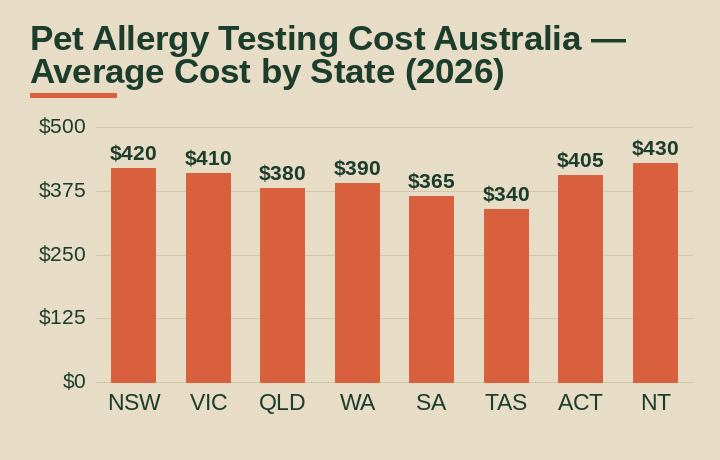
Metropolitan clinics charge more due to higher operating costs and access to veterinary dermatology specialists. Darwin and remote NT locations face the highest prices because labs need to fly samples interstate for processing, adding $40-$70 to the bill.
Basic blood serum tests (testing IgE antibodies) cost $150-$300 across Australia. Intradermal skin testing, which involves injecting tiny amounts of allergens under the skin, runs $350-$600. Comprehensive panels testing 50-80 different allergens reach $600-$850 at specialist clinics.
Real-World Example: A Typical Pet Allergy Testing Journey
Sarah from Brisbane noticed her 4-year-old Labrador, Max, constantly licking his paws and developing red patches on his belly every spring. After two months of antihistamines barely helping, her local vet suggested allergy testing.
Here’s what she paid:
- Initial consultation and examination: $95
- Blood serum allergy panel (35 environmental allergens): $340
- Follow-up consultation to discuss results: $75
- First month of immunotherapy drops: $127
Total first-time cost: $637
The test revealed Max was highly reactive to Bermuda grass, dust mites, and several tree pollens common around Brisbane. The immunotherapy (desensitisation treatment) now costs Sarah about $110 per month, but Max’s symptoms improved by roughly 70% after six months. She reckons spending the $637 upfront saved her from years of expensive emergency vet visits for skin infections and ongoing steroid prescriptions.
What Affects Your Pet Allergy Testing Cost
Several factors shift the final bill beyond just the base test price.
Test Type: Blood vs Skin
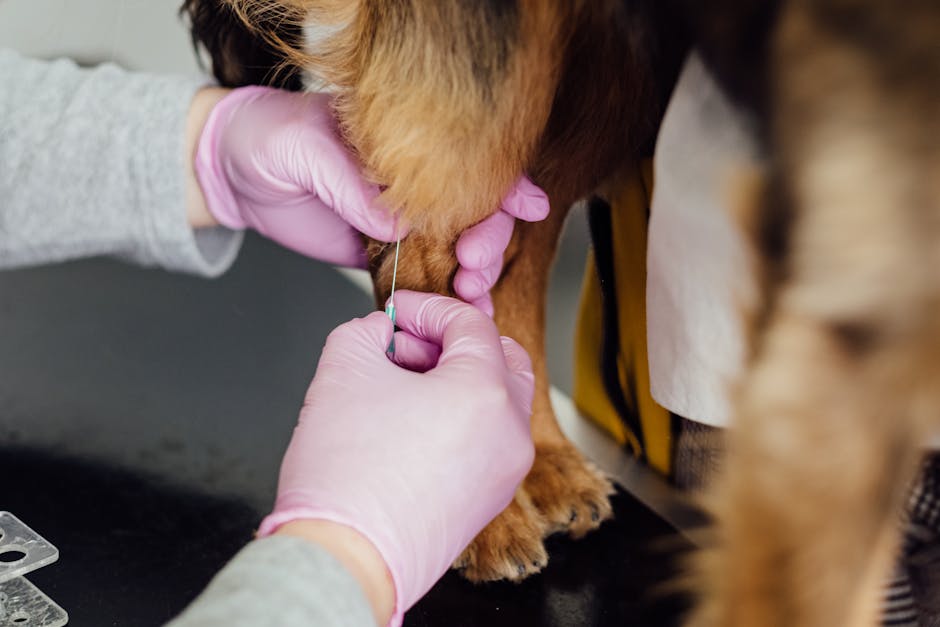
Blood serum tests (also called RAST or ELISA tests) are the most common starting point because they’re less invasive. Your vet draws a blood sample, sends it to a lab, and results come back in 7-14 days. These cost $150-$350 for standard panels.
Intradermal skin testing is more involved, your pet gets sedated, their side gets shaved, and tiny amounts of up to 60 different allergens are injected just under the skin. The vet watches for reaction bumps over 15-20 minutes. This method is considered more accurate for environmental allergies and costs $350-$600, but sedation adds another $120-$200 to the bill.
Panel Size and Allergen Count
Regional panels testing 20-30 allergens common to your area cost $200-$380. Comprehensive panels testing 50-80 allergens (including obscure moulds, multiple grass types, and storage mites) run $500-$850.
Most vets recommend starting with regional panels unless your pet’s symptoms are severe or year-round. Testing for every possible allergen sounds thorough, but it inflates costs without always adding useful information. If you live in Melbourne, paying extra to test for tropical plants found only in far north Queensland doesn’t make sense.
Specialist Referral
General practice vets handle basic blood allergy testing, but complex cases often get referred to veterinary dermatologists. Specialist consultations cost $180-$280 versus $70-$120 for regular vets, and their testing packages (which include detailed interpretation and treatment planning) run $600-$950 total.
Is it worth it? If your pet has been suffering for months and basic treatment hasn’t worked, absolutely. Dermatologists have success rates around 80-85% for correctly identifying and treating allergies versus 60-65% for general vets.
Location and Clinic Type
Inner-city Sydney clinics in Surry Hills or Paddington charge $380-$480 for tests that cost $280-$350 in Western Sydney suburbs like Penrith or Parramatta. The equipment and labs are identical, you’re paying for postcode and higher rent.
Emergency animal hospitals typically charge 30-40% more than regular clinics for the same tests because they’re staffed 24/7. Unless it’s a true emergency, book allergy testing during regular business hours at your standard vet.
Follow-Up Costs
Testing alone doesn’t fix allergies, it identifies them. After getting results, you’ll need a follow-up consultation ($65-$120) to create a treatment plan. If immunotherapy (allergy shots or oral drops) gets recommended, that’s an additional $100-$180 monthly for 12-24 months.
Some clinics bundle the follow-up consultation with testing packages, saving you $65-$90. Always ask upfront what’s included.
What to Watch Out For
- Testing too early: Pets under 6-12 months old often test positive for allergens they’ll naturally outgrow. Most vets won’t test before 12 months unless symptoms are extreme, saving you $300-$450 on premature testing.
- Skipping the elimination diet for food allergies: Blood tests for food allergies in pets are notoriously unreliable (accuracy below 50%). A proper 6-8 week elimination diet costs around $150 in hypoallergenic dog food and gives far better results than a $400 blood panel.
- Not researching the lab: Not all allergy testing labs are equal. Cheaper tests ($120-$180) often use lower-quality labs that produce more false positives. Ask your vet which lab they use, Spectrum Labs and Avacta Animal Health are reputable Australian options.
- Testing during active flare-ups: If your pet is currently on steroids or antihistamines, these medications can interfere with test accuracy. You’ll need to stop medications 2-4 weeks before testing (under vet supervision), or results may be skewed, requiring expensive re-testing.
Recommended Products
Here are a few products from Amazon Australia that pet owners find useful (these are affiliate links):
How to Save Money on Pet Allergy Testing
Getting accurate allergy testing doesn’t mean maxing out your credit card.
Try an elimination diet first
Before spending $300-$850 on testing, work with your vet on a 6-8 week elimination diet using a novel protein source. Food allergies account for only 10-15% of pet allergies, and this approach costs around $150 total versus $400+ for inconclusive food allergy blood tests.
Ask about panel size options
Many clinics offer tiered panels, regional allergen panels (20-30 allergens) cost $200-$350 versus comprehensive panels (50-80 allergens) at $600-$850. If your pet spends most time indoors in Sydney, you probably don’t need to test for West Australian native grass pollens. This saves $250-$400.
Bundle with annual health check
Some vets discount allergy testing by $50-$80 when bundled with your pet’s annual health check or vaccination appointment. The consultation fee often gets waived, saving you $70-$120.
Consider veterinary universities
University vet clinics in Sydney, Melbourne, and Brisbane offer allergy testing at 20-30% below private clinic rates, around $210-$300 for blood tests versus $280-$400. Service may be slower, but the quality is excellent and you’re helping train the next generation of vets.
Get testing done before immunotherapy
Accurate testing upfront prevents wasted money on ineffective immunotherapy. Improper testing can lead to 12-18 months of $80-$150/month injections that don’t work, totaling $960-$2,700 wasted. Spending an extra $150 for intradermal testing versus cheap blood tests pays off.
Document symptoms thoroughly first
Bring a detailed symptom diary (when symptoms occur, what makes them worse, seasonal patterns) to your first consultation. This helps your vet order the right test the first time, avoiding repeat testing that costs another $300-$450. Most vets appreciate clients who’ve done their homework, it makes their diagnostic job easier.
Keeping your pet comfortable while managing symptoms between vet visits can reduce overall costs too. A quality medicated allergy shampoo helps control skin flare-ups for $20-$35, versus $120-$180 emergency vet visits when infections develop.

If your pet is constantly uncomfortable and basic treatments haven’t brought relief, allergy testing is honestly worth the investment. Knowing exactly what’s causing the problem beats months of trial-and-error treatments that don’t work and cost more in the long run. Talk to your vet about which test type makes sense for your pet’s specific symptoms and your budget. According to the Australian Veterinary Association, proper allergy diagnosis and management significantly improves quality of life for allergic pets, and the testing technology has improved substantially over the past decade.
Frequently Asked Questions
How much does pet allergy testing cost on average?
The pet allergy testing cost Australia averages $300-$450 for most dogs and cats. A basic blood serum test costs $150-$300, while intradermal skin testing runs $350-$600. Comprehensive panels testing 50+ allergens can reach $600-$850. The consultation fee (usually $70-$120) is separate.
Is blood or skin testing more accurate for pet allergies?
Intradermal skin testing is generally considered more accurate than blood tests for environmental allergies in pets. Skin testing has roughly 75-80% accuracy versus 60-70% for blood serum tests. However, blood testing is less invasive and easier for anxious pets. Your vet will recommend the best option based on your pet’s symptoms and temperament.
Does pet insurance cover allergy testing in Australia?
Most comprehensive pet insurance policies in Australia cover allergy testing when it’s deemed medically necessary, typically covering 80% of costs after your excess. Budget policies often exclude it. Always check your policy’s diagnostic testing clause. Pre-existing conditions aren’t covered, so get insurance before symptoms start.
How long do pet allergy test results take?
Blood test results typically come back within 7-14 days in Australia. Intradermal skin testing provides immediate reactions during the appointment (results within 20 minutes), but your vet will need time to interpret the full panel. Follow-up consultations to discuss results usually happen 1-2 weeks after blood tests.
Can I test my pet for food allergies and environmental allergies at the same time?
Yes, but most vets recommend starting with an elimination diet for food allergies since food allergy blood tests are notoriously unreliable in pets. Environmental allergy testing (pollen, dust mites, mould) is more accurate via blood or skin tests. Testing both simultaneously costs $500-$950 depending on the clinic and panel size.
More Common Questions
What are the signs my pet needs allergy testing?
Common signs include persistent scratching, paw licking, ear infections that keep coming back, red inflamed skin, hair loss, and face rubbing. Seasonal patterns suggest environmental allergies, while year-round symptoms often indicate food allergies. If over-the-counter treatments haven’t helped after 4-6 weeks, testing is worth considering.
Can I buy pet allergy test kits online instead of going to the vet?
Online at-home pet allergy test kits cost $80-$200 but are widely considered unreliable by Australian veterinary dermatologists. These kits often produce false positives and test for IgG antibodies instead of the IgE antibodies that cause allergic reactions. Save your money and get proper testing through a vet for accurate, actionable results.
How often does a pet need allergy testing repeated?
Most pets don’t need repeat testing unless their symptoms change dramatically or immunotherapy isn’t working after 12 months. Allergies can shift over a pet’s lifetime, but re-testing typically isn’t needed more than once every 3-5 years. If environmental changes happen (moving cities, new home), your vet might recommend re-testing after 2 years.
Do mobile vets offer allergy testing at home?
Some mobile vets offer blood sample collection for allergy testing at home, which costs $30-$60 more than in-clinic visits (total $230-$420 for basic tests). However, intradermal skin testing almost always requires a clinic visit since it needs controlled conditions, sedation monitoring, and immediate emergency equipment access if reactions occur.
What’s the difference between seasonal and year-round pet allergies?
Seasonal allergies in pets flare up during specific months (spring and autumn are common) and usually involve pollen, grass, or mould spores. Year-round allergies typically point to indoor allergens like dust mites, storage mites, or food ingredients. This distinction affects which allergen panel your vet orders and changes costs by $100-$300 depending on complexity.
Understanding pet allergy testing cost Australia helps you budget properly for your pet’s health. The testing itself is just the first step, treatment and management become the long game. Most pets with allergies need ongoing care, whether that’s immunotherapy, prescription diets, or environmental changes at home.
Related Cost Guides
This guide contains affiliate links. We may earn a small commission from qualifying purchases at no extra cost to you.