
Dog flea and worming treatment in Australia hits your wallet every month or quarter, which makes it one of those ongoing expenses every dog owner just has to budget for. Prices swing wildly depending on your dog’s size, the product type you choose, and whether you go prescription or over-the-counter. Around Sydney’s inner west, a small dog owner might pay $18 monthly for basic protection, while someone with a 35kg German Shepherd in Brisbane’s suburbs could be spending $65 every month on a premium all-in-one chewable.
Dog flea and worming treatment cost Australia typically ranges from $8 to $95 per treatment. Monthly chewables cost $15-$35 for small dogs and $25-$65 for large breeds. Three-month spot-ons run $35-$95 per dose. Generic brands start around $8 per month, while premium prescription combos reach $95 for bigger dogs.
Prices updated July 2026 from current Australian sources.
| Treatment | Typical cost | Notes |
|---|---|---|
| Monthly chewable (small dog) | $15 to $35 | |
| Monthly chewable (large dog) | $25 to $65 | |
| Three-month spot-on | $35 to $95 / dose | |
| Generic brands | from $8 / month |
Larger dogs cost more because dosing is by weight. Buying 6 or 12-month packs is usually cheaper per dose than single treatments.
Sources (July 2026): Petbarn, Pet Circle, RSPCA Australia
Here’s what you’ll actually pay, broken down properly.
Dog Flea and Worming Treatment Cost Australia Across the Country
The dog flea and worming treatment cost Australia varies between states mainly due to vet consultation fees and retail competition. NSW and Victoria tend to sit at the higher end because vet clinics charge more for consultations ($75-$95), which affects prescription product pricing. Queensland and WA follow closely behind. Regional areas sometimes see slightly lower costs at independent vet clinics, but you’ll pay more if you’re limited to a single provider.
Online pharmacies and pet stores have changed the game. Many Aussie dog owners now get their prescription from a local vet, then buy the actual products from online retailers at 20-30% below clinic prices.
| State | Average Monthly Cost | Typical Range |
|---|---|---|
| NSW | $38 | $12 to $68 |
| VIC | $36 | $11 to $65 |
| QLD | $34 | $10 to $62 |
| WA | $35 | $11 to $64 |
| SA | $32 | $9 to $58 |
| TAS | $30 | $8 to $55 |
| ACT | $37 | $12 to $66 |
| NT | $33 | $10 to $60 |
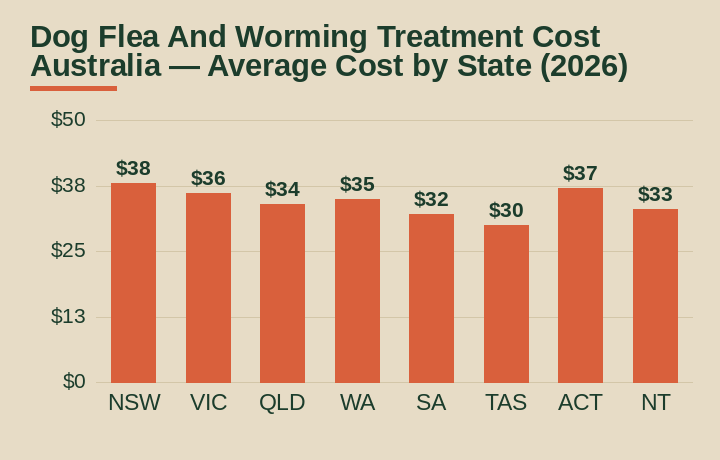
These ranges cover everything from basic supermarket worming tablets to premium prescription combination chewables. The lower end represents single-purpose generic products, while the upper end covers large-breed dogs on comprehensive parasite control.
Real-World Example: A Typical Dog Flea and Worming Treatment Cost Australia Scenario
Sarah owns a 22kg Kelpie cross in Melbourne’s eastern suburbs. She uses Simparica Trio, a monthly chewable that covers fleas, ticks, heartworm and intestinal worms. Here’s her annual breakdown:
Initial vet consultation: $85 (includes heartworm test required before starting treatment)
Simparica Trio 12-pack (10.1-20kg): $186 from an online pet pharmacy
Total annual cost: $271
Monthly cost: $22.60
Sarah saves about $78 per year by buying online instead of through her vet clinic, where the same 12-pack retails for $264. She still gets her annual heartworm check at the vet (included in her regular check-up), but the pharmacy delivers the product to her door. The convenience of one monthly chewable covering everything beats juggling separate flea, tick and worming products.
What Affects Your Dog Flea and Worming Treatment Cost Australia
Your Dog’s Weight
Product pricing jumps significantly between weight brackets. A 7kg terrier might pay $18 for a monthly chewable, while a 28kg labrador pays $48 for the exact same product formulated for heavier dogs. The weight brackets typically break at 4.5kg, 10kg, 20kg and 40kg. If your dog sits right on a bracket boundary, it’s worth getting an accurate weight. Being 500 grams over can push you into the next price tier and cost an extra $180 annually.
Product Type and Duration
Monthly treatments offer more flexibility but cost slightly more over time. Three-month products like Bravecto reduce dosing frequency and often work out cheaper per month of coverage. Spot-on liquids applied to the skin generally cost less than flavoured chewables, but some dogs hate the greasy residue. The premium for convenience and palatability runs about $5-$12 per dose. Chewables also mean you don’t need to avoid patting your dog for hours after application, which matters if you’ve got kids.
Prescription vs Over-the-Counter
Basic intestinal worming tablets from Coles or Woolworths start around $8 for a single dose. These cover roundworm, hookworm and whipworm but nothing else. Add a separate flea treatment for another $12-$18, and you’re still only treating two parasite types. Prescription combination products cost $35-$65 monthly but include heartworm prevention and often tick coverage too. In tick-prone areas like coastal NSW and Queensland, that comprehensive protection matters. The Australian Veterinary Association strongly recommends year-round heartworm prevention across most of Australia.
Brand Name vs Generic
Generic alternatives exist for many popular treatments. A generic fipronil spot-on might cost $14 compared to $26 for Frontline, using the identical active ingredient. The main brands, Bravecto, Nexgard, Simparica, Comfortis, don’t have direct generic equivalents yet because the formulations are still patent-protected, but older active ingredients like fipronil, imidacloprid and selamectin have multiple generic versions. Your vet can advise whether a generic suits your situation.
Where You Buy
Vet clinics charge $35-$95 for products that online pharmacies sell for $28-$68. The markup covers the convenience and immediate availability, plus vet clinics argue it funds the professional advice. Online retailers like Budget Pet Products, PetChem and Vets Love Pets offer the same products with valid Australian registration at 20-35% less. You’ll need a prescription from your vet for restricted products, but many vets now write scripts without requiring you to buy through them. Some charge a small script fee ($8-$15), others include it in your consultation.
Frequency and Compliance
Missing doses creates gaps in protection that can lead to infestations requiring emergency treatment. A single flea can lay 50 eggs daily. If you miss three months of prevention and your dog picks up fleas, you’re looking at $120-$180 for emergency vet treatment plus home fumigation costs of $200-$400. Consistent prevention is always cheaper than treating an active infestation. Setting phone reminders or using auto-delivery subscriptions from online pharmacies helps maintain that schedule.
Common Mistakes to Avoid with Dog Flea and Worming Treatment Cost Australia
- Using cat products on dogs: Some flea treatments formulated for cats contain permethrin, which is extremely toxic to dogs and can cause seizures or death. Always check the label says ‘for dogs’ before applying anything.
- Guessing your dog’s weight: Underdosing leaves your dog unprotected, while buying the next bracket up wastes money. Weigh your dog properly at the vet or on home scales at least twice yearly, especially for growing puppies or dogs who’ve gained weight.
- Stopping treatment in winter: Fleas and mosquitoes don’t disappear in Australian winters, particularly in Queensland and northern NSW where it barely gets cold. Year-round prevention is essential. The ACCC has flagged cases where pet owners stopped winter treatments and faced costly infestations.
- Bathing too soon after spot-on application: Most spot-on treatments need 48 hours to spread through the skin’s oil layer. Bathing within two days washes off the product before it’s absorbed, wasting the entire dose. If your dog needs regular baths, chewables make more sense.
How to Save Money on Dog Flea and Worming Treatment Cost Australia
Most Aussie dog owners reckon you can trim at least 20-30% off the standard costs without compromising your dog’s protection. Online shopping makes the biggest dent. Buying a year’s supply during promotional periods locks in lower prices and means you’re not paying full retail every time you run out. Some owners save $120+ annually just by switching from vet clinic purchases to online pharmacies.
Choosing the right product matters too. If you live in an area with low tick risk, paying extra for tick coverage might be unnecessary, though most vets recommend it for dogs who travel or visit bushland. A quality flea comb helps you monitor whether your prevention is working and catch any breakthrough infestations early.
Pet insurance sometimes covers preventative care. Policies with wellness add-ons typically include $100-$200 annually for flea and worming treatments. If you’re already paying for insurance, that allowance effectively makes your treatments free. Even without insurance, loyalty programmes at Petbarn and Petstock accumulate points worth $30-$60 yearly for regular buyers.
Check too if your local vet offers multi-pet discounts. Households with two or three dogs sometimes get 10-15% off when buying multiple doses at once. It’s worth asking, the worst they can say is no.
Maintaining good hygiene extends protection. Regular vacuuming picks up flea eggs before they hatch, reducing environmental burden. Washing your dog’s bedding weekly in hot water kills larvae. These habits don’t replace chemical treatment but make it more effective, potentially letting you use slightly less aggressive products. Between doses, some owners use grooming wipes to keep their dog’s coat clean and check for pests.
Recommended Products for Dog Flea And Worming Treatment Cost Australia
If you’re tackling this yourself, here are some products from Amazon Australia that can help (these are affiliate links):
- Three-month flea and tick protection, Covers fleas, ticks and mites with one chewable every 12 weeks
- Monthly all-in-one parasite control, Combined flea, tick, heartworm and intestinal worm protection
- Comprehensive monthly chewable, Broad spectrum coverage including heartworm prevention
- Pill pocket treats, Makes giving tablets easier and stress-free for picky dogs
The dog flea and worming treatment cost Australia doesn’t have to blow your budget. With smart shopping, appropriate product selection and consistent prevention, you can keep your dog protected without overspending. Whether you choose monthly chewables or quarterly spot-ons, the investment in prevention always beats the cost of treating an active infestation. Check with your local vet about which products suit your dog’s lifestyle, then shop around online to get the best price. Your dog stays healthy, and your wallet stays happier.
Frequently Asked Questions About Dog Flea and Worming Treatment Cost Australia
How much does a 3-month flea treatment cost for dogs in Australia?
Three-month flea treatments like Bravecto cost $35 to $95 per dose depending on your dog’s weight. Small dogs (4.5-10kg) pay around $38-$45, medium dogs (10-20kg) pay $48-$58, and large dogs (20-40kg) pay $65-$95. That works out to roughly $12-$32 per month of protection.
Are monthly or 3-month flea treatments cheaper?
Three-month treatments typically work out slightly cheaper per month of coverage. Monthly chewables cost $15-$65 each, while 3-month treatments cost $35-$95 total (around $12-$32 monthly). However, monthly products give you more flexibility if your dog has side effects or you want to switch brands.
Do I need a prescription for dog flea and worming treatment?
It depends on the product. Basic flea-only treatments and intestinal worming tablets are available over-the-counter from pet shops and supermarkets. Combination products that include heartworm prevention require a vet prescription in Australia. Your vet will need to confirm your dog is heartworm-negative before prescribing these.
What’s the difference between cheap and expensive flea treatments?
Cheaper treatments (around $8-$15) typically only cover fleas or intestinal worms and require separate products for complete protection. Premium products ($35-$95) combine flea, tick, heartworm and intestinal worm coverage in one dose, plus they often last longer between treatments. The active ingredients and speed of action also differ.
How often do dogs need flea and worming treatment?
Most vets recommend year-round flea prevention in Australia, with treatment every 1-3 months depending on the product. Intestinal worming should happen every 3 months for adult dogs, or monthly for puppies and dogs in high-risk areas. Heartworm prevention needs to be given monthly or every 6-12 months depending on the product type.

People Also Ask About Dog Flea and Worming Treatment Cost Australia
Can I use human flea treatment on my dog?
Absolutely not. Human flea treatments contain different chemicals that can be toxic to dogs. Products designed for humans are formulated for different body weights, metabolisms and skin types. Always use veterinary-approved dog-specific treatments. Using the wrong product can cause serious poisoning, seizures or even death in dogs.
What happens if I miss a flea treatment dose?
If you miss a dose by a few days, just give the next treatment as soon as you remember and continue the regular schedule from there. Don’t double up doses. If you’ve missed by several weeks, your dog may have lost protection and could have picked up fleas or worms. Check your dog for signs of infestation and consider a vet check if you’re concerned.
Do indoor dogs need flea and worming treatment?
Yes, even indoor dogs need regular treatment. Fleas can enter homes on clothing, other pets, or through open doors. Mosquitoes that transmit heartworm can fly indoors. Dogs also encounter worm eggs during brief outdoor toilet breaks or walks. Indoor-only dogs can follow a slightly relaxed schedule in consultation with your vet, but shouldn’t skip treatment entirely.
Are natural flea treatments as effective as chemical ones?
Natural alternatives like essential oils, garlic or diatomaceous earth are significantly less effective than veterinary chemical treatments. While they may have minor repellent properties, they don’t kill fleas or prevent infestations reliably. Most vets don’t recommend natural products as primary protection, especially in Australia where flea and tick burdens are high year-round.
Why do prescription flea treatments cost more than pet shop ones?
Prescription products typically contain newer active ingredients with broader spectrum coverage, including heartworm prevention which isn’t available over-the-counter. They’ve also undergone more extensive testing and often work faster or last longer. The prescription requirement adds vet consultation costs, but these products genuinely offer more comprehensive protection than basic supermarket options.
Related Cost Guides
This guide contains affiliate links. We may earn a small commission from qualifying purchases at no extra cost to you.