
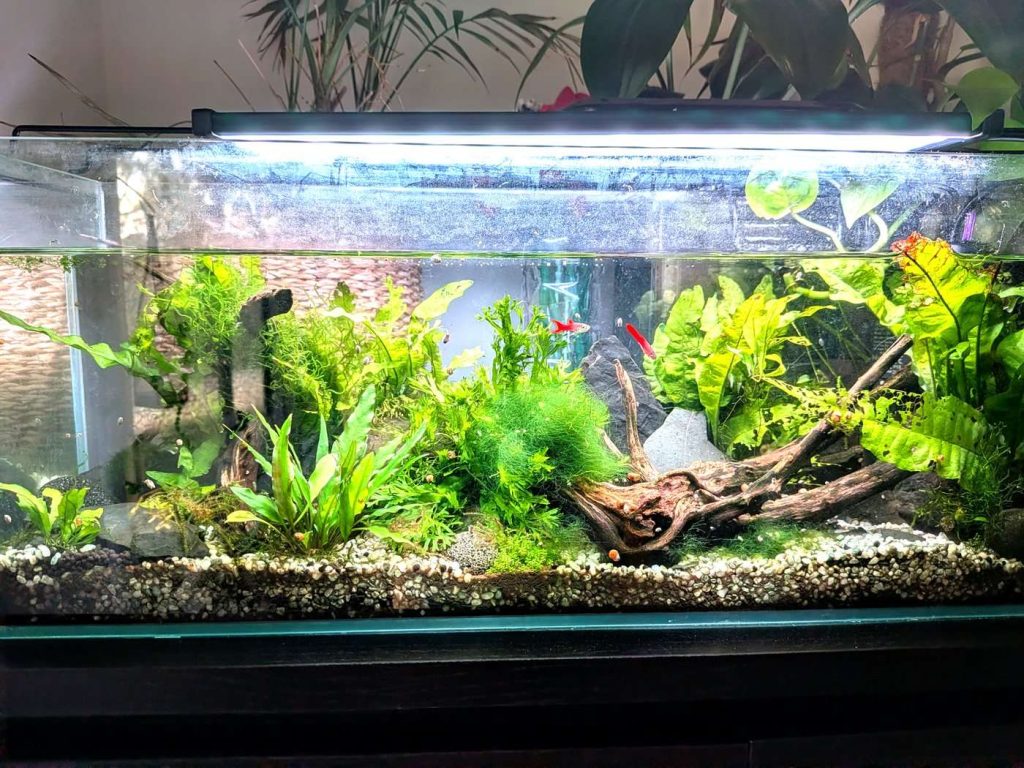
I keep a 40 litre indoor pond with a betta, bristlenose and tetras, plus shrimp tanks, and I use glass Aqua One heaters. I also sell heaters at the pet store I work in, and there is one warning I give with nearly every one: never take a heater out of the tank while it is switched on.
Here is why, plus how to choose the right heater and get the most out of it.
Most tropical tanks in Australia need a heater, set to around 24 to 27 degrees depending on the fish. A rough guide is 1 watt per litre, going up a size for a cold room. Glass heaters like the Aqua One range and the Eheim Jager are reliable and affordable. Always switch the heater off and let it cool before lifting it out, because a glass heater that heats up in air can crack or shatter. Run a separate thermometer so you are not relying on the heater’s dial.
For most home tanks I would buy an Aqua One glass heater. It is what I use, it is an Australian brand with spares and support easy to find here, and the preset nano versions are perfect for small betta and shrimp tanks because there is nothing to set.
Affiliate link. I may earn a small commission at no extra cost to you.
| Tank size | Heater size | Example |
|---|---|---|
| Up to 20 litres | 10W to 25W | Aqua One Nano Betta Preset |
| 20 to 40 litres | 25W to 50W | Aqua One 25W, Eheim Jager 50W |
| 40 to 75 litres | 50W to 75W | Eheim Jager 75W |
| 75 to 125 litres | 100W to 125W | Eheim Jager 125W |
| 150 litres and up | 150W plus, or two heaters | Eheim Jager 150W or 200W |
The Shattering Mistake
A glass heater is designed to sit in water, which carries the heat away from it. Lift it out while it is on and it keeps heating with nothing to cool it. The glass gets very hot very quickly. Then, when you put it back in the water, the sudden temperature change can crack or shatter it.
The fix is simple. Switch it off at the wall, wait around 15 to 30 minutes for it to cool, then lift it out. Do the same before a big water change that will drop the water level below the heater. Some newer heaters have a cut out for running dry, but I would not rely on it.
Unplug any heater and filter before you put your hands in the tank, too. Water and mains power is not something to take chances with.
Do You Even Need a Heater?
For tropical fish, yes. Bettas, tetras, bristlenose, guppies, most shrimp and most community fish want stable warm water. Even in Queensland, indoor tanks drop at night and in winter. Coldwater fish like goldfish do not need one.
The bigger point is stability. A tank that swings a few degrees between day and night stresses fish, and stressed fish get sick. A heater on a thermostat holds the temperature steady.
Aqua One vs Eheim Jager
Aqua One is what I use. The glass heaters are good value and the preset nano heaters are especially good for small tanks, because they are set to the right temperature out of the box.
Eheim Jager heaters are another reliable choice that a lot of keepers swear by. They have an adjustable dial you can recalibrate, and a safety cut out if the water level drops. They come in a wide range of sizes, which is handy for bigger tanks.
Where to Put It
Put the heater near the filter outlet or somewhere with good water flow, so the warm water gets spread around the tank instead of making one hot corner. Mount it at an angle if the instructions allow, and keep it fully under the water line it is marked with.
If you keep fish that rest against things, like bettas or bristlenose, a heater guard stops them burning themselves on the glass.
Always Use a Separate Thermometer
Heater dials are a guide, not a reading, and heaters can fail stuck on or stuck off. A cheap thermometer at the opposite end of the tank tells you what is actually happening. Glance at it every day when you feed. A tank that is suddenly 31 degrees or 20 degrees tells you the heater has a problem before your fish do.
One Big Heater or Two Small Ones?
For bigger tanks, two smaller heaters at either end is a good idea. The heat spreads more evenly, and if one fails, the other keeps things from crashing. If one sticks on, a smaller heater also takes longer to cook the tank.
What It Costs
Small glass heaters start around $30 to $40. Mid sized Eheim Jager heaters cost more, and big tanks need more watts. A thermometer is a few dollars to $20. Heaters do wear out, so I would plan on replacing one every few years rather than waiting for it to fail.
What I Would Buy
The heaters I trust, by tank size, plus a thermometer. (these are affiliate links)
Want to see everything I run? Here is all the gear I actually use across my reptiles, tanks, rabbits and caique.
Frequently Asked Questions
Can you take an aquarium heater out of the water while it is on?
No. A glass heater keeps heating in air with nothing to cool it, and it can crack or shatter, especially when it is put back in the water. Switch it off at the wall, wait 15 to 30 minutes for it to cool, and then lift it out. This is the one warning I give with almost every heater I sell.
What size aquarium heater do I need?
A rough guide is 1 watt per litre, so about 50W for a 50 litre tank. Go up a size if the tank is in a cold room. For tanks over about 150 litres, two smaller heaters at each end spread the heat better and give you a backup.
Do I need a heater for my fish tank in Australia?
For tropical fish, yes, even in warm parts of the country, because indoor temperatures drop at night and in winter. Bettas, tetras, bristlenose and most shrimp want stable warm water. Goldfish and other coldwater fish do not need one.
Which aquarium heater brand is best?
I use Aqua One glass heaters and recommend them. Eheim Jager heaters are another reliable option with an adjustable dial and a cut out if the water level drops. Whichever you choose, run a separate thermometer.
What temperature should a tropical tank be?
Most tropical community fish are happy around 24 to 27 degrees. Bettas do well around 26. The most important thing is that it stays steady rather than swinging between day and night.