
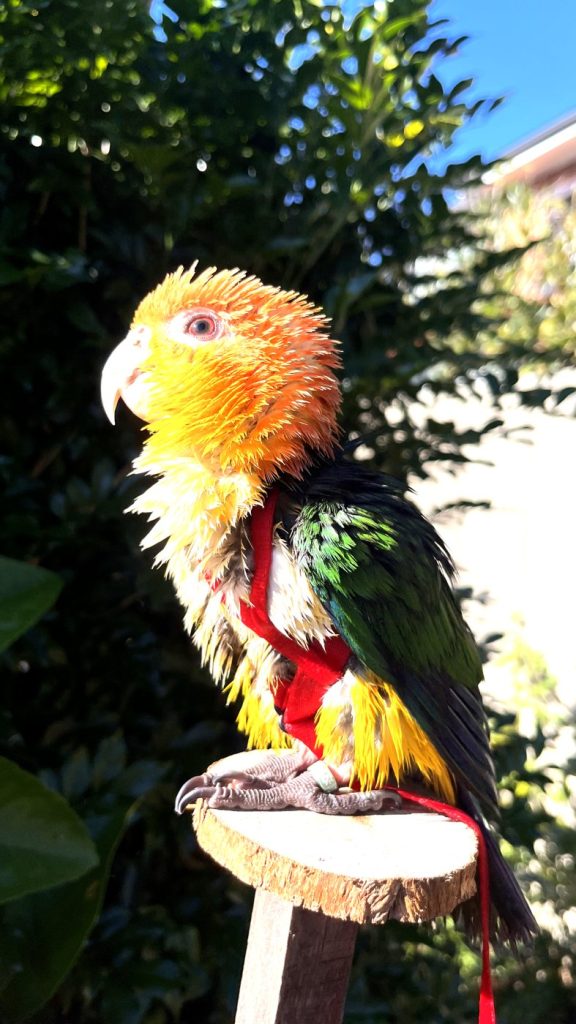
My white bellied caique goes for walks. He wears an Aviator harness, and I take him outside for sun and a change of scene, and sometimes out with me when I go places. He spends somewhere between two and six hours out of his cage every day, and getting outside is part of that.
People are always surprised to see a parrot on a lead, and the questions are always the same: is it safe, does he hate it, and how did you get it on him. So here is what I use and what I have learned.
The Aviator harness is the one I use and the one most parrot owners in Australia end up with. It is a single piece with no buckles, it comes in sizes by bird weight, and the lead is elastic so it does not jerk the bird. Fit it by your bird’s weight using the Aviator size chart, introduce it slowly over days or weeks with lots of treats, and start indoors. Outside, never leave a harnessed bird alone, keep it out of the midday heat, and watch the sky for birds of prey.
The Aviator Pet Bird Harness is what my caique wears. There is nothing to buckle, the one sliding adjuster is all you need, and the elastic lead moves with the bird instead of yanking it. Check the Aviator size chart against your bird’s weight before you order.
Affiliate link. I may earn a small commission at no extra cost to you.
| Size | Typical birds |
|---|---|
| XXXS and Petite | Cockatiels, small conures, ringnecks, caiques at the smaller end |
| Small | Larger conures, caiques, senegals, quakers |
| Medium | African greys, amazons, small cockatoos |
| Large and X-Large | Large cockatoos, macaws |
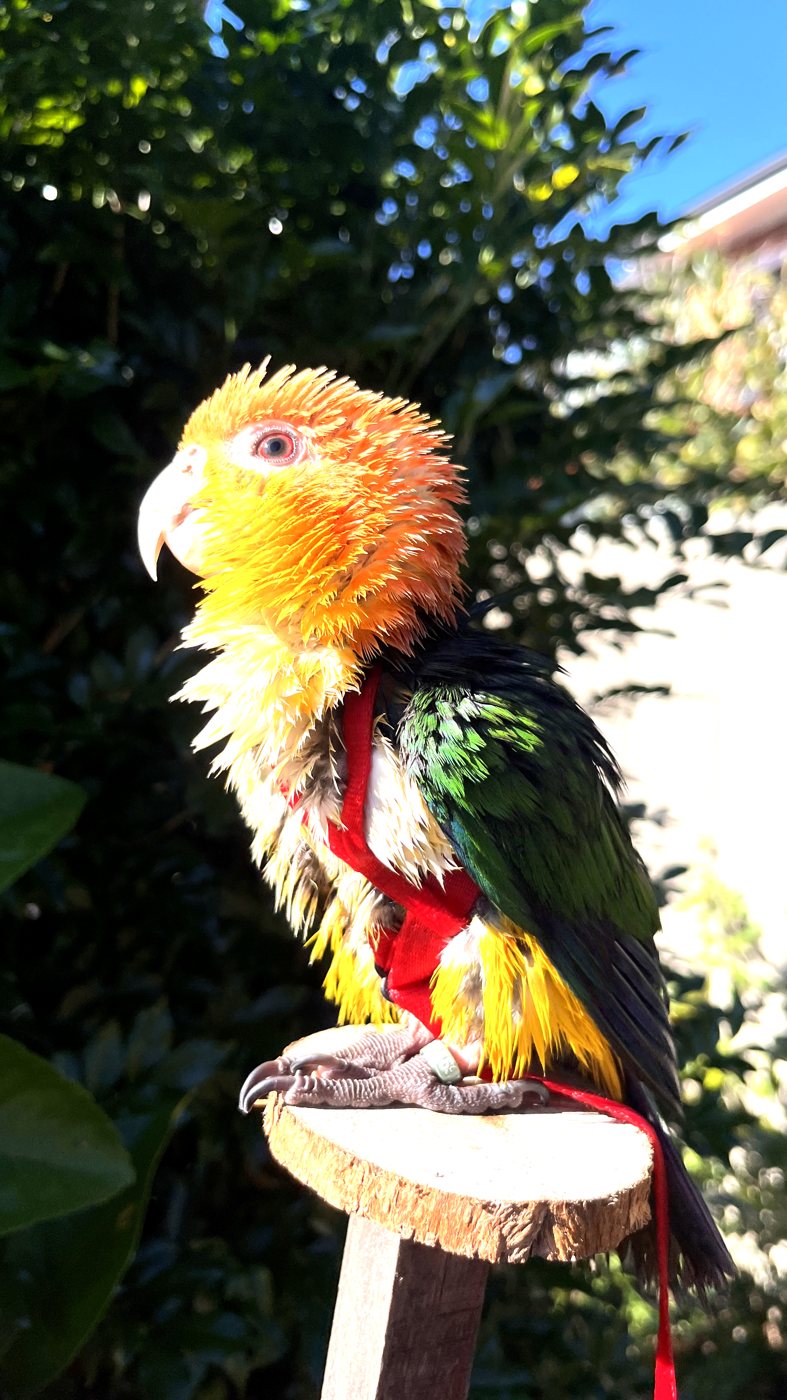
Why I Take Him Outside
The main reason is sun. Birds make vitamin D from UVB light, and window glass filters most of that out, so an indoor bird sitting in a sunny window is not getting what you might think. Time outside in natural light makes a real difference, and it is the same reason I run UVB lighting for my reptiles.
The second reason is enrichment. New sights, sounds and smells give a parrot something to think about. A caique is a busy, clever bird, and a bored caique finds his own entertainment, usually something you would rather he did not.
How to Get a Parrot Used to a Harness
Do not expect to put it on the first day. The bird needs to decide the harness is not a threat, and that takes as long as it takes. Every bird is different, so go at your bird’s pace.
- Leave it near the cage for a few days so it becomes boring furniture.
- Reward any curiosity. Touching it with a beak gets a treat.
- Touch the bird with it, briefly, then treat. Then drape it over the back, then treat.
- Slip the head loop on and take it straight off again. Build up the time slowly.
- Fasten it fully indoors and let the bird wear it during normal out of cage time, with treats and attention.
- Only then go outside, starting with a few minutes somewhere quiet.
Keep sessions short and end on a good note. If the bird panics, go back a step. Forcing it is how you end up with a bird that hates the harness for life.
Safety Rules I Stick To
- Never leave a harnessed bird unattended, not even tied to a perch for a minute. A harness keeps a bird from flying off, it does not protect it from anything.
- Watch for birds of prey. Hawks and kites are common in Australian suburbs, and a parrot on a perch is easy to spot from above.
- Avoid the heat of the day. Birds overheat quickly. Morning and late afternoon are best, with shade available. Panting and holding the wings away from the body mean get inside now.
- Check the fit every time. Snug enough that the bird cannot step out, loose enough to breathe and move normally.
- Keep the lead short around dogs, cats and other people’s birds.
- Watch what goes in the beak. Outdoor plants, bark and things on the ground can be toxic.
Taking Him Places
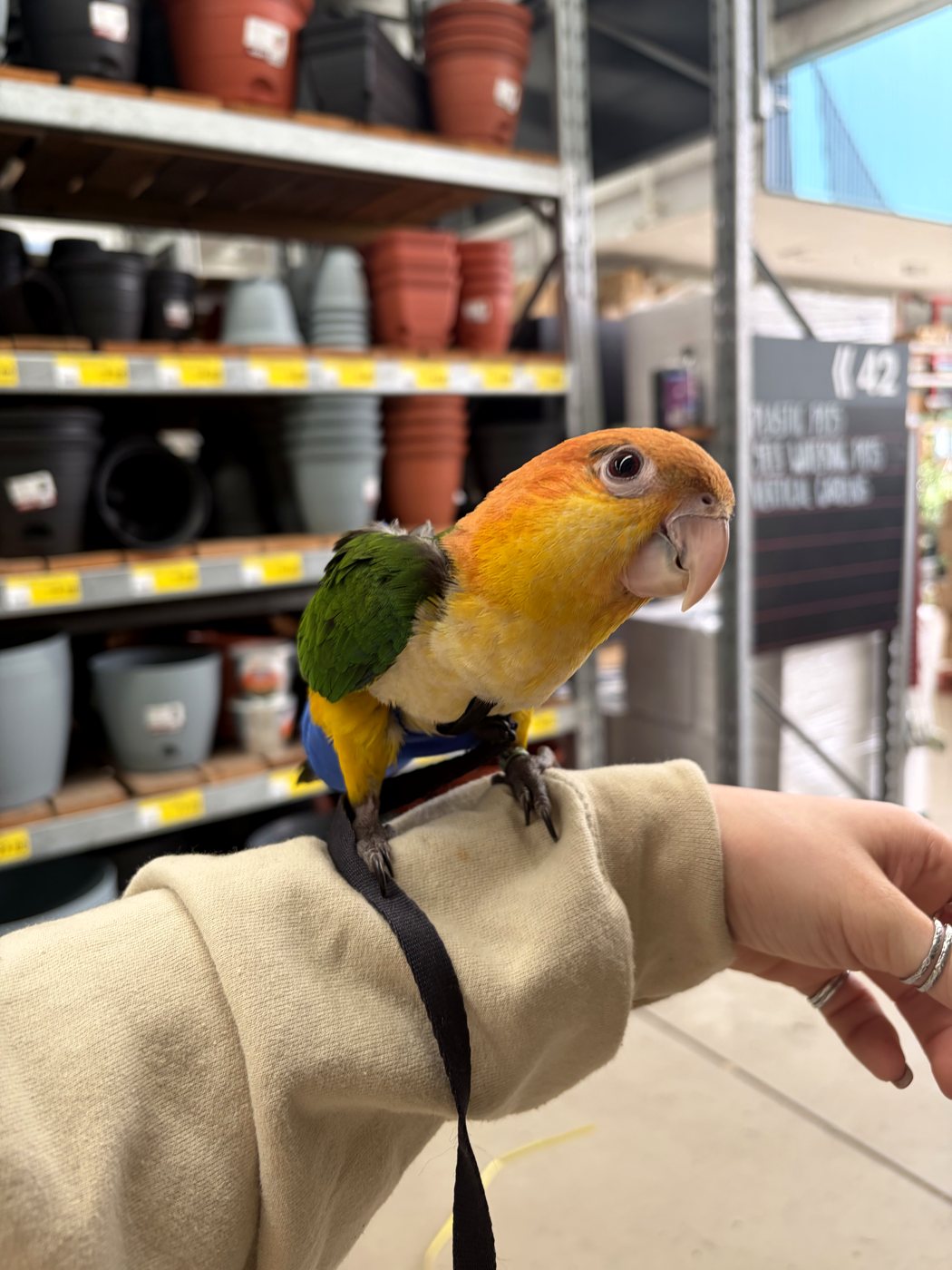
Once your bird is relaxed in the harness, it opens up a lot. Mine has come out with me on my arm and to the water, and he takes it in his stride now. That confidence is built at home first, though. A bird that is calm in its harness in the backyard is a bird you can take further.
For anything beyond a walk, like a car trip or a vet visit, a proper bird carrier is safer than a harness on its own. The bird can stand on a perch, it is protected if something goes wrong, and you are not holding it the whole time.
Clipped or Flighted?
A harness works for both. For a flighted bird it is the only safe way to go outside unless you have an aviary, because a startled bird can be over the fence and gone in seconds, and lost parrots rarely come home. For a clipped bird it still matters, because clipped birds can still catch a gust of wind and get away from you.
What It Costs
An Aviator harness is around $30 to $40. A decent bird carrier backpack runs from about $25 for a basic one to $160 for a sturdier model. Compared to what most people spend on a parrot, a harness is one of the cheapest things that can genuinely change its life.
What I Would Buy
The harness I use, in the sizes most people need, plus carriers for trips. (these are affiliate links)
Want to see everything I run? Here is all the gear I actually use across my reptiles, tanks, rabbits and caique.
Frequently Asked Questions
Are bird harnesses safe?
Yes, when they fit properly and the bird is supervised the whole time. I use an Aviator harness on my caique. The risks come from leaving a harnessed bird alone, birds of prey, heat, and a harness that is too loose. Never tie a bird up and walk away, even for a minute.
What size Aviator harness does a caique need?
It depends on the individual bird’s weight, so weigh your bird and check the Aviator size chart before ordering. Caiques usually sit around the petite to small range.
How long does it take to harness train a parrot?
Anywhere from a few days to a few months. Introduce the harness slowly, reward every bit of curiosity with treats, and only fasten it once the bird is relaxed about being touched with it. Practise indoors before you ever go outside.
Why should I take my bird outside?
Natural sunlight helps birds make vitamin D, and window glass filters most of the UVB out. Being outside is also great enrichment. My caique gets out regularly in his harness and spends two to six hours out of his cage every day.
Can a clipped bird fly away on a walk?
Yes. Clipped birds can still catch a gust of wind and get lifted away, which is why a harness is worth using even on a clipped bird. For flighted birds, a harness or an aviary is the only safe way to be outside.