
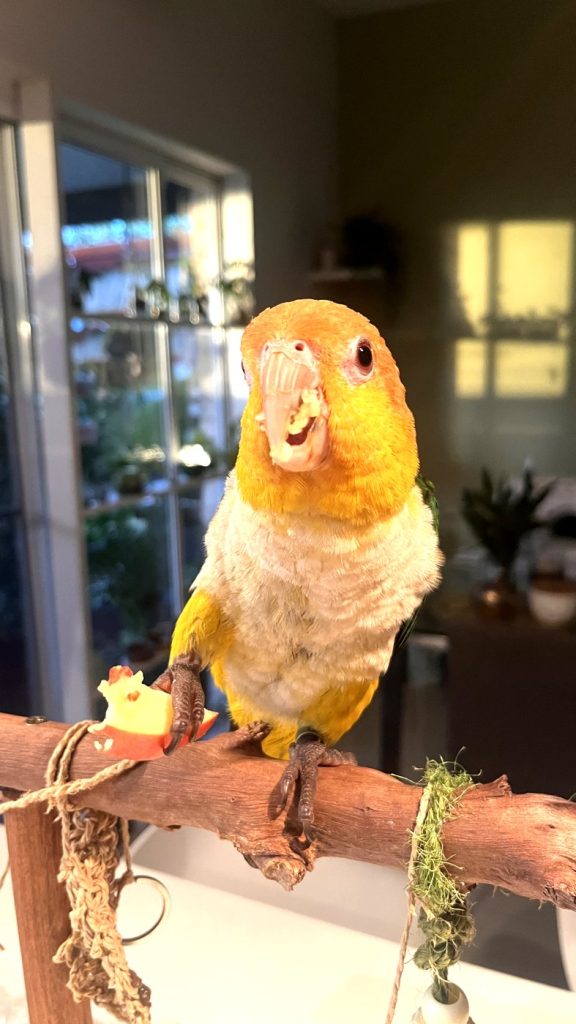
I have a white bellied caique, and I work in a pet store where I sell bird toys every week. Between the two, I have watched a lot of money get spent on toys that a bird never touches, and a lot of birds that would be calmer and happier with the right ones.
The biggest thing people underestimate is that bird toys are a consumable, not a one off purchase. A parrot is supposed to destroy its toys. That is the whole point. So the question is not which toy to buy, it is which toys are worth buying again and again.
The best parrot toys are the ones your bird can destroy, forage in, or hold in its feet. For my caique, foot toys beat hanging toys by a mile: sola balls, small rattles and anything he can carry around. Shreddable toys made from sola, balsa, paper, palm leaf and soft wood suit most parrots. Budget for toys as an ongoing cost, especially for large parrots like macaws. Rotate toys rather than leaving the same ones in the cage, and skip bird huts and hides, which can trigger hormonal behaviour.
If I could only buy one thing for a small or medium parrot, it would be a pack of sola balls. My caique loves them for the squeak they make when he bites, and they are soft enough for a smaller beak to actually destroy, which is exactly what you want.
Affiliate link. I may earn a small commission at no extra cost to you.
| Toy type | Best for | Rough price | My take |
|---|---|---|---|
| Foot toys (sola balls, small rattles) | Caiques, conures, cockatiels, greys | $5 to $30 a pack | My caique’s favourite by a mile |
| Shredding and foraging toys | Almost all parrots | $13 to $30 | Great value, they get destroyed and that is fine |
| Large wooden block toys | Macaws, cockatoos, greys | $20 to $70 | Big birds go through these fast |
| Mineral and iodine bells | Seed eating birds | About $5 | The cheapest thing that prevents the most problems |
| Huts, tents and hides | Not recommended | Varies | Can trigger hormonal behaviour, I talk people out of these |
Foot Toys Beat Hanging Toys
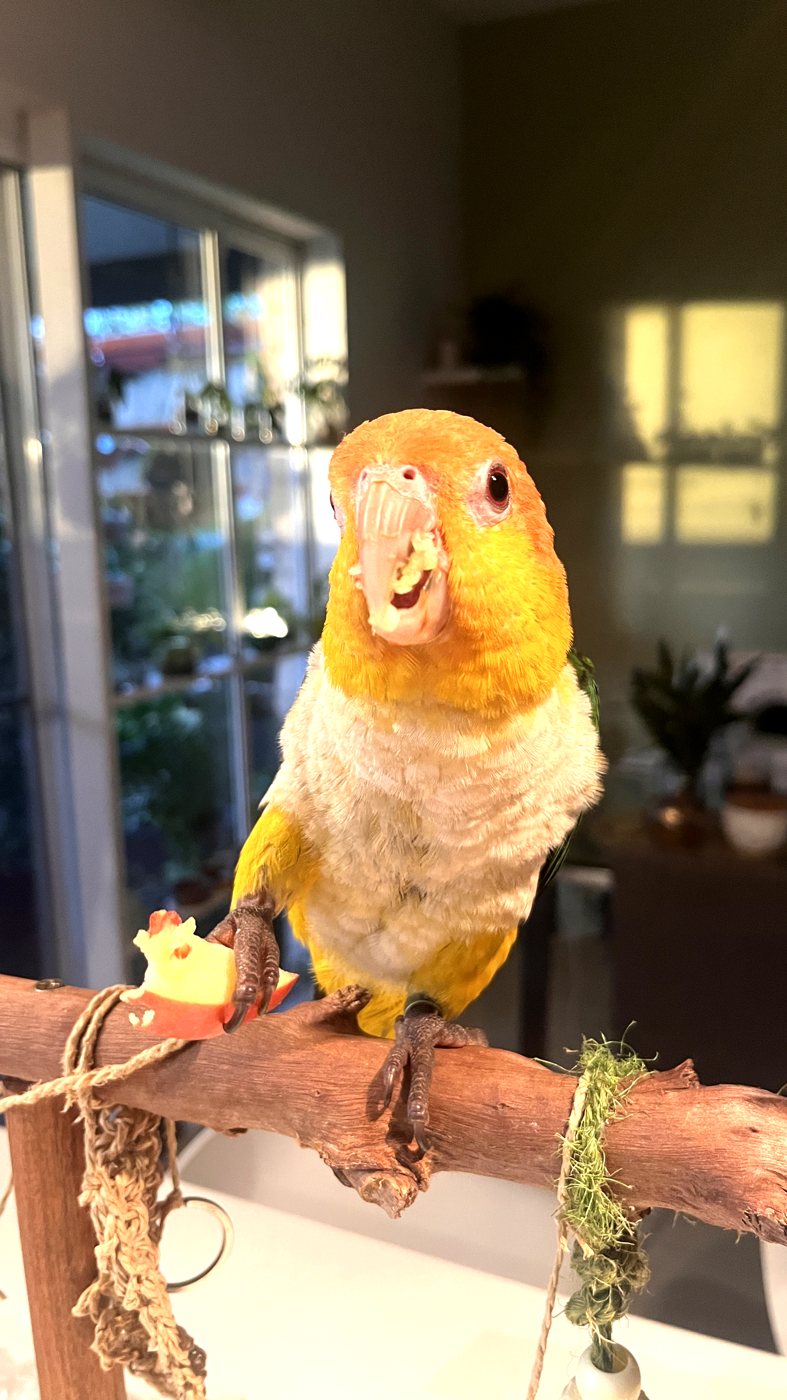
This is the most useful thing I have learned from my own bird. My caique ignores most hanging toys but will carry a foot toy from the floor of the cage all the way to the top and then shake it. He holds his food in one foot too, so it makes sense that he wants toys he can hold.
The clearest example: he loves sola balls for the squeak, but when I hung exactly the same ball up as a hanging toy, he ignored it. He wants to hold it, not visit it. His other favourite is a set of mini maracas, which he hangs upside down to shake.
So before you spend $40 on an elaborate hanging toy, watch your bird. If it picks things up and carries them, buy foot toys. They are cheaper too.
Shredding Toys Are Meant to Be Destroyed
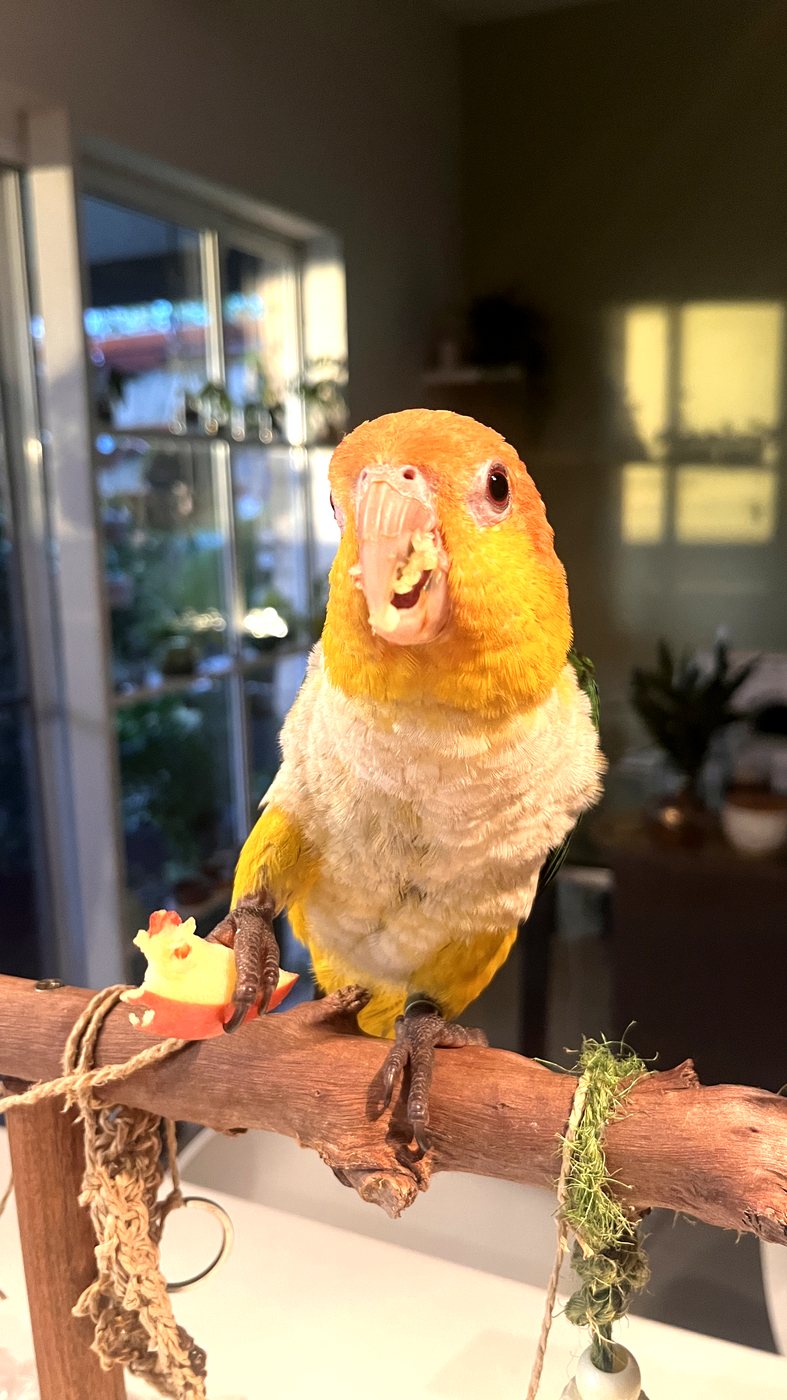
People sometimes come into the shop disappointed that a toy lasted two days. That is a toy doing its job. Parrots in the wild spend a big part of the day chewing, stripping and foraging, and a bird with nothing to destroy will often turn that energy on its own feathers or on you.
Soft materials like sola, balsa, paper, cardboard, palm leaf, corn husk and soft woods are what most small and medium parrots can actually get through. Hard wood blocks are fine for big beaks, but a cockatiel or a caique will often just give up on them.
Rotate Toys Instead of Buying More
This is what experienced bird keepers do that beginners do not. They own a wide range of toys and rotate them. A toy that has been in the cage for a month is furniture. The same toy taken out and brought back a month later is new again.
Swap two or three toys out every week or so. It keeps the bird interested and it makes your toy budget go a lot further.
Big Parrots Cost More Than People Expect
Bird toys are the ongoing cost people underestimate most, and it is worst with big parrots. A macaw can reduce a big wooden toy to splinters very quickly, and it needs a steady supply of them to stay happy. That cost never goes away.
It is one of the reasons I always tell people a macaw is not an easy bird, even though they are sometimes sold as one. They are a lifelong commitment that you will probably pass on to your grandchildren, and the toy bill comes with them for all of it.
The One Thing I Talk People Out Of: Huts and Hides
Bird huts, tents and snuggle hides look cosy and they sell well, but I talk people out of them. To a lot of parrots a dark, enclosed space reads as a nest site, and that can trigger hormonal behaviour like aggression, screaming, territorial biting and, in hens, egg laying. Some birds also chew and swallow the fabric fibres.
If your bird needs warmth at night, a bird safe heater or warmer beside the perch is a better answer. My caique has a K&H Bird Snuggle Up warmer in his cage that he sits beside on his shelf all night and goes to bed under a cage cover at about 7pm.
The Cheapest Thing That Prevents the Most Problems
Not a toy, but it hangs in the cage like one: an iodine and calcium bell for seed eating birds like budgies and cockatiels. Australian soil is low in iodine, so the grain grown in it is too, and so are plain seed diets. It is the same reason our table salt is iodised. Budgies on seed alone can develop thyroid problems from it. A bell costs about $5 and is the best value thing you can put in a seed eater’s cage.
Safety Checklist
- Size matters. A toy for a budgie can be swallowed or broken into dangerous bits by a bigger bird. Buy toys rated for your bird’s size.
- Check rope. Frayed cotton rope can wrap around toes. Trim loose threads or replace it.
- Avoid zinc and lead. Cheap metal parts can be toxic if chewed. Stainless steel fittings are safest.
- Watch bells. Some small bells have slots that can catch a toe or a beak, and clappers can be pulled out and swallowed.
- Throw out mouldy or soiled toys. Natural materials that get wet can go mouldy.
What I Would Buy
Toys I would actually put in my bird’s cage, plus the bell for seed eaters and the warmer I use instead of a hut. (these are affiliate links)
Want to see everything I run? Here is all the gear I actually use across my reptiles, tanks, rabbits and caique.
Frequently Asked Questions
What toys do parrots like best?
Toys they can destroy, forage in or hold. Many medium parrots, including my caique, much prefer foot toys they can carry, like sola balls and small rattles, over hanging toys. Shreddable toys made from sola, balsa, paper, palm leaf and soft wood suit most parrots, while big birds like macaws need large wooden toys.
How often should I replace my bird’s toys?
Whenever they are destroyed, soiled or falling apart, and destroyed is normal. Toys are a consumable for a parrot. It also helps to rotate two or three toys out of the cage every week or so, because a toy brought back after a month away feels new again.
Are bird huts and tents safe?
I talk people out of them. To many parrots an enclosed dark space looks like a nest, which can trigger hormonal behaviour such as aggression, screaming and egg laying. Some birds also chew and swallow the fabric. A safe heater or warmer beside the perch is a better way to keep a bird warm at night.
Do budgies need an iodine bell?
It is a very good idea for budgies and other seed eating birds in Australia. Australian soil is low in iodine, so seed grown here is too, and budgies on a plain seed diet can develop thyroid problems. An iodine and calcium bell costs about $5.
How much do parrot toys cost in Australia?
Small toys and sola ball packs run about $5 to $30, shredding and foraging toys about $13 to $30, and large wooden toys for macaws and cockatoos about $20 to $70. Because parrots destroy them, budget for toys as an ongoing monthly cost rather than a one off, especially for big parrots.